

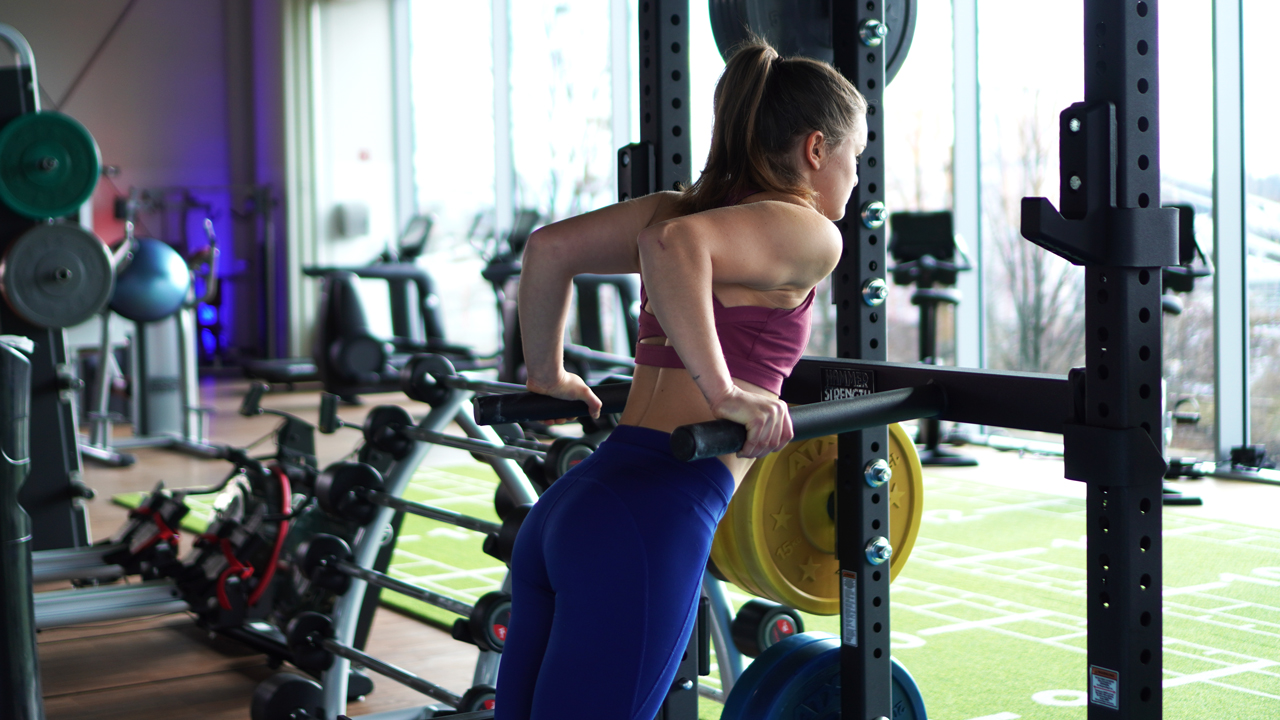
Calisthenics has been a huge hype in the fitness scene for years. It is a street workout in which muscle building is achieved through static or dynamic bodyweight exercises. The best calisthenics exercises are simple yet highly effective, often requiring nothing more than a pull-up bar. With simple aids, these can be supported or made more difficult if necessary. Despite its simplicity - you hardly need more than a pull-up bar for the workout - calisthenics has enormous effects on the entire body. So it's not for nothing that the trend has spread like wildfire around the world.
What is Calisthenics?
The term "calisthenics" comes from the Greek and translates as "beautiful strength". In contrast to pure strength training with weights, here it's about more: In calisthenics, the movements are performed in a controlled and graceful manner. The basic exercises do not require any equipment at all. The best basic Calisthenics exercises are for example:
- Push-ups
- Squats
- Sit-ups
With time, you can then integrate some tools into the training. These are in particular:
- Pull-up bars
- Hanging bars
- wall bars
- parallel bars.
Since the sport is becoming increasingly popular, there are now even special outdoor calisthenics parks in every major city, where you can find bars, parallel bars and other sports equipment.
The advantage is that you don't have to train alone in a quiet room, but can get in touch with like-minded people and exchange ideas. If you don't have a park near you, you can also use climbing frames in playgrounds, clothes poles or branches in the woods that can bear weight.
Even in the origins of calisthenics exercises, which partly originated in New York in the street workout scene, athletes first integrated street signs, benches, scaffolding or wall ledges into the workout. This simplicity - effective training when and where you want - is what makes calisthenics exercises so popular. Even people who have little time and money can get a strong and supple body.
These Are the Advantages of Calisthenics Exercises
With Calisthenics exercises you can stabilize your musculoskeletal system in the long run and improve your posture. Better posture reduces postural deformities caused, for example, by sitting at a desk for long periods of time. Calisthenics exercises can help reduce or relieve shoulder, neck and throat tension.
As you learn to be more aware and mindful of your body overall, you will automatically develop a healthier gait and more ergonomic movements. Mobilization, which is part of the workout, is also a type of fascial training that allows your muscles to become flexible and supple. Because of the very deliberate, controlled movements, calisthenics can also be somewhat meditative. Athletes of the sport often report feeling more focused and internally balanced as a result of regular training. In addition, the potential for injury is reduced compared to training that consists of jerky and hectic movements.
Last, of course, muscle is built, helping to improve overall fitness, strength and well-being. In addition to the calories burned in extended workouts, building muscle also benefits calorie balance, as muscle burns more calories than fat. Calisthenics exercises, unlike classic weight training, have the great advantage of being a full-body workout. It uses all muscle groups at the same time and thus also promotes coordination. In addition to shoulder, arm and chest muscles, push-ups alone also train the entire body core, which stabilizes and holds you so that you don't sag downward during the exercise. Strength training on equipment, on the other hand, often trains only isolated muscles and thus also neglects the application-related coordination of the muscle groups with each other.
The Best Calisthenics Exercises for Beginners
When you start calisthenics training, it is important to first practice the basics and build up a certain basic fitness. Only when you have mastered these and can perform them in a clean and controlled manner does it make sense to move on to more difficult calisthenics exercises. This is especially important to avoid injuries and to ensure long-term progress and motivation.
The difficulty of Calisthenics exercises can be progressively increased for all exercises: when you realize that you have mastered an exercise, you replace it in your training plan with a more strenuous variation or increase the repetitions and intensity.
The best example of this is push-ups: if the "normal push-ups" are still too difficult for you, you can, for example, raise your hands and thus reduce the weight on your arms. You can then gradually reduce the difference in height between your hands and feet. If push-ups are too easy for you, you can perform the exercise with one arm or vary the height of the foot position.
Here are some of the best Calisthenics exercises for beginners:
These Are the Calisthenics Exercises You Need to Know:
The best calisthenics exercises for beginners include:
- Dips
- Push-ups
- Handstand
- Pull-up / chin-ups
- Rows
- Skin-the-Cat
- Deadlift
- Glute Bridge
- Squats / Squats
- Lunges
- Plank
- Hollow Hold
Urban "playgrounds": Where sports become urban culture
The Best Calisthenics Exercises for Advanced
Once you've had some practice and have a better understanding of your body, it's time to move on to the typical calisthenics exercises on equipment. It is helpful to think about your strengths and weaknesses in advance. This way, when you create a training plan, you can adjust the weighting so that you gradually compensate for your weaknesses. For example, if you notice that your abdominals always sag a little in the plank, you can train your abdominal muscles more. If your upper body lacks strength, you can focus on push-ups and pull-ups. If you can't do an exercise like the pull-up yet, there are again easier variations to strengthen the same muscle groups. Advanced exercisers usually train three times a week without any problems. If necessary, a fourth, lighter workout can be added. However, be careful not to overdo it and learn to listen to your body. If your muscles are very sore, it is better to take a break and rest for a few days until you get back to training. Below you will find some of the best advanced calesthenics exercises:
The Correct Training Structure for Calisthenics Exercises
Unless you are pursuing an individual goal that requires its own training parameters, it is recommended, whether beginner or advanced, to perform two to three sets of all calisthenics exercises per training session. In the beginning, you should perform between 12 and 15 repetitions of each exercise in order to train your strength endurance. You should not reach muscle failure, especially if the exercises are new to you, so that you can always concentrate on the correct execution and technique. After each set, take a break for about two minutes to catch your breath and let your muscles recover a bit. If you find that you can't do 12 reps, you can try replacing the exercise with an easier variation. If you still have strength after your set, it's time to replace the exercise with a more strenuous alternative.
Incorporating the best calisthenics exercises into your routine will help you build strength and mobility efficently. Of course, it is important to maintain your enjoyment of the workout. Try to find out what motivates you and keeps you going. This could be a training group or buddy. You may also want to keep a small notebook where you can document your workouts and keep track of your progress. Soon you will realize that your body is capable of much more than you always thought.
Learn handstand now in only 12 weeks
Calisthenics Exercises Sore Muscles
Of course, it is important not to overstrain yourself, especially at the beginning. Otherwise, in addition to severe muscle soreness, more serious overuse symptoms can force you to take a longer break from training. Give your body the necessary break so that you can quickly get fit again after the muscle soreness. In addition to the exercise selection, you can also adjust the training frequency accordingly. For example, start by exercising only twice a week. When you feel that your body is getting used to the strain over a period of a few weeks, you can add a third training session. Each workout should also include a warm-up and cool-down. Preparation and follow-up are essential to achieve good performance in training and to reduce the risk of injury. So now let's move on to the specific exercises. The following three exercises are wonderful for beginners to build strength and get into training. In addition, all three do not require any equipment or tools.
How many calories does calisthenics burn?
In average, calisthenics burns about 300 - 500 calories per hour. However, it's about how intense your workout is - a beginners workout will burn less calories than exercising on high intensity.