

In 2025, everything will revolve around refinement rather than reinvention. For the sports industry, this means further developing existing products and technologies. But how can brands benefit from this development? The focus on sustainability and versatility offers numerous opportunities - but how can companies make targeted use of them?
At ISPO 2025, the discussion about trends will be deepened. Practice-oriented insights from industry experts will provide orientation to better understand challenges and opportunities along the entire value chain and integrate them into existing marketing strategies. From 30. NOV. - 02. DEZ. in Munich.
In the midst of ecological challenges, economic uncertainty and growing social responsibility, companies and consumers alike are looking for sustainable, durable and holistic solutions. This trend was also confirmed at the first ISPO Award Jury Meeting 2025 in Schröcken, Austria. The products submitted were particularly impressive with their clever detailed solutions and well thought-out, holistic product design concepts.
The current transformation of the sports industry is characterized by five significant developments. What they all have in common is that they focus on improving existing structures instead of constantly looking for innovations.

Founding a start-up in the sports industry sounds like freedom, innovation and a direct line to the zeitgeist. But there are many decisions to be made between idea and impact. What makes the difference between an exciting product and a scalable brand? This guide provides 10 clear lessons for sports start-ups - from practice for practice. Compiled from the success strategies of previous ISPO Brandnew finalists, the experience of today's founders and concrete tips from the industry.
Extra opportunity: At ISPO 2025 (30. NOV. - 02. DEC.), you will not only gain visibility - you will also be able to get live feedback from investors, experts and an international audience in formats such as the Founders Fight Club. Those who impress here win far more than applause: real leads, strong contacts and a place in the global sports business. Be part of it!
The path from an idea to a global brand often begins at the very moment you open yourself up - to feedback, to networks, to new formats. The stories of brands such as GoPro, On Running or Ryzon show impressively: the first big step was not the first sale - but the first professional appearance on a platform such as ISPO, the international flagship event of the global sports industry. international flagship event of the global sports industry. These three brands were at the beginning of their journey in the ISPO Brandnew Village. Today they are billion-dollar companies.
ISPO Brandnew is not a competition. It is an ecosystem. And maybe the starting point of your own success story.
Save the Date: ISPO 2025 from 30. NOV. - 02 DEC.
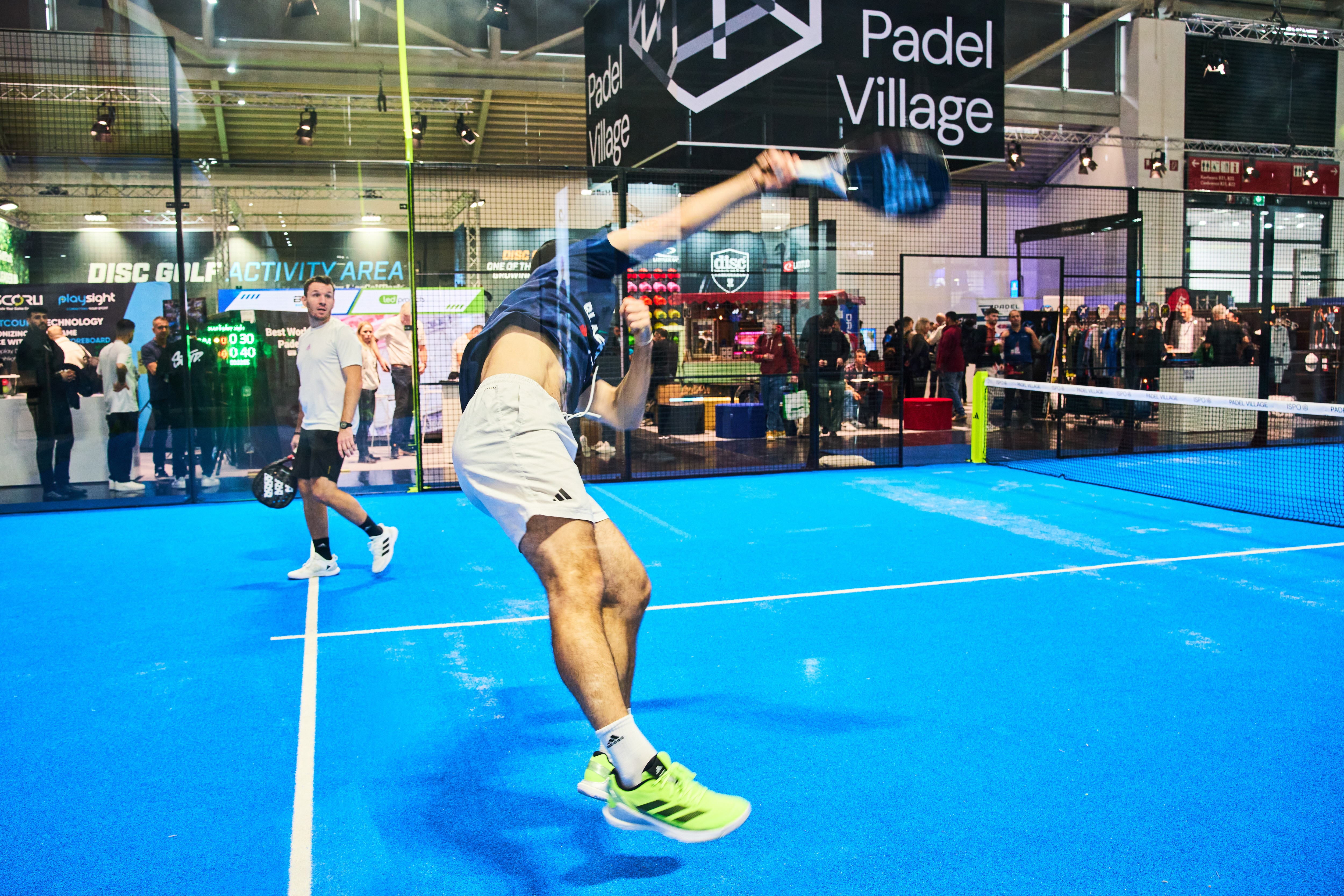
Padel has been experiencing an unprecedented rise for years - worldwide, rapidly and with growing economic relevance. The latest sign of this boom: at the Padel World Summit 2025 in Barcelona, not only market potential was discussed, but also the possible inclusion of the sport in the program of the 2032 Olympic Games in Brisbane - a clear sign of how seriously padel is now being taken as a global sport.
ISPO 2025 is therefore planning its own Padel & Pickleball Village, which will create its own platform for the currently fastest-growing backstroke sport. Be there, experience the pulse of the sport and become part of a community that is actively shaping the future of the sport. From 30. NOV. - 02. DEZ. in Munich!
With around 30 million active players in 130 countries and an estimated market value of 870 million US dollars by 2033, the sport is booming like no other discipline. This shows that padel is not just a sporting phenomenon, but an economic factor with enormous potential.
The rapid increase in the number of players is leading to a growing demand for playing surfaces. There are currently around 63,000 padel courts worldwide, and the trend is continuing to rise sharply.
Sporting goods retailers such as Decathlon are specifically focusing on operating their own courts in order to strengthen customer loyalty and sales experiences:
These examples show: Those who use infrastructure as a strategic lever, be it for brand loyalty, community building or product experience, can position themselves sustainably in the rapidly growing padel market.
Padel requires specialized equipment: lightweight rackets, special balls and stylish, functional clothing are in demand. Although the figures vary depending on the region, industry observations indicate a strong growth in market interest.
Brands such as Adidas and Babolat are focusing on designs and influencer marketing to establish themselves in this dynamic niche:
For retailers, this means reacting to trends at an early stage, adapting the range and style to new requirements and offering exclusive products with a lifestyle factor. This creates clear competitive advantages.
Padel is not only growing on the court, but also digitally. The Playtomic platform has established itself as a leading provider and has more than one million active users per month worldwide. With over 4800 connected clubs in 49 countries , Playtomic offers a comprehensive solution for booking courts, organizing leagues and managing tournaments.
In addition, Playtomic Manager enables clubs and providers to efficiently manage their offers and reach new target groups. Functions such as online booking systems, payment processing, member management and community features make the sport more accessible for players and more economically attractive for operators.
Padel has long been more than just a trend - it has developed into a dynamic growth market with high economic relevance. For companies in the sports business, a wide range of opportunities are opening up along the entire value chain, from infrastructure and product innovations to digital solutions and professional events.
An outstanding example of the enormous potential of padel is the success of the Hexagon Cup. Since its premiere in 2024, the Spanish sporting event has developed at an impressive pace into one of the most successful and fascinating padel team tournaments in the world. The second edition in January 2025 in the Madrid Arena attracted over 30,000 spectators and was completely sold out on the last two days of the event.
What makes the Hexagon Cup so unique is its innovative team format: eight teams compete against each other, with each team consisting of three pairings - in the categories Men, Women and Next Gen. This concept combines different generations and playing styles and ensures varied, exciting encounters that go far beyond the classic tournament format.
Celebrity team captains such as Lionel Messi, Robert Lewandowski and Eva Longoria also ensure that the tournament attracts outstanding media attention. But the Hexagon Cup offers more than just sport: with live DJs, fan zones and interactive experiences, it creates a unique atmosphere that inspires spectators and participants alike.
In close partnership with ISPO 2025 for the Padel & Pickleball Village, Hexagon Cup also aims to further promote padel worldwide and even enable its inclusion in the Olympic Games in the long term. At the Padel & Pickleball Village, you can meet brands, retailers and service providers, learn about new trends, exchange ideas and discover new business opportunities. Gain insights into modern padel courts and facilities, new products, lifestyle trends and digital platforms that make bookings and tournaments easier. Here you will find all the important information and partners for professional leagues and major events. Be there - from 30. NOV. - 02. DEZ. in Munich.
Strong growth: Padel is developing into one of the fastest growing sports worldwide with increasing economic importance.
Infrastructure expansion: Demand for courts is growing continuously, creating new opportunities for brands and operators.
Lifestyle and equipment: Specialized products and influencer marketing promote the lifestyle positioning of padel.
Digital networking: Platforms connect players and clubs and offer efficient solutions for organization and community building.
Professionalization: Professional leagues and major events increase visibility and create new sponsorship and marketing opportunities.
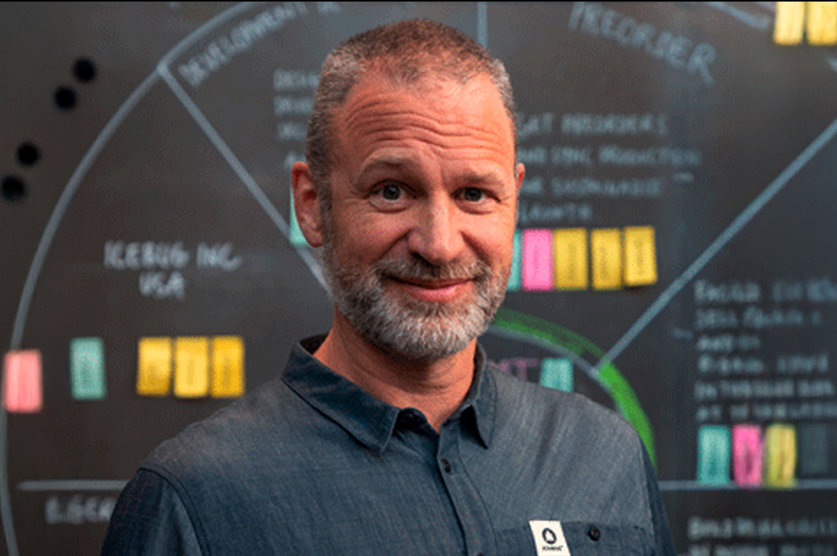
Deep green forests, crisp blue skies, and moss-covered rocks hugging pristine lakes — nature in Sweden is nothing short of extraordinary. At Icebug, a sustainable footwear brand based just out-side Gothenburg, this natural beauty is more than scenery — it’s a core part of the company culture. Since relocating to Jonsered in 2016, Icebug has embraced its wild surroundings, placing out-door time at the heart of the workweek.
Building on the idea of integrating innovative approaches into your marketing strategy, ISPO 2025 offers a space where brands can connect, learn, and grow together. There you’ll have the chance to meet potential partners and exchange ideas with, other brands, industry peers and experts. Discover new business opportunities and get useful insights that can help shape your strategy and inspire innovation. Be part of it – 30. NOV. – 02. DEC. in Munich.
CEO David Ekelund believes this connection to nature is essential for both mental health and in-novative thinking. With mandatory “Wellness Hours” three times a week, all employees spend at least an hour outside — whether walking, running, or simply breathing fresh forest air. It’s part of a bigger shift: a commitment to inner development and new ways of working in a changing world. As Ekelund shares on a walk through the forests of Västra Götaland, breaking with business-as-usual has helped Icebug thrive — from the inside out.
David Ekelund (Icebug CEO): It's quite difficult to isolate where mental issues are coming from. Is it really because of work? Or can it be a parent who is ill or a child having problems at school? But it’s for sure, that you're not one person at work and then you're another person in your private life. We are basically one person.
The underlying assumption is, that people get more dusk worn down at work. They need the weekend or a vacation to rest. I think it's not a really good way of having it. What if instead, we can make the workplace the place where actual health and well-being are increased? Where people can develop towards their full potential.
David Ekelund (Icebug CEO): We know that physical activity also gives mental well-being, but that's only one part of it. About 3 years ago, we decided that we wanted to work on inner development. This was really a departure from business as usual.
David Ekelund (Icebug CEO): The core idea of business as usual being professional at work. But we all have strong sides and weak sides. And if we go to work, spending a lot of time trying to hide our weak side and always show our strong side, our “better side”, we lose a lot of opportunities to learn. Instead spending a lot of energy doing that, we could use it to develop together.
David Ekelund (Icebug CEO): It happened during the spring of Covid, when me and a few others in leading positions were confronted with the weekly thrown up of the situation. It became clear to me, that I had an image for myself as a CEO, that I was trying to kind of execute to others. Like that only if I come up with the best plan and we just follow my plan, we're going to have a good outcome.
But during this time, I felt that if I would have tried to hang on to this, it would have broken me completely. So instead, I embraced vulnerability. Saying that I don't know what will happen, because things will likely keep changing a lot. But that I think we have the capacity to work on this together. This didn’t make me weaker, but stronger. And I also noticed that it unlocked the participating in joy at work for me and being able to express gratitude.
David Ekelund (Icebug CEO): Yes, until then I had this kind of underlying assumption that if things would be too joyful at work or if I would say thank you that maybe people would get lazy. But the effect is the contrary: People want to contribute more, if you show gratitude and approach things in a joyful manner, even pretty heavy things.
David Ekelund (Icebug CEO): I had some coaching during this time and read a book which was very, very helpful to me. It's called “You are your best Thing”, written by Brené Brown. It led me to the conclusion, that I couldn’t change the situation, but I could try to change myself.
David Ekelund (Icebug CEO): We started thinking about how we can set up an environment that people get the chance to grow personally. There was this newly established framework called inner development codes, which is kind of a response to having global sustainable development goals: we basically know what to do, but in many cases, we're moving in the wrong direction. It's not that we lack knowledge, but we lack in the capabilities as humanity to move in the right direction and know what's actually good for us.
We had this framework with a definition of inner development goals, grouped in different themes like being, thinking, relating, collaborating and acting. Nobody had worked with it before, but we don't mind pioneering old trail blasting. So, we decided that we want to work through this framework with all the employees and basically kicked off in our teams for 100 days each.
David Ekelund (Icebug CEO): We already worked with an external facilitator for team development. She helped us working through those skills and capabilities to link them to some evidence. The most successful way of using the framework was finding something at work that you want to get better at. We have this principle at Icebug that nobody should only work with things in their workflows that they already know how to do. Everybody should always have something that they need to learn and stretch to.
That’s why we often have some situation where we would like to work better or feel better. And then you can try to link that to some helpful skill and a situation where you can practice this. We’ve established a one-hour reflection group every two weeks, where people across the company meet to share what they have tried, how it worked out und what they’ve learned or what has been useful or difficult.
David Ekelund (Icebug CEO): This development program is designed for people to find their own inner motivation. It was no surprise that there were some concerns and skepticism. But with the participation of everyone in the company, it was very helpful and good to question several parts of the program to grow together.
David Ekelund (Icebug CEO): I struggled a little bit with changing things, because I felt we were in a good state. I needed some logical motivation and asked the opposite of a positive outcome: What if people in the organization don’t grow and develop their inner compass, their integrity and authenticity? If they get worse at perspective taking, critical thinking, and sense making and lose their optimism in action? To me it’s pretty obvious that the organization would be a worse place to work. But if we get better at these things, we will also work better and increase the capabilities of the organization. That’s why I think it’s a much bigger risk to not try it, as the world around is changing, too.
David Ekelund (Icebug CEO): Today, almost all of our employees reached the recommended physical activity level from the World Health Organization. But my thing here is also the dare trusting in what I experienced. The trust that I feel in the organization. People are feeling much more secure at work and it became easier to address more difficult issues. We are much faster in collaborating around real problems that matter. That saves us a lot of time and energy at Icebug. And I also noticed that I became a more enjoyable partner and Dad.
David Ekelund (Icebug CEO): Maybe, yeah. I never really framed it that way for me personally. I think the boldest talk was when I did it myself first, I started opening up. And I didn't see that much risk in trying to do it for the company because we also were clear that, we wanted to try this.
It’s a complex program and we didn’t plan everything ahead. But we’re still finding our way and I think in that sense you decrease a lot of risk in decisions if you stay agile. If it doesn't work, we'll just abandon it and try to find a way forward.
David Ekelund (Icebug CEO): Sure, maybe not exactly how we do, but I think it’s doable and beneficial. There are big companies already working with inner development goals. IKEA is working quit a lot with it on leadership levels. But you can do it in smaller departments as well.
I know that there is some skepticism and worry, that this cannot spill into performance reviews and salary discussions. Whatever I share here or in the book we recently published about our journey, I think that you need this trust that learning and development is a good thing. You will see that people get less stressed and they are fine with sharing difficulties as well.
David Ekelund (Icebug CEO): We had our biggest problems with Cash flow issues that were kind of self-inflicted first time I think that we were we were growing. We had like 3 years when we grew an average of 35% and took for granted that we would keep growing. When that didn't happen, we ran into real cash flow problems. We had a similar scenario when we wanted to hit it up in North America and gave too much leeway to somebody leading that operation.
But profitability and growth somehow got missed. So we just had the growth and that was also. Quite and took some restructuring. I think a lot of that is is. I think our biggest failures has been when we have been too locked into growth earlier. So you do things to grow. Broader than growth as a result of doing the right things.
David Ekelund (Icebug CEO): I think as a company you have to stay very agile and have a high degree of resilience. You need cash reserves for not being too stretched. That’s one part.
And then the other more philosophical part we want to promote is the return of the virtue. Contribution and seeing what you can contribute, not looking at, just us getting what we could get. It's not that if somebody else wins that I automatically lose. A lot of people can win at the same time through collaboration.
Our role models are companies that do something for the common good. We want to do so, too, because I think that we’ll also benefit. If we all do a little bit more, the world will be a better place.
David Ekelund (Icebug CEO): We haven't maybe been as collaborative lately as we were before. But the outdoor industry has always been a strong community. We are trying to move the same things: to increase participation in sports or outdoor activity. The future we are looking for is where people can thrive on a planet in balance.
Being physically active and doing it together with others while connecting with nature increases people’s well-being. And that is where we have a real chance to be part of the solution. Also because we’re not such a big part of the problem. Yes, our industry does pollute and we need to take care of reducing our emissions. But the real imact we have is in moving people’s awareness for a sustainable future. Which is actually what to strive for because it will lead to more flourishing lives.
It's the wrong direction to just pick up pages from fashion playbooks and try to create trends and sell as much stuff as possible. The challenge for most CEOs is finding a plausible hypothesis and set business targets to prove that the company reaches them. But that triggers overconsumption and is not good for us. The challenge is to find a viable business model that contributes to people’s well-being. And flourishing life or nature on the planet as well.
With that in mind, how this can look in practice and how brands can implement it meaningfully is at the heart of ISPO 2025. Here, brands come together to exchange knowledge, build partnerships, and discover fresh ideas. Through focused talks, workshops, and networking events, you gain valuable tools to drive your business forward. Be part of it – 30. NOV. – 02. DEC. in Munich.

Jana Kesenheimer pushes herself to her limits in ultracycling - both physically and mentally. In an interview with ISPO, she tells us what she has learned about herself and sponsorship: That pure product placement no longer works - sport needs authentic sponsorship.
This is exactly what ISPO 2025 wants to create the right framework for. Brands that want to be authentic and approachable are in exactly the right place here. ISPO Munich offers more than just visibility - it ensures authentic brand presence. With stage talks, workshops and networking events, you become an active part of the sport. Be there - from 30. NOV. - 02. DEZ. in Munich.
My drive in ultracycling is to prove it to myself. It's about getting everything out of myself so that I can cross the finish line at the end and know that I've done it all on my own. That's why self-supported ultra races have a very special appeal for me. It's about completing many hours and many kilometers on your own and solving all the problems that arise on your own. That's ultracycling for me.
The fact that I started ultracycling at all is a coincidence. I had actually started with triathlon. But then I took part in a cycling marathon and realized that I was quite good, even though I'd never done it before. I had the worst equipment at the start, but still ended up on the podium. That was cool, of course, and then at some point I just rode my bike. Of course, it's in my nature that I like to push things to the limit. At some point, I realized that I'm particularly good when it gets extremely long. Since then, my races have become longer from year to year.
If you like cycling, then you set yourself goals. And these can be very subjective. The first time it might be 50 kilometers, then it's on to 100 kilometers. It was the same for me. At some point, the goals just get bigger and bigger. For me, this torture is part of achieving the goal. Because for me, ultracycling is about getting everything out of myself, I don't like to make compromises in the race. It's easier when you're on your own.
Especially in unsupported ultracycling races, a lot of things happen that you can't plan for in advance. When you're standing on a pass at three in the morning in the rain and you can't feel your hands, what else can you do but find a solution? Even if it's a kind of privileged, banal problem that you manage to overcome yourself, it also helps you in everyday life. Resilience is certainly the greatest outcome of the races, which also benefits you enormously in everyday life. You don't react so sensitively to everything and it gives you an incredible boost in self-confidence and optimism. And also a bit of optimism that things will somehow go smoothly.
The fact that I am now an ambassador for four major brands is also thanks to a coincidence, because I never really made an effort. Back then, I had an Instagram account with just 400 followers. Then filmmaker Stephan Wieser became aware of me and really wanted to make a movie about me. I hesitated for a long time because I asked myself, who would want to see this? In the end, I went along with it and "Three Peaks & In Between" was made. The bike manufacturer Specialized supported the film at the time and then asked me if I wanted to become an ambassador. Then we met in Holzkirchen and there was immediately a cool, personal connection. The company also trusted me and believed in me. Since then, I've been a Specialized ambassador and then one thing led to another.
For me, the best collaboration with brands is when I already use the products or am convinced of their quality. This is the case with Specialized as well as Evoc, Sram or Rapha, who I really enjoy working with. I would never enter a race in cycling shorts that don't work for me. The personal exchange with the people behind it is also very important to me in a cooperation. I work together with Evoc on prototypes, which I find exciting and also makes total sense. I would say that very few people spend as much time on a bike in different conditions as I do. That's when you often notice things. And if I then have a brand that is interested in solving this problem together with me, then it's a win-win not only for me, but for the whole community. I get around 40 messages a day from people who often have very product-specific questions and I answer them all. I take the time and you shouldn't underestimate how important this is for brands in the end.
I have the feeling that many brands try to catch influencers very easily and randomly send them products to hold up to the camera. I often get these requests, but that's not how it works for me. The platform we offer as Ambassador is extremely valuable because we simply have a very targeted community. To cover so many people with these interests through print or other media, these brands would have to invest a lot of money. That's why I want there to be a kind of appreciation, a personal exchange and an interest in my needs. I believe that this is the only way that good, consistent and sustainable partnerships work, from which everyone involved benefits in the end. In my opinion, the biggest mistake brands make is that they only use influencers as a one-sided advertising platform. That may be good for the moment, but there is often a lack of authenticity and exchange. If I have any feedback, my partners are open to it and work on it. In return, they also send me congratulations after a race. That's very cool and it's the only way to build a sustainable partnership.
You notice that there are more and more sponsored riders, especially in the field of ultracycling. The sport has become much more competitive. At the Transcontinental Race 2025, there are around 100 women at the start, more than ever before. I'm one of them and I want to win again. It will be very special. But that's not all - it's exciting to see how many people come up to me in the race or now on the Bike Film Tour and tell me that they are there or got on their bikes because of me. That's the best feedback you can get. It's pretty overwhelming for me, the influence these films have. I don't think that should be underestimated. Even if many influencers are sometimes ridiculed.
Successful ambassador models are created where the focus is on genuine connection, long-term trust and joint product development. For brands, this means moving away from superficial influencer marketing and towards genuine co-creation with credible personalities. In specialized sports segments in particular, this creates highly engaged micro-communities that go far beyond traditional target group loyalty. The reward: valuable customer insights directly from the field - and not from the laboratory. This reduces wastage, increases brand loyalty and creates relevant reach - at a fraction of traditional advertising expenditure. Brands that actively shape this exchange not only gain relevance, but also organically develop into an integral part of a movement.
The following also applies at ISPO 2025: Pure product placements are no longer enough - sport needs authentic marketing. Position your brand visibly and credibly at the center of the sports industry. Whether at talks, networking events, 360° packages or themed areas - ISPO Munich is the ideal place for exchange, partnership and authentic brand presence. Be there - from 30. NOV. - 02. DEZ. in Munich.