


As the outdoor and running industries evolve, brands face the challenge of staying authentic while keeping pace with shifting consumer trends. We sat down with Tim Selby, Vice President and General Manager of Merrell EMEA, to discuss how outdoor brands can position themselves for the future — from Merrell’s recent transformation and the rise of trail running to retail segmentation and building a more inclusive outdoor culture overall.
You can experience how Merrell is rethinking outdoor at ISPO 2025 from NOV 30. - DEC. 02 in Munich, where you will have the opportunity to experience the brand's latest innovations up close.
The outdoor market is under pressure at the moment, but Merrell seems to have a solid strategy. Can you let us in a little?
Tim Selby: The brand has been going through a transformation over the past few years. Before 2019, we were quite traditional — I used to joke that our product meetings were “40 shades of brown.” But consumer research showed a clear shift: new participants didn’t want that classic, heritage-only approach. If we hadn’t changed, the market would have become increasingly difficult.
We began a journey to reposition Merrell as a more athletic outdoor brand. If you visit our website today, you’ll see that shift clearly. The results have been strong and we’ve achieved double-digit growth over the last five years.
What is Merrell about today?
Selby: Our heritage has always been about inclusion. We were never a “top of the mountain” brand but one for everyone. Today, our mantra is simple: “the outdoors is for everybody.” We now talk more about celebrating the “outside”, that everyday space beyond your front door, rather than only the extreme outdoors.
Lots of brands still focus on the summit, but only a small percentage of people ever get there. The “outside” is a much broader, more relatable space. And you know, the outside is far bigger market than the outdoors. Consumers no longer think of heavy leather boots they wear twice a year; they want products they can use on multiple occasions, from trail to town.
What changes in the market do you observe at the moment?
Selby: We’re seeing a clear move toward versatility. Consumers in their 30s want shoes that fit multiple occasions — something that works for hiking, travel, or daily life. If they are serious about it, they still buy that technical mountain boot for the occasion. But even when I was in the Alps this summer, almost everyone wore trail running or hiking shoes; hardly anyone wore leather boots. And when you went out afterwards, also in bigger towns, everybody was pairing the same type of shoes with jeans.
Outdoor retailers are adapting, embracing colour, style, and crossover aesthetics. They are becoming more of an outside than a classic outdoor retailer. Collaborations with fashion brands are also opening new spaces, helping outdoor products become part of everyday wardrobes.
What does this mean for retail?
Selby: Well, in terms of these capsules with their smaller numbers, everybody wants to get their hands on these pairs and we have seen some really meaningful collaborations in recent years. But how you segment your line is super critical. In the old days, you could just bring out four colour ways and sell these everywhere. But it doesn’t work like that any more. Today, you need to bring the right product for the right channel, and that is where the challenge lies. If you don’t have the product in place that the consumer in that channel wants, the price will be off, as you need to discount there.
Also, the cycles have changed: we are not talking about maybe three months interest now. It’s about regular drops of buying and selling out and the consumer moving onto the next one from there. You need to keep the freshness because why else should consumers come to your store?
And it’s not only us that are doing this research, it is the big retailers as well, crunching data and getting more of a segmentation on. They want to talk to different consumers in different ways. And this is exactly where we think the market is going. We’ll have to be more tailored and more sophisticated, more targeted also. And I think that is a good thing as it will elevate the outdoor value.
How does customer experience and community play into that?
Selby: I think the retail landscape will further consolidate and change from transactional to experiential. Brands and retailers need to collaborate more on events, storytelling, and community engagement. For the future, it’s all about elevating the experience in retail, and also how brands and retail partners come together to do it, as brands are also using the space for launching events and building community. I believe that delivering customer experience and having a longer dwell time in store is key, too. Inviting local schools or hosting in-store activities helps create lasting connections.
Beyond retail, community runs are thriving. You do not only see that in retail. Run clubs, for example, have made people feel included and connected, with running becoming a lifestyle choice rather than a purely competitive sport. In the UK, events like *Love Trails* combine running with music and culture and create a new kind of community experience and I think we will see more of that too, as the need for connection and shared identity is not going to slow down.
You’ve touched on trail running briefly. How do you explain the trend in light of strong urban markets?
Selby: Trail running shows no sign of slowing down. It will be a major growth area in coming years. As running grows overall, consumers are bringing that passion outdoors. They may not be going top of the mountain, but they still want technical gear like Gore-Tex and Vibram and show that move outdoors via brands supporting that technical feel.
Interestingly, about 60% of trail running consumers are urban dwellers. They might spend two weeks a year in the Alps, but for the rest of the time, they’re training near home and then maybe heading to the pub afterward. The trend is driven from urban settings. Running silhouettes have become part of daily style, retailers are bringing in new ideas here and consumers love that technical edge of trail footwear.
Merrell is also dedicating funds and effort into getting more people outside. Can you talk a little bit more about that?
Selby: Yes, we believe the outdoors should be accessible to everyone. As research shows, only 15 minutes outdoors can have a massive impact on metal health and our general wellbeing, which is why we want to bring more people outside. Our CSR programs focus on community, belonging, and accessibility. That includes funding projects that bring underprivileged kids from cities into nature, helping communities build local trails, and supporting groups that use outdoor activity to improve mental health.
We have also run initiatives for refugees and maintain a Merrell Fund to support grassroots organizations and welcome applications from all over Europe.
Last question: How do you see the future of the industry and how does ISPO 2025 fit into that for you?
Selby: Running will continue to grow, and as an industry, we need to stay close and talk to our consumers to keep evolving and remain relevant with them. Despite economic challenges, the outdoor sector has a strong point of view and a meaningful role in society.
As for ISPO, we’re excited to see how the show evolves alongside the market. The new concept aligns closely with what we’ve discussed — the intersection of outdoor and lifestyle. That’s exactly where we see the future, and we’re thrilled to return to ISPO in 2025 to showcase that vision.
From the interview with Tim Selby from Merrell, it is clear that the sports and outdoor industry is undergoing a fundamental change. Consumers today are looking for versatile products that combine function, style and suitability for everyday use. Outdoor is becoming a lifestyle, not just a sporting activity. Brands that focus on authenticity, inclusion and community are creating real relevance. For retailers and manufacturers, this means less product thinking and more experience, cooperation and meaning.
At ISPO 2025, you can experience for yourself how Merrell is shaping this change. As an exhibitor, the brand will be showing how outdoor and lifestyle come together seamlessly with new products that combine versatility, function and design. From NOV 30. - DEC. 02 in Munich.

The bicycle industry is currently facing a variety of challenges: A long-lasting boom during the pandemic was followed by a phase of market saturation, characterized by declining demand, high stock levels and price pressure. At the same time, customer expectations are rising, not only in terms of quality and availability, but also in terms of advice, service and experience. Retailers are therefore under pressure to differentiate themselves more strongly and break new ground.
The concept of the "bike store" is becoming increasingly important, especially in the stationary bike trade: places that go far beyond traditional sales, combine service, advice, community and experience and thus offer real added value. Whether as a rental station in a bike park, an urban boutique with coffee and social rides or a digitally sophisticated flagship experience: innovative retail concepts focus on customer proximity, brand loyalty and close links with local scenes or tourist target groups.
The following six examples show how different and future-oriented modern bike stores can be today: From alpine rental centers to urban community hubs.
Want to be the first to find out the latest insights from the sports industry?
Then subscribe to our free newsletter now and always be one step ahead.
The bicycle industry is undergoing an exciting transformation. The focus is increasingly on an experience that goes beyond traditional sales. With a mix of service, advice and digital innovation, new business models can emerge that meet customers' changing expectations. Retailers have many ways to differentiate themselves and adapt their offering to changing needs.
You will gain in-depth insights into best practices through lectures and workshops at ISPO 2025. Learn more about current and future trends, new technologies and successful business models that will change the industry. Experience innovative store concepts live on site in the "Future of Retail Store" Experience Area and discover new inspiration for your store. Be there - from 30. NOV. - 02. DEZ. in Munich.

The European Championships 2022 in Munich and the 2024 Olympic Games in Paris have impressively demonstrated what sport can achieve: sport excites, connects and inspires millions. An Olympic bid from Munich offers the historic opportunity to anchor this spirit in society, the economy and sports culture in the long term, to make Germany a pioneer for physical activity in Europe and to be a trailblazer for the sports industry.
Here are five reasons why the Olympics in Munich would be far more than just a sporting event and how the sports industry can actively become part of this change.
According to the Sport Trend Radar, sporting events such as the Olympics have a positive impact on people and sport:
The Olympics in Munich would be far more than just a sporting event - it would be a social movement project for Germany and Europe as a whole. Health, community and economic innovation would come together here, and the sports industry would not be on the sidelines, but at the center: as a driver, partner and shaper of an active, sustainable future.
Organized sport in Bavaria therefore clearly says: "OlympiJA!" and supports Munich's bid for the 20XX Olympic and Paralympic Games. At the press conference in the Olympic Stadium, Bavaria's Minister President Dr. Markus Söder, Munich's Lord Mayor Dieter Reiter and Sports Minister Joachim Herrmann emphasized the historic opportunity for the city. According to the BLSV, not only top athletes, but also clubs, sports facilities and the entire population will benefit from sustainable investments and the targeted promotion of young talent.
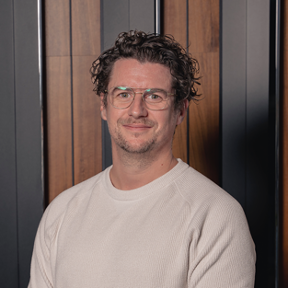
New business models for fitness & health, data-based personalized offers, space as an inactivity laboratory for an ageing society: physiotherapist and founder Simon Roth talks about the converging markets of physiotherapy, fitness and health and what part his healthtech start-up myoact plays in this. Find out how these trends could change the business.
ISPO 2025 will focus on innovations and digital tools for a healthier, more active future. In the dedicated hall for Health & Wellbeing, with targeted matchmaking and international reach, new ideas will be visible and directly tangible. From 30. NOV. - 02. DEZ. in Munich.
When Simon Roth talks about his visions for market developments in physiotherapy, terms such as health gyms, home assessment and demographic change come up. The 42-year-old has known the market for almost two decades as a physiotherapist and since 2021 as a health tech entrepreneur: he founded Myoact with Philipp Piroth. The start-up uses electromyography (EMG) sensors to measure communication between the brain and muscles - and uses this to create individual muscle maps. The technology visualizes weak points and can check which exercises patients use to correctly target muscles. "In contrast to the blind flight of many exercise prescriptions, we offer transparency and measurability. We are the cockpit for targeted therapy," he says.
The main users of their technology currently include orthopaedic and physiotherapy practices as well as medical departments of sports clubs such as Bundesliga soccer club Eintracht Frankfurt. His vision: technologies like Myoact's will change therapy journeys ("More at home"), bring fitness, health and therapy together ("Thanks to tech, gyms will become health gyms") and help to cushion the consequences of an ageing and immobile society.
ISPO.com: What trend is currently influencing your work the most?
Simon Roth: The healthcare market has an oversupply of patients, particularly due to demographic change, but not enough practitioners. At the same time, the evidence shows that the right exercises are often more effective than passive treatments for musculoskeletal complaints. Our vision: A good physiotherapist will therefore become even more of a trainer. And a trainer, with the appropriate qualifications, will also be a therapist who works on patients - and is subsidized by health insurance companies to close this gap in care
What role does the trend towards prevention play in this?
Simon: We offer a monitoring tool, for example. It's not about immediately sounding the alarm when an injury is imminent, but about recognizing trends. If a trend develops contrary to the target state, warnings can be communicated at an early stage to prevent pain or injury. This promotes individualized medicine, has a preventive effect and relieves the system by making patients their own therapists and strengthening their self-efficacy
Your first target groups are currently orthopaedists and physiotherapists. Almost 250 of them use your technology, and what feedback have they given you?
Simon: Doctors and physiotherapists of professional athletes love it because it helps them to generate added value information that they could previously only guess at. If users express initial difficulties, it is because they are afraid of misinterpreting the app. The problem is that professionals still often make decisions based on subjective feelings and hypotheses. When we present them with the actual muscular reality, this can be perceived as overwhelming or even as questioning their previous work.
How do you address these fears?
Simon: We emphasize the concept of "clinical reasoning": you combine your previous knowledge and experience with the new information from the tool to achieve the best possible output. We initially focus on biofeedback during a single exercise. The therapist sticks the sensors on to see whether the exercise is actually working. This is a simple, self-explanatory added value that arouses curiosity. Patients can immediately see which exercises are effective in terms of neuromuscular control. Over time, the desire for standardized test protocols, our mapping, arises.
What needs to happen for practices to use standardized sensors like yours?
Simon: New technologies initially mean more work and the need to get to grips with new things, which can lead to uncertainty in front of the patient. Top elite physios are already on board, but the broader you go in the industry, the more difficult this step becomes. That's why we rely heavily on training. By instilling our mindset from the start, young physiotherapists are not yet "comfort-zone-averse".
While the majority of society is becoming increasingly overweight, others are increasingly defining health and fitness as a lifestyle.
Simon: We are also seeing this divide. Data from wearables often does not reflect the reality of the population as a whole, as these devices are primarily worn by people who are already intrinsically motivated and more active. Prevention programs often don't reach the people who need them most.
Want to know how real health solutions are created?
Then discover how ISPO brings together researchers, sports brands and manufacturers and technology providers to create a space where real solutions are developed for issues such as physical inactivity, longevity and corporate health.
From your practice: What helps inactive people to take the first steps?
Simon: We have found that data-driven feedback can change people's thinking by holding up a mirror to whether they are in an unhealthy state. Our sensors provide immediate feedback on muscle activity. This helps you get to know your own body and improves your self-efficacy. This transparency and classification motivates us to train outside our comfort zone.
Sounds like a simpler form of gamification.
Simon: It is. We also know from tests that people perform up to 10-20% better when they have a clear goal in mind, as an external focus is superior to an internal focus.
You have been collecting data on the muscular state of society for over a decade.
Simon: My co-founder and I have observed patients with EMG every day for over 15 years - and collected data from 50,000 pseudonymized measurements. Using this database, we discovered correlations between individual muscles, recognized patterns and developed algorithms. If a muscle deviates from healthy patterns during certain movements, this is often a factor in persistent pain or injury. We are now systematically validating these observations with user data and in cooperation with universities.
What do you know about the condition of Germans' back muscles, for example, thanks to the many years of data collection?
Simon: The large back extensor muscles, which are often trained, are hardly relevant and are rarely conspicuous. Instead, we see the greatest abnormalities in the pelvic muscles, especially the lateral gluteal muscles (gluteus medius). People with back problems are often unable to control these muscles sufficiently.
Your research and your product are part of the Business Incubation Center of the European Space Agency (ESA) CESAH. Why are you testing your technology in space?
Simon: As part of the joint funding project with ESA, we are currently developing an EMG suit that we will use in space to research how the body behaves during maximum inactivity - and which exercises can be used to maintain and control muscles. This will help us on Earth. Our society is becoming increasingly older and immobile. How do we move these people? There is evidence that brief bodybuilder posing of relevant muscles can result in a 20% gain in strength for senior citizens. That is enough to keep the neuromuscular system alive.
Big tech companies are also pushing into this area; Meta wants to change the way we interact with computers with its own EMG wristband. What does this commitment mean for Myoact as a start-up?
Simon: First of all, it's good because it underlines the relevance of the topic. However, we want to understand the entire body and not just develop a controller. We see a great future in the gamification of muscle functions. Imagine that in a shooter you can only shoot if you activate certain muscle groups, or in boxing you receive less damage if you tense your abdominal muscles. We believe the tech giants see this too, but we will have the largest amount of data in the background telling us what works for pain - and what doesn't.
Could Europe be missing out on a trend here?
Simon: I don't see us missing out on the trend. We are the only EMG manufacturer that collects data from patients in real practices using standardized processes. The danger is more that we could be forced to move to the USA at some point, as the investment conditions and valuations are much more attractive there. I am a European patriot and would like this to stay here, but the political framework conditions and funding in Germany/Europe are often difficult.
How are technologies like yours changing the market? Is the trend moving towards home therapy?
Simon: That is our vision. We hope to relieve the pressure on the system. It doesn't mean that physiotherapists will become redundant, but they will be able to devote more time to the manual therapy aspect. Everything that falls under self-management, self-efficacy and training is then the responsibility of the patient - supported by tools. And with the certainty that all movements and exercises are targeted and measurable.
The future of physiotherapy is being redefined by data, technology and gamification. EMG-based tools enable patients to train their muscles in a targeted manner and take preventative action. By combining home training, digital feedback and interactive exercises, fitness, health and therapy can be seamlessly brought together: a solution for an ageing and increasingly inactive society.
ISPO 2025 dedicates a separate area to the topic of health: Health & Wellbeing shares Hall B1 with Digitize & Retail, ISPO Brandnew and Sports Tech Nation. A deliberate neighborhood that creates strong synergies. Here, start-ups from the health tech sector meet retailers, platforms, wearable providers and digitalization experts. Innovative solutions are not only presented here, but also brought to life. From 30. NOV. - 02. DEZ. in Munich. Be there!
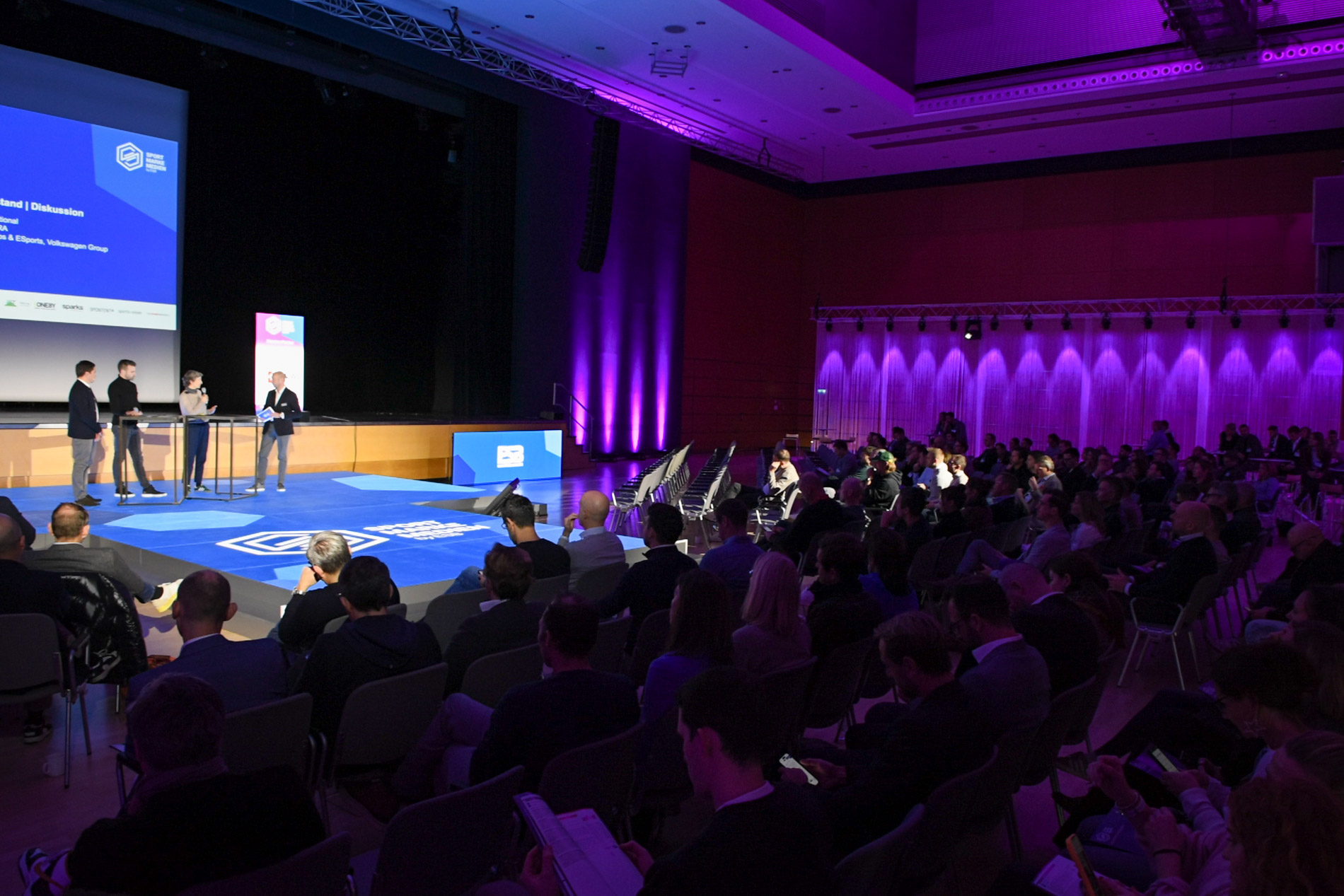
Big sporting events inspire millions. But behind the excitement of such events lies a complex reality: financial survival. How can organizers plan years ahead while costs fluctuate and risks multiply? And how do strategies differ for one-off events compared to recurring competitions? At the SPORT BRAND MEDIA conference, Elisa Schorno and Gabriela Buchs answered all these questions.
Discover more key insights on the future of the sports industry, from event management to strategic adaptation and learn how sports, brands, and media can stay ahead at the upcoming SPORT BRAND MEDIA conference at ISPO 2025. The conference takes place on 01 and 02 DEC.
The session began by setting the stage with two contrasting examples, the UCI Road World Championships in Zurich and the Tour de Suisse in Switzerland. While the former is a unique, one-off event in itself, the latter is an 8-day annual road cycling stage race.
Elisa Schorno, Head of Finance, ProTouch Global, explained how fast these formats shape financial planning from the start
With the one-off events, we tend to go from the project budget, which then covers several years. For recurring events like the Tour de Suisse, we usually work from an annual budget that repeats, adjusted year by year.
Elisa wasn’t done yet. She highlighted that the World Championships required setting an initial budget as early as 2019, four and a half years before the races began. That meant planning without the final team in place, while relying on very rough estimates. Inflation, hotel costs, and accessibility requirements all changed during that time.
On the other hand, the Tour de Suisse has the advantage of “experience values." As Gabriela Buchs, Co-Director of Event Operations, 2024 UCI Road & Para-Cycling Road World Championships Zurich, put it
You take the previous year and maybe the last three years, adjust depending on the canton you do it. The experience is extremely important.
This difference sets the tone that while one-time events are built on uncertainty, recurring events build on history.
One of the biggest differences in Zurich was just how early the process had to begin. Negotiations with the UCI started in 2019, and an agreement was signed in 2020, years before Elisa officially joined as Head of Finance. She described the challenge
Already four and a half years before the event, you have to set up something that will always serve as the basis for financial control. But the people responsible for implementation are not yet on board.
That disconnect created tension. The early “initiative budget” was often too rough, missing critical details like barrier-free infrastructure. Gaby recalled
At first, inclusion was forgotten. Things like ramps or toilets for accessibility, these details came up later and had a big impact on the budget.
By contrast, at the Tour de Suisse, the budget cycle is shorter and led by the same people year after year. As Gaby noted,
The same people budget and also have to implement it. That makes it much easier.
This shows how timing can shape financial accuracy. The earlier you start, the greater the uncertainty. Yet, starting early also had its benefits.
Elisa explained that the long lead time gave Zurich the chance to think big, and said
We could set ambitious goals for inclusion and sustainability because we had years to plan. Even though those goals stretched the budget, they gave the event a clear identity.
Gaby agreed, adding that such projects also create stronger political connections
When you start years in advance, you bring the cities, cantons, and stakeholders on board much earlier. That can make a difference when problems appear later.
Planning an event can be challenging - that’s why SPORT BRAND MEDIA chose Wasserman as their presenting partner
For their conference at ISPO 2025, SPORT BRAND MEDIA partnered with Wasserman, a global leader in sports and entertainment management, to bring expertise, creativity, and seamless execution to the event. Wasserman, with over 3,000 employees across 28 countries, specializes in consulting, marketing, and developing tailored solutions for brands and rights holders, as well as managing athletes and artists. Through Wasserman Live, the company will design the visual experience of the congress, including event spaces, interactive installations, and innovative brand activations, creating an immersive connection between sports, brands, and media for all participants.
Budgeting sounds straightforward, but the speakers made it clear it’s anything but. Elisa described how financial staff depend entirely on operational input:
As a financier, I can only collect the information, I can’t think of it myself.
She explained the tools, such as profit and loss statements, investment planning, and liquidity forecasting. But even with structure, things can be missed. For the Zurich event, the VIP tent became a problem when ramps and lifts had not been considered early enough. Costs rose unexpectedly. Gaby reflected on this gap and said,
At the beginning, it was really rough. You think of everything, but in detail many things are missing. Then suddenly you realize, oh, this is still needed.
At the Tour de Suisse, the process is far more precise. The budgeting is done bottom-up, with area managers and sales teams feeding in numbers. Elisa said,
We start with the operative people who plan their costs and revenues. I’m just the counterpart who asks for the information.
Want to gain more insights from industry experts in order to grow your business?
Then find out how ISPO brings the sports industry together to share strategies, practical solutions, and insights from leading international brands.
Cash flow appeared to be one of the most critical challenges. Elisa compared it to the “march table” in cycling, which shows how fast riders will pass a point. She explained.
We want to know how we get through the rounds in terms of liquidity.
Planning inflows and outflows is vital, yet timing often creates stress. Sponsorships may come late, catering income is uncertain, and supplier payments often cluster around the event. Elisa admitted.
You can neither project them in height nor in timing,
Gaby emphasized the value of multi-year contracts
It makes everything safer and more plannable. You can agree on certain account payments with long-term partners. It’s much better than one-year deals.
Elisa agreed, pointing out that public funds provided strong security in Zurich, while last-minute sponsorship deals brought risk. She said
Revenue-dependent incomes like ticketing often come only after the event.
That creates pressure, because costs must be paid upfront. The takeaway was clear: liquidity planning is the lifeline of big events. Without careful monitoring, even successful events risk financial collapse one day.
Just as a race has intermediate sprints and final standings, financial management requires constant tracking. Elisa described project controlling as “the ongoing update of project success, to assess the risk.”
For Zurich, this meant constant revisions to the initial rough budget, especially as offers and contracts came in very late. She revealed
Valid forecasts only came three to six months before the World Cup.
At the Tour de Suisse, updates are less frequent because the base budget is already reliable. But Elisa warned against complacency
You should not neglect asking again and again and checking every position, even with recurring events.
Gaby positioned herself as a generalist, relying on experts to dive deep into accounting. She explained
I look at the overall picture. But the interplay between finance and operations is extremely important.
This shows that financial control is not a one-time activity. It’s rather a continuous process, adapting as real numbers replace projections.
One theme that stood out was the unexpected cost of inclusion. The UCI Para-Cycling Road World Championships in Zurich were the first fully inclusive cycling World Cup, hosting para and non-para athletes together. That meant barrier-free infrastructure was essential but it was not fully considered in the early budget.
Gaby recalled the surprises
You think it’s just toilets but then it’s ramps, tents, lifts. Suddenly the VIP tent was built in two pieces, and then we realized it didn’t work at all. It became too expensive.
These details highlight how values and vision directly impact finances. The drive for inclusion added complexity and costs, but also created an event that was historic and deeply meaningful.
As Elisa put it
You must fight for your reserve position. You can’t define the content when you’re discussing it, but you can be sure it will be needed.
Hidden costs will always appear, whether from inclusion, weather, or last-minute requirements. The solution is not perfect planning, but flexible reserves.
Want to be the first to find out the latest insights from the sports industry?
Then subscribe to our free newsletter now and always be one step ahead.
Perhaps the most frustrating challenge discussed was the lack of knowledge transfer between events. Elisa explained that organizers often start almost from scratch. She noted
There are no IST values unless you have good connections to previous organizers.
Thomas asked why mistakes seem to be repeated. Gaby admitted
It starts with sponsoring and ends with project controlling. Much more would have to be fought for by the international association to make sure knowledge is passed on.
At the Tour de Suisse, knowledge sharing happens more naturally, with regular exchanges among organizers. But at global one-off events, the UCI provides guidelines yet little continuity. As Elisa pointed out
The UCI’s organizer guide is detailed, but every country is different. You can’t just copy and paste.
The result is inefficiency, repeated errors, and frustration for those who know things could be smoother.
Towards the end, Thomas asked a tough question: why take on the stress of a one-off World Championships at all, if it’s financially riskier than a recurring event?
Gaby’s answer was immediate:
It has a lot to do with emotions. To organize a big event and be part of it is something great. Especially with paracycling, for the first time they had the same stage, the same winning ceremony. These emotions are priceless.
Elisa added that one-off events also bring location marketing and social value. Cities and regions see them as investments beyond profit and loss. She explained
Value creation is often more important than the bottom-line result.
This exchange captured the heart of the matter. Finance is crucial, but so is meaning. Events are not just numbers; they are platforms for inclusion, pride, and legacy. Elisa also stressed that taking on such risk builds long-term capability
After a World Championship, your team is stronger. They’ve seen everything from early budgeting to last-minute crises. That expertise stays, and you can use it again.
Gaby added that such events also inspire volunteers and young professionals, saying
Many who worked with us in Zurich now want to stay in sport. That is part of the legacy too.
Managing the finances of major sporting events is less about perfect numbers and more about navigating uncertainty. The UCI Road World Championships in Zurich showed the risks of one-off events: early budgets, hidden costs, and constant revisions. The Tour de Suisse showed the benefits of repetition: experience values, reliable data, and smoother cycles.
Yet both also revealed the same truth that events depend on people, their expertise, their teamwork, and their willingness to adapt. And beyond the balance sheets, they depend on emotion. The pride of hosting a world championship, the inclusion of para-athletes on equal footing, the joy of fans along the roads, these cannot be measured in numbers alone.
In the end, finance is the backbone that makes such moments possible. And with better planning, stronger reserves, and real knowledge transfer, the future of large events can be both financially secure and emotionally unforgettable.
Discover how successful events come to life at the SPORT BRAND MEDIA Conference during ISPO 2025. Experience the congress firsthand through dynamic event spaces, interactive installations, and innovative brand activations, all designed to create an immersive connection between sports, brands, and media. The conference takes place on 01 and 02 DEC.