

Only 1% of start-ups achieve a turnover of 10 million dollars, while 30% fail in their first year. But success stories such as Crocs, GoPro and Nixon show how networks and industry events can make the difference. They provide access to funding, market knowledge and valuable partnerships. Find out how your start-up can benefit from these success strategies!
Startups need nurturing, which comes from operating in a supportive ecosystem. A critical component of this is establishing valuable connections that can help thrive in an interconnected world.
Here’s why your startup needs the boost offered by networking and industry events:
Networking events employ innovative techniques to aid participants. These shows are often designed to maximize exposure and offer opportunities to participants. Take the example of ISPO Munich, which attracts 1000+ media representatives and helps bring startups into the media limelight.
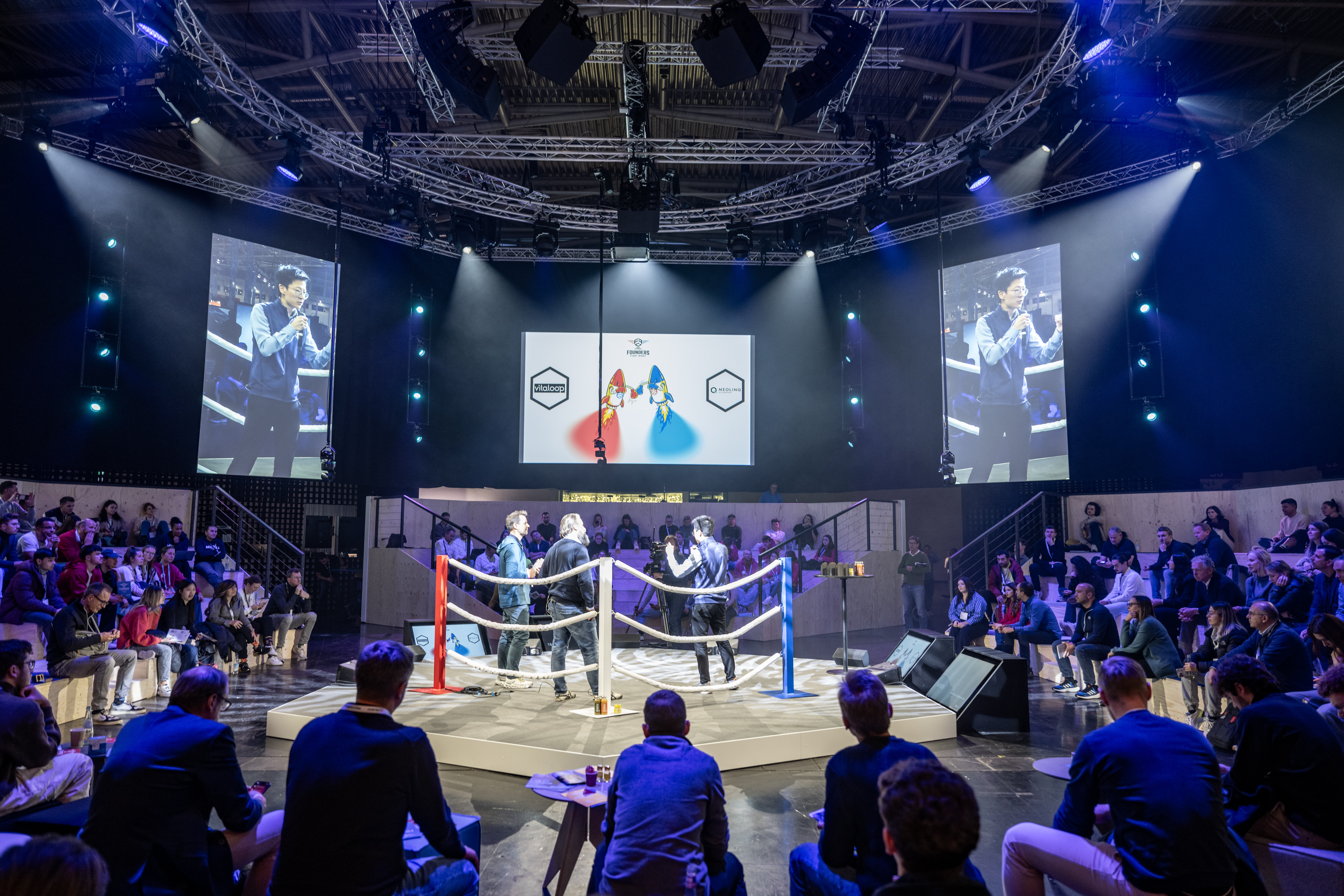
Industry events also offer direct meet-ups with investors so startups can secure funding. At ISPO Brandnew, for example, speed dating sessions are held with potential clients along with an Elite Networking Night event to increase prospects of attracting investors.
Besides direct meet-ups, award shows for startups are another technique employed to gain traction with investors and the media. The ISPO Brandnew Awards is a leading step in this direction. Upon fulfilling the eligibility criteria, startups participate in an awards program attended by media and potential investors. This gives them an excellent chance to pitch their product to a focused audience.
Every startup’s initial few years are full of experimentation, chaos, constraints, and confusion. Being a part of a supportive system, as offered by networking events, can be instrumental in maintaining stability. The benefits of such events aren't just limited to the initial stages.
Rather, this participation must be an intrinsic part of the long-term business growth strategy. In an environment where most startups are unsuccessful, leveraging all the external support and guidance you can get can be the factor that keeps you from failing.

Would you like to expand your knowledge of the latest trends and developments in the sports industry? Then the ISPO Newsletter Exclusive Area is just right for you! Here you will receive exclusive content that is only available to our subscribers.
In the Newsletter Exclusive Area, you will find exciting articles, in-depth analyses and the latest insights from the world of sport and the sporting goods industry. We shed light on topics that will help you stay one step ahead.
If you want to stay informed and value in-depth industry insights, exclusive analyses and forward-looking expert voices, the exclusive section is the key to success. Whether you're interested in new tech & health trends, sustainability, fashion or marketing strategies in the sports business - you'll find everything here at a glance.
It's very simple: sign up for our Sports Business Briefing free of charge. This gives you access to exclusive content and regular updates on the most important trends and news from the world of sport.

Launching a start-up is a high-stakes endeavor that demands resilience, adaptability, and sharp strategic execution. The reality is stark: 90% of start-ups fail, with nearly 30% folding in their first year. Only an elite 1% break through to achieve $10 million in revenue.
This blog distills actionable strategies from the ISPO Brandnew webinar, offering founders a proven roadmap to thrive in the face of these challenges. Uncover the bold steps needed to scale your start-up, build resilience, and secure lasting success in a competitive landscape.
Successful start-up founders aren’t overnight successes. They’ve faced failures, tested and refined their products, and adapted based on market insights. Many fail due to flawed products – either solving non-existent problems or lacking product-market fit. However, those who learn swiftly from setbacks pivot to create impactful solutions that address real needs.
For founders, failure can feel like the end—but top entrepreneurs see it as a teacher. Radina Popova, cofounder of Difold, exemplifies this with the Origami Bottle, a foldable, sustainable product. Despite setbacks, her persistence led to a $140,000 Kickstarter success in 30 days, delivering 6,500 bottles worldwide by 2022.
Her journey proves failure is not a setback but a stepping stone to explosive growth.
Radina's example illustrates that failure isn’t final – it’s formative. When start-ups embrace setbacks as opportunities for learning and growth, they cultivate the resilience needed to overcome future challenges.
Start-ups are not your average enterprises. You need to go ahead with only a team of A-players who will contribute wholeheartedly for your start-up growth. Behind every successful start-up is a team that believes in its mission and works collaboratively to achieve it.
AI Product Owner and Innovation & Data Science Expert, Markus von der Lühe, noted, the right combination of skills, attitudes, and vision can propel a start-up toward its goals. Conversely, the wrong hires can derail progress and breed inefficiency.
The team of successful founders came together and discussed the battle-tested frameworks to develop a team that always wins, and the right structure of the same.
Successful teams thrive on collaboration. Regular brainstorming sessions, open communication channels, and a culture of mutual respect allow ideas to flourish and problems to be solved efficiently.
Your startup exists—but how do you connect with your ideal customer profile (ICP) or attract investors and partners critical to growth? Networking is a non-negotiable skill for every founder. A strong network lays the foundation for startup success, as the saying goes: “Your Network = Your Net Worth!”
Mentorship and networking are essential for unlocking opportunities that cannot be achieved in isolation. The ISPO Brandnew initiative exemplifies this by providing startups with access to 500 investors, over 20 speed dating sessions, channels with more than 7 million views, and a global network of 3 billion contacts.
Through ISPO Brandnew, startups gain a platform to showcase their ideas, secure exposure, and connect with key partners. Brands like GoPro and Poc have leveraged these resources to scale operations and achieve global recognition. ISPO’s platform offers invaluable advantages to sports startups, enabling unparalleled growth and visibility.
Every start-up founder must learn to build and leverage meaningful relationships for their start-up growth. Here’s how you can do the same.
Even the most experienced footballer does train in front of a coach before every match. Therefore, it is given that mentorship is one of the best ways to constantly advance on your way to build a profitable start-up.
Mentorship isn’t just about advice; it’s about guidance and accountability. Whether it’s refining your pitch or navigating market challenges, mentors provide an external perspective that can help you avoid costly mistakes.
A lean and profitable start-up thrives due to systems. And the best way to build efficient systems is by using AI. AI and ML innovation has disrupted the start-up scene, bringing agility and efficiency to the entire ecosystem like never before.
Technology is no longer a luxury for start-ups—it’s a necessity. Markus introduced a suite of AI tools that have the potential to boost productivity by 20-40%. These tools enable start-ups to save time, streamline operations, and focus on innovation.
Here, we list a suite of tools that every start-up founder will find valuable in their journey.
Most start-ups seek explosive growth. However, bootstrapped start-ups often fail in this regard, because they would need multiple resources to market their MVP and constantly iterate. There are other costs as well for which capital is required and that’s why fundraising and pitching are almost indispensable parts of a start-up journey. Your pitch is often the first impression investors have of your start-up. Radina stressed the importance of focusing on the problem you’re solving and presenting your solution as the most effective one.
Here are some of the pointers to create a pitch that converts doubtful listeners to enthusiastic investors.
Beyond the pitch, ensure you’re ready to answer tough questions about your business model, financial projections, and scalability. Preparation breeds confidence—and confidence attracts investors.
A start-up founder’s road is often lonely and full of struggles. In such a scenario, building a steely mindset is essential for success.
The emotional toll of founding a start-up can’t be overstated. From the elation of securing funding to the stress of meeting deadlines, the journey is an intense roller coaster. Matty emphasized the need for founders to prioritize their mental health and build resilience.
Here are some strategies that will secure your emotional well-being as a start-up founder.
Creating a supportive workplace culture isn’t just good for the founder – it’s beneficial for the entire team. Encourage open communication about challenges and celebrate collective wins.
Achieving start-up success requires bold strategies, resilience, and focused execution. Founders must embrace failure as a stepping stone to innovation, assemble a dedicated team aligned with their vision, and leverage cutting-edge tools to optimize efficiency. Networking and mentorship play a pivotal role in opening doors to opportunities and partnerships that fuel growth.
To stand out, craft a clear and compelling pitch, stay adaptable to market challenges, and foster a resilient mindset. Success isn’t just about having a great idea—it’s about executing it with precision, building strong relationships, and seizing opportunities with confidence. With the right approach, your start-up can thrive, scale, and leave a lasting mark in the competitive business landscape.

The sports business is facing a major transformation. Seven leading experts have given us their views on which innovations will shape the industry in the coming years. Their statements make it clear: technology, sustainability and the fusion of sport and lifestyle are the game changers that will redefine the sports business of the future. We have analyzed their perspectives and summarized the most important trends.
Almost all experts agree that technology will play a central role in the further development of the sports business. Digital innovations such as wearables, fitness apps and artificial intelligence will not only change exercise habits, but also make processes in the industry more efficient.
Grace McNamara, Founder & CEO of The Collective emphasizes how technologies could seamlessly integrate exercise into everyday life:
"So if we can consistently look at active days, then we're going to consistently look at our population being more active. That to me is going to have a massive impact."
Stephan Buschmann, Director Customer Service B2C & B2B at Jack Wolfskin, emphasizes how apps could help people become more active again:
"The greatest opportunities are in harnessing digital technologies to promote more people being active. This includes developing apps and programs to help people restart sports and being more active, and using technology to monitor and measure activity levels and track trends."
Technologies such as artificial intelligence and data-driven solutions are not only relevant for end consumers, but also for companies. Margit Gosau, CEO of Sport 2000 GmbH, explains how AI could change the industry:
"Innovations using artificial intelligence can simplify retail and the process of curating sports, making both much more efficient."
Digitalization is therefore not only becoming a tool to motivate consumers to exercise more, but also a game changer for retail, marketing and product development.
Another key trend that many experts emphasize is the importance of sustainability. The industry is facing the challenge of establishing resource-saving materials and sustainable production methods.
"Sustainability and recyclability could be the key priorities, as we, as a society, already have too many things and garments", says Benton Wang, Marketing Director, LifeLabs Ai-Clo System sums up the urgency.
It's not just about the materials themselves, but also about efficiency in production. Sustainability must become part of the entire value chain - from raw material extraction and production through to disposal or recycling.
Brands that manage to credibly integrate sustainability into their products and processes will be successful in the long term. The younger generation in particular expects companies not only to think sustainably, but also to act actively.
The boundaries between sport, fashion and lifestyle are becoming increasingly blurred. The next generation sees sport not just as a physical activity, but as part of their identity. Products need to be versatile - functional, fashionable and sustainable.
"I buy a product to engage in an activity, but I use it for many different purposes. It could be for sports, work, or leisure", describes Grace McNamara.
Athleisure is the perfect example of this development: clothing that combines sporty functionality with fashionable design. Simon Wong adds: "Sportswear that can also be worn outside the gym is becoming increasingly important."
The young generation itself is also seen as a great opportunity. Their values, lifestyles and needs are driving innovation.
"The young generation has new lifestyles and visions. Their behavior and views offer enormous potential," explains Benton Wang.
They are not only looking for products, but also for brands that share their values - be it in the areas of sustainability, social responsibility or technological progress.
Another topic that many experts address is the role of design and innovation. Creativity and technology will increasingly go hand in hand to create products that are both sustainable and functional.
Luping Shao, Representative for Zhejiang Ciapo Sporting Goods Co., Ltd., explained how artificial intelligence could revolutionize product design:
"We are very familiar with AI design and we will design new products next year so we can bring them to this booth next year as well."
With regard to young consumers, the experts also emphasized how important it is to meet their demands for individuality and sustainability. Brands that manage to combine technological innovations with creative solutions will prevail.
The voices of the experts clearly show where the sports business is heading. Three key trends will shape the industry:
The future of the sports business lies in the balance of innovation, responsibility and the ability to fit seamlessly into consumers' lives. Now is the time to redefine the industry - smarter, greener and closer to the people.

On October 10, 2024, Outdoor Sport Valley held its Explore Day in Grenoble on the topic of "Disruptive Marketing". From digital foresight to changing consumer expectations, the outdoor industry came together to explore strategies for its global transformation.
Outdoor Sport Valley's Explore Day, which was dedicated to disruptive marketing, was held at Sidas' Basecamp Academy. Topics such as digital foresight and changing consumer expectations took center stage as the outdoor industry came together to discuss approaches for global transformation.
In every industry, technology is rewriting the rules of the game. Consumers have become better informed and more demanding, value chains more transparent and distribution channels more competitive. Traditional marketing strategies are reaching their limits.
At its fifth edition, OSV Explore offered deep insights into the redefinition of marketing. To meet the new needs of consumers, marketing is evolving beyond the basic principles of supply and demand. It places customers at the center of strategies, simplifies offers and sharpens messages to the essentials.
From co-creation to eco-design, profound transformations of business models, artificial intelligence, immersive storytelling and influencer marketing, this day brought together over 20 experts to share the latest developments in their fields.
Disruptive marketing is defined as a bold, creative and minimalist approach to attracting and retaining an increasingly selective audience. According to digital marketing expert Grégory Pouy, who was interviewed independently of the event:
"Disruptive marketing means harnessing the power of AI to create more time to build relationships. It makes it possible to use advertising to convey new ideas of success. Success through accumulation was a 20th century idea. Today, we want fresh air, clean water, time - and above all, to make our lives a work of art."
The day particularly highlighted the rise of technology and eco-friendly practices as powerful differentiating factors in the outdoor industry. However, sustainability as a marketing strategy is bound by clear rules to avoid misleading claims. This change affects trend research, research and development as well as marketing and sourcing. Inspiration was provided on the day by companies such as Google™, Veja™, Chilowé™ and Outside™.
Foresight means recognizing and understanding weak signals in order to anticipate trends. It reflects the polarization of societies and industries. Between ultra-expertise, the search for meaning, regulatory constraints and information overload... For some target groups, the trend has shifted from FOMO (Fear of Missing Out) to ROMO (Relief of Missing Out).
How do you reach this target group? How do you anticipate the change in your own areas of work? What role does a brand play today? This is where Disruptive Marketing Strategies come into play. Sourcing and impact management must fulfill specific requirements and go beyond their original tasks. Innovation and products serve to better communicate a brand's identity, know-how and uniqueness.
The Code Zéro™ agency, which works with Decathlon, Salomon, Petzl and Snowleader, shared its vision of interpreting the future and embedding it in a company's mission.
François Duvillard, CEO of Sidas, talked about the history of the company, which specializes in custom-made and thermoformed insoles. Today, the brand offers a wide range of accessories for trail running, cross-country skiing and more. Special products have been developed in collaboration with brand ambassadors such as Jonathan Albon and the UTMB® team.
Damien Pommeret from Woolmark™ highlighted the environmental impact of synthetic materials. His presentation, which introduced the "Wear Wool, Not Waste" campaign, criticized disposable fashion, which is heavily influenced by cheap synthetic fabrics.
Disruptive marketing strategies also played a role with Chilowé™ and OutDoor Media™, which focused on microadventures, accessibility, responsible outdoor activities and community practices. The Chilowé community prioritizes criteria such as disconnection, destination, accessibility and activity when traveling.
Jean Pourrat from Veja presented the success story of the sneaker brand, which gained over a million organic Instagram followers without advertising. Their long-term strategy is based on product and production coherence, customer service and a gradual development into the sports market.
Artificial intelligence (AI) is seen as the driving force behind disruptive marketing strategies. It is revolutionizing marketing strategies through personalized customer experiences and automated content. Nicolas Durand from Google France showed how AI is not only changing marketing rules, but also redefining their foundations.
Deep learning enables precise data analysis to better understand customers. According to Google, 87% of consumers expect personalized offers. In e-commerce, long-tail search queries (with more than five words) are increasing rapidly, as is interest in second-hand products (+65% in three years).
Approaches for future-oriented, collaborative marketing were developed in interactive workshops. Topics included
Sustainable sourcing is becoming a key component of outdoor marketing. Florian Auger (Outercraft) and Baptiste Arribe (The New Materialist) discussed how linear supply chains can be transformed into circular ecosystems.
Their approaches combine design, science and ecology to develop innovative materials. Sourcing thus becomes the core of storytelling - an element that shapes marketing strategies and makes them authentic.
Disruptive marketing strategies must prevent greenwashing. Some key ideas:
This inspiring day showed how important it is to combine dual competencies in sustainability and AI. Marketing teams thus become ambassadors of OutDoor values and responsible communication.