

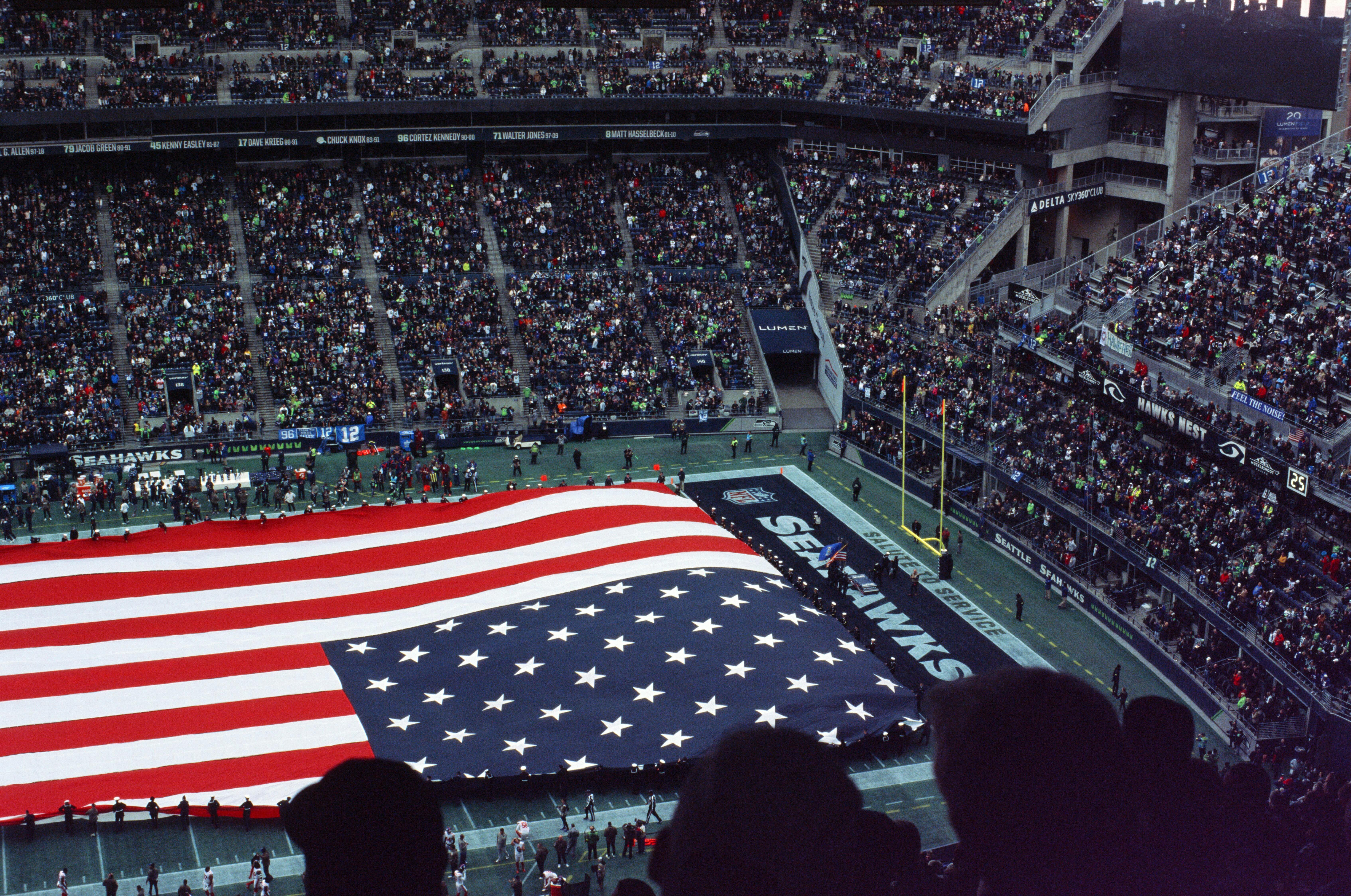
“Sport is no longer confined to arenas and stadiums, but is blending seamlessly into the broader fabric of pop culture”, Serkan Yel, Strategic Advisor eSports/Gaming sums up the emerging synergy between sports, entertainment, and lifestyle. Athletes are becoming fashion icons and sporting events are the next big performance spectacle to watch in the coming years. The fusion of audiences shows that you don’t really need to know the game to love it anymore! The US leads the way in this hype generated by clever marketing tactics and carefully planned strategies that have blurred the lines between sports and entertainment. So, what does this spell for brands in the sports business?

Whether it's breaking, 3x3 basketball or kayak cross - the young trend sports impressed at the 2024 Olympics in Paris. Nevertheless, there will be major changes to the program at the 2028 Summer Games in Los Angeles. Find out what will change and what role money plays in this by reading this article.
"These are superheroines!" the speaker shouted into the microphone at the Olympic premiere in breaking at the Place de la Concorde in Paris. Thousands of fans cheered him on. Just like 3x3 basketball, skateboarding or BMX freestyle - the young trend sports were particularly popular on one of the most famous squares in the City of Love at the 2024 Summer Olympics and reached millions of viewers worldwide on TV.
This also applied to climbing in Le Bourget, the wild kayak cross in front of 15,000 fans in the white water of Vaires-sur-Marne and, to a lesser extent - due to the competitions being held on the Cote d'Azur - to the kitesurfers at their Olympic premiere in Marseille.
At the center of the Olympic attention in Paris, however, were the B-girls in the Breaking. This had something to do above all with their sensational protagonists in a sport that rejects the commonly known name of breakdancing. As one of the trend sports introduced to attract younger audiences, Breaking made a strong impact.
After her performance, Afghan Talash showed off a blue cape with the words "Free Afghan Woman" written on it. The young woman had fled her home country after the Taliban took power and competed for the international refugee team at the 2024 Olympics. "If I had stayed in Afghanistan, I wouldn't have survived. They would have executed me or stoned me to death," she said. Talash's political message, which was banned at the Olympics, was punished with disqualification but recognized worldwide.
Australian Rachel Gunn triggered even more controversy around the planet. The 36-year-old B-girl with the stage name Raygun divided the public with her Kangaroo moves. She was met with so much hatred, especially on social media, that she had to publicly defend herself against the attacks. Rachel Gunn researches the "cultural politics of breaking" in her main job as an academic.
For the expert, one thing is clear: Breaking has gained unprecedented importance in the sports industry thanks to the worldwide enthusiasm triggered by the Olympic premiere, especially among the young target group. This makes it all even more incomprehensible, and not just for Raygun, that the sport will no longer be an Olympic sport at the 2028 Summer Games in Los Angeles. The decision had already been made before the spectacular performances of Paris.
"It's very disappointing that breaking wasn't chosen for LA, especially as the sport has its origins in the USA," said Rachel Gunn in Paris: "But maybe they're annoyed now, especially as there are great American B-girls and B-boys."
Nevertheless, Breaking is unlikely to have a chance of returning to the Olympics until 2032 at the Brisbane Summer Games in Raygun's home country of Australia. In Los Angeles in 2028, on the other hand, they are focusing on completely different new trend sports in the program. However, these have little to do with the "rejuvenation" of the Summer Games envisaged by the International Olympic Committee (IOC). Most of them, such as softball/baseball - last Olympic in 2021 - lacrosse, the after 1908 non-olympic team sport, and flag football are primarily American. The low-contact version of American football, which is hardly known worldwide, will celebrate its Olympic premiere, as will the backstroke sport of squash.
There will also be changes to well-known Olympic disciplines in 2028 in the shadow of Hollywood. Following serious mistreatment of horses, show jumping in the modern pentathlon will be replaced by an extreme obstacle course modeled after a ninja warrior course. In rowing, a beach sprint is planned in which running is combined with water sports.
The role money plays in the Olympics is shown by the return of cricket to the program of the 2028 Summer Games in Los Angeles after a break of 128 years. "We have seen the growing international importance of cricket and there is a growing Indian community in the USA. It is therefore very attractive for LA and for the Olympic movement," says Thomas Bach. Even if it is not a new trend sport.
What the IOC President does not say explicitly is that India, an extremely exciting billion-dollar country for the mega-business of the Olympics, wants to bid to host the 2036 Summer Games. And because cricket is already being included in LA, according to information from the industry portal "insidethegames", TV revenues from India will increase by a whopping 130 million euros!
The new sports are also exciting for large companies in the sports business. Adidas boss Björn Gulden for example, has recognized that cool, young sports such as climbing, skateboarding, BMX racing or breaking can be used to polish up the image. "Focusing on the four or five biggest sports is all too easy and, frankly, it's stupid," Gulden said in an interview. "I want Adidas to be visible again in the smaller sports too."
Breaking is particularly exciting here, because new target groups and markets can be tapped into with hip clothing. For example, Adidas has signed Liu Qingyi - also known as "B-Girl 671" - under contract. She won bronze at the Olympics in Paris. Nike, as the supplier of various top breaking teams such as the USA and Puma, have also recognized this - making it all the more bitter that the trend sport of "superheroines" now has to take a forced break from the Olympics.

In its home market of China, Anta Sports is number three behind Nike and Adidas. Now, the sports company, which is largely unknown in Europe, has acquired Amer Sports for 4.6 billion euros, making it one of the biggest players in the world. ISPO.com introduces the sporting goods manufacturer.
As in Europe, the global leaders Nike and Adidas dominate the sports market in China. Currently, the industry already generates ten percent of its total sales in China, and the two largest companies are considered status symbols. However, a faction of Chinese competitors has formed in their shadow. Behind Adidas and Nike follow the brands Anta Sports, Li Ning, X-tep and 361 – as some of the biggest chinese sports brands.
China still produces the most sporting goods in the world and is also buying more and more due to the government's promotion of sports and the growing middle class. "Anta, Li Ning or 361 are all brands from medium-sized cities. But the international brands are so strong that it is impossible for Chinese companies to enter the premium market with their own brands," says Karen Dai, Project Group Director ISPO Beiing & ISPO Shanghai.
Until now, no Chinese company has been able to position itself as a brand on the European market. What at least Anta Sports changed at the beginning of 2019. The company from the southeastern Chinese Jinjiang, has acquired the Finnish competitor Amer Sports, for 4.6 billion euros.
Amer carries well-known brands such as Salomon, Arc'teryx, Peak Performance and Atomic, and is roughly the size of Anta Sports. As a group, the two companies rise to become the world's number three in the sports industry and probably the biggest chinese sports brand. Karen Dai and Danny He, Project Manager at Messe München Shanghai Co, answer the three most important questions about the up-and-coming sports brand Anta Sports.
What role does Anta play in the Chinese sports market from an economic point of view?
Anta Sports is undoubtedly the number 1 Chinese brand and number 3 overall in the Chinese sports market from an economic point of view. However, an international acquisition is now the fastest way for Anta to improve its image. Because the Amer brand Arc'teryx, for example, has already built up a very good reputation in China.
What product portfolio does Anta offer?
Anta offers a wide range of products, including basketball shoes and apparel, running shoes and apparel, lifestyle and outdoor. However, the outdoor segment is very small. In addition, Anta Sports buys and distributes several brands in China to offer various products, including Fila or Descente.
How does Anta's image in China compare to Western brands like Nike or Adidas, which are highly regarded?
Anta has long been seen as a normal Chinese sports brand, mainly offering a low price and producing in Tier-3, -4 or -5 cities. However, like Li Ning, the company cannot compete with Nike or Adidas.
Recently, Anta Sports has gained a much better image. The reasons:

Exclusion? Without us! We show how sport is breaking down encrusted structures, fighting for gender equality as well as diversity in sports and giving marginalized minorities a voice. From big brands like Adidas or Riot Games giving athletic women room to breathe, to a TV world premiere at the Paralympics, to a diverse cycling team becoming perennial winners.

Long jump star Malaika Mihambo is known for her mental strength - a skill that has helped her win Olympic gold, as well as world and European championship titles. Malaika explains why success does not make you a better person and what role personal goals play. Find out here what example you can take from the long jump star in your business to initiate lasting change in society.
ISPO.com: You often talk about the balance between mental and physical health. Can you tell us how you manage to show mental strength in stressful moments?
It's a question of balance beforehand - physically and mentally. For me, a competition is not just a moment, but a whole season - a whole year or maybe four years of preparation for the Olympic Games. The highlight is then the Olympic final and this special competition. But in the end, it's just a tiny little moment in those four years. That's why it's always important for me to focus on my body and push myself to my limits.
I always say that professional sport is not about constantly pushing your limits, but you have to reach them. And you raise your level over time. But you don't raise it by always going beyond your limits. You can do that every now and then for a competition, but not every day. And in my opinion, that's the key to physical well-being - you should always be careful.
When it comes to mental strength, it's important to stay with yourself, ask yourself what you want to achieve, what you want to be, how you feel now and how you want to feel in the future. Perhaps also how the past has shaped you. And then try to find a way to gain a new perspective on life in order to become the best version of yourself.
Has there been a particular type of innovation in terms of data or tracking in recent years that has particularly helped your training progress?
Ultimately, you can collect an incredible amount of data, but what's more important is the quality of it and how you can use it. We try different things, but in the end I really rely on my body, how it makes me feel and not just the hard facts. After all, my job is to listen to my body. At the same time, the coach is there to keep the hard facts in mind, to see what it looks like from the outside and to give feedback, compare and constantly improve the training plan.
In Germany, we also really concentrate on biomechanics. We have several training camps where everything is measured with a camera to know exactly what was a good or a bad jump. Then I know whether I might need a stronger leg or a stronger movement in that direction. That's the most actionable data because it's measured while I'm doing the long jump. If I train with weights, for example, and measure the training data, that tells me something completely different.
How do you think we can use technology to drive the future of sport, such as for greater fan engagement at events or in the respective communities?
I think there are many opportunities. We can enable access and connect through technology. Sport can be something that unites people around the world and brings them together. They can participate and they don't even have to be in the same place or it doesn't have to be at the same time. There is technology that is easily accessible to everyone. I think that's the most important thing if we as humanity want to create a society that is inclusive.
You are now a great role model. Looking back on your journey, you have also had to deal with difficulties as a woman and racism. What would you like to see from the sports community in terms of greater inclusion, what needs to change?
As someone who has had these experiences, I always try not to talk too much about what happened because then people tend to say: "Oh, you poor thing." But in the long run, that doesn't help anyone. When it comes to discrimination and racism, we all take part in it, either actively by suffering from it, but also as an observer.
So if we realize that we are doing something that is harmful, even if only as an observer, we need to be open and honest with ourselves. We may need to apologize and start taking responsibility to take action to become a better society.
This doesn't just apply to sport. Sport is a part of society and is very diverse. Women are now being seen more and more, including para-athletes. Nevertheless, there is still a general and structural problem.
So how can sport start in its own field and how can it have more influence on a larger part of society? We should focus on these kinds of questions. Sport has so much power as it unites people, their common goals, but also emotion and passion. This should be used to promote sustainable development. By that I don't just mean the environment, but also social and individual well-being.
You yourself do a lot of groundwork to support children and have an impact on society. Can you tell us a bit more about this?
We should all participate in society as a whole, not just in a negative way, but also in a positive way, for example by getting involved. I started my own foundation to support children whose families are not financially able to bring them to a sports or athletics club.
It's so important for children to exercise and have fun while doing their sport. Also for personal development, for example in terms of self-confidence or through a new social environment and success in sport.
What would you like your legacy to be as an athlete on the field, but also in the public eye?
That's a big question and one that I don't think much about as I'm rather humble and don't believe that success makes someone a better person.
However, I would love to inspire as many people as possible to find their own way to live a healthy life for themselves and also to share their happiness and passion with other people. When we focus on the good and the things that unite us, it makes us stronger and we can become happier and more peaceful.
What would be your wish for the sports business, the community or maybe a message for young athletes to be successful?
The most important thing for someone who wants to become a professional athlete is to focus not only on success, but also on yourself as a person and your needs and goals outside of sport. Don't just focus on the sport, but always focus on the other parts that make life worth living. Because even if you are successful, especially in the sports business, you can't be successful your whole life. At some point you might be too old and then it's over. So you have to have something for afterwards. And you also need to have something for in between, because success can feel so empty if you don't live your life to the full.