


The ISPO motto "New Perspectives on Sports" now also applies to the editorial team: The ISPO Group welcomes Martina Wengenmeir, Dorothea Neu and Oliver Knoch to the editorial control of ISPO.com.
Editor-at-Large - for three years, Andi Spies enriched ISPO.com with his experience as a sports journalist in this position. Now the veteran of the sports industry is passing on the baton to Martina Wengenmeir. She will be supported by Dorothea Neu as the new Editor-in-Chief.
As a figurehead of the editorial team and ISPO Award jury member, Andi Spies has made a significant contribution to the further development of the online magazine. Together with Christoph Beaufils, Brand Strategist of the ISPO Group, and the responsible content agency sayang.gmbh, he conceived new formats, developed inspiring storylines and achieved considerable SEO success. Today, the "sport-inspiring magazine" regularly provides the international sports business community as well as sports enthusiasts from all over the world with the latest trends, insights, impulses and innovations directly from the heart of the global sports world.
"Together with Andi, we were able to implement many concepts that we had developed with him in the first place, such as the further development of the ISPO Award and its integration into ISPO.com. This has also generated attention outside the industry for the innovations and quality of the sports industry," says Christoph Beaufils. "When I took over responsibility for ISPO.com, I was very happy that Andi directly agreed to support me temporarily. Andi is simply at home in sports and knows the industry inside out."
Thanks to Andi Spies' support, the ISPO.com team was able to improve the quality of the content, increase the international reach and reader loyalty, and position the magazine for the future. Now Andi Spies would like to devote more time to his other editorial heart projects, such as the surf magazine blue, to his other editorial heart projects. "We thank Andi for his dedicated service to ISPO.com. I am pleased that he will remain with the ISPO Award as a jury member and with our network of freelance writers," says Christoph Beaufils.
Martina Wengenmeir will succeed her as the new Editor-at-Large. The doctor of communication science is already active as a writer for ISPO.com and knows both the tonality and the structures. At her side, Dorothea Neu, as Editor-in-Chief of the ISPO Group, will take over editorial control. "Martina is super networked and will be our 'front woman.' She will also represent ISPO.com at many industry events and take on special projects," says Christoph Beaufils. "Dorothea brings a lot of experience in the sports business, is conceptually very strong and impresses with excellent editorial know-how in the online sector. She will be responsible for the further development of content."
Also the content marketing agency sayang.gmbh which creates the content for ISPO.com, has also brought additional sports expertise into the content team in the form of sports scientist Oliver Knoch. "As an experienced editor and content specialist at sayang.gmbh, Oliver combines sports and journalistic expertise, which is necessary for an opinion-leading magazine like ISPO.com," says Karsten Lohmeyer, managing director of sayang.gmbh. "Oliver is the perfect sparring partner for our customers in the day-to-day editorial business and a great addition to the existing team. We are very much looking forward to further expanding ISPO.com with Christoph Beaufils, Dorothea Neu, Martina Wengenmeir and the other great colleagues at trade show Munich."
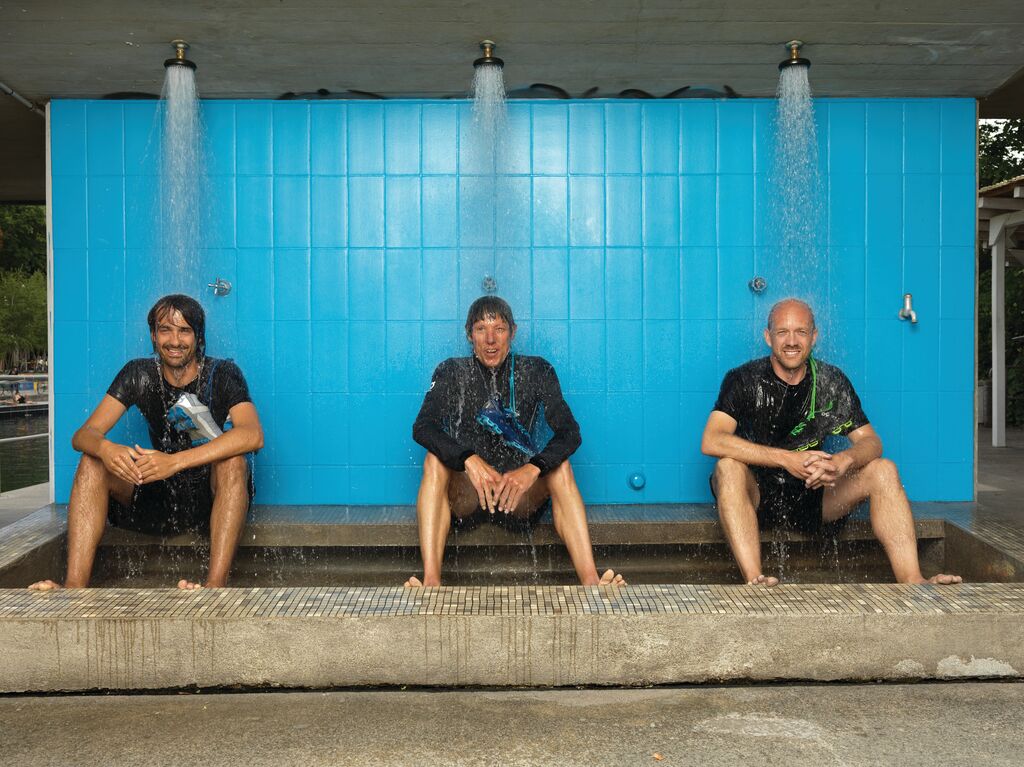
More than 17 million products sold, billion-dollar turnover, IPO - how did the Swiss running shoe label On manage to actually compete with industry giants like Nike and Adidas 14 years after its founding? Co-founder Caspar Coppetti takes us on a journey from the ISPO Brandnew Award to today - and reveals his key success factors.
Honestly, there's hardly a lower probability of success than with a new running shoe brand from Switzerland. In my guest article for ISPO.com, I tell you how we managed to do it with On anyway.
We sold more than 17 million products, went public, and broke the billion-dollar sales barrier in 2022. The main reason for this success was originally our unique cloud technology, but today we are an innovation company at heart. We create high-performance products for all people who want to stay fit and healthy through exercise. This includes apparel and running shoes that are different even at first glance, and for many, the most comfortable shoes they've ever worn.
Was I convinced of this from the start? No. When my co-founder Olivier Bernhard approached me with the idea 15 years ago and asked for my help, I was more than sceptical. Looking back, I laugh at that Caspar I was back then - how little courage I had!
Together with the third in the group, David (Allemann), we then fortunately still dared and developed our first running shoe. With a very minimalist design, typically Swiss. The location was a curse and a blessing for us right from the start. In a country as small as Switzerland, you simply can't make enough sales with a running shoe brand. We had to get out into the world right away and launched in six countries at the same time. I spent most of the first ten years travelling globally to build up all the markets in parallel. But it was worth it: when it works, it works. We are now represented in 60 countries.
We had no idea about the industry when we started. None of us had ever developed or sold a product. I found out about the ISPO Start-up Award by chance and didn't expect to win directly on my first participation. The first prize was a trade show appearance with PR package - that was overwhelming: When I came into the trade show halls in 2010, I wanted to hide. Our shoe was pictured everywhere. But we had neither an order list nor a price. Just two or three samples of the prototype.
The ISPO Brandnew Award set a lot of things in motion: Two weeks after the announcement - I was just on a snowboarding holiday - we had 600 e-mails in our inbox. That's also how we made our first six distribution partnerships.
In the beginning, we couldn't afford athletes as testimonials, so we supported those who had a special story to tell. The most famous is "The Man with the Halo," our athlete Tim Don. The day before his 2016 Ironman competition in Hawaii, he was hit by a truck. Broken neck. We had him flown out immediately to get the best medical care. And extended his contract while he was still on his sickbed.
He then received a so-called halo, which is a metal frame that is fixed in the skull with screws. Extremely painful, but for Tim the only option to ever be able to do sports again. We followed the healing process from day one and a documentary was made that went through the roof. Not only did it make Tim very famous, it also sped up a lot of things for On.
Olivier, David and I decided early on to bring two other partners on board to build the brand as equals among the five of us. We didn't want to build up hierarchical levels among ourselves and continue to be the eye of the needle in the company. With Marc Maurer and Martin Hoffmann as co-CEOs, we have gained an incredible amount of capacity.
We now have five points of contact when it comes to "boss stuff". This allows us to move things forward more quickly, and we can use each other as sparring partners in day-to-day business. Sooner or later, everyone makes a mistake, but as a group we recognize them early and can correct them better.
The most important principle at On is: The Positive Spirit. The market for running shoes is so big that we don't really need to look at competitors. There is enough room for everyone, even if we are already dreaming of becoming number 1 with our first success.
To achieve this, we have completely overhauled our running range over the last 18 months. For much more comfort and even more cushioning. We have just launched the elite running shoe Cloudboom Echo 3, with which Helena Obiri won the Boston Marathon. And in the next ten months, more models will come with our performance technologies.

Years of anticipation, athletes, brands and spectators cheering together, shared joy and shared sorrow over victories and defeats - hardly any other mega-event shows so clearly that top-class sport and emotion are extremely closely linked. We had a look at why the 2024 Olympics evoke these feelings in us, how the competitions become more sustainable, and how brands can incorporate emotion into their communications.
Top-level sport and emotion are extremely closely linked - so it's no wonder that the 2024 Olympics in Paris are captivating us. How brands can be more sustainable and incorporate emotion into their communications.
"movēre", the movement, that which moves us, makes us act, makes us feel, is the root of (high performance) sports. Whether it's board sports, extreme sports, action sports or outdoor sports, it all comes down to the same thing: feeling ready for the competition, developing ambition and being able to handle the equipment safely. Board sports and outdoor sports are only possible because the climatic conditions and the "playing field" are available - and these are usually free and accessible. Athletes interact with their environment. In outdoor sports, nature is a crucial element of emotion that prolongs our stamina and ensures that the moment stands still. How can these insights be applied to international mega-events? Are they more sustainable? How do top athletes create dreamlike micro adventures through their ambitions? These are questions that sponsors and organizers should ask themselves in order to remain desirable.
Although the founding myth of the Olympic Games is brought to life in Greece, it is Pierre de Coubertin, founder of the modern Olympic Games, who brings diversity to the fore. Inclusion and the Olympics belong together, as the symbol of the five rings already shows. They stand for the unification of continents, for universality, inclusion and continuity.
And some athletes really turn the conventions of the sports world upside down. Clarisse Agbegnenou, Olympic runner-up and four-time world champion in judo, for example, believes that Pilates is essential for training after childbirth in order to be able to meet the high demands of sport again. She also approached the French federation and obtained that her daughter be allowed to be present at training and competitions, as she is still breastfeeding her.
Since the 2016 Olympic Games in Rio de Janeiro, there has been a team specifically for refugee athletes who are International Olympic Committee scholarship holders. Whether they are cyclists, swimmers, runners or boxers, they are supported throughout the year by the Olympic Foundation in training and administrative matters. Some of them are in the process of being naturalized.
Diversity and inclusion go hand in hand. Gradually, the LGBTQ+ community is also being heard and seen more. In the film "Fragment choisis" ("selected fragment ") by Alicia Cenci, Elisabeth Gerritzen, a freeride skiing world champion, talks about her emotions, fears and deficits to create more sensitivity. She is an ambassador for Peak Performance and wants to continue pushing the boundaries in elite sports beyond her public coming-out and to take action against patriarchal structures. Alicia Cenci was discovered as a director of Salomon™ and The North Face™ and also makes other women and minorities heard. For example, in her latest film Didi, in which she follows world snowboarding champion Marion Haerty and a 100% female team of experienced Nepalese mountain guides and Sherpas. The insightful film shows how these women are bound to the mountain with their hearts and feet.
"The Olympic idea is not a system, but a state of mind. Diverse elements can enter into it, and it is not for any group of people or any era to claim the sole monopoly on it." - Baron Pierre de Coubertin
Apart from the unifying aspect and the universal and democratic values of sport, the limitations of events such as the Olympics are becoming increasingly apparent. The Olympic Games and other sporting competitions of their dimension continue to provoke conflicts and controversial reactions, especially in relation to the environmental, economic and social impact of the events.
For some, the legitimacy of these competitions is questionable. This is the case for Marc Perelman, who denounces the unwavering spirit of the Olympics in his book "2024 - Les Jeux Olympiques n'ont pas eu lieu" ("2024 - The Olympic Games Didn't Take Place"). In his opinion, it's all about growth: more licensees*, more spectators*, more money.
To best prepare for the 2024 Summer Olympics, the French Ministry of Sport and the Olympic and Paralympic Games have published a guide to responsible sport. The aim is to protect all sports stakeholders, from athletes to spectators, and to promote solutions for water and energy conservation. The organizers of the Olympic Games have also published information for sustainable sports. The ADEME (Agency for Environment and Energy), which has also produced a guide on responsible communication, is tasked with setting communication guidelines to avoid greenwashing and promote biodiversity and climate projects - a resource for brands that need to adapt their message. To support this shift in thinking, some non-profits, such as the Water Family, offer training and guides to help organize events in a better, more sustainable way.
"You have to consider seven areas of impact at an event, which we prioritized by impact: Transportation, Food, Respect for the Natural Site, Waste, Communications and Promotional Assets, Inclusion and Equity, and Internal and External Awareness/Training." - Louise Ropagnol, sustainable development education officer at Water Family
To make its own contribution, Surfrider Europe offers tools to share knowledge and raise awareness about ocean conservation. Surfrider Europe also leads lobbying efforts at the IMO (International Maritime Organization) to reduce CO2 emissions. The counterpart for mountain sports is Protect our Winters, an initiative that brings the community together under the motto "Acting for the Climate."
For some athletes, the feeling of belonging to a team or to the values of a brand is just as important as winning. Both give meaning to their actions. We're seeing a generation of athletes and champions in sailing, cycling, surfing or snowboarding who are quitting their sport or leaving a sponsor they've worked with for a long time.
This is the case, for example, with Stan Thuret, who announced his retirement from ocean sailing in February 2023 for climate protection reasons. Climate protection and the protection of biodiversity were not compatible with the competitions and the lifestyle of ocean sailing, he said. Or with Xavier Thévenard, an ultra-trail champion who no longer wants to fly to competitions on the other side of the world. Or even Mathieu Crépel, who is leaving his very first sponsor after almost 30 years to join Oxbow™, whose eco-design of their collections better matches his values.
"There is no question that high-performance sports and global events today need to think about how they can fit into a fundamental redesign of their organizational system. We know about the negative ecological impact of these important events, but we also know about their positive impact, on an emotional or social level." - Mathieu Crépel, world champion snowboarder, Oxbow brand ambassador and sports commentator for the French Olympic Games.
In his latest film, Mathieu Crépel climbs the north side of the highest peak in the French Pyrenees, Vignemale, alongside director Walid Berrissoul and mountain guides Mathieu Millet and Patrice De Bellefon. The emotions of all the participants about climbing this ever-receding Pyrenean glacier are palpable - and that is what makes the goal of climbing the mountain significant. They want to raise awareness about glacier retreat and find new ways to protect these incredible places.
Neurobiologists agree that neurological processes and emotional responses interact in athletic performance, decision-making, and stress management in athletes. In a reptilian brain, what scares keeps you alive, and what moves you keeps you happy. In "Free Rider," a film by Jérôme Tanon that won an award at the International Freeride Festival in Capvern Les Bains, Victor Delerue, a two-time world champion freeride snowboarder, says just before an impressive descent, "It's not very steep per se, it's just scary," and then takes off like a child discovering powder snow for the first time.
Fear is an emotion that psychoanalysts and mental trainers examine particularly closely during long-distance sailing races such as the Route du Rhum or the Vendée Globe. While fear can stop actions and save lives in everyday life, it warns of an emergency and prevents accidents and mishaps in individual races. Therefore, it needs different programming in the brain.
Maugan Péniguel and Nathan Vitu say how their environment was damaged, and then decided to build a brand based on these values. In Annecy, they launched the Nosc™ brand, which uses tested, recycled and bio-based materials. In their film "1.5 degrees", the brand stages the passing of the flag between athletes* of different disciplines to raise awareness of the Paris Agreement and the 1.5 degrees target.
The link between neuroscience and emotions in sport is a dynamic area of research. It offers deep insight into how the brain influences athletes' emotions and how these emotions in turn impact athletic performance. Whether managing energy and stress or making quick and efficient decisions during recovery, emotions can act as a catalyst to release the mental and physical energy athletes* need to perform at their best. On the other hand, the application of neuroscience can help athletes and coaches optimize their preparation and improve performance in competition.
To optimize athletic performance using data, Aurélie Jean and Yannick Nyanga are publishing a book in September, "Data et sport: La révolution" ("Data and sport: the revolution"). In their eyes, data analytics and high-tech are radically changing the world of sport, enabling athletes and teams to dramatically improve their performance.
Back to Pierre de Coubertin's motto "Faster - Higher - Stronger" - the link between emotion and movement is deeply interwoven in top-level sport. And for some, it's time to forge a new relationship with the world of sport and its events. From surfing to snowboarding, canoeing to golf, athletic performance at the highest level is influenced by a variety of factors. Emotions play an essential role, as top athletes have to cope with intense pressure, high expectations, fierce competition, victories and defeats, and the emotional highs and lows that come with them.
While the world is waiting for the 2024 Paris Olympics, there are festivals in France that show films and documentaries about outdoor sports and the world of freeriders: the high five festival in Annecy, the IFOF (International festival of outdoor film) and the EOFT (European outdoor film tour), or even the Festival de film et du livre d'aventure (Festival of adventure films and books) in La Rochelle.
Whether you believe that things move more slowly in a group or that individual sports are also won as a team, one thing is certain: the focus is always on creating something and surpassing oneself.
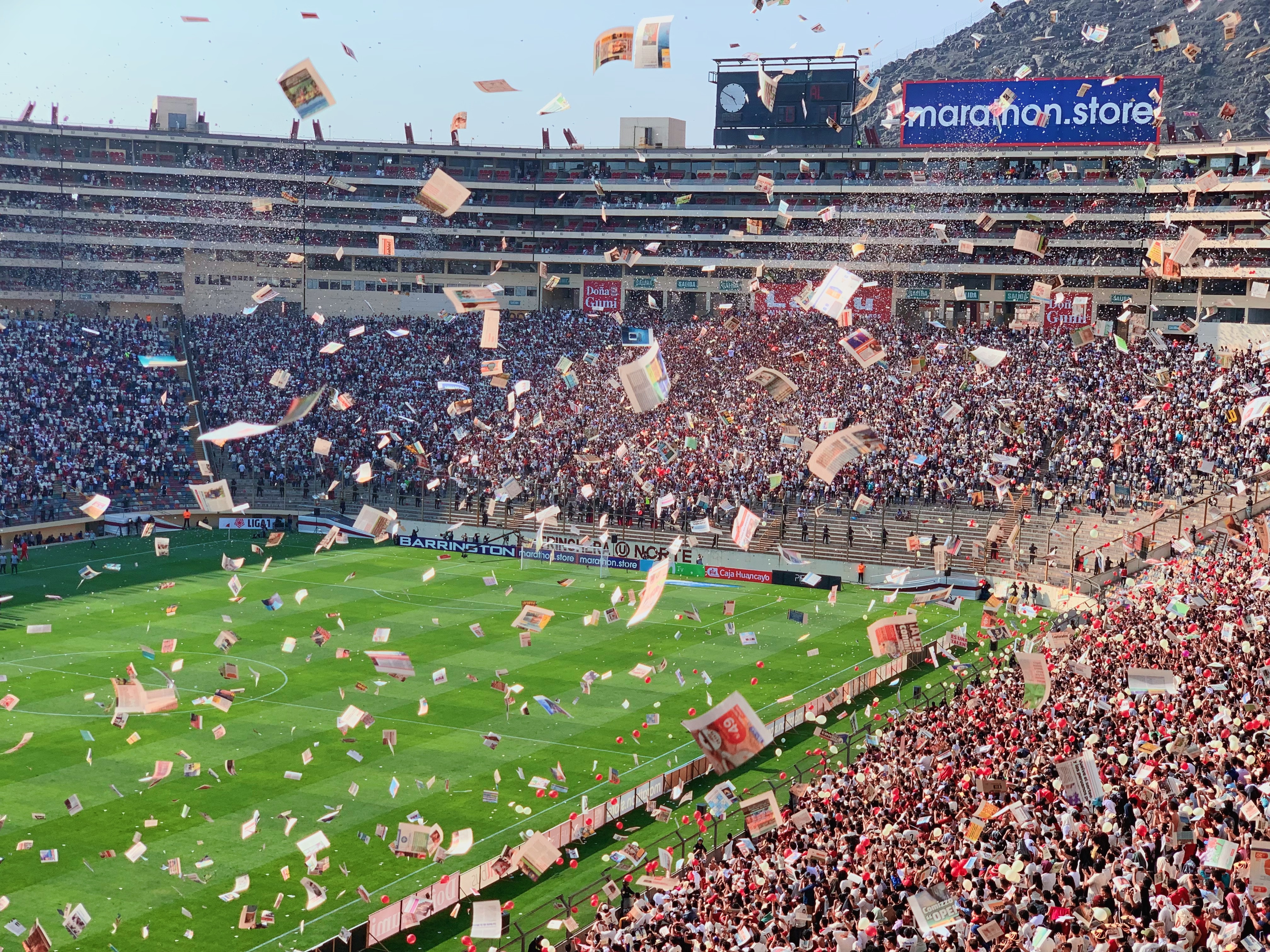
The triumph of the mountain finish, the photo finish after the 100-meter sprint, the winning goal in postgame time - sports moments leave unforgettable impressions on millions of people. Brands try hard to use these emotional experiences to anchor their logos and names in the minds of consumers. But how do brands transform sports sponsorship from a simple marketing ploy into a value-added investment?
In an analysis of 100 sponsorships across seven markets and 20 industries, Nielsen found in its Global Sports Market Report 2022 that sports sponsorship increases fan purchase intent by an average of 10%. 81% of global respondents either fully or at least somewhat trust brand sponsorship of sporting events.
Despite this positive data: Accurately calculating the return on investment (ROI) in sponsorship remains a complex task. Many benefits - such as an improved brand image and intensified customer loyalty - simply cannot be expressed in figures. Nevertheless, brands around the globe like to rely on sponsorship, partly because sporting events are still popular live or re-live events. Brands can use this to strengthen their corporate image and brand awareness and to promote customer loyalty in the long term.
Today, there is an increasing demand for brands to be committed to social and environmental goals. Sponsorship can pick up on this and underscore a company's corporate social responsibility (CSR), as a study by the University of Montenegro investigated. The results show that by actively engaging in sponsorship, companies can effectively bring their corporate and social responsibilities to the forefront. This increased visibility plays an essential role in strengthening consumers* trust in the company.
So how can brands successfully implement sports sponsorship? We have summarized the best tips:
An impressive example of this is the Merrell Belgrade Ultra Trail Run in Istanbul, which invites runners of all kinds out of the city and into nature. The event convincingly reflects Merrell's brand mission: "At Merrell, our mission is to enable everyone to experience the joy and power of being outdoors - regardless of figure, size, background, ability or experience."
Sports sponsorship is more than an investment in visibility. With the right strategy, it can strengthen the relationship with the target audience and leave a lasting mark on a brand. Connecting brands with the emotion of sport is a dynamic and diverse area that, when done right, offers countless opportunities to reach and impress audiences.

It is one of those hidden champions that shape the sport without being in the spotlight themselves: Riedel Communications. Hardly any major sporting event in the world can do without the technology from the tranquil town of Wuppertal in Germany. Founder and CEO Thomas Riedel explains to us how he became one of the largest event suppliers for audio and video technology and with which famous racing driver he shares a passion today.
What do the Olympics, the World Cup, Formula 1 and the Super Bowl have in common? That's right, they are the biggest sporting events in the world. And they are all implemented with communications technology from Wuppertal. Riedel Communications transmits the announcements of the referees in the NFL, enables the pit radio in Formula 1 and connects the FIFA referees with the analysts in the control center. Even when Felix Baumgartner jumped from the stratosphere to earth in 2012, it was Riedel's audio and video technology that transmitted the spectacular flight to a billion TV viewers. Besides sports, Riedel is also involved in show events like the Eurovision Song Contest or big music festivals like Wacken.
In our series "Challenges of a CEO", founder Thomas Riedel talks about the beginnings of his success story and reveals what it takes to convey the emotions of sports in the media.
"I started 36 years ago with classic event technology. At some point, I also started renting out radios. Radio technology was a niche in the 1990s. Right from the start, I was involved in sporting events, especially soccer and motor sports. The marshals had to communicate somehow with the drivers and race control. Of course, that was nowhere near as modern back then as it is today. Much of what is standard today, we have invented and developed over the years.
The first major sporting event at which I was on site with radio technology was the 1992 Olympic Games in Barcelona. Almost at the same time, I started working at the Formula 1 in Hockenheim. In both cases, these were initially small, national assignments. At the Olympics, I equipped the German House - which was not yet called that at the time - with radio technology, and in Hockenheim, I equipped the local race control. But when you're at an event like that, a couple of things inevitably happen: first, you get ignited by the atmosphere on site; second, you meet important people; and third, you learn what the procedures are like. That led to me quickly getting deeper into events and adding more jobs.
In the second half of the 1990s, more and more Formula 1 teams gradually came knocking - also because data transmission was added to voice communication. In the beginning, it was just Ferrari, to whom we sold a few devices. Then McLaren approached us. They had problems with communication and wanted to know what we were doing for Ferrari. I then put on a bit of a show and acted mysterious. That worked. McLaren said, 'Okay, if you don't tell us what you're doing for Ferrari, we'll assume you won't tell anyone what we're doing together then either.' That's one of the basic principles of success: in a competition - whether it's the Olympics, soccer or Formula 1 - you have to follow the rules of the game. And the same applies in business: confidential information remains confidential. Just imagine if the signals from the referees of the 1st and 2nd Bundesliga soccer leagues, which all converge at our control centre in Wuppertal, became public. That makes you realize the role we play in terms of confidentiality.
In the beginning, I just rented out radios. That was pretty trivial, it just wasn't done by anyone else. But over time, we learned as a team to develop specific solutions for certain applications. Take referees, for example: FIFA needed a radio that was small and light enough to wear on your wrist. It had to work anywhere in the stadium where thousands of cell phones, WiFi signals and wireless cameras interfere. And it had to withstand sweaty jerseys and rain. Our engineers developed and deployed the hardware and software. Such individual solutions are our USP. There aren't even a handful of companies in the world that do this.
Our second USP is service. Often, it's the little things that eventually turn into a bigger problem. Let's take the example of referees again: All it takes is for one of them not to check the battery, the thing goes out, and he has to interrupt the game or continue without communication. Stupid situation. Or there was an operating error and the referee didn't want to show his face. In the early days of referee communication, these were really common reasons why something didn't work on the radio. Now it would be much too costly to send a technician to every stadium. That's why we solved it with intelligence. It's now part of the procedure to talk to our control centre when you switch on the headset and check everything. We have created the conditions for this: We can monitor all the properties of the end device in Wuppertal, including battery status or position in the charger.
Similar special requirements had the America's Cup had similar special requirements for us. The organizers wanted live images from the sailboats, plus tracking signals. Seawater whips over the equipment, strong winds make communication almost impossible. A conventional microphone windscreen quickly gets soaked in water. But we have also developed solutions for this, which have made it possible to track the America's Cup in a level of detail that was previously unheard of. We have made the sport explainable and brought it to the people.
The most recent example is the SailGP Formula 1 as a water sport, so to speak. Until now, the team coaches have driven alongside the sailboats on 500-horsepower speedboats. The organizers no longer wanted that, if only because of sustainability. And it also had disadvantages for the coaches: On the water, you can't see the course of the race. So at the race in Los Angeles in July, as a test for the German and American teams, we set up a station on shore where the images from the helicopter and the onboard cameras are combined. The system makes it possible to jump back and forth, fast-forward and rewind, to be in dialogue with the boat. The coaches came up to us afterwards and said, 'This is a game changer!' Now, for the next races in Europe in September and October, we are setting up stations like this for all ten teams, similar to the pit lane in Formula 1. This has the side effect of changing live coverage as well, because the cameras can suddenly capture the emotions of the coaches. This example shows that technology can change the dramaturgy of a sport.
Being format-relevant in this way is something that motivates us. Firstly, the work is then much more fun, and secondly, money can be earned differently if you are important and relevant. Meanwhile, the big organizations and players come to us when they have a problem with wireless data transmission. That still drives me after 36 years. In fact, in the case of SailGP, so much so that I switched sides for the first time. Together with a few co-investors, I am the owner of the new German SailGP team. Sebastian Vettel, four-time Formula 1 world champion, is also involved. He was enthusiastic about the sport and the sustainability idea behind it right from the start and sits in on every meeting. And at the races, he exchanges ideas with the data analysts at the top level.
Now I can optimize the series not only from the outside, but also from the inside, and contribute technical ideas. Of course, for Thomas Riedel, a private citizen, it's once again a question of playing by the rules - as it was in Formula 1. For me, that's a question of morale, of sportsmanship. When competing on the water, I want to win with the German team. But when it comes to developing the sport further behind the scenes, we as Riedel are involved in the interests of everyone. And the other teams agree with that, too.
As shareholder of Sportdeutschland.TV I'm very keen to help sports that are away from the mainstream media spotlight. What can change that is a certain entertainment factor. Here, too, technology can help bring the fascination of sports closer to the audience, be it through digital balls or sensor technology in rackets. And that's also interesting for the athletes. An app could be used to control and train trajectories or stroke angles. About the start-up platform leAD start-up platform, we are supporting a number of exciting projects.
We are also working on a camera that is so small that it can be flanged to the communication systems of soccer referees. This would make it possible to see live images from the referees' point of view and relieve them if they had no insight into a situation.
Next year, I'm really looking forward to the Olympic Games in Paris. We'll be at all the venues there and run a communications sports business lounge ourselves, where we want to bring people together on the topics of sports and technology. Directly after that, the America's Cup will take place in Barcelona and our second season with the German SailGP boat will start. And then, of course, the European Football Championships in Germany and all the ongoing projects such as Formula 1, Bundesliga, NFL, MLB, PGA, and so on. That's quite a program. Plus projects that come up at short notice. For us, the year will again be adrenaline at a stretch.