


In today's rapidly evolving consumer landscape, brands face new challenges in connecting with customers on sustainability issues. We spoke with Fredrik Ekström, a brand strategist and consumer behavior specialist with over 20 years of experience working with global lifestyle brands to gain insight into effective strategies.
According to Ekström, the traditional model of consumers passively admiring brands from afar is outdated. Today's consumers expect deeper interaction and want to be co-creators and active participants in brand communities. This shift requires companies to reevaluate their communication, build culture, and foster community around their brand story.
"Brands need to understand that the game plan has changed," Ekström explains. "They need to align insight, strategies and activations into what I call winning game strategies that are more connected to the consumer world." This is extra important when communicating sustainability which usually is approached with rational or informative communication.
He emphasizes that successful consumer-centric sustainability strategies don't happen through single campaigns, but require a roadmap of strategic, creative and operational decisions executed consistently over time.
To bridge the knowledge gap around sustainability in many executive teams, Ekström began tracking consumer attitudes several years ago. His newest two reports are The NXT Sustainable Consumer and The NXT Outdoor Consumer. Rather than focusing solely on past sales data, these reports examine consumer aspirations, status markers, attractions, and anxieties related to sustainability and outdoor activities.
The research, based on surveys of 2,500 nationally representative respondents across Nordic countries, reveals high interest but low knowledge regarding sustainability among consumers. While 8 out of 10 wish they knew more about sustainability, many feel paralyzed by uncertainty and fear of judgment over their choices.
Ekström's research identified three key "green archetypes" among consumers:
Interestingly, there's a strong correlation between dedication to sustainability and engagement in outdoor activities. This suggests that time spent in nature cultivates a desire to protect it.
To help brands develop consumer-centric sustainability strategies, Ekström created the "Winning Game Matrix." This tool allows companies to assess their initiatives across different consumer archetypes and areas of impact (social issues, planetary issues, and future trust).
"This is a way to build up a holistic approach, but with the consumer in mind rather than having an internal focus," Ekström notes.
Ekström's research shows strong consumer support for brands that openly engage with social and environmental movements. This is especially true among Gen Z, with 9 out of 10 wanting brands to take a stand and 7 out of 10 more likely to support brands that do so.
Consumers want brands to address several topics among the most important ones are social responsibility, protecting biodiversity, cleaning up ocean pollution, and transitioning away from fossil fuels. However, Ekström cautions that brand activism must be genuine and purpose-driven to be effective.
Ekström highlights three important trends for brands to watch:
By understanding these trends and adopting consumer-centric sustainability strategies, brands can better position themselves to win in today's evolving marketplace while making a positive impact.

There is still a lot to do. The outdoor industry has made impressive progress in the area of sustainability in recent years and is setting new standards for the entire apparel industry in many respects. But despite these positive developments, we are only at the beginning of a comprehensive transformation that affects all aspects of the value chain and is being driven forward by new legal requirements. These are the key points.
The good news is that the outdoor industry has been a pioneer for many years when it comes to making products, manufacturing processes and supply chains more sustainable. Flagship companies such as Patagonia, Vaude, Picture Organic Clothing and many more have used their influence on the industry to inspire other companies to also take a more sustainable and better path. Ultimately, more and more consumers and retailers are demanding the same from the industry. Hardly any brand, especially in the clothing sector, has been able to ignore this trend in recent years. But we are still a long way from reaching our goal.
The necessary transformation is complex and is taking place in many areas at the same time: Whereas a few years ago it was enough to simply use more sustainable materials (for example, organic cotton, recycled polyester or other certified fibers) and, as a member of the Fair Wear Foundation, to pay attention to working conditions in the production countries, it is now clear to everyone that these measures could only be a start. The much-cited concept of sustainability encompasses far more fields of action and involves almost all stakeholders along the long path of a product's life cycle. This is now also reflected on the regulatory side, as voluntary measures have not led to the desired result.
Various European regulations, some of which have already been passed, are about to be passed or have yet to be transposed into national law, will have a huge impact on the industry. However, waiting until these laws come into force is a dangerous strategy. Achim Berg, former McKinsey & Company partner and long-standing co-author of the annual report on the state of the fashion industry, "The State of Fashion", calls for the industry to act quickly. "Waiting for regulation runs the risk of being just another excuse to disguise, delay and excuse the industry's inaction - at a time when it needs to hurry up," writes Berg. The transformation of the industry is primarily about these issues:
For a long time, companies did not need to think about how many years a product would be used, how many new resources would be needed to manufacture it and how it would be disposed of in the end. All economic activity was based on the linear "take-make-dispose" model, whose basic assumption that there are an infinite number of resources available on earth has since been proven wrong. Today, the clothing industry is also faced with the major challenge of establishing a circular model instead of the linear production and consumption model, in which resources are not "used up" as much as possible. The aim is to fully return products to the production process at the end of their life cycle in order to create new products without materials being lost or becoming waste.
Various measures are needed to achieve this: Products must be designed in such a way that they last as long as possible and still have a chance of a long life even as second-hand goods. They must be designed in such a way that they can be easily recycled, for example by using mono-materials. The more complex the material of a textile is, the more complex and therefore more expensive it is to recycle. If items are not designed to be recyclable, recycling processes are not yet economically viable.
The technical capacity for high-quality sorting, collection and recycling of clothing and textiles must be created, preferably where the textiles are produced in order to avoid long transportation routes. This means that companies are called upon to establish additional relationships with recycling, collection and sorting companies beyond their usual supply chains in order to work together on solutions.
Of the approximately 7.5 million tons of textile waste generated in Europe every year, according to the European textile association Euratex, only just under one percent is currently recycled into textiles. This is set to change drastically over the next few years, partly thanks to new EU legislative initiatives. In countries such as the Netherlands, only textiles made from 50 percent recycled material are to be placed on the market from mid-2025. From 2030, the target is 75 percent. That is not far off and other EU countries will follow these measures.
Until a few years ago, it was unthinkable that companies in the clothing industry would have to think about how their product should actually be disposed of in the end. It was only NGOs such as Greenpeace that drew public attention to the major problems of textile waste, for example because synthetic fibers take centuries to decompose, because harmful substances are often released in the process and because textile waste often ends up in countries that do not have functioning disposal systems. The EU therefore wants companies to assume extended producer responsibility (EPR). This means that companies will be responsible for the disposal of their products when they are disposed of by consumers.
However, the separate collection and reuse of textiles is not yet economically viable, which is a major obstacle to the realization of a circular economy for textiles. Therefore, these systems still need to be established. This could be done either by manufacturers having to pay a mandatory levy for every product placed on the market in future, which would be invested in the development of a circular economy.
Alternatively, companies can fulfill their responsibility themselves by setting up their own collection, sorting, reuse and recycling systems, either individually or jointly. According to the Ellen MacArthur Foundation, the latter system in particular promises to be more successful, as it involves the obligated manufacturers more closely in implementing their responsibility.
So far, three EU countries have introduced an EPR policy for textiles: France, Hungary and the Netherlands. A number of other countries and regions, including Australia, Ghana, Kenya, Colombia, California, New York and all EU Member States, are currently discussing an EPR policy for textiles. The French EPR program, for example, obliges manufacturers to pay for the recycling and disposal of textile products at the end of their life. At the same time, it rewards manufacturers who bring sustainably produced items onto the market.
In order to achieve greater resource efficiency and a longer product life, it makes sense to repair defective products. With the EU's "Right to Repair" legislative proposal, companies could soon be obliged to be able to repair their products within the warranty period and beyond. Traditional companies in the outdoor industry, such as Schöffel and Lowa, have often been offering this service for a long time. Many young brands, on the other hand, which may not even have their own product development or have outsourced it completely, will have to look for partners in the future.
A new service sector is already positioning itself here and new repair centers and new, efficient software solutions are being set up all over Europe to minimize costs. For the industry, this also means ensuring the availability of spare parts and providing information on the repairability of their products.
As with recycling, in the future it will also be important to set the course for good reparability at the design stage and to prioritize potential conflicts of interest. After all, functionality, design and reparability cannot always be easily combined. Companies such as Vaude have therefore developed guidelines for the repairability of their products: "Our repair index gives our customers the assurance that the repairability of Vaude products is not a coincidence, but has been taken into account in the development of each individual product," says Hilke Patzwall, CSR Manager at Vaude.
The retailers also have a duty. After all, it is from them that consumers will largely request the repair service.
There are crazy figures circulating about how much of the new clothing that comes onto the market each year is not sold at all. The figures that can be researched on the Internet range from ten to 50 percent. However, nobody knows exactly, as companies are not yet obliged to record the amount of unsold products. And they certainly do not have to disclose this data. Here, too, the legislator could soon make improvements. The EU's Ecodesign Regulation aims to establish annual transparency obligations for the disclosure of data on unsold consumer goods. This could also affect textile companies, which is actually quite likely.
Overproduction is primarily a phenomenon of "fast fashion", where large quantities of clothing come onto the market in a short space of time. What cannot be resold via remnants and third countries ultimately has to be disposed of or incinerated. But here, too, there could soon be new EU-wide regulations banning the destruction of new goods. Countries such as France have already introduced laws that prohibit the destruction of unsold clothing. There are also corresponding efforts in Germany. The devil is in the detail here: for example, it has not yet been clarified whether the recycling of new goods is also equated with their destruction.
The production of textiles from fossil raw materials such as polyester, nylon and acrylic causes large quantities of greenhouse gases. These fabrics are made from crude oil, the extraction, processing and transportation of which releases large amounts of CO2, which further contributes to climate change. Textile manufacturers around the world are therefore working on new processes to produce these important synthetic fibers in a bio-based and therefore more environmentally friendly way in the future.
This applies in particular to polyester, the most widely produced textile fiber in the world. So far, however, only one of the two components of polyester can be replaced with bio-based materials; the other component, which accounts for 70 percent, is still petroleum-based. "The aim is to replace the remaining 70 percent as well," says René Bethmann, material specialist and Senior Innovation Manager at Vaude. "Then the CO2 footprint will be almost zero." However, there are already market-ready solutions for other synthetic fibers such as nylon or polyamide. So the first step has been taken. Now the brands have to prove that they support the change in the industry and demand these new bio-based fabrics and use them in their collections - even if they are often more expensive to begin with.
Textiles are one of the main sources of microplastics. According to projections from a study by the International Union for Conservation of Nature, 35 percent of microplastics in the sea actually come from fiber abrasion from synthetic textiles. But these microfibers don't just pollute the oceans. Textile fibers that have been broken down into tiny particles can now be found everywhere in our environment: In Arctic and Antarctic ice samples, in water, in the air, in land and sea animals, in human organs and tissues. Microfibers therefore not only pollute our environment, they also damage the health of many organisms.
Contrary to the original assumption, this apparently also applies to natural fibers, not just synthetic, petroleum-based fibers. In terms of their environmental hazard, it does not seem to play a significant role whether these microfibers come from natural fibers or synthetic fibers. "Natural fibers also end up in the environment and remain there for a long time. This is due to the many chemical processes that natural fibers undergo, which ensure that they are not degraded either," explains Elliot Bland, researcher at The Microfiber Consortium (TMC).
The textile industry is therefore called upon to look for ways to make fibers and fabrics more robust and release fewer fragments, for example by developing new materials and fabric constructions. This includes the production phase of fibers and fabrics, including finishing, as well as the use phase by consumers and disposal. Washing machine manufacturers and wastewater treatment plant operators are also already working on new solutions. The Ellen MacArthur Foundation is therefore proposing an extension of cost recovery under the EPR to also finance the removal of micropollutants from wastewater.
In July 2024, the EU passed the European supply chain law, theCorporate Sustainability Due Diligence Directive(CSDDD), by the narrowest of margins. This obliges companies to ensure that their supply chains respect human rights and protect the environment. Due diligence makes companies responsible for all negative impacts of their business activities on the environment and human rights. This applies to all stages of production, from the raw material to the finished product. Particularly in the textile industry, which often has production in countries with problematic working conditions and low wages, companies must ensure that there is no forced labor, child labor or unsafe working conditions in their supply chains.
In future, companies will therefore need to know exactly what is going on in their supply chain, not only with regard to their direct suppliers, but also for subcontractors and indirect suppliers. This requires comprehensive monitoring and transparency throughout the entire supply chain. They must also carry out risk analyses and communicate these to the various stakeholders. If grievances arise, companies must take measures to improve the situation. If this does not happen, there is a risk of sanctions in the form of fines or civil proceedings such as lawsuits.
This measure was pioneered in Germany, where a German version of the law was passed in 2021.
Large brands and companies are also obliged to report regularly on their environmental performance and social responsibility for the first time.
However, smaller companies may also be affected if they are part of the supply chains of larger companies that fall under the legislation.
Forests play a key role in reducing the concentration of CO2 in the Earth's atmosphere. This is because only plants have the natural ability to convert carbon dioxide from the air into solid carbon by binding it in their biomass. Forests are also important for many other aspects of nature conservation, from maintaining biodiversity to stabilizing the weather. In future, the textile industry should therefore also ensure that no forests have been cut down or damaged to produce its raw materials - such as cotton, viscose, wool or leather.
Under the EU Deforestation Regulation (EUDR), which will come into force across the EU at the end of 2024, certain raw materials and products may only be imported, exported or made available on the EU market if they are not associated with deforestation or forest degradation.
This regulation is expected to have a major impact on the global textile industry, as it requires a detailed analysis of viscose and lyocell supply chains, as well as the leather industry, whose supply chains are often opaque and global.
In recent months, reports from NGOs about illegal deforestation for the clothing industry have repeatedly reached the public. For example, the NGO Earthsight accuses companies such as H&M and Inditex of indirectly contributing to the destruction of the Cerrado region in Brazil, an area of great biodiversity. These companies are sourcing cotton from Brazilian suppliers who are involved in illegal activities in the region. "While we all know what soy and beef have done to Brazil's forests, the impact of cotton has gone largely unnoticed. Yet its cultivation has exploded in recent decades and has become an environmental disaster," says Earthsight Director Sam Lawson.

Together with Diana Born, an expert in sustainability strategy and communication, we delve into the complex interplay between sustainable practices, communication and consumer impact. Diana explores how companies can navigate the shifting landscape of green claims and sustainability communication. This discussion illuminates the challenges and strategies for corporations looking to align their marketing efforts with genuine sustainability goals, amidst increasing regulatory scrutiny and consumer demand for transparency. We provide you a concise transcript of the interview. If you want more details you can watch the whole interview on the video down below.
ISPO.com: A few years ago, there were lots of green claims, but things have gotten more complicated. For instance, in 2022, the Dutch Consumer and Market Authority revealed that Decathlon was using eco-design claims without clear valuation criteria. They agreed to stop using these claims and paid €400,000 to sustainable causes. The term "green hushing" appeared. Should companies communicate about sustainability in marketing, or leave it to sustainability reports?
Diana Born: That's a great question. In the past, many green claims were made without data validation. Claims like "This is more sustainable" or "This is climate neutral" often had little evidence. Now, legal practices are catching up, requiring more transparency. Environmental data can be hard to obtain, and sometimes marketing and communication teams aren't as informed as those in sourcing or product development. It's become essential for marketing teams to collaborate with sustainability departments to ensure accurate claims.
There are three main reasons: Sustainability claims are good for profit, the environment, and investors. Firstly, studies show that products with sustainability claims have higher sales growth. Secondly, consumers' choices impact the planet. Choosing products with lower footprints benefits the climate. Thirdly, investors are increasingly interested in sustainability management. The EU has introduced regulations like the Corporate Sustainability Reporting Directive to guide investment decisions. Proper sustainability claims can attract investments for future products.
It's crucial to keep communicating because consumers' decisions impact the planet. For example, if a raincoat generates 70kg of CO2 emissions over its lifecycle, millions of such purchases add up significantly. Offering products with lower emissions can make a big difference. The EU has regulations to ensure consumers are better informed and not misled by vague claims. Achieving net zero greenhouse gas emissions by 2050 requires collective action from all sectors, including consumers making informed choices.
Sustainability in Sports: Your Ultimate Resource
Start with a science-based approach and have your data ready. Conduct a double materiality analysis to understand your company's impact on sustainability and vice versa. For products, perform a full lifecycle assessment to measure the carbon footprint and other impacts.
Effective communication about sustainability should adhere to four key principles: materiality, completeness, precision, and verification.
Materiality involves focusing on significant aspects of your product's lifecycle. For example, in a buckle made of a magnet and plastic, the magnet's carbon footprint might be higher. Communicate about what you're doing to address the largest impact. Transparency is key, as shown by brands like Rab, which disclose recycled materials and environmental impact clearly.
Completeness means covering the entire lifecycle of a product, not just optimized processes. For instance, if you use recycled plastic in a product, provide the carbon emission savings for the entire product, not just the plastic component.
Greenwashing - How Deceptive Sustainability Becomes a Problem
Precision involves targeting consumer groups appropriately and using clear, understandable language. For example, if you use recycled PET for polyester, be transparent about where the material comes from and its end-of-life recycling potential. Puma provides a good example by clearly stating the sources of recycled materials in their soccer jerseys.
Verification means getting external validation for your claims. With over 200 sustainability labels out there, it's essential to use externally verified labels to ensure transparency. Brands like Picture Organic Clothing work with Clear Fashion to provide detailed product ratings.
3 ways to get inspired by good examples on sustainability
Marketing and communication processes need to change to include sustainability validations and collaborations with sustainability departments. Internal processes must be set up to ensure claims are checked and verified before campaigns are published. Building capacity within marketing teams to understand sustainability is also crucial.
For company-level targets, science-based targets for nature are becoming relevant. Tools like info.link from House of Change help validate claims and provide compliant information through QR codes. Circularity.ID from Circular Fashion offers a QR code system to facilitate recycling and resale of products.
Use science-based methods, validate your claims, and keep communicating. These are essential steps to ensure effective and credible sustainability communication.
CSRD & Anti-Greenwash - Why sustainability reports and transparency are so important for brands

An intelligent and practiced circular economy can help to conserve resources and use materials once they have been produced for as long as possible. Waste avoidance is the goal. The "bgreen leaders" network brings together numerous thinkers and leaders from different sectors who see sustainability not as a buzzword, but as an urgent task.
When an economy coughs, its innovative strength also weakens. But this is precisely what is needed in the transformation that Germany is undergoing in many areas. Start-ups can help deliver innovative and scalable solutions to pressing problems. But times are uncertain, and the young company sector is feeling the effects. Last year, 2,489 start-ups were founded in Germany - almost 5% fewer than in 2022 and therefore on a par with the pre-coronavirus year of 2019. Not only is start-up momentum slowing, so is success. Last year, more start-ups went bust in Germany than ever before. A total of 297 start-ups filed for insolvency. Compared to 2022, this was a whopping 65% increase.
What all start-ups have in common is the courage to pursue and launch an innovative idea without letting the fear of failure slow them down. Even if there are good and less good ideas, in the end failure is not necessarily due to the idea that nobody wants. Sometimes it is simply a lack of visibility. After all, there are many hurdles that start-ups have to overcome: Product development, securing liquidity, marketing, monitoring, corporate identity, recruiting, sales, IT - all at once, all at the same time. This hurdle race goes far beyond the usual route. It's easy to lose focus and fall off track. Social media is a good indicator of this, because here too, the protagonists with the greatest reach are not always the ones with the strongest content. But visibility can also be an indicator of success.
In the central economic model of the future, the circular economy, there has been a new aggregator for a few months now that can help to bring young companies out of obscurity: "bgreen leaders" is the name of the business network that was launched four months ago by Circulaze in cooperation with the Munich trade show. Natascha Zeljko, co-founder of "bgreen leaders", explains the power that the network offers: "It is a vibrant ecosystem of like-minded visionaries driven by innovation, shared best practices, cutting-edge knowledge and connections for collaboration." Of course, the "bgreen leaders" are not just a gathering place for young companies. It is much more than that, because as the name implies, the network also includes established industry giants, corporates, investors, experts, ambassadors and venture capitalists. All sides should benefit. "The start-ups need visibility and new customers. The professionals, i.e. the large companies in our network, are primarily interested in gaining an overview of the market," explains Natascha Zeljko. Her main task is to curate a year-round program with online and offline formats for the members.
The webinars are a core element of the network. With "Sustainability Reporting on CSRD and ESRS" on 08.10 and "eXchange: Circular Design" on 10.10, two informative programs are on the agenda. And at ISPO Munich 2024 in December, bgreen leaders will also inspire with several program items, so: stay tuned!
Another very popular format is the "bgreen leaders" dinner, which is held four times a year, always in a different major city. Once a year, the most promising circular economy start-ups with high potential are identified by a high-caliber jury. The best are honored at the Circulaze Award Night. This is part of the Circulaze Summit, which takes place this year on November 5 and 6 in Munich. A conference with influential keynotes, panel discussions, workshops and lively networking. This is where the most important players in the circular economy come together. A gathering place for innovation and shared growth. After all, the challenges we face in dealing with resources and the increasingly visible climate change are huge. Doing without more would be the real order of the day, but this is difficult to implement in a globally interconnected society with ingrained patterns of behavior. This is precisely why we need innovators who think differently and take on the transformation in some areas.
The biggest challenges on the road to a circular economy
One person who does this is start-up entrepreneur Christian Schiller from Cirplus: "A network like bgreen leaders enables exchange with like-minded people with a passion for action. After all, we don't have a knowledge problem, we have an implementation problem. bgreen leaders helps to drive forward effective solutions by learning from each other and creating synergies between the pushed solutions." Cirplus is a trading platform for used plastic. Schiller and his Hamburg-based team have set themselves the task of counteracting the 15 million tons of plastic that end up in the sea every year. "The circular economy is the answer to the overconsumption of our planet's finite resources. Its implementation requires a rethink from all of us, in all areas of life," warns Schiller.
Circularity, modularity and adaptability. Keeping the sports industry fit for the future
The spectrum of "bgreen leaders" from the circular economy is diverse. Food, mobility, fashion and textiles are represented, as are electronics and consumer goods. Natascha Zeljko believes that this mix is absolutely necessary in her network: "The different perspectives on things are important. It's about staying in touch, learning from each other, supporting each other, but also looking at things critically in a safe space. This requires different players from different areas."
Of course, political support is also needed. However, the circular economy lacks the will to make decisions and the necessary speed. That's why networks like "bgreen leaders" are so important for the transformation. Only one voice is quiet, many together make noise. This is also the view of Natascha Zeljko, who is pursuing a vision with bgreen leaders. "We want to become the Davos for the circular economy." If, in the end, just one less start-up goes bust because it has become visible thanks to the "bgreen leaders" community and an innovative idea is seen and supported, then all the efforts of Messe München and Circulaze will have paid off.
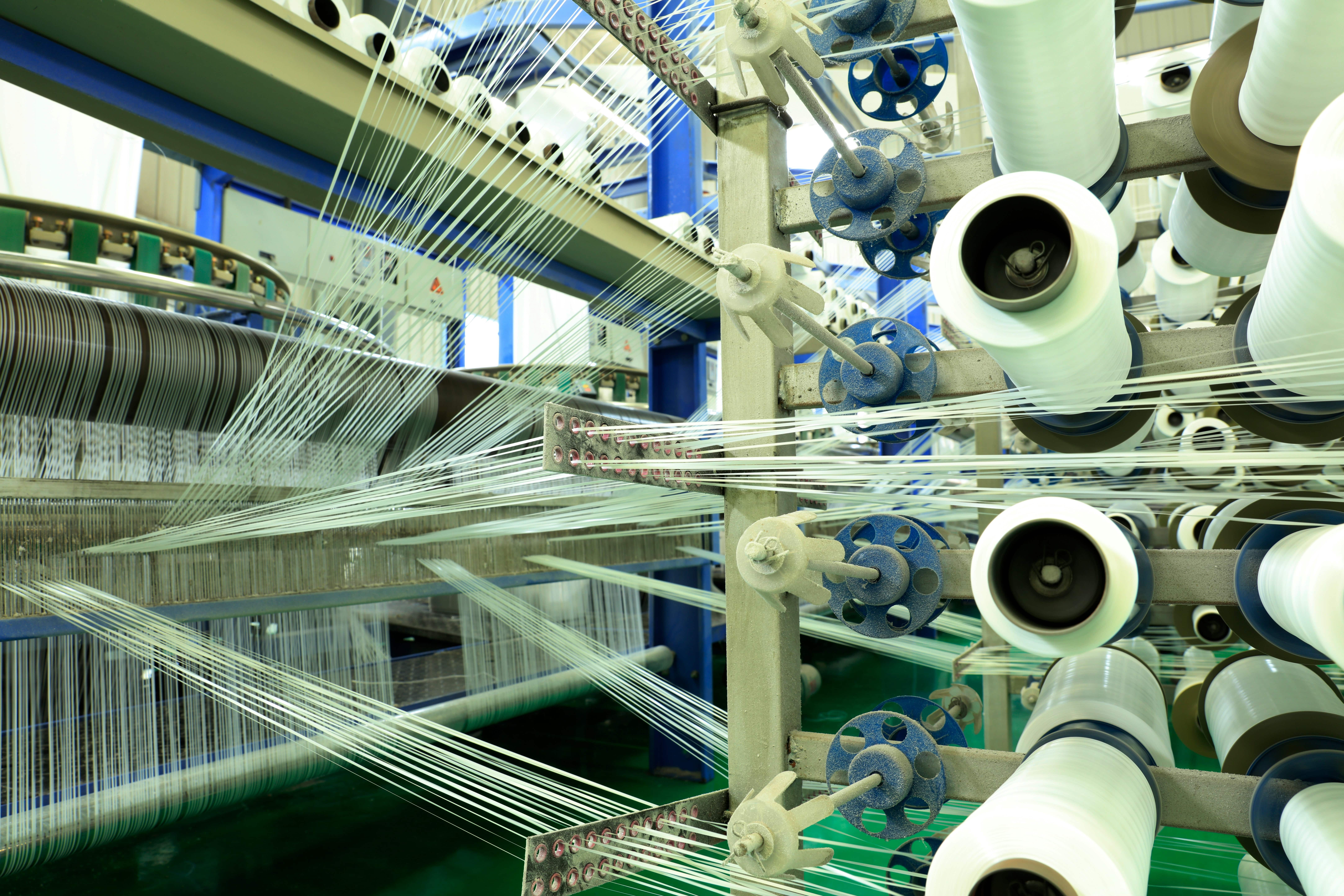
Explore how the textile industry reduces water consumption at fabric mills with innovative dyeing techniques, recycling practices, and advanced technologies, leading to more sustainable and efficient production.