


In the world of search and rescue, every second counts — and every beam of light matters. When visibility becomes the defining factor between hesitation and action, the Acebeam X25 steps forward as a new benchmark in performance lighting. Engineered for professionals who operate where conditions are unpredictable and precision is non-negotiable, this powerhouse flashlight pushes the limits of what portable illumination can do.
The X25’s defining feature is its circular array of 16 SFT-25R LEDs (with a CREE XP-LR version optional) – a configuration that doesn’t just flood an area with light; it shapes it with intent. The result is an astounding 22,000 lumens of pure, focused brilliance that reaches up to 1,505 meters. Whether it’s mapping terrain from a mountain ridge or scanning a forested valley in the dead of night, the X25 transforms darkness into clarity with surgical precision. This isn’t just brightness for the sake of spectacle – it’s performance tailored to the realities of extreme exploration and tactical use.
One of the X25’s strongest qualities lies in how intuitively it integrates into demanding workflows. Dual independent switches, one on the body, another on the detachable handle, allow seamless control in any configuration. This dual-system setup is not only ergonomic but essential when operating with gloves or under pressure. Safety, too, is built into its DNA: a patented mechanical lockout prevents accidental activation during transport, a small but vital detail for field professionals who rely on precision gear that never misfires.
Acebeam recognizes that in the field, downtime isn’t an option. That’s why the X25 introduces a dual power system: users can choose between an integrated 60W fast-charging version or a swappable battery pack that enables quick energy replacement on the go. This flexibility ensures maximum uptime and mission continuity – whether in a mountain search or an overnight rescue operation.
Built from aerospace-grade aluminum, the flashlight balances ruggedness with optimal heat dissipation, while maintaining a surprisingly compact size: 157.5 mm in length, 92 mm in head diameter, and 57 mm in body diameter.
“Acebeam has always been committed to pushing the boundaries of lighting performance and design. With the X25, our goal was to strike a perfect balance between power, design, and user experience, allowing every user to feel the strength and craftsmanship behind Acebeam.”, says Michael Song, Product Manager at Acebeam.
Visually, the X25 is as striking as it is functional. The circular LED arrangement gives it a futuristic, balanced design, complemented by an RGB status light that communicates battery and mode information without disrupting night vision. Every element, from its waterproof construction to its abrasion-resistant finish, speaks to Acebeam’s deep understanding of field demands. The tactile grip, modular handle, and precise machining all reinforce one feeling: absolute reliability.
Retailing at €335, the Acebeam X25 isn’t designed for casual users. It’s built for those who operate beyond the edge: search and rescue teams, tactical professionals, outdoor expedition leaders, and nighttime explorers who need more than just light; they need confidence in their equipment.
"By merging extreme-range illumination, adaptive power systems, and refined usability, the X25 redefines what’s possible from a handheld flashlight. It’s a product born from necessity, refined by design, and made for those who never stop moving forward – no matter how dark it gets.“ ISPO Award Jury

For kids, summer means freedom: forest trails, camping adventures, barefoot games at dusk. For parents, it often means something else — a quiet worry about ticks and mosquitoes. Finnish outdoor brand Reima has turned that worry into innovation with the Surista BugProof Hoodie, a smart layer that lets children explore the outdoors without compromise.
The Surista Hoodie looks like any other comfortable, lightweight layer — but its secret lies in its plant-based insect repellent technology. Instead of relying on harsh chemicals, Reima chose a natural compound derived from lemongrass. Long used in repellents, it works as a gentle yet highly effective shield against ticks and mosquitoes.
The innovation is applied directly onto the fabric, a soft, bi-stretch jersey made from 91% recycled polyester. Tested rigorously, the BugProof finish remains effective even after 50 washes, offering long-lasting protection for countless adventures.
This isn’t about overprotecting kids, it’s about giving them freedom to roam safely. As Reima puts it, “Children should never have to choose between comfort and exploration.”
Reima has decades of experience designing gear for active children growing up in Nordic conditions. The Surista Hoodie reflects that heritage. It’s lightweight, breathable, and quick-drying, ideal for both forest play and sunny seaside days.
The cut is intentionally generous, allowing full freedom of movement for climbing, running, or cycling, while still providing maximum coverage around arms and neck – key areas where ticks often find a way in. The stretchy cuffs and soft-touch finish ensure it’s a piece kids actually want to wear, not one parents have to insist on.
Available in children’s EU sizes 80–164, it’s a companion for toddlers discovering nature as well as older kids heading off to summer camp or forest school.
The Surista Hoodie doesn’t just protect kids, it protects their future playground too. Reima’s choice of recycled polyester instead of virgin material helps cut down carbon emissions significantly, aligning with the brand’s Science-Based Targets initiative (SBTi) goal to reduce total product emissions by 51.6% by 2030 (compared to 2021 levels).
Polyester itself is ideal for activewear as it repels moisture, resists wear, and stays comfortable through long hours of play. By opting for recycled sources, Reima combines durability, comfort, and conscience, creating a garment that aligns with how modern families want to dress: responsibly and practically.
“It’s our mission as parents to raise the next generation of active kids who love nature”, says Sari Perttunen, Reima’s Chief Creative Officer. “Coming from forested Finland, Reima has consistently worked to protect kids against mosquitoes and ticks. Reima BugProof wear such as the Surista hoodie with our unique design and a long-lasting insect repellent effect makes children’s outdoor play in nature and parks more carefree and enjoyable.”
Behind every Reima product lies a simple Finnish truth: there’s no bad weather, only bad gear. The Surista BugProof Hoodie extends that philosophy into a new dimension of protection. It’s gear for discovery, not restriction.
„By using a biodegradable substance instead of synthetic repellents, Reima proves that innovation doesn’t have to come at the cost of nature. It can come from it.“ ISPO Award Jury
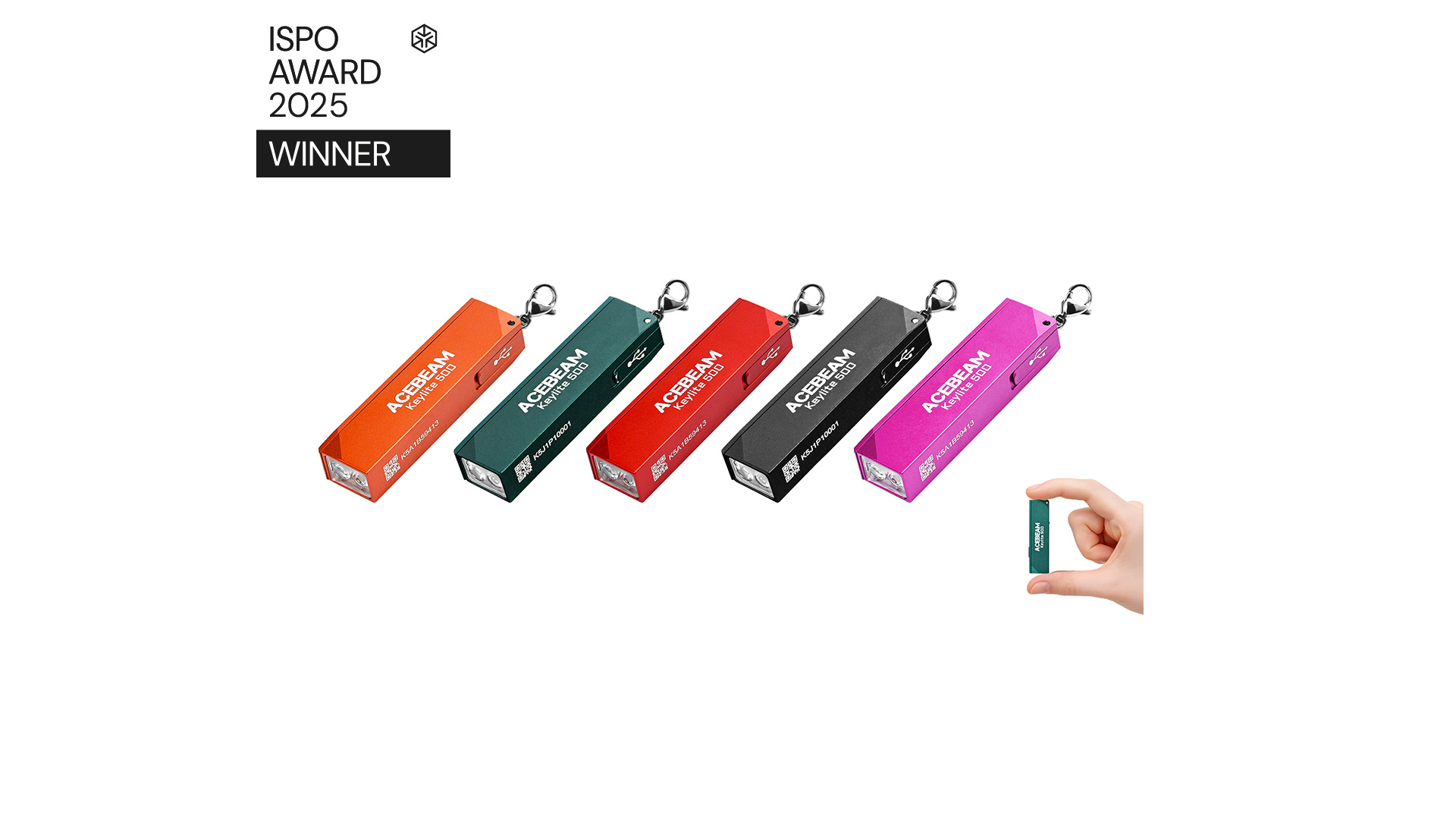
Small enough to disappear in your pocket, powerful enough to turn night into clarity — the new Acebeam Keylite 500 redefines what a keychain flashlight can do. For outdoor enthusiasts, urban explorers, or anyone who values reliability in compact form, this mini powerhouse proves that true innovation often comes in the smallest packages.
Weighing just 19 grams and measuring under 6.1 cm, the Keylite 500 feels almost weightless – yet its beam cuts through darkness with an impressive 500 lumens. That’s more than enough to light up a trail, find your way back to camp, or simply unlock your bike in the dark.
Its dual-LED design is where the magic happens: one LED delivers powerful, focused brightness, while the other emits a soft, eye-friendly glow. The result? A tool that adapts effortlessly, whether you’re repairing gear, reading a map, or navigating a power outage at home.
Crafted from aerospace-grade aluminum, the Keylite 500 feels reassuringly solid, built to handle real life’s bumps and scrapes. It’s rated IP66 dust- and water-resistant, with 1.5 meters of drop protection, meaning it’s just as ready for a rain-soaked trail as it is for a hectic commute.
Despite its toughness, the design language is sleek and minimalist. Smooth contours, a matte finish, and subtle color options in red or green make it as stylish as it is functional. It’s that rare piece of gear that feels equally at home clipped to a climbing harness or hanging from a handbag.
“Acebeam has always been committed to pushing the boundaries of lighting performance and design. With the Keylite 500, our goal was to strike a perfect balance between power, design, and user experience, allowing every user to feel the strength and craftsmanship behind Acebeam.”, says Michael Song, Product Manager at Acebeam.
The Keylite 500 charges quickly via USB-C, ensuring you’re never left in the dark for long. Its intuitive one-handed operation makes it practical for on-the-go use, while the soft-glow mode proves a thoughtful addition — ideal for late-night walks or gentle, close-up tasks.
It’s also a product developed with women’s needs in mind: compact, comfortable to carry, and designed for intuitive ease. It’s light, bright, and empowering, a simple but meaningful tool for everyday independence.
At an accessible €11.90, the Keylite 500 brings premium engineering to the everyday. It embodies Acebeam’s philosophy of making professional-grade lighting accessible, durable, and genuinely useful.
"From emergency preparedness to night-time adventures, it’s the kind of gear you forget you’re carrying — until you need it most. And when you do, it delivers not just light, but reassurance." ISPO Award Jury

The EDV x i:D Aether S1 is a versatile low-cut sailing shoe designed for professionals. It protects against friction, expels water quickly, and features an eco-friendly rubber outsole for a more sustainable use in water sports.
Imagine yourself on deck, harnessing the wind as you steer through rough waters. Each pull of the sail brings your shoes into contact with the boat’s tough surfaces, where stability and comfort are key. EDV x i:D Aether S1 shoes are built for exactly that. Developed under Vanbestco’s innovation leadership, in collaboration with Équipement de Vie (EDV), a UK brand renowned for high-performance sailing footwear. Vanbestco, a Taiwan-based leader in advanced outdoor marine performance innovation, spearheaded the Aether S1 development process, integrating sustainability with high-performance design. »Inspired by our shared island heritage, Taiwan and the UK, both surrounded by the sea, we set out to create deck shoes that merge peak performance with genuine sustainability, delivering for professional sailors while respecting the ocean that connects us«, the joint R&D team explains.
»We built multiple prototypes and refined each one with partners and athletes. Their hands-on feedback ensured the final version offers the best fit, feel, and performance so every sailor wearing Aether S1 can trust it under pressure«, the team details their collaboration further. During this process of prototyping and brainstorming, great attention was also paid to the feedback of athletes testing the shoe in real-world conditions. »Athletes told us exactly where and how their feet moved and met friction on deck. Using that input, we customized the LENZI Perspair® upper to deliver top-tier protection and abrasion resistance while staying light, breathable, and strong. True to the “less is more” philosophy.« For example, the drainage layout and grip pattern of the outsole were developed straight from the feedback of the experts. These practical insights guided each design iteration until the shoe could shed water in seconds and maintain grip on wet, unpredictable decks — enabling confident, agile movement.
The EDV x i:D Aether S1 features a LENZI Perspair® woven upper which strategically combines Kevlar® for cut resistance and PUtek® for abrasion protection, precisely reinforcing high-stress areas like the toe cap and eyestay. This construction approach was led by Vanbestco’s materials engineering team, ensuring
performance optimization through every prototype cycle. Meanwhile, the vamp remains lightweight and breathable, thanks to its integration of monofilament yarns. This innovative single-layer construction ensures sailors stay agile and comfortable during long hours on deck, without the added bulk or weight of traditional multi-layer designs. And when it’s time to take a break below deck, simply collapse the flexible heel to slide the shoes on and off with ease. This thoughtful feature allows sailors to move around the cabin comfortably for quick rests or short walks, and also makes pulling on and off the shoes really quick and easy. Whether you’re tacking, jibing, or enjoying a brief break in the cabin, Aether S1 keeps you moving effortlessly while providing the durability you need to face marine environments.
As a versatile state-of-the-art sailing shoe, its advanced materials also set the EDV x i:D Aether S1 apart. As already detailed, the upper is made from LENZI Perspair®, a lightweight yet durable single-layer weave that provides protection while allowing breathability. For insulation in cold, wet conditions, Yulex® offers a flexible natural alternative to neoprene. Inside, a removable Blumaka™ insole made from recycled ETPU enhances comfort and slip resistance. The Kevlar® Lock & Quicklace system ensures a secure fit that can be adjusted quickly and also allows you to secure or release your shoes instantly, even with wet or cold hands. Durable Kevlar® webbing holds firm through the toughest maneuvers. Finally, a flexible, deforestation-free natural rubber outsole with drainage delivers reliable grip and stability on wet deck surfaces.
Reflecting on the journey, the team at Vanbestco described what winning an ISPO Award means: »This recognition celebrates the journey: months of trials, redesigns, and honest conversations with our partners at Équipement De Vie. We built the Aether S1 together, layer by layer, and that's where real progress happens. It's a powerful moment - encouraging us to dream, and to believe in what's possible.« This milestone underscores Vanbestco’s ongoing mission to advance sustainable innovation across marine environments.
»It's apparent that a lot of thought has gone into this high-performance sailing shoe: The design is functional and offers great protection, while sustainable options of materials have been used, making it a great companion for professional sailors in rugged marine conditions.« ISPO Award Jury
Advanced multi-functional material integration: reinforced in high-wear zones, ultralight vamp, collapsible heel
Sustainable materials, i.e., Yulex®, bio-based neoprene alternative, recycled Blumaka™ insole, and deforestation-free natural rubber
Purpose-built for professional sailors and challenging marine environments
Targeted reinforcement, thermal insulation, and advanced drainage for wet surfaces
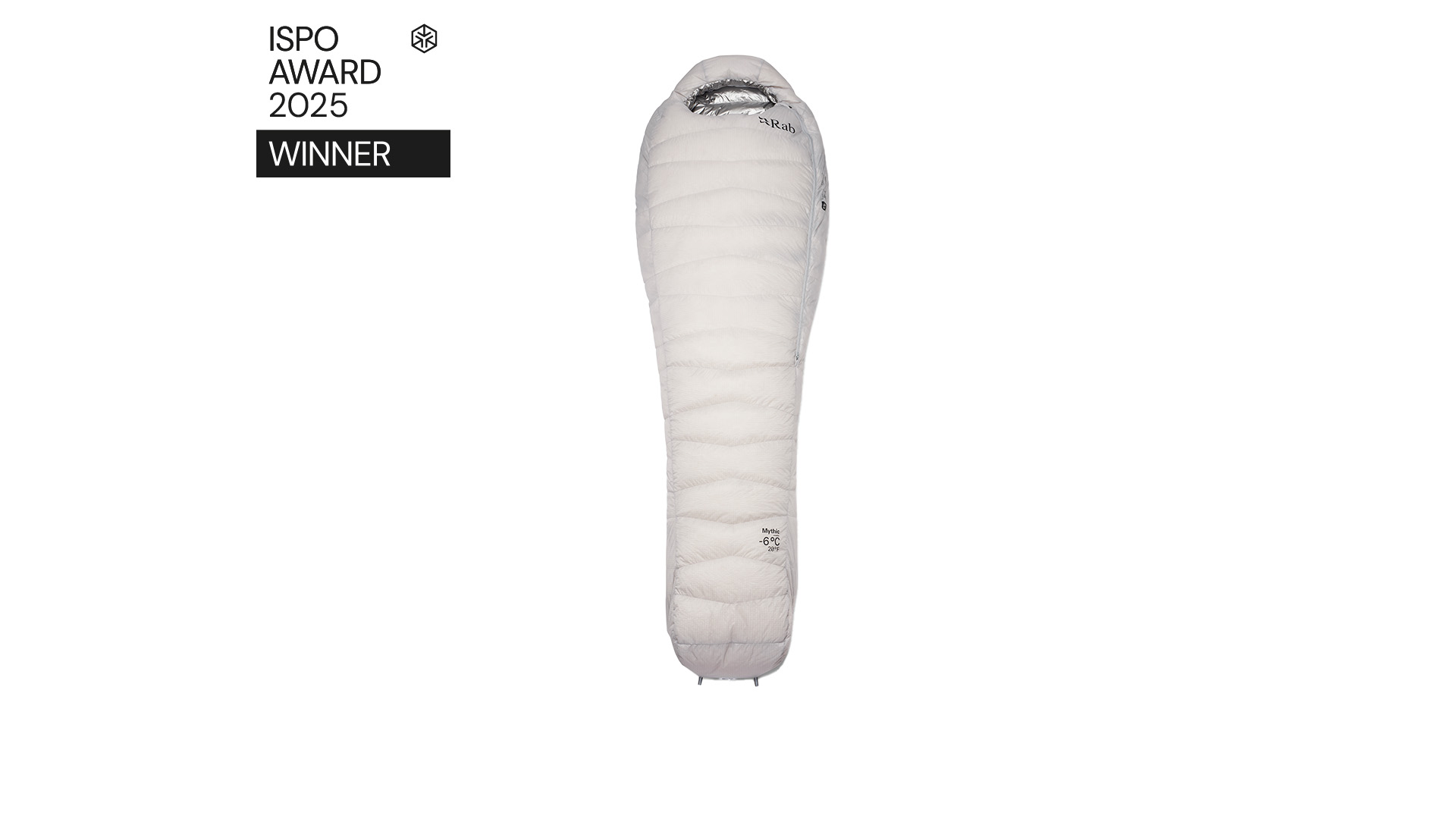
With the Mythic -6, Rab receives the ISPO Award 2025—a technical sleeping bag featuring patented baffle technology that combines innovation, low weight, insulation, and sustainability.
In alpine terrain, carrying less often means giving up comfort. Rab’s Mythic -6, winner of the 2025 ISPO Award, breaks that logic. At just 700 grams, it delivers true cold-weather performance through a precisely engineered design. The core: 900FP RDS-certified goose down and Rab’s patented L.O.F.T 3D baffle construction. Twisted into a helix shape, the offset baffles prevent cold spots and increase thermal efficiency—while keeping weight and volume to a minimum.
This focus on material logic runs through every detail. The Mythic -6 uses 10D Pertex Quantum for its outer shell—light yet durable—combined with recycled Atmos lining and Thermo Ionic Lining Technology (TILT) to retain heat. A PFAS-free hydrophobic down finish keeps insulation dry and lofting, even under moisture stress.
“Winning an ISPO award for the Mythic-6 validates our commitment to innovation and excellence. Our product development teams have created technologies that directly address what mountain people need in the field. We’re now working hand-in-hand with our retail partners to bring these award-winning products to market with strategic and targeted approaches.” Hervé Domenighini, European Sales Director at Rab
The Mythic -6 is part of a wider overhaul of Rab’s sleeping bag range. “We’ve completely reimagined our Spring/Summer 2026 sleeping bag collection from the ground up,” explains Tim Fish, Rab Product Director. “The Mythic bags showcase the pinnacle of our engineering capabilities, featuring patented L.O.F.T 3D technology that exemplifies our passion for innovation. This technology breakthrough has elevated our entire range of versatile sleeping bags.”
Beyond engineering, the Mythic -6 reflects a shift in how Rab balances performance with responsibility. All down is treated with a PFAS-free Grangers finish. The lining includes recycled materials. Packaging is redesigned: polybags with recycled content, paper-based tape, and recyclable outer cartons. And crucially, the bag is hand-filled in the UK, with production partners audited under the amfori BSCI framework and supported through Rab’s Fair Wear membership.
Ultralight, technically sharp, and transparently made—the Mythic -6 shows how Rab translates mountaineering know-how into product innovation. Its ISPO Award 2025 win marks more than a single product success; it reflects a shift in how high-performance gear is developed. By uniting patented design, recycled materials, and regional manufacturing, Rab sets a new reference point for what technical equipment can be. For specialist retailers and alpine professionals alike, the Mythic -6 isn’t just another sleeping bag—it’s a signal that function and responsibility are no longer in conflict, but advancing together.
"The Mythic -6 impresses with a consistently executed technical innovation: despite its low weight, the patented L.O.F.T 3D baffle construction marks a clear advancement in sleeping bag design. This high level of engineering is complemented by well-thought-out details, premium materials, and a responsible, PFAS-free finish. The result is a product that credibly brings together innovation and sustainability." ISPO Award Jury