


Customs in the asphalt jungle are getting rougher: the denser the traffic and the less space for everyone involved, the more friction arises. This is where tempers can quickly flare - especially among species of different kinds, such as drivers and cyclists. How can we make our streets safer again? An offer for reconciliation.
Pedestrians and cyclists, cars and vans, scooters and e-scooters. Plus delivery traffic, buses and trains. And all at the same time during rush hour. Especially in cities, the limited space available strains the nerves of road users. Often, there is nothing more than a good intention to be mindful and considerate. There is stress, especially between cyclists and car drivers. Everyone insists on their rights, there is scolding, blocking and sometimes even endangering. Especially in big cities, cyclists are often fair game: blind spots, disregarded right-of-way, disregarded minimum distances. But some bikers are no angels on two wheels either: ignored traffic rules, curses, gestures, kicks against metal behemoths. The relationship between the parties seems more strained than ever. Yet most people know both sides. What's going on our roads?
Cities around the world are groaning under too much traffic, congestion, and exhaust fumes - and suffer from a lack of space. Example from any European metropolis: Two lanes in each direction are reserved for cars, with a row of parked cars next to each, making a total of six lanes. The street car runs in the middle. On the very outside, between the parked cars and the building facades, there are two narrow lanes for cyclists and pedestrians, together less than a single car lane. Pedestrians and cyclists also have to share this space with the displays of stores and outdoor restaurants. When various delivery services also block bike or pedestrian paths, things get really wild.
The origin of this dilemma goes back many decades. The car has dominated transportation planning since at least the 1960s. We built roads over passes and rivers, tunnels through mountains, highways, parking garages, parking lots and traffic lights that are really only there because there are cars. In Berlin alone, there are currently 1.18 million cars. Heinrich Strößenreuther, industrial engineer, co-founder of KlimaUnion and environmental activist, recently calculated in a study that mobile individual traffic in Berlin accounts for 39% of public road space. Another 19% is occupied by stationary mobile individual traffic, i.e. parking spaces. The share of space for bike lanes is a meager 3%. When one considers that 30% of daily commuting in Berlin is done by bicycle, and thus more than by car, it becomes clear that the infrastructure no longer matches the usage. And this is where politics is called upon to play a decisive role.
Katja Diehl is an author, podcaster and traffic turnaround activist. She does not demonize the car; after all, she says, there are legitimate reasons for people to travel by car. "However, it must be advantageous to leave the car behind. That happens when the alternatives become more attractive and available," Diehl said. "We have to succeed in creating land use equity." That this is a long way off in many places is shown not only by studies from the German capital.
Some cities do it better, and some do it even faster. Every two years, the German Bicycle Club (ADFC) conducts a nationwide online survey to determine the most bicycle-friendly German cities - the so-called Bicycle Climate Test. The result: Bremen is currently the most bicycle-friendly major city in Germany. More than 800 kilometres of excellently signposted cycle path network, special sovereign rights for cyclists or exclusive cycle routes are just some of the parameters that give Bremen 1st place in the large city category. In the Hanseatic city, cycling is a way of life. Münster, with Germany's largest bicycle parking garage for up to 3,500 spaces and its own bicycle highway, is also at the top of the ranking. Both champions are copenhagenized cities.
Because the role model for many city planners and politicians is Copenhagen, which is considered the most bike-friendly city in the world. Bridges for cyclists only snake through the entire city, wider bike lanes, bike parking garages - in Copenhagen, the bicycle dominates the cityscape. Although cycling is not always stress-free, especially in rush-hour traffic, Copenhagen recognized the advantages and began its mobility concept 50 years ago. The Danish treasury, especially the health service, says it saves almost one euro per kilometer cycled. Driving, on the other hand, costs the state money and drivers often precious time in traffic jams.
Paris has shown that it is possible to achieve success more quickly. The French capital is taking radical steps to reduce car traffic. Mayor Anne Hidalgo's goal is to prevent traffic collapse in the city and give Paris back to pedestrians, bikers and children. To this end, she has, among other things, converted a city highway on the Seine into a pedestrian zone, eliminated 60,000 parking spaces and introduced 30 km/h speed limits practically throughout the entire city. Such ideas are a long way off in Germany, often for fear of losing votes. For Anne Hidalgo, however, the course has paid off: she was re-elected for a second term in 2020 on the strength of her program.
"At the state and local level, the transport turnaround is currently progressing faster than at the federal level. But in general, things are going slowly," says Katja Diehl. The facts: For the maintenance and operation of highways, the federal budget for 2024 provides a whopping 11.5 billion euros, remaining at the previous year's level. By contrast, the federal government's support of state and local governments for the expansion of bike paths continues to decline. 400 million euros will remain for cycling in 2024, down from 750 million euros in 2022. As disappointing as these figures are: Katja Diehl nevertheless draws something positive from them: "At least people are finally talking about this disparity. It is finding its way into the public domain. That wasn't the case for many years." Nevertheless, the traffic turnaround is a work in progress and, at least in Germany, is currently still moving at walking speed. But how do we get a grip on aggression for so long? We have a serious appeal.
Dear drivers, look more often in your side mirror and show consideration! All cyclists you meet protect the climate and actively contribute to the traffic change. You should always keep this in mind. Also, look more often in the face in the rearview mirror and ask yourself: Do I really have to move the car for this ride? And keep an eye on the blind spot, but don't look back to the old days! Because drivers will have to learn to do without. Cities must not only be decarbonized, but also "de-cemented" to create more cooling green spaces. And for this, the automobile will have to take a back seat.
Dear cyclists, look ahead and be patient. Because cycling is indispensable for the traffic turnaround and the necessary infrastructures are being created bit by bit. Be tolerant and do not curse every person in a car. There are people who are dependent on the car. And at the end of the day, you can simply be glad that you are on the road by bicycle. After all, driving a car costs a lot of money, and often a lot of lifetime as well.
We plead for more understanding, more consideration. After all, we have a common goal and that is to arrive healthy! If everyone shifts down a gear, then things can be a bit more harmonious on the roads again. Politicians, on the other hand, are welcome to shift up three gears!

Cool sports venues and the stories, subcultures and personalities associated with them give cities a special flair. From classics like Muscle Beach in Santa Monica to urban bouldering spots in Melbourne, we've taken a closer look at what keeps the desire for sports firmly rooted in the city.
Streetball courts in New York, the Eisbach wave in Munich, Muscle Beach with circus performers and slackliners in Santa Monica, fitness fanatics and bodybuilders in Venice Beach - special sports venues embedded in urban life are sightseeing and Insta-spots. At the same time, they are meeting places for locals. In a Paris suburb, too, a basketball court sandwiched between two apartment buildings glows in bright colors. The court on Rue Duperré was designed by Stephan Ashpool, founder of the Pigalle fashion label, and built with the help of Nike. On the court, Ashpool trains with children from the neighborhood or even presents his collections. The project at the intersection of lifestyle, design, and social issues has been successful: In 2020, it received a redesign, and in Beijing, Pigalle and Nike are jointly designing another street court. Around the world, more and more courts designed by local artists are being added, which Nike supports as a social project to get young people from the neighborhood and especially girls onto the court and into sports.
Art and action sports - the perfect symbiosis
Outdoor sports are also at home in the city in modified form. For example, instead of being used in alpine terrain between rock pillars, the slackline is now stretched between trees or artificial pillars in city parks or on the beach. The manufacturer Gibbon led the way: "We wanted to make the sport of slacklining more accessible. Meanwhile, the slackline is the meeting point and brings everyone together. Especially in Brazil and Chile, but also in Japan, there are strong trickline communities," says Gibbon CEO Robert Käding.
But the trend sport of bouldering has also made the leap from rock into the concrete jungle. It owes its popularity above all to the training opportunities in the city. Cities such as Melbourne, Madrid, Barcelona and Shanghai show that this does not have to be limited to commercial indoor facilities. Public climbing and bouldering walls offer free training areas for athletes. They are lit and supervised by the city, and volunteers take over the construction and bolting work. Underpasses or pedestrian tunnels in particular offer protection from the elements and make the wall usable year-round. In this way, formerly dead corners become busy hotspots. In Munich, too, the DAV group "Kraxlkollektiv" is building one of the world's largest publicly accessible urban bouldering walls in a street underpass.
Action Sports: Now also where you are
The idea of using free outdoor sports facilities is not new, of course. The original Muscle Beach in Santa Monica already experienced its first heyday between 1930 and 1950, and the Trimm-Dich trails in Germany also found a large following in the 1970s and 1980s, triggered by the 1972 Olympic Games in Munich. In today's society, however, special experience spaces are not only significant if they are particularly "Instagrammable".
In sociology, we also talk about the third space, which primarily refers to places beyond the home (first space) and the workplace (second space). Digitalization is increasingly blurring the distinction between the first and second spaces. Work is done in the home office, remote work or workstations are becoming the places where we want to spend time and experience things after work. Sports and exercise also play a role in this.
Offering sports free of charge not only promotes the general health of the population, but is also a locational advantage for cities: shared experiences on the sports field strengthen the feeling of togetherness and identification with the homeland. At the same time, in times of scarce space and busy lifestyles, it makes sense to revitalize transit areas in the city with additional sports. Playgrounds and programs for children are booming, as are free or low-threshold exercise programs for adults - from skate parks to weight training.
After all, letting off steam doesn't just make sense for youngsters. Spaces where exercise and training can be done publicly and free of charge are important for our entire society, regardless of age. They make a neighborhood or a city more livable and convey an even stronger sense of belonging if residents are involved in the creation of the offerings. Example New Zealand: After the devastating earthquake in Christchurch in 2011, sports halls were closed or destroyed. There were hardly any meeting places left for people. But the "Gapfiller" initiative gave rise to various projects to make use of the gaps in the urban plan of the destroyed city again: with Gap Golf, a mini-golf course spread over various corners of the city, or with the Dance-O-Mat, a public dance floor including a disco ball on which people can play their own music via a converted washing machine. This has been so successful that even King Charles has shaken a leg there - alongside schools or dance groups for tango classes.
Piloxing: when pilates, boxing and dancing unite
The extent to which sports are actually possible in the city depends on sensible urban planning and management. When it gets dark earlier in the fall or winter, a budget is needed to build and operate floodlights so that a round of skating is still possible or basketball can be played after homework or work. To be as cost-efficient and climate-friendly as possible, cities like Munich are experimenting with timers to extend floodlighting hours, but also with accessible controls so that the lights are only on when the court is in use.
Urban Mobility: reinventing the wheel
Places for being outside increasingly exist embedded in urban life and the respective character of the city. And when the city's location meets planning finesse, special recreational spaces can emerge, such as the Harbor Baths in Copenhagen: man-made swimming pools with sunbathing areas create quality of life in the middle of the big city. But spaces no longer in use that are repurposed as sports and recreational areas can also offer great added value. Also in Copenhagen, there is an artificial turf ski slope on top of a waste incineration plant: the "CopenHill." Other examples include a skating track at the former Tempelhof Airport in Berlin or Europe's largest indoor diving area in an old gasometer in Duisburg.
When brands and artists get involved, history, culture, lifestyle and sport combine to create a special mix that is often only possible in the city. Or at ISPO Munich: By the way, if you want to experience Ashpool's design competence up close, you should visit the Zeitgeist exhibition in the Future Lab at ISPO from Nov. 28 to 30, 2023. Because there will be a basketball court there that was also designed by the mastermind of the famous Pigalle Court in Paris.
Calisthenics exercises for beginners and advanced

The power of sport: More and more athletes are raising their voices and using their reach to be role models in the fight for more rights and inclusion for the LGBTQ+ community. A look into the future and the new guidelines for trans athletes also gives hope.
Megan Rapinoe now has more than two million followers on Instagram. Why is that special? Because Megan Rapinoe is considered THE voice of the LGBTQ+ movement in professional sports. Almost every one of her social media posts reaches millions of people. In them, she engages in one way or another with the fight for social justice that Rapinoe, along with her wife Sue Bird, also a top athlete, is waging in U.S. society. And the fight is important: To date, for example, no active soccer player in the men's national league in Germany has come out. "Gay" is furthermore still used as an insult in many sports. It is meant to deny athletes their masculinity, which is associated with power and strength. But there are positive developments as well. In large part due to women like Megan Rapinoe and Sue Bird speaking out and thereby advancing LGBTQ+ rights and inclusion in sports.
Athletes who have come out themselves or see themselves as allies play an important role in the acceptance of LGBTQ+ in sports. On the one hand, they provide visibility, but they also give the topic a face and a story.
However, many athletes come out only after their careers have ended, because they still have to fear disadvantages. Some major sponsors, on whom professional athletes are usually dependent, may withdraw financial support for LGBTQ+ athletes for various reasons. Equally, there could be reprisals by the sports federation or the own state, such as the exclusion from tournaments despite sporting qualifications.
In America, NFL star Carl Nassib caused a stir with his coming out, currently playing for the Las Vegas Raiders. He followed national soccer player and activist Megan Rapinoe, who spoke out about her homosexuality back in 2012 and is known for her political commitment to the LGBTQ+ community. Nassib is the first active NFL player to come out about his homosexuality. This is notable because American football in particular is strongly associated with the patriarchal view of masculinity.
A prominent example in Germany is Thomas Hitzlsperger, who made it to the German national team as a soccer player. Shortly after his career ended, he confessed his homosexuality in a major newspaper interview in 2014. However, he always dismissed questions about the reasons for his late coming out - although the outing was very positively received by officials and fans. Since then, he has publicly campaigned for LGBTQ+ rights.
While for Hitzlsperger, Nassib and Rapinoe there was no professional regression, for Chinese national soccer player Li Ying her outing in 2021 was presumably the end of her career. In China, homosexuality is not explicitly banned, but is often socially associated with resentment. Ying was no longer called up to the national team and was not allowed to take part in the Tokyo Olympics, although this was not officially justified on the grounds of her sexuality.
Lia Thomas sparked an international controversy. The trans swimmer began competing in the women's category during her transition and achieved considerable success there. Conservative America in particular reacted harshly with debate and, in many places, far-reaching anti-LGBTQ+ laws. The IOC (International Olympic Committee) then deepened its efforts to re-regulate the grouping into tournament categories by gender.
Social media plays a major role for the LGBTQ+ community. On networks such as Instagram, TikTok or the Chinese platforms WeChat and Weibo, athletes can provide personal insights into their lives. And they position themselves: for example, by publicly showing their everyday life, reposting campaigns and important messages, or interacting with other accounts. In this way, they become tangible and identifiable figures for fans from the LGBTQ+ community. Young people from the queer community in particular feel close to them.
At the same time, this publicity is associated with negative experiences for many. Hate speech, insults, misanthropic comments and even concrete threats are daily experiences of prominent queer athletes. Add to this the equanimity or even incomprehension of many people outside the community who cannot understand why LGBTQ+ athletes* expose themselves to this negative energy.
Nevertheless, the outreach is invaluable to the queer community. Visibility and attention to LGBTQ+ rights are strengthened by large accounts. As a result, the issue reaches many people outside of the social bubble.
The first queer sports club in Europe was founded in Cologne in 1980: SC Janus. In 1982, the first Gay Games took place, which are based on the Olympic Games and aim to offer homosexual athletes a sports event without queer hostility. They take place every four years and are part of popular rather than professional sports, as no qualification is required to participate.
The number of queer sports clubs has been growing steadily since then. They want to create a safe space where LGBTQ+ athletes can pursue their sports without interference. Some clubs allow heterosexual people to participate as well, while others specialize in only single queer groups.
The visibility through a club and the team spirit among like-minded people are an important building block for many sports enthusiasts - also for the acceptance of non-heterosexuality. However, voices are repeatedly raised that see this as a delay of inclusive sport, in which sexuality should not play a role. The clubs usually counter this with the answer: Safe Spaces will exist as long as the sport makes them necessary.
Members of the LGBTQ+ community are still threatened by misanthropy, exclusion and insult in everyday life. They suffer sexual or sexualized violence and discrimination disproportionately more often. In 69 countries around the world, homosexuality is still punishable by law, and in seven of them same-sex sex is even punishable by death.
In public, it is therefore perceived as courageous to come out or to act as an ally. Because professional consequences are not uncommon. Not only the loss of sponsors, but also the denial of participation in competitions or the exclusion from teams. This is rightly feared by many queer athletes. In addition, depending on the sport or the prominence of the athletes, there may also be safety concerns.
Periodically, the issue of LGBTQ+ rights comes up when countries are involved that persecute queerness by law. One example was the Men's World Cup in Qatar - keyword: one-love-tie. The Gulf state, known for its queer hostility, required gay sports fans not to show their sexuality in public during the games. Even the rainbow flag was banned.
The way professional associations and sponsors deal with this issue is generally very different, partly because high investments and sponsorship money are associated with these competitions. And even among the athletes, the moral question of whether participation under these conditions is justifiable is controversial.
Since the Lia Thomas case, a fierce debate has raged around the question of whether trans women athletes can and should compete against cis women in competitions. The competition of trans men against cis men is much less of an issue due to the physical constitution.
The IOC is currently drafting new guidelines to address the complexity of the gender issue. Involved are many voices from science, but also considerable pressure from different currents within society.
Currently, a concept is under discussion according to which unverified and only apparent competitive advantages based on gender or physical differences should not lead to the exclusion of a female athlete. Thus, until scientifically based arguments prove otherwise, it is to be assumed that trans and inter female athletes do not have an unfair advantage. Both the LGBTQ+ community and academia welcome this right to self-determination and privacy.
Yet, for many, this concept ignores demonstrable, biological differences - such as the physical development of trans women when they do not begin transitioning pre-pubescently. These are often broader-shouldered and more muscular than cis women of comparable age due to a history of athleticism, but this is not completely equalized by hormone therapy. Similarly, there is no place for the question of whether inter women with higher testosterone levels than cis women have a competitive advantage in some sports.
Furthermore, the debate ignores the fact that for professional sports, it is rarely exclusively the muscle mass present that is decisive and that many other factors such as hand-eye coordination, fine motor skills or balance are of great importance. One of the ideas originally planned was therefore to have professional associations proactively research whether there are significant differences between cis men and women and trans men and women in their sport. Based on the results, a fair regulation should then be made specifically for that sport.
The World Rowing Federation then established testosterone guideline values for women's competition. In the case of inter athletes, an expert* panel decides on a case-by-case basis. However, the federation emphasizes that they only want to classify athletes and do not make any assessment of therapeutic measures.
The World Rugby Federation, on the other hand, now categorically excludes trans women from the women's class. It justifies this with safety concerns for the physical integrity of the participants.
A debate on trans men has not yet taken place and is not in the IOC's concept paper. So far, no professional association has commented on trans men having an advantage due to a smaller, lighter body.
Due to the visibility of LGBTQ+ athletes through their platforms, federations and involved companies are increasingly under pressure to position themselves. Likewise, bogus measures to improve inclusion - so-called pinkwashing - are denounced by those affected, thus enabling actual progress.The queer athletes* make the principle of empowerment clear: "Not without us about us!"
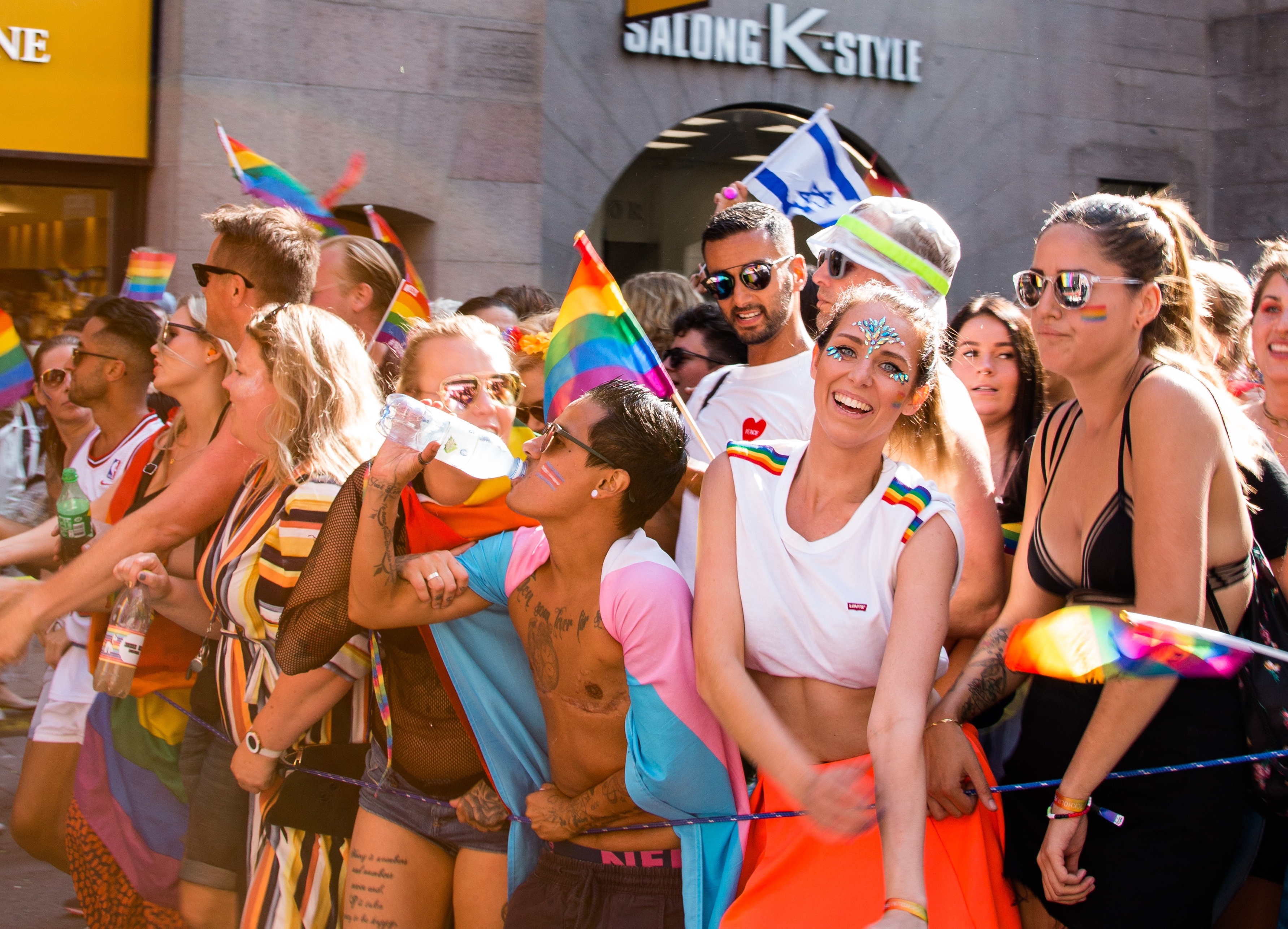
Sport connects and brings people together. The fact that there is still too much segregation nevertheless is shown by the current transgender debates. LGBTQ+ people still face challenges in the sports industry. What's missing for truly gender-inclusive sports? An approach to a controversial topic
A youth coach said Søren Dahl that he would never be successful as a swimmer if he came out as gay. A few years later, the Dane mentions this story in a TikTok video - with images of his participation in the 2016 Summer Olympics in Brazil playing in the background. So happy ending? For the openly gay Dahl, maybe. But the story of queer athletes' struggle against discrimination is far from over.
The Olympics are a model for the entire world of sport and are praised for the hugely important contribution to queer visibility in elite sport. But while progress is celebrated on one side, regressions give pause for thought on the other. Because (especially) in competitive sports, significant distinctions are made among LGBTQ+ athletes: queer does not always equal queer.
At the 2021 Summer Games in Tokyo, eight times more women than men officially counted themselves as LGBTQ+ athletes*. To date, only a few active male athletes have come out publicly about their homosexuality: Besides Olympic swimmer Dahl, for example, it's his friend and professional football player Carl Nassib, the only known homosexual player in the NFL since coming out in June 2021. In men's soccer, too, the open treatment of homosexuality is a problem. While soccer was the sport with the most out queer players at the Olympics, only a handful of professional soccer players worldwide have come out so far:
The first tragic example - which certainly kept many athletes from coming out - was that of Justin Fashanu in 1990. His career suffered extremely from his sexual orientation: After years of contempt and a hounding by the press, he took his own life at the age of only 37. It wasn't until the fall of 2021 that Joshua Cavallo of Australian first division club Adelaide United became the second active professional soccer player to come out as gay. The first European players followed in 2022: Jake Daniels of Blackpool FC and Scotland's Zander Murray. Most recently, Czech professional Jakub Jankto made his homosexuality public - and thus made headlines. Which describes the core of the problem: Coming out is a huge topic in men's soccer. When asked why, advisors and the environment are often cited as factors that hold them back. Even former DFB captain Philipp Lahm advises LGBTQ+ footballers in his 2021 book "The Game. The World of Football," advises against coming out during their active careers. The reason for this, he says, is the lack of acceptance both in the Bundesliga and among fans in the stadiums.
But why does dealing with homosexuality in women's and men's sports differ so seriously? Dr. Birgit Braumüller, researcher and lecturer at the Institute for Sociology and Gender Research at the German Sport University Cologne, explains in an interview with the German Olympic Society: Sport, she says, is considered the last domain where male-connotated behavior is accepted. This makes it more difficult for people who do not conform to the male image - especially in stereotypical male sports such as soccer or handball - to participate. "The thought structure that assumes gay athletes are close to femininity denies them the ability to succeed in a physical and strength-based sport." For women, he said, it's the other way around: "If you look at history, women don't belong to sports qua gender. Lesbian athletes, who are often thought to be close to typically male characteristics and behaviors, are therefore a bit of a better fit for sports."
Sports industry only partially open to LGBTQ+ people
In addition to the different treatment of homosexual and bisexual men and women, people who do not fit into the binary gender system have a particularly hard time: transsexuals, intersexuals and non-binary people. The unequal developments regarding the acceptance of sexual orientation and gender identity are addressed, among others, by "Sports Media LGBT+" - a network that advocates for inclusion in the sports media industry and in sports in general.
After repeated surveys of sports media employees, findings suggest that while the industry has become more LGBTQ+-inclusive in recent years, major challenges remain, particularly in the area of sports media. However, significant challenges remain, particularly for trans and non-binary people: The visibility of LGBTQ+ people in the industry is increasing and, seemingly, so is acceptance toward lesbian, gay, bisexual, and pansexual people. However, in terms of gender identity, there has been an increase in the percentage of respondents who felt that the sports industry is falling short in terms of inclusion of trans or non-binary people.
Exclusion and discrimination experiences of LGBTQ+ athletes* are confirmed in the first area-wide European study conducted by the Sport University Cologne: The results of the study "Outsport - Sexual Orientation, Gender Identity and Sport" for Germany show that 20 percent of LGBTQ+ respondents do not practice their sports - for fear of discrimination, exclusion or negative comments. In particular, trans people (56%) and here especially trans men (73%) feel excluded from certain sports because of their gender identity. Almost all male and female athletes surveyed (96% and 95%) agree: homophobia and transphobia are a problem in sports. 16 % of the study participants have had personal negative experiences due to their sexual orientation or gender identity in the last 12 months - but especially trans people (40 %).
In addition, there are worldwide debates about transgender athletes. While many sports federations are still struggling to find solutions, others have even tightened their rules. After the world swimming federation FINA published new regulations for trans athletes in June 2022, the International Rugby League followed with the exclusion of trans women from international women's competitions. In March of this year, World Athletics (WA) joined FINA's restrictions: transgender women will no longer be allowed to compete in women's world rankings if they have passed male puberty - regardless of testosterone levels. Restrictions that, in fact, hardly any transgender female athlete can fulfill.
How the sport-specific regulations look is left to the federations. The World Athletics Association has sought intensive advice - including from transgender groups, he said. "Many feel there is insufficient evidence that trans women have no advantage over biological women," WA President Sebastian Coe said. The trend is toward ever stricter limits. Cycling's world governing body, the UCI, also updated its transgender eligibility rules with stricter testosterone limits and extended the transition period from 12 to 24 months. A FIFA spokesman confirmed to Deutsche Presse-Agentur that soccer's world governing body was also revising its gender-specific admission rules. It remains to be seen whether FIFA will follow FINA & Co.'s new regulations as a model.
But it is not only the new rules of the international sports federations that give cause for concern. Malicious political discourse and new discriminatory laws - such as the recently signed "Don't Say Gay" law banning education about homosexuality in elementary schools in the U.S. state of Florida - are, too. Previously, many U.S. states, including Oklahoma, Arizona, Iowa and Florida, had passed laws banning transgender women from participating in women's sports in public schools. Other Republican states have taken their cue from "anti-trans policies" and introduced similar bills.
This makes it all the more important to strengthen the idea of diversity in sports, to stifle burgeoning transphobia and to bring the issue to the attention of the general public. In doing so, companies, brands and sports associations should not rest on the fact that rainbow armbands are worn and flags are hung up, also emphasizes Dr. Birgit Braumüller. Education and sensitization must take place even before homophobic, transphobic and sexist tendencies become entrenched, ideally already during the first club sports. "By adopting a clear attitude toward diversity, sports clubs and trainers can create a welcoming culture that forms the basis for shared, diversity-sensitive cooperation," explains Lena Sieberg, diversity officer at the German Sport University Cologne. But there is a lot of uncertainty on the part of institutions and organizations. There is a lack of background knowledge and options for action in order to do justice to gender diversity.
That's why it's necessary to engage in conversation, train staff, fill knowledge gaps, and empower sports teachers in schools, universities, and sports clubs. In the Sports Media LGBT+ survey, respondents wanted more involvement and encouragement for LGBTQ+ staff, as well as specific LGBTQ+ education in newsrooms. Sports clubs and coaches* can sign on to, among other things, the Charter for Gender Diversity in Sport, among others. Sieberg adds, "A first simple step can be to explicitly welcome trans*, inter* and non-binary people on the homepage. Of course, the race only begins with this step and doesn't end there."
In Germany, the draft for the "Law on Self-Determination with Regard to Sex Entry (SBGG)" is available. is available. With the Self-Determination Act, transsexual, intersexual and non-binary persons are to be given the opportunity to change their gender through uniform and simple regulations. With which the transsexual law of 1980, which violates human rights, will finally be completely a thing of the past. A liberating blow for LGBTQ+ individuals who do not identify with their assigned gender.
With the Self-Determination Act, one's self-perceived gender becomes authoritative, one breaks away from the purely physical definition of gender. Yet this is precisely the tension that raises issues in athletic competitions where physical makeup is significant. The Self-Determination Act exclusively regulates the entry of gender in the civil registry. It does not include regulations for organizations, sports federations or clubs. Thus, someone who is legally considered a woman does not yet have the right to be included in a women's team.
It is undisputed that "sport must find ways to enable people who are currently still excluded and discriminated against to participate on an equal footing," says Sabrina Huber, gender equality officer at the German Olympic Sports Confederation (DOSB). "That there are possibilities is shown to us by associations such as the German Hockey Federation or the German Football Association, as well as clubs such as Seitenwechsel e. V., a sports club for womenLesbiansTrans*Inter* and girls." Formats such as the Federal Network Conference on Queer Sports (BuNT) bring together different stakeholders, raise awareness and show low-threshold approaches to solutions. Non-profit LGBTQ activist groups such as Athlete Ally in the U.S. educate sports communities and successfully exert political pressure on global sports federations through strong campaigns. The increasing number of committed organizations, sports federations, fan projects, and top athletesThe growing number of committed organizations, fan projects, and top athletes working for a sports culture that is open to all genders and sexual identities is a source of hope.
Anna Katharina Mangold, professor at the European University of Flensburg, expresses her views on the gender issue in the successful German podcast "Lage der Nation" (episode 335) with clear demands: "For athletic competition, performance classes for physiological differences must be developed so that comparability can be established and fair competition can take place." Each sports federation should consider criteria and examine them carefully for each individual discipline: Where does a need for regulation arise? Why do we need the reference to gender? For that, he said, one could certainly define biological differences that are relevant for a sport and performance class. "And here the German Chess Federation will certainly come to different results than the German Football Association or athletics."
Sabrina Huber of the DOSB also thinks that it is possible to act more flexibly in popular sports. On the one hand, clubs and federations are not bound by the specifications of their international umbrella organizations, and on the other hand, it is primarily about the fun of the sport: "Even if the personal best is strived for, we are not in the centisecond or millimeter range. Sport is for everyone. There are already good examples in clubs of how gender-inclusive sport can be practiced, and we need to learn from them. But we need more examples, more creative ideas and attempts beyond the status quo. If new sports are making it into the mainstream, surely new approaches to performance evaluation should too."

Robby Naish, Tony Hawk, Jake Burton: they all did pioneering work in their sport and shaped an entire culture, formed a new attitude to life. Some legends still influence the scene today.
These three up-and-coming talents are shaking up the action sports scene: