

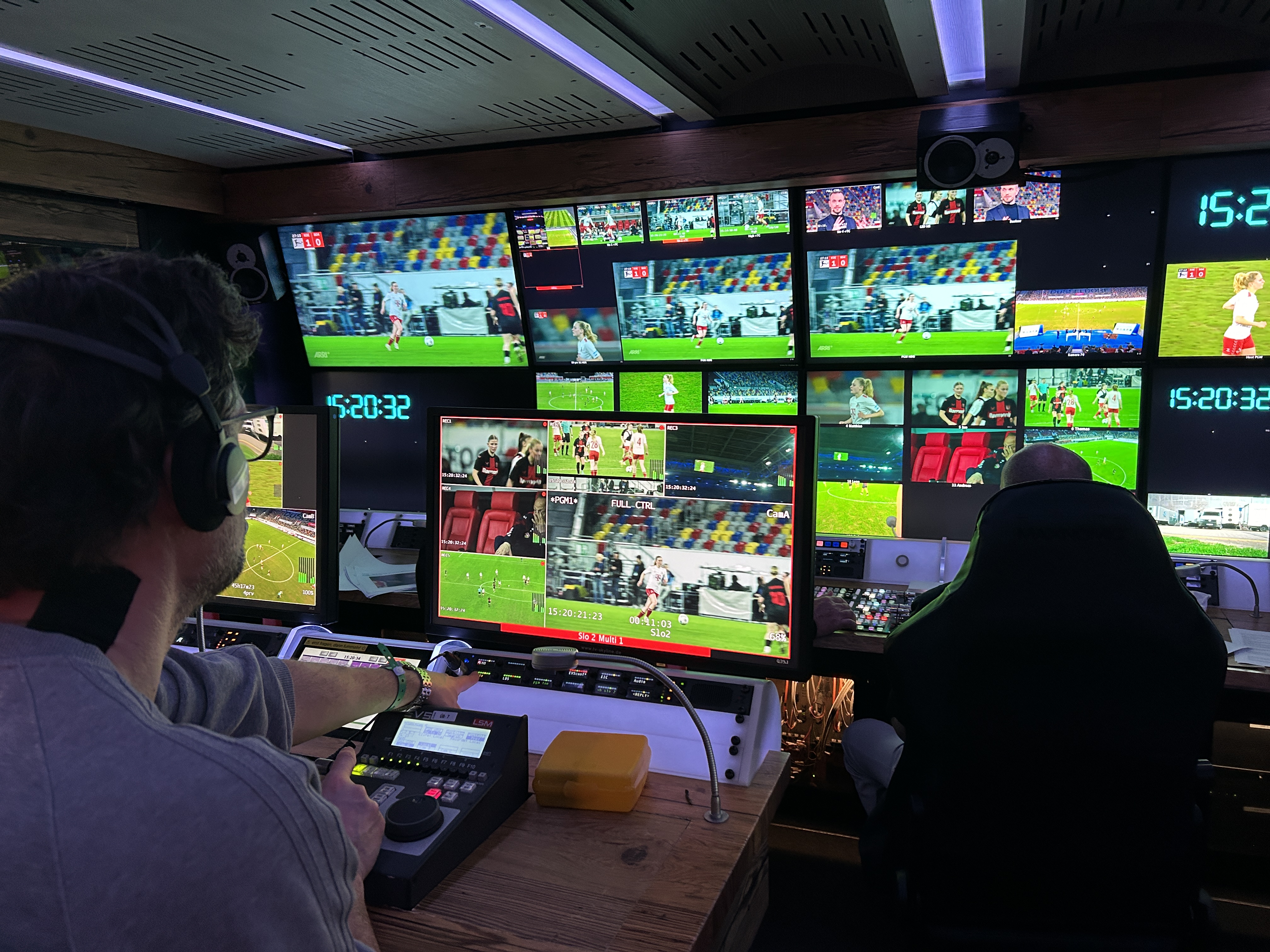
Automated Sports Production is revolutionizing the industry – with automated shots that take a fraction of the time, real-time analytics for even more insights and personalization that truly engages fans. AI holds enormous potential for the creation of sports content - from big TV productions to small clubs. ISPO was on the road for you at the NAB Show in Las Vegas and shows you the most important developments.
Every year in April, broadcasters from all over the world flock to Las Vegas to discover the latest production trends and products at the NAB Show. The fact that AI has long since found its way into production technology is no great surprise. The speed at which this is happening is. Not all technologies will find their way into everyday production - but some tools certainly have the potential to revolutionize sports broadcasting.
As a provider, Amazon Web Services (AWS) was an early adopter of AI and uses a lot of computing power and countless data points to provide statistics and evaluations in the sports sector - for example for the Bundesliga. AWS Match Facts provides soccer fans with in-depth insights into the game and can, for example, call up goal probabilities and statistical data on players.
As a "Generative AI Provider" of the German Football League (DFL), AWS wants to offer much more in the future: In the area of fan experience, automated translations, personalization and localization are to be created in the future with the help of AWS AI. AWS AI will also be increasingly used in media production and video archiving.
AI is also providing a boost in sports coaching because there are now many more tools available to visualize and compare movement sequences, for example. Such analysis systems have become indispensable in sports reporting, especially in soccer. Whether coaching or reporting, this form of analysis has only been possible since AI has been able to process all the data that is collected.
In research, AI is also paving the way for further sports science studies in competitive sport. For example, the German Sport University Cologne recently announced that it has been selected for a joint project with the TIB - Leibniz Information Center for Science and Technology and University Library on the AI-supported analysis of sports videos from the German Research Foundation (DFG).
Scouting, training optimization, rehab: how AI is shaping the future of soccer
For several years now, there have been attempts to automate the production of visual sports content, particularly in the lower leagues, and thus ensure greater visibility, especially in club sports. AI has made such systems possible in the first place. As a rule, cameras are used that follow the action via AI tracking and then stream it to the internet or make it available for viewing. In some cases, these streams are also available for further analysis, for example for tactical analysis, as a tool for coaches or as a basis for fan TV.
Pixellot from Israel develops such solutions. The manufacturer's systems are characterized by a combination of artificial intelligence, machine learning, stationary and portable camera systems, software and cloud computing.
What comes out at the end of a Pixellot production looks like professional sports reporting. The system even automatically generates "highlight clips", for example of players who have scored. What the manufacturer sees as the unique selling point of its products is the wealth of content that is produced with Pixellot systems. According to the company, more than 150,000 games are broadcast every month in around 80 countries. This feeds the Pixellot AI, making it better and better - and thus also increasing the quality of the productions. These systems for automated sports production are usually offered as a subscription model. With the entry-level packages, clubs can produce and advertise their teams' matches even with a small budget.
Sports productions are often about creating content as quickly as possible. However, this is only possible if the editors can easily find the relevant scenes and clips during editing. This is exactly where semantic search comes in, as it offers much more than searching via metadata or tags. A concrete example: If you search for the term "peaceful" in the clip archive using the semantic search, you will get a clip of a sleeping cat as well as a sunset or rolling hills as a result. For editors looking for archive, edited, near-live or live material, this opens up completely new possibilities for finding content.
There are a number of companies working on integrating this functionality into their asset management systems. One of these is the Fonn Group from Norway, whose MAM system Mimir is pursuing a cloud-based production approach. Incidentally, this has also enabled Dyn Media with this approach. The German streaming service uses Mimir for the production of its program. The Berlin-based company Obvious Future goes one step further with its product Cara One. CEO Eddi Weinwurm: "We wanted to develop an AI that doesn't feel artificial, which is why we call Cara One an intelligent media assistant and not an artificial intelligence. Cara One enables a search with an understanding of the world, so to speak".
AI vs. coach - how helpful chatbots really are
However, the underlying AI technology from Cara One makes much more possible. For example, Obvious Future showed "predictive editing" in a demo. The AI analyzes existing raw material, from which, for example, a two-minute piece is to be created, and suggests suitable cuts in a kind of flow chart. Editors can work their way through scene by scene and create an entire piece based on the AI's suggestions.
My coach, the artificial intelligence
Hardly any sport is covered without slow motion. However, not every production has the budget to use the expensive high-speed cameras required for this. It is also often the case that the production teams cannot set up a slomo camera in every position at the event location and can only fit smaller, more compact cameras.
In such cases, AI can help. There are now a number of providers that can generate slowmotions using software. EVS, for example, has developed XtraMotion a solution that uses AI to calculate a superslomo from a camera signal with a normal frame rate. The special thing about it: XtraMotion only needs a few seconds to do this, so that the calculated slomos can be used immediately in the TV broadcast.
Thanks to AI, high-quality slow motion does not always have to be expensive, as Riedel Communications proves with its RiMotion solution which combines extensive replay functions, including super-slow motion support, with an innovative, user-friendly interface. Other manufacturers are now also able to offer slow motion using AI-driven solutions, such as TVU Networks or Blackmagic Design. An iPhone can also be the source for replays.
The start-up ElevenLabs has only been around for two years, but the company has already caused quite a stir. ElevenLabs specializes in cloning and synthesizing voices in different languages - based on machine learning. And it works incredibly well.
With the AI Voice Generator, it is possible to convert text into speech - in a matter of seconds and in a wide variety of languages and voices. You can even use Voice Clone to clone your own voice, which can then speak any text. This is at least as impressive as it is frightening.
Dubbing Studio is currently able to translate audio clips or the sound of videos into 29 languages. And the great thing is that it can even do this in the voice of the original - so a German-language sports commentary is available with the original voice in a wide variety of languages at a stroke. For the sports production market, this technology offers incredible potential for the localization of content.
AI recognizes users' preferences and makes it easier to provide personalized content. For example, fans can discover new content, but also receive more content from their favorite club. TVXRAY from Teravolt offers a wide range of personalization options for broadcast and OTT services to enhance the live sports experience: from features such as highlight clips from each match, instant live stats and personalized video alerts to an interactive match overview. TV Buddy, also from Teravolt, takes a different approach. This is a second-screen application that makes data available in chat form. Viewers can ask questions via their messenger, for example WhatsApp, and receive answers from their "TV Buddy". These tools all have one overarching goal: on the one hand, they should ensure more interaction with fans and, on the other, offer more incentives to stay on the respective platform for as long as possible.
Storytelling via video: How outdoor brands pack their image into pictures
AI definitely enables more efficient and, in the long term, interactive sports reporting. Developments in generative AI in particular, which automates creative and analytical processes, are of central importance here. However, it is often still challenging for broadcasters and production companies to integrate AI tools into their workflows, decide on the right tools and maintain an overview. But: AI is here to stay. Those who take advantage of its benefits early on will have a head start.
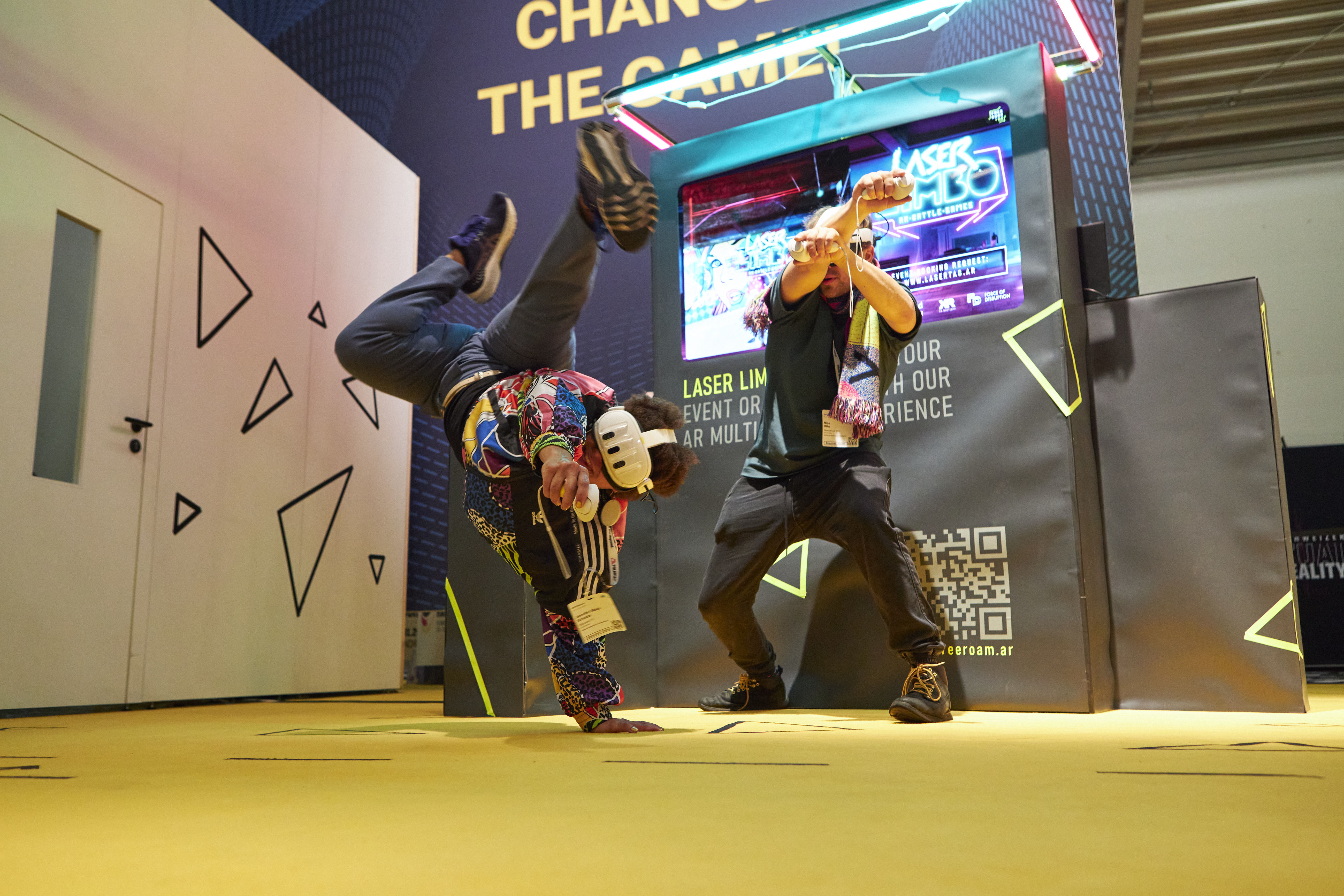
At the GameChanger Hackathon at ISPO Munich 2023, experts and young talents tackled the challenges of digitalization in sport. Together, they developed demands for the sports industry that should give our digital society and German club life a new lease of life.
6 hours, 41 minutes and 20 seconds - that's how much time a member of Gen Z, i.e. a person aged between 15 and 27, spends in front of various screens every day in Germany. This kind of digital behavior among young people leads to results like those announced by the World Health Organization (WHO) in its 2022 Global Status Report on Physical Activity: 81% of young people are currently not achieving the level of physical activity recommended by the WHO. A lack of physical activity can lead to extreme damage to health, which is already making itself felt in society today: Cardiovascular disease, diabetes, depression, dementia and other fatal health consequences are encouraged by too little exercise. If this trend does not change, the WHO estimates that the treatment of people suffering from physical inactivity will cost around 300 billion US dollars by 2030.
In a world characterized by modern conveniences and digital comforts, increasing inactivity is one of the key health challenges facing our society. Today's digital lifestyle increasingly favors sedentary activities - whether at work, while commuting or during leisure time. This comfortable but increasingly inactive lifestyle has far-reaching consequences for our physical and mental health.
How can we learn to live healthily in a digitalized world? Can we even use digitalization to become healthier again as a society? The participants of the hackathon in the GameChanger Sports Hubs at ISPO Munich 2023 asked themselves these questions.
It quickly became clear that integrating exercise into everyday life is crucial for a sustainable change towards a more active lifestyle. Modern technologies not only offer innovative solutions for this, but also the opportunity to motivate people in new ways. Digital technologies such as wearables, fitness apps, virtual reality, online communities, challenge platforms and social media can serve as tools to make our daily routines more activity-friendly. Digitalization thus opens up a way to inspire people to lead an active lifestyle again and positively influence their health.
The participants in the "Digitalization in sport" workshop ultimately developed five demands for the industry to get more people moving again.
1. build and promote digital education approaches
Promoting physical activity requires not only the provision of technology, but also comprehensive education and information on how to use it. Combining technology with analog educational activities, such as physical education in schools, can pick up young sedentary people where they are every day. The combination of technology and education thus creates a basis for long-term changes in behavior.
2 ESG criteria for digitalization
For some institutions in the sports industry, such as smaller clubs, the digitalization of their services can result in high costs that threaten their existence. Yet they are an essential part of our society and therefore also of sport. The workshop participants therefore propose the development of an "ESG-like criterion" for digitalization in sport in order to ensure more financial support in this important area.
3. digital approaches for more inclusion and fewer barriers to entry
Many people lack access to a sport that really excites them. Digitalization can help to remove any barriers to entry: Virtual reality (VR) and augmented reality (AR) can be used to realistically simulate sports, facilitate contact with communities or create new environmental events. Virtual environments allow people to move around in fascinating landscapes or take part in interactive fitness classes without leaving home. These immersive experiences merge exercise and entertainment, helping to overcome barriers to accessing fitness activities.
4 Gamification as a motivational approach
The integration of playful elements, also known as gamification, has proven to be a successful method of motivating people to exercise. Fitness apps and platforms use reward systems, challenges and virtual badges to integrate a playful element into everyday activity. The idea of presenting physical activity as a fun challenge can appeal to different age groups and promote a positive attitude towards exercise.
5. sustainable modernization of the industry
The participants of the "Digitalization in sport" workshop recognize the urgent need for a sustainable modernization of the sports industry. In view of the current challenges and changing social demands, the sports industry must take on a pioneering role in terms of sustainability and future-oriented technologies. This means expanding digital technologies such as smart technologies, data-driven analysis and artificial intelligence to ensure more efficient processes and promote social responsibility, transparency and education.
However, even people who want to actively participate in sport sometimes face problems. The number of sports clubs in Germany has been in constant decline for over ten years, and the provision of sports for young people is particularly at risk in rural areas. In another workshop, the participants therefore looked at German club life together with two experts, which has been confronted with a variety of problems since the coronavirus pandemic at the latest: rising energy costs, inflation, fewer volunteers, generational change, consolidation of the sports landscape into a few large clubs in urban areas, etc.
While gyms and other commercial sports providers attract young people with glitzy social media campaigns and influencers, many traditional sports clubs struggle with media attention. Their online presence is often sparse and their messages go unheard in the digital desert. The challenge of reinventing themselves and meeting the younger generation where they are can become a matter of survival for these sports clubs.
The participants in the workshop developed solutions to the challenges mentioned above and put them into a four-point plan:
1. promote club culture
Making club work more attractive to young people by presenting it not just as an obligation, but as an opportunity for personal and community development. With financial incentives, recognition and a strong sense of community, young people are encouraged to volunteer. This fresh approach transforms the traditional image of volunteering into a vibrant and rewarding commitment that attracts young talent and secures the future of clubs.
2. modernize communication
Club influencers become the new faces and voices that carry the sports club into the future. Dedicated young people are bringing a breath of fresh air to the online presence of clubs, using Instagram, TikTok and other platforms to tell authentic, lively stories about club life. With their enthusiasm and creativity, they transform clubs into dynamic, digital communities that reach far beyond the boundaries of the sports field.
3. improvement of internal factors
A nationwide digital platform that connects all sports associations and clubs. This innovation simplifies bureaucratic processes and makes funding applications more accessible. It opens up a new era of efficiency and consistency, where information and resources flow seamlessly. This digital hub is not only an administrative tool, but also a symbol of the modern and connected future of sport.
4. improving external factors
Increased financial support for grassroots sport sends a clear signal of the systemic relevance of sports clubs. At the same time, club structures and processes are being optimized to create modern, efficient and inclusive workflows. These reforms aim to adapt clubs to modern society, facilitate generational change and usher in a new era of sports club culture.
In view of the shared conviction and strong commitment of all workshop participants at the GameChanger Hackathon to a sustainable modernization of the sports industry, the demands developed are intended to encourage sports organizations, clubs and event organizers to work together to pave the way for an innovative and socially responsible sports industry.

Artificial intelligence is no longer a foreign concept in soccer. Step by step, technologies are changing the way we look at the game. Team sports will change "massively" over the next five years as a result of AI, says sports computer scientist Daniel Memmert. He also knows which area will be most affected and whether it will soon be possible to predict injuries.
Coaches have been working with a wealth of training data for a long time in the world of sport, especially soccer. First division teams, for example, were the first to integrate new technologies, as measuring and evaluating physiological parameters has always been part of the job description of their fitness coaches. During training and matches, first without and later with the ball, the coaching team can easily record the speed, acceleration and distance covered by players. Today, this data is also analysed with the help of artificial intelligence (AI). Coaches integrate the insights gained into their training plans, derive load profiles and manage the sessions. AI can now also be used to plan and analyse complex training content with a ball.
Daniel Memmert is involved in the scientific aspects of such developments. Memmert is Professor and Managing Director of the Institute for Training Science and Sports Informatics at the German Sport University Cologne. He has published numerous (specialist) publications, for example on data analysis in soccer, and conducts research for the German Football Association and the German Football League, among others. For ISPO.com, he gives a forecast of how far AI will change sport and shows what is possible today in top-class sport and will soon be possible in recreational sport with AI.
Massive. The main factor will be scouting. Only around ten percent of professional clubs use data scouting at the moment. This will explode in the coming years. There are many leagues, such as the Brazilian and Argentinian leagues, that do not yet collect satisfactory tracking or positional data. At some point, all leagues will have this data. For example, you will then be able to click on a list of players with certain metrics that the respective club considers important. You can then watch the ten best players from this list again live or scout them via video. Some clubs are already employing fewer scouts, but conventional player monitoring is still predominant at present. In the coming years, data scouting will also extend to the U17 and U19 youth divisions in order to be able to search, list, analyse and evaluate players more quickly, efficiently and effectively according to certain KPIs.
With our self-developed and validated tool, we use historical data from the Bundesliga clubs and calculate, for example, the probabilities of which players from the U12s should already move to the U14s. Or what market value and how many professional minutes players will have later on. The basis is always the historical data, which gives us an estimate for the future.
We would use other measures. There is BioBending, for example. This involves grouping and assessing players in training and competitions according to their biological stage of development rather than their calendar age in order to avoid the problem of the "relative age effect". At the same time, it is statistically the case that players born late in the year collect more professional minutes at some youth academies than those born between January and March. This is known as the "reversed relative age effect". As the younger players are constantly playing with stronger/larger players and have to assert themselves, this can also result in advantages. In fact, we are also starting to work with AI here. We have already developed prediction models to incorporate the relative age effect.
Of course, this is very time-consuming overall. However, there are increasingly cheaper camera systems that provide video data from which tracking data can be extracted. This has been in use for around five years. In the future, these options will soon be affordable for many amateur clubs, as the sensors will no longer cost as much. This creates a business model for many technology companies to work with smaller clubs.
The technical term for this is "injury prediction". There are studies that show the probability of players getting injured if they are not spared. You need medical data for this, which is why it is very difficult to publish something like this or make it transparent. This is where we still need the most research. We want to gain a better understanding of the history of injuries that lead to players being spared. At the same time, we are investigating in which situations in a match - for example in which type of tackle - the risk of injury is particularly high. Such questions can be answered very well with AI based on large amounts of historical data. We are currently trying to find sponsors for such projects.
Yes, of course. As soon as historical data or even comparative data within groups is available, whereby historical data from an athlete makes more sense, then this AI uses this information to control the training accordingly.
The AI attempts to classify the performance data and, based on the available data from the past, it knows which training area the athlete is in.
In my eyes, movement techniques are highly individual. I reject the idea of generating standards. There is no such thing as the golden standard technique; instead, many different techniques lead to top performances due to biomechanical and anthropometric conditions. For example, the top ten tennis players in the world have relatively different techniques for the serve, backhand and forehand. As there is no ideal standard technique, the use of AI is much more complex here. A lot of time would have to be invested to achieve meaningful results. We are at the very beginning.
Yes, yes, that's exactly how it works. For example, we have the data from the German Bundesliga. This allows us to read out the spatial control of the players, the entire team, the pressing values, the opponents overplayed and many other tactical variables in fractions of a second. As the sensor data from the ball and players is now highly reliable, everything is tracked very accurately. This means we have first-class data and very good AI-supported analyses.
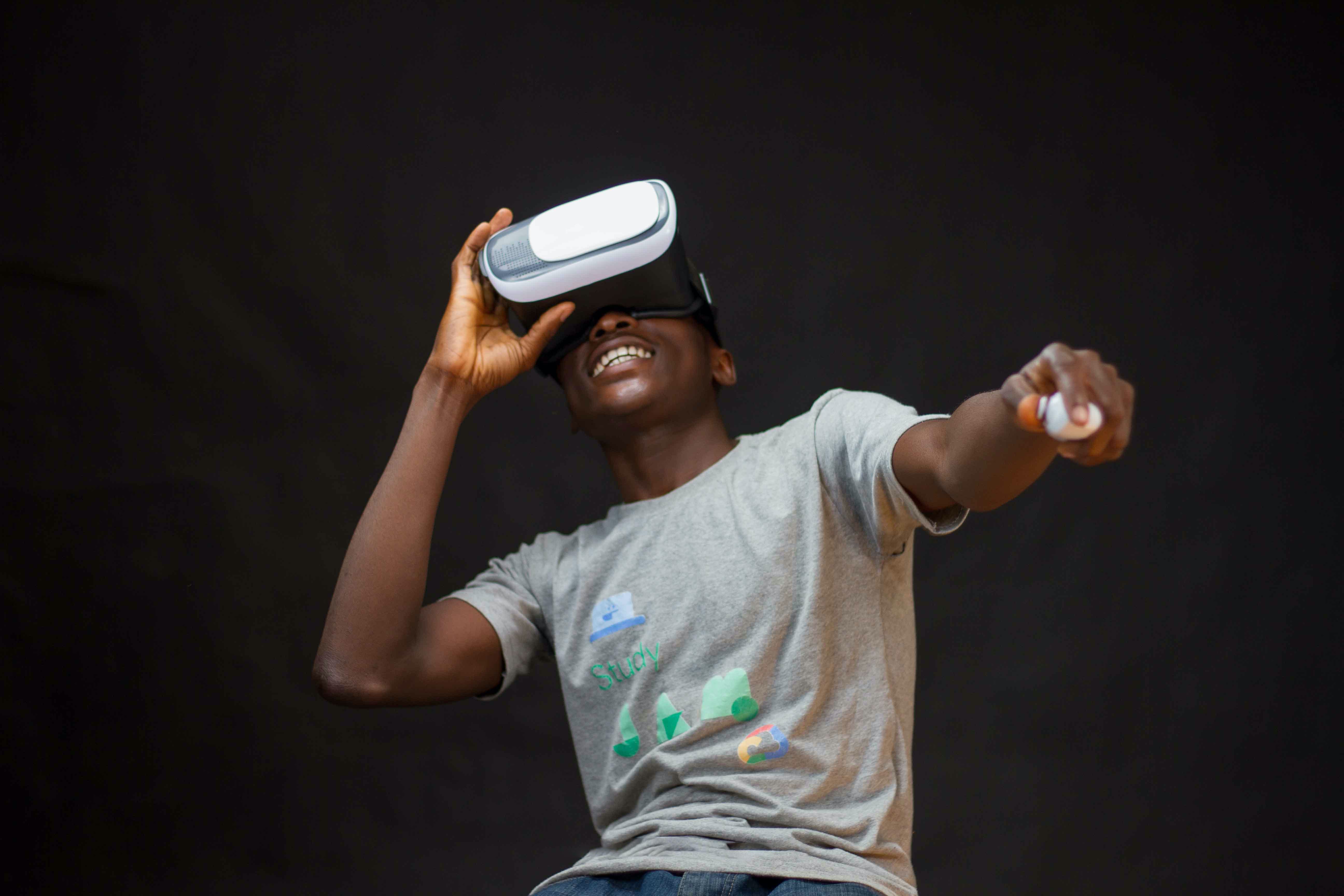
Do you initially associate virtual reality and gaming with inactivity and hours of sitting? Wrong, because these technologies have the potential to get people moving! New developments make it possible to combine digital entertainment and physical activity. Gamified fitness apps and VR games motivate people to move more and have fun at the same time. Find out how virtual reality is revolutionizing movement - in the GameChanger SportsHub at ISPO Munich 2023.
9.2 hours. That's how long Germans sit on average every day, for the US it's even 9.5 hours. Heart disease, obesity, diabetes, depression, dementia: diseases that are promoted by a lack of exercise. Nobody wants to be sick and yet over 40% of adults and over 80% of teenage boys and girls do not get enough exercise. Not least because of the high screen time on smartphones, tablets and televisions.
How can we get society moving again?
However, the latest developments in VR (virtual reality) offer hope. The technology provides the opportunity to combine digital entertainment and physical activity.
The playful approach of fitness apps and VR games provides the necessary motivation to get people to become more active. Here's an example: You want to play tennis but don't have enough time to drive to the nearest tennis court, the weather is too bad again, or you can’t afford private training.
Your solution: Tennis Esports! An authentic tennis game with realistic ball physics that makes it feel like you're actually standing on the court and swinging your racket through the air - from the comfort of your own home. You can play online against friends and take part in tournaments. What's more, your body movements are recorded and analysed in detail to help you refine your technique.
We asked VR Motion Learning why VR can get more people into the sporting habit: "We're picking up a lot of kids on their computers and getting them into a real sporting activity at home. When sport is gamified, it has that special something!"
Of course, this approach doesn't just work with tennis. “Beat Saber” is one of the most popular applications for encouraging movement in VR. In this rhythm game, you break up flying blocks to the beat of the music while avoiding obstacles. This makes you work up a sweat and is a lot of fun at the same time.
This new type of movement can also be used by fitness studios and health facilities to promote exercise.
Totally exciting: virtual reality can also be used to bring people back to traditional sports and sports clubs. The "Active Esports Arena", for example, uses VR for digital experiences at school competitions. Students are asked whether they would like to improve their skills in order to qualify for finals. The trick is that they have to take part in a non-binding trial training session at a local sports club. And just like that, we are one step closer to exercise.
There are even the first solutions for simulating extreme sports. The Simventure company wants to give everyone who is enthusiastic about the respective sports access to them. Regardless of location, age, financial means or physical condition. To achieve this, they create "digital twins" of sports experiences with a focus on the body's own movements and hyper-realistic, multi-sensory perception.
You can experience all of these solutions live at the GameChanger Sports Hub in the Future Lab at ISPO Munich 2023 from November 28 to 30.
The GameChanger SportsHub aims to develop solutions for the future of sport and make them visible.
The release of the Meta Quest 3, the latest mixed reality goggles from Meta, in particular, has the potential to inspire many people who have not previously had anything to do with VR with the technology. This is because the trend is increasingly moving towards mixed reality. This means that you can still see the real world within the glasses - together with virtual elements.
This opens up a whole host of new possibilities to explore:
Glasses on, table tennis table conjured up in the living room and still everything in view.
There are also exciting prospects in combination with artificial intelligence.
How about tailor-made workouts that are precisely adapted to your individual needs and abilities, together with a virtual trainer standing right next to you and cheering you on? These and many other applications of VR and MR need to be discovered and developed in order to get people moving again.
Experience and shape the latest developments in VR sports at the GameChanger SportsHub from November 28 to 30 at ISPO Munich 2023.
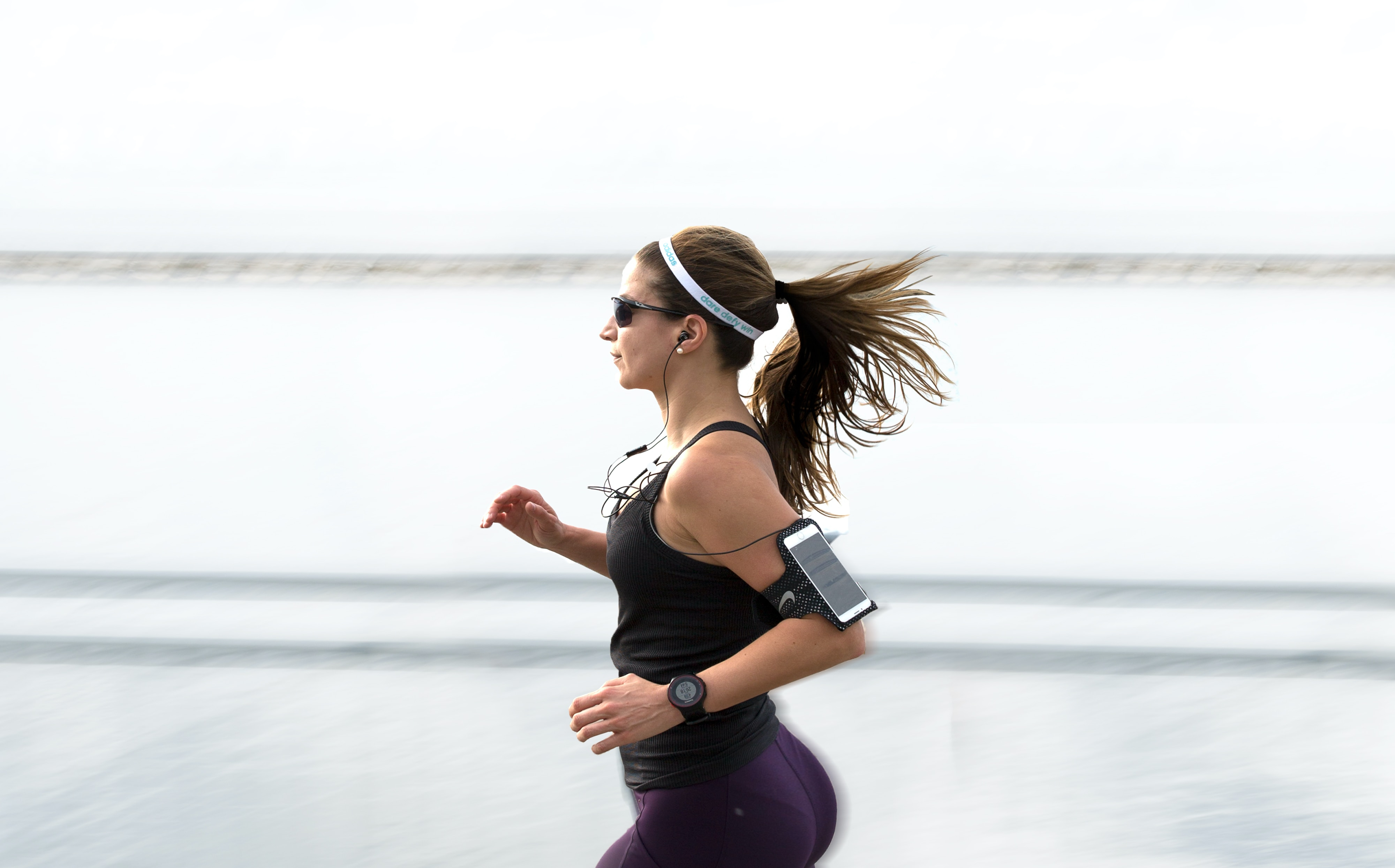
Analog running without the personal coach (the fitness tracker) on your wrist recording, analyzing and sharing every meter - in the smart sports age, that seems so outdated that Tyrolean sports psychologist Johanna Constantini sneers: "If you don't track, you've never run!" ISPO.com reveals how we can use modern training technology sensibly without disregarding our gut feeling.
Apple has just launched its new Watch Series 9 and Ultra 2 smartwatches. Both are "the ultimate tool for healthy living," according to the U.S. company. Apple promises, "When you wear them, you have a fitness partner that can measure all the ways you move." Sports psychologist Johanna Constantini explains what makes such fitness gadgets successful: "These tracking devices aim to reward us for our achievements by making them measurable - to us and to others on social media."
Sharing achievements, comparing them, hoping for likes and thus for rewards and feelings of happiness - the classic addictive mechanisms take effect here, only not tied to toxic substances. According to Johanna Constantini, motivating oneself in this way and conquering one's inner pig doesn't have to be fundamentally wrong or bad: "The dose makes the poison. And the question is: Am I still doing it for me, because I am driven by my own intrinsic motivation? Or am I just doing it more for the data, for the likes?"
The manufacturers of the wearables promise "human enhancement," the optimization of the human body by tracking athletic performance. To a certain extent, this actually seems to work. According to a study in the journalMedicine & Science in Sports & Exercise, active people can run 3.5 percent more efficiently on average with a smartwatch. That means they can cover a correspondingly longer distance at the same speed - or they run their usual distance faster, using less energy.
Another study in the magazine "Frontiers in Sports and Active Living" claims to have found that athletes with smartwatch trainers save an average of five percent energy. They can thus supply their muscles with a greater proportion of the oxygen they inhale. The undeniable advantage of such gadgets is that they allow athletes to stay much more precisely within their optimal pulse range. Here, even small advances have a decisive effect: Running one percent more efficiently can save more than four minutes over ten kilometres.
Anyone who doesn't even start running because the smartwatch battery is empty, or who turns back because they forgot their watch at home, should question themselves, psychologist Johanna Constantini told ISPO.com. For her, the distinction looks like this: "If I'm training for a marathon, and the watch helps me maintain my speed, then that's not reprehensible. But if I'm just running for others to see, then of course it's difficult. You have to ask yourself the question: Would I go running even if I didn't wear the watch?" If the answer is "no," then sports will degenerate into further digital stress, which already shapes our lives to a large extent.
Children instinctively know exactly when they want to move - and when they are tired and want to rest. As we grow up, we often lose this intuition and gut feeling. Experts therefore recommend breaking away from strict and rigid training plans, and instead focusing on "intuitive training". This means: athletes learn to understand their body's mental and physical signals and adapt their training so that they are rested, full of energy and ready to train. This does not mean training only on a whim and throwing all training plans out the window - especially since there are enough days anyway when the training plan and the readiness to train go together.
But if you feel that intense strength training today would only aggravate the already existing muscle soreness, you should take the liberty to deviate from your training plan - and swap the days of the next planned workouts, rides or runs, for example. For performance, this doesn't mean a problem. After all, studies have shown that there are no measurable deviations in training results when athletes are free to choose which workout they do on which day of the week. The prerequisite is that none of the planned units are omitted, and the load is increased over time as specified in the training plan.
Sports psychologist Johanna Constantini also recommends common sense for healthy training: "We should manage to let equipment be equipment sometimes. Because we ourselves have the best sense and feeling for what is good for us at the moment." The parameters that are decisive for this include the sleep of the last few nights, the current stress load, the diet of the past few days, the general body feeling - and for women, the cycle. Those who pay attention to this ensure a balanced relationship between stress and recovery, with which the greatest performance progress can be achieved.
If you want to listen more to your gut feeling and less to the digital coach, you need a digital detox - not only for excessive use of social media, but also for sports. If you still want the smartwatch to be present during training, it makes sense to at least set it to "do not disturb" mode. Then it can track performance data - but at least the time of the workout remains an analogue space, free of calls, text messages, WhatsApp and notifications that cause stress.
Expert Constantini recommends as a sensible strategy for more analogue sports: "Maybe start by running offline twice out of five times. After all, you can look at your watch when you start running at home - and then a second time when you get back home. Then you also know how long you've been running." Those who train in a group can agree that all participants will start without a tracker once or twice a week.
Those who have become so accustomed to digital training that sport without tracking has long since become unthinkable will find the switch difficult at first, the Tyrolean psychologist knows: "It's like any addiction - trying to break free from it tends to be accompanied by an unpleasant feeling. But if it's not easy, it's usually the right way to go." Her general tip: "I advocate not cutting back from 100 to 0, but successively trying to exercise offline more and more often."
The next data revolution in sports is just around the corner: training with artificial intelligence. Google has just unveiled the Pixel 8 and Pixel 8 Pro, which it claims are the first smartphones to have Generative AI - the technology of chatbots like ChatGPT - integrated directly into the device. And it won't be long before this AI also finds its way into smartwatches and other tracking devices. The digital coach will thus get to know "his" athlete even better and be able to offer even more individualized coaching - in which, for example, genetic information about the athlete can then also play a role.
Bosch Sensortec currently offers the BHI260AP, the first self-learning AI sensor for installation in smartwatches and comparable devices. The gadgets can thus not only record predefined workouts as before - but also analyse the movements of the entire body with their sensors. "They are able to learn any new fitness activity based on repetitive, cyclical patterns," the developers say. Users can thus virtually train their trainer - and teach him new exercises.
There are already numerous AI apps in the app stores that promise to make nutrition, fitness and sport smarter than ever before. The AI app Foodvisor for iOS and Android, for example, wants to recognize the number of calories eaten based on photos of the dishes. And the app Evolve AI (iOS, Android) promises to continuously adjust the load control during sports based on live data, just like a real trainer.
The possibilities of AI seem almost endless - and so do the demands on the personal responsibility of sportspeople. Sports psychologist Johanna Constantini recommends: "The better the technologies become, the more intensively you have to deal with them yourself - and not just let it happen to you. Here, more than ever, I have to arm myself with knowledge to recognize what I can use well for myself and what is a danger."