


Modern stroke analysis with artificial intelligence has not yet arrived in every sport, yet it offers a lot of potential for further development for players. While golfers and baseball players already train with high-tech equipment and perfectly tuned software, there is often only a ball machine on the tennis court.
Modern golf simulators use a combination of cameras and radar technology to measure not only the speed of the club head and ball, spin rate and trajectory, but also the direction of the swing, club face, angle of impact and other relevant data for the perfect golf swing. The software spits out more than 20 results after each shot - initially overwhelming for the golf layman. Nevertheless, it is worthwhile to increase one's own golf IQ, to learn to read the data with a little practice and to train more successfully with a simulator.
Many tour pros already train on the driving range with a simulator. The advantage is that you don't just watch the ball fly, you also get additional information about the distance and exact direction of the ball. The simulators provide this information within seconds after the shot. This allows pros to perfectly adjust to the lengths, which depend on altitude, temperature, wind and humidity, and have fewer problems choosing a club during the round. For amateurs who are still working on the basics of their swing, the data helps them to readjust the swing direction, angle of impact and clubface and thus get closer and closer to their personal maximum.
In baseball and softball, too, it is now a matter of course to train with radar tracking systems. The pitcher's throws are getting faster and faster, also due to modern training methods. According to spox.com, in 2012 there were 52,012 pitches that flew through the air at over 95 miles per hour, while in 2017 there were already over 110,000. And the trend is upward. And not losing control of the ball at these speeds requires millimeter work, which the simulators can illustrate. The systems measure and calculate the most important key elements of each throw, such as release, flight and strike zone, from which the experienced pitching coach can immediately conclude what the pitcher needs to work on to perfect the throw.
The simulators also provide the batter with enough material to work with.. Exit speed, spin rate, departure angle and distance information are evaluated immediately after the moment of impact. Here, too, the metrics provide information on what fine-tuning the professional still needs.
Why these two sports have an advantage over other racquet sports in terms of hitting and throwing analysis becomes clear upon closer examination: The sports of golf and baseball or softball are characterized by recurring swings from the same point of view. The athletes are not in motion before the swing, but have a fixed booth. This is not the case in tennis or ice hockey. The analysis of certain strokes is also more difficult on the playing field due to the distance and the angle between the set-up measuring devices and the playing equipment.
When you watch a tennis match, as a fan you're often amazed at how precisely and consistently the servers get the yellow felt ball over the net. Could the first serve rate of many professionals be improved if you think about the training methods with high-tech equipment like in golf or baseball?
Tennis has also made inroads into using digital tools in training. The Wingfield brand is heading in the right direction with its AI-assisted camera system for the tennis court, attempting to digitize and revolutionize training in a cost-effective way for the local tennis club as well. The cameras capture various data from the court and the players. They also offer video analysis tools, but the biomechanical processes of the players and their racquets are not yet included in the way they are in golf.
While the simulator Trackman in golf and baseball measures or displays, among other things, swing plane, swing direction, clubface tilt and many other swing and grip details from which one can read where the ball will land with which spin rate and trajectory, the Wingfield system quickly reaches its limits. While it measures how precisely and quickly balls fly over the net, it lacks the analysis of why a shot landed exactly where it did. Was the point of impact of the ball too far on the frame of the racket? Is the swing direction too steep or was there too much spin on the ball and if so, why?
Systems like Wingfield's are still in their infancy, but they demonstrate the progress that exists in tennis. The potential has not been fully exploited. For now, the brand's focus should be on strokes from the booth, as these are the easiest to measure and thus perfect. Impact precision and hardness could soon gain in quality with modern measuring systems.
Many golf courses in Germany now offer training with the help of a simulator, and the first tennis facilities are also incorporating AI systems into their courts. However, it will still be a few years before these systems have conquered the whole of Germany.
For golf, however, there are a number of indoor-only facilities in Germany that are transforming the seasonal sport into a year-round sport. SevenTees with seven Trackman simulators or the Iron7 in Biedenkamp near Hamburg, which is run by former professional soccer player Martin Harnik.
Facilities of this kind have been established for some time in Korea and the USA, where golf is more popular, and at least since the pandemic. In the South Korean capital Seoul alone, there are over 15 indoor golf courses. In the USA, the chain "fiveiron" is represented with its golf bars mainly on the East Coast.
Author: Frenky Mühlbauer

What the textile industry can definitely do: Optimize production and supply chains. The European Green Deal will bring even more movement to the entire industry, because success and performance indicators will have to be defined completely differently from now on. Re-think everything is the motto that is currently making the industry shake.
The industry's big goal: We want to create transparent communication that not only allows facts to be checked, but also reflects an expanded circular economy as well as developed production and environmentally friendly alternatives. Brands must start at the value chain and, if necessary, completely redirect their course. Only in this way can the sports and outdoor industry meet new challenges, find solutions, and become more adaptable to economic, and above all, climate risks.
With increasing transparency and growing consumer interest in where a product comes from, ecologically responsible action is no longer a unique selling point for brands. Rather, the motto applies: Those who do not pay attention to it now are missing out on an important development.
Manufacturers are much more challenged to find a balance between persuasion and proof of commitment without becoming too political. The EU law on environmental labelling requires that it be based on verifiable facts. Because we all know: In this industry, ambiguous statements tend to float around. What counts are facts - and a framework in which this is allowed to happen. This is how greenwashing and green hushing campaigns can be prevented.
Brands already committed to environmental, social and governance (ESG) criteria can anticipate these critical challenges - for them, this means adapting their methods and changing course based on scientific methods.
Did you know? The textile industry cannot function without agriculture. That's because fabrics and yarns often come from farms that supply the raw material, such as wool or yarn. But a revolution is on the horizon: because some ingredient brands have their eyes on the future. A completely new generation of fabrics is currently being created in laboratories, for which proteins are fermented and bacteria are transformed into biomass. The main focus here is on alternatives to animal leather or down and feathers used as fillings.
The USA, Italy, Germany and England are the countries here with the most forward-looking startups working on such materials and components. The brands Adidas, The North Face, Hermès, Arc'teryx, Napapijri or the Kathmandu Group invest time and money here to be close to a future-oriented production and source.
New weaving and blending techniques ensure that natural and man-made fibres have the properties that sportswear needs. Merino wool in under layers or other applications works along these lines. Linen, which is becoming increasingly popular for athleisure, especially yoga wear, is also a popular material for this technique. Incidentally, linen is also used for snowboards, skis, skateboards and surfboards, as in the case of Notox or Akonit - and can thus replace plastic as a material.
But: So far, these are primarily niche applications, but they are helping to open up the market for alternatives to carbon fibre.
Eco-designed or not at all - that has long ceased to be a question. Limiting oneself to what is really necessary is a growth factor for redefined growth in a world in which abundance (as defined by the industrial revolution) is no longer conceivable.
The challenge now is to create durable products that are recyclable. Key to this are designs that allow repairs, fibre disassembly, and the ability to disassemble a final product to improve traceability.
The analysis of a product's life cycle could be simplified by an eco design grid with reverse traceability, from waste to fibre. Lectra's Textile Genesis and Reverse Resource already call for this.
And packaging must not be forgotten either, it is an underestimated source of waste. A change is needed here for recommerce and product returns.
However, some reusable packaging solutions already exist, such as Hipli™ in Europe or Lulu Pack™ in Southeast Asia. Algae-based packaging is currently being developed that is inspired by the food industry and is biodegradable under certain conditions. A Swedish company has created the first prototype for packaging that can be completely degraded at home.
For consumers, frugality has long since ceased to be a distant wish, but rather a prerequisite according to which consumption is geared.
In the near future, it will no longer be possible without AI in one's growth and innovation strategy. For the textile production chain, AI can be used to collect more accurate data at source, standardize it, secure it, and then make it available to the downstream chain.
This is especially true for traceability, which requires extreme accuracy. Traceability is one of the key components of the Corporate Sustainability Reporting Directive (CSRD), which will be implemented next year in France for companies with more than 250 employees*.
Future technologies also offer potential for customer service, recommerce, 3D design and pattern placement management technologies. Services such as ChatGPT support the creation of product data sheets and Saas facilitates the management of circular logistics, production and e-commerce. What could become interesting in the near future: the use of AI to combat greenwashing in communications and texts.
Traceability and scientific measurements are indispensable tools for selecting and using sourcing methods with the goal of reducing overproduction.
It will be critical for brands to adapt by evolving their design and sourcing systems. Depending on the brand positioning, this responsibility will be common in nature and highly differentiated, and a challenge will be to narrow down to the essentials. Another responsibility of procurement is to identify risks and evolve by adapting processes. This facilitates decision-making in times of uncertainty and makes brands more resilient.
Wouldn't the ultimate goal of sourcing in the future be to stop measuring production by pure volume? This will require scientific methods, collaboration and reductions where possible.

Against the backdrop of the popularity of cryptocurrencies and the metaverse, numerous new programs are currently being introduced in and outside of Web 3.0. Most of them are based on blockchain technology. Such as Move2Earn, a new addition to the world of Web 3.0 that has become an overnight success.
Move2Earn, or Play2Health, is a Web 3.0 concept that makes it fun for users* to take care of their fitness and health - often in the form of cryptocurrency or NFTs. The apps and programs based on them are drastically changing the traditional fitness industry. They use blockchain technology and biotechnology to manage and coordinate offerings. We will trace in detail the Move2Earn concept, its scope, its importance and the main apps and programs. And in the process, analyze whether Move2Earn is worth all the hype and truly has the potential to be a fitness revolution.
Move2Earn is also known as Play2Health or Burn2Earn. All terms indicate the concept's close connection to the fitness industry. There are already Move2Earn programs on Web 3.0 that people can participate in. These programs are mainly games. In them, one can earn a reward, often cryptocurrencies or NFTs, by completing fitness tasks. In other words, you get an incentive and a financial reward for taking care of your health.
Move2Earn typically uses wearables, GPS services, motion trackers, pedometers, or simply a smartphone to monitor participants' physical activity. The players:inside have to move according to the requirements to achieve the fitness goals of the game. In this way, they earn tokens that can be converted into barter currency. The tasks can range from casual exercises to intense workouts.
One of the main criticisms of modern communication technology is that it tempts people to be lazy, dull and sluggish. Instead of engaging in physical activity, we spend our time in front of screens. Move2Earn debunks this criticism. Because the main motive behind the Move2Earn concept is to create a health-conscious society.
The concept motivates people to engage in physical activity in order to earn rewards. This monetary motivation enables them to engage in consistent physical activity and thus stay fit and healthy.
Typical fitness applications are the logical predecessors of Move2Earn applications and projects. Almost everyone knows or uses some of them: Freeletics, Nike Run Club, Asana Rebel - just to name a few examples. They offer users insights, tips and training opportunities via their app, but usually no rewards or incentives other than some gamification elements. On the contrary, most of the time users had to pay for the apps and their features, often significant amounts of money.
The main difference between Move2Earn programs and the other fitness apps is exactly this concept of incentivization. Although users* often have to pay some kind of start-up fee, for example by buying an NFT or a certain amount of a cryptocurrency, they can later earn new NFTs or cryptocurrencies in the Move2Earn app. In other words, they can earn money by playing sports. Some people even try to go so far as to make Move2Earn their full-time job.
To give you a better understanding of the programs and their scope of features, let's take a look at some of the most popular apps from this area.
STEPN is a fitness app that provides cryptocurrencies, namely GMT and GST tokens, as rewards for its active users*. It records the activities via an app on your smartphone and rewards them accordingly.
STEPN uses GPS to track the user's movements. So you can't use the app in a gym or stationary workouts. Although in the STEPN app three modes of operation are available, two are under development; therefore, users* must sign up for solo mode.
Once logged in, users must select one from a collection of digital sneakers (NFT). Each digital sneaker is associated with an expected walking speed. So if you walk slower than the minimum speed of the sneaker, you won't get any reward. You can choose walking, running or jogging shoes depending on your needs.
The number of sneakers purchased determines the amount of time you can spend in the application, earning points with exercise. With a pair of running shoes, users* have only about ten minutes of play time. Therefore, they have to use part of their tokens for in-app purchases to advance in the game and buy more shoes. This is the only way they can play longer and earn more.
The company's website interestingly mentions big names of traditional sports brands like Scott Dunlap, Vice President of Adidas, as advisors.
Step App is a playful Metaverse version of a fitness application that is very similar to STEPN. Users can play, jog or run to learn, have fun and earn rewards in Step App.
The Step app uses FITFI tokens for its transactions. It provides an in-app account where the FITFI tokens are stored. During the initial registration, users* need to buy some FITFI tokens and transfer them to the account. Then, one can take the challenges.
The app has a marketplace where users* can buy goods such as sneakers (NFT). Although you can later upgrade the sneakers with the earned tokens, you have to spend your own cryptos to buy the first pair of sneakers.
Once a user* owns a sneaker, he or she can move around and earn FITFI tokens that can be converted into barter currency.
Step App was able to attract Usain Bolt as a brand ambassador and is a good example of what an easy-to-use Move2Earn app with little to no barriers to entry can look like.
Pros
Cons
Sweatcoin is a fitness app that tracks users' steps throughout the day, generating SWEAT cryptos.
Sweatcoin has been around for a long time, and they report 120 million active users on their Web 2.0 and Web 3.0 platforms. In 2022, Sweatcoin was even the number one downloaded health and fitness app. The program also launched a SWEAT cryptocurrency with its SWEAT account.
Sweatcoin has now entered the Move2Earn and Web 3.0 space. By using this new web 3 app, similar to Sweatcoin, one is rewarded for the number of steps he takes each day.
When the cryptocurrency version of the app launched, the user received 1 SWEAT for 1000 steps. Over time, the difficulty of minting the coin increases, similar to Bitcoin, and users need a few thousand steps to earn SWEAT tokens.
So basically, users* don't need to do anything other than download an app and take steps. Already, cryptocurrency can be earned, which can be converted into barter currency. This makes the list of pros and cons for the app pretty short.
Pros
Cons
As you can see, the Move2Earn industry is on the rise. Hundreds of millions of users, celebrities and companies are entering this field with excessive speed. But is it all worth it? Is it just hype or a real game changer?
The Move2Earn concept has been making high waves in the crypto industry for some time now and is revolutionizing the entire fitness industry in many ways.
Move2Earn innovates traditional fitness apps by enabling real-time activity tracking. They offer the ability to sync users* health apps with the Move2Earn platform for comprehensive fitness tracking. Although traditional apps do the same, Move2Earn is much more.
Move2Earn also creates incentives for users* to effectively achieve their fitness goals. The incentives have helped fitness routines to be followed more consistently, which inevitably contributes to a fitter community.
With the introduction of the Move2Earn platforms, user*s engagement with their fitness program has reached record levels. The engaging experience, incentives, and random rewards motivate users* to stick to their workout plans.
Move2Earn platforms have come a long way: Since the early days of STEPN, programs have evolved tremendously as many providers such as SWEAT, Step App, etc. have introduced advanced features that even include spending tokens in the real world.
Move2Earn platforms have the potential to transform the fitness industry if they can get a handle on issues such as poor "token economics" and oversupply of tokens.
Move2Earn has revolutionized the fitness industry since its inception last decade with its incentive-based approach and intense user experience. Move2Earn is undoubtedly the next big thing in the fitness industry, as it has outstanding potential.
Although Move2Earn is still in its early stages, it has already generated over $1 billion worth of revenue. With the incorporation of Web 3.0 technology, blockchain, the right tokens, the introduction of top players in the market, etc., the business potential of the Move2Earn industry will soon soar even higher.
There are efforts to make Move2Earn tokens usable outside the application, which could give the industry a lot of traction and investment opportunities.
The importance of Move2Earn platforms will surely reach greater popularity due to their broader health aspects. The fact that Move2Earn encourages the community to lead an active lifestyle while helping them earn from it makes it the best possible physical activity intervention, even in the real world.
With the right incorporation of advanced technologies and the right attempts to solve the problems of Move2Earn platforms and connect the hype with reality, the concept of Move2Earn and the platforms involved will surely have a long journey ahead.
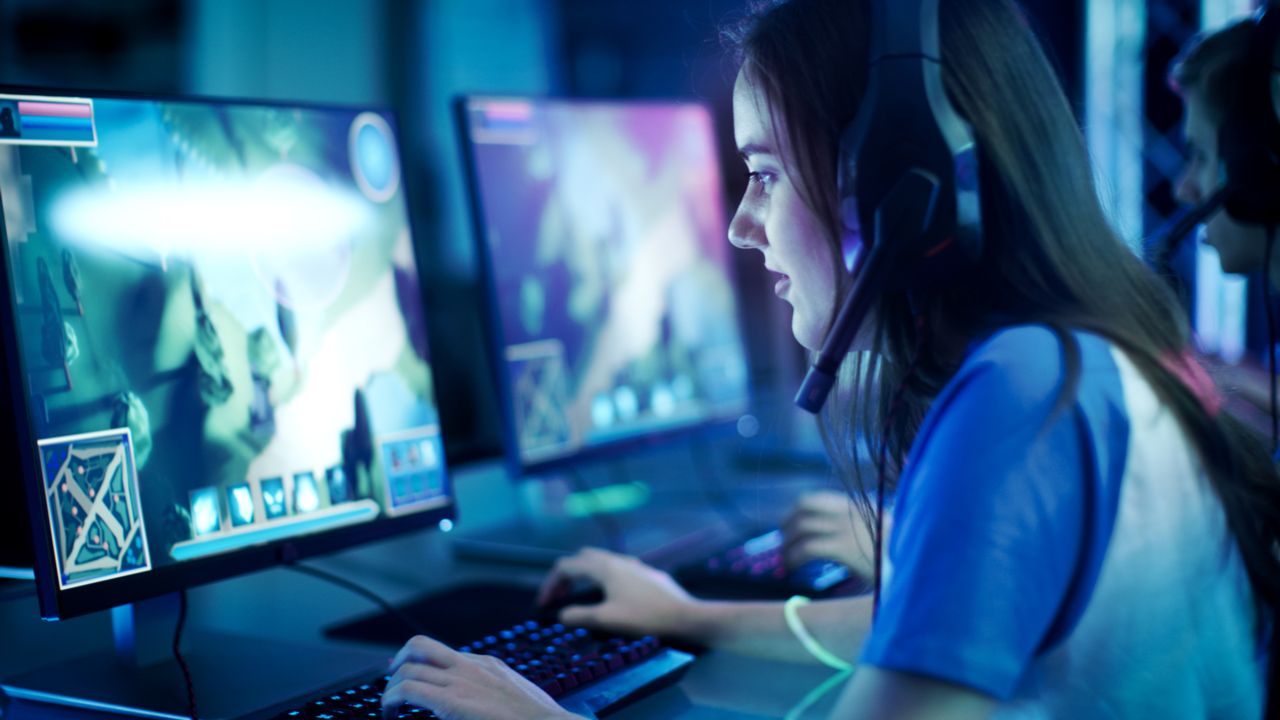
eSports likes to present itself as the most inclusive sport of all. Because who ultimately sits behind the screen should play no role in the vast majority of computer games. But is that really the case? Are everyone really equal in digital sports, and do they all have the same opportunities? If you take a look behind the scenes and at the self-portrayal of eSports, you will quickly find what you are looking for. In recent years, eSports has repeatedly attracted attention due to bullying and harassment scandals involving high-profile female players, as well as disadvantages for people of color or those who are physically impaired. In this article, we will explore how inclusive eSports really is and identify areas where the digital sport still needs to improve.
.
Gaming and competitive gaming, or eSports, are theoretically very inclusive and diverse. Unlike traditional sports such as soccer, tennis, volleyball, track and field, where men's and women's teams, as well as physically impaired individuals, must compete separately, eSports is inclusive. Anyone can compete against anyone, with the ultimate focus being on in-game skills.
This inclusivity is exemplified by eSports pros like Niklas Luginsland, who was featured at ISPO Digitize 2019 on ISPO.com. Despite having brittle bone disease, he has been a FIFA professional for VFB Stuttgart for several years, playing the soccer simulation game at the highest level in the German Bundesliga.
"In terms of my physical limitations, there are no barriers in eSports. In eSports, I can, just like anyone else, take the controller in hand and go. I can achieve success just as easily."
More and more female eSports pros are also in the spotlight. Sasha "Scarlett" Hostyn has been a star in the eSports world for years. In StarCraft 2, she has been among the best players in the world and consistently among the top 10 non-Korean players in terms of both prize money won and the Elo system for nearly the past decade.
However, despite these positive examples of the inclusive possibilities of eSports, true diversity, especially at the professional level, is not yet a reality. The majority of professional gamers are male. According to a recent estimate, only 5% of professional players are female. This is staggering when compared to the nearly 60% of women ages 18-29 who regularly play video games. As a result, the professional gaming sector is 95% dominated by men. Due to this lack of diversity, several groups and movements within the industry are working to make eSports more inclusive overall.
Whenever the discussion about women in the eSports sector arises, it is essential to also consider the broader gaming scene and eSports culture. Playing video games is not yet as accepted in society and is less widespread among young girls compared to boys. Consequently, girls often start gaming later and are more likely to stop, especially during their teenage years. However, this trend is changing. In 2020, 96% of boys and 76% of girls reported playing video games regularly, compared to 96% and 63% in 2018. These figures indicate that social acceptance of gaming among young girls has significantly increased in recent years.
Additionally, young girls seldom see themselves as real gamers, often viewing computer games as just a pastime. In contrast, boys are more likely to identify as gamers and structure their lives around computer games and eSports. In the same survey, many boys expressed the desire to have a future where computer games played a central role, envisioning careers as eSports athletes, streamers, or game developers.
However, even though fewer young girls and women see computer games as a fixed part of their lives, those who do often face more problems in the online world than their male counterparts. eSports is far from providing equal opportunities in this regard.
The personal experiences of many female players reveal that boys and men often do not take them seriously, and they frequently face sexual harassment. If they do not respond to these advances, they are often met with sexist insults. It is difficult to imagine developing the necessary motivation in such an environment to put in the time and effort required to compete at the highest levels in eSports.
A discussion about diversity and equality in eSports is therefore essential and must be addressed.
In the search for explanations for the lack of diversity, it is crucial to consider the foundations of the gaming community. Only those who start as casual gamers can eventually become professionals. However, the vast majority of women never reach the professional level, which could be attributed to the toxic gaming community.
Anyone who has ever played a multiplayer online game knows that toxic comments, trolling, and cyberbullying are commonplace. This phenomenon has been a problem in the gaming world since its inception. While some games experience it more than others, ultimately, every popular multiplayer game is affected by it. In a 2020 study using the Toxic Comment Classifiers by IBM, various gaming communities on the internet platform Reddit were investigated to determine which games struggle most with this problem. The results showed that almost all highly competitive eSports titles, such as Counter-Strike: Global Offensive, DOTA 2, League of Legends, and Overwatch, are among the most toxic communities. Therefore, if you play these games regularly, sooner or later (and usually sooner) you'll encounter homophobic, sexist, and racist statements.
This pervasive toxicity can deter many women from investing the time and effort needed to reach the highest levels in eSports, making a discussion about diversity and equality in eSports essential.
By the way, women are particularly affected by this. A study by PickFu and Utopia Analytics from November 2021 shows that 30% of women surveyed have directly experienced insults and toxicity while playing online games. Most of them (72%) have directly encountered sexism and misogyny. In comparison, none of the male respondents reported experiencing any form of gender discrimination.
LGBTQ+ gamers also report similar experiences. A report published by the gaming website OnlineRoulette, based on a survey of 788 people between the ages of 18 and 70, shows that 73% of LGBTQ+ athletes have been harassed because of their sexual orientation or gender identity. Players who come out online are 21% more likely to experience verbal harassment than other players.
This pervasive toxicity disproportionately impacts women and LGBTQ+ gamers, highlighting the urgent need for discussions about diversity and equality in eSports.
The eSports industry itself recognizes that the current state of the professional scene is not desirable. In recent years, game makers, tournament organizers, and eSports organizations have launched projects that highlight women and LGBTQ+ gamers, promoting the diversity and inclusive possibilities of eSports.
However, not all that glitters is gold. Tournaments and leagues exclusively for women's teams spark debates about whether male and female players should even compete together. Often, these projects appear more like failed PR stunts than genuine measures to promote diversity in eSports.
In 2019, the Russian eSports organization Vaevictis fielded an all-female team for the first time in the League of Legends Continental League (LCL). However, the team failed to record a single win in 28 matches, set a league record for the shortest average game time—indicating the fastest average losses—and had the most frequent in-game deaths. Consequently, Riot Games, the game developer and tournament organizer, removed the team from the LCL the following season. Whether this project genuinely succeeded in promoting women in eSports and encouraging female gamers to pursue professional careers remains debatable.
However, there are also positive examples and diversity-promoting projects. For instance, Telekom is committed to fostering more diversity in eSports and gaming as part of the Equal eSports Initiative.
"Gaming and eSports are now fixed components of the everyday culture of many adolescents. With this new initiative, Telekom wants to support this movement and address key issues such as diversity, inclusion, and strengthen digital education," says Birgit Bohle, Chief Human Resources Officer and Labor Director at Deutsche Telekom AG.
The project includes a professional female team in the game League of Legends in cooperation with SK Gaming. The first all-female professional team in Germany will receive professional training, enabling them to compete at the highest level.
Another part of the initiative is the Female Player Program, which focuses on promoting young female players. Additionally, the initiative includes the Equal eSports Council, consisting of 13 top female players and notable figures in the eSports scene like Melly, Miss Rage, Anna Baumann, and Kristin Banse. Together with a network of strong women from the business world, this council will guide the program.
The initiative also extends support beyond women to include people with impairments, ensuring their presence in eSports is promoted through suitable projects. One notable example is the cooperation between Microsoft and the Paralympics on the "Gaming for Inclusion" project. This virtual, multi-day eSports tournament brought together more than 90 Paralympic athletes to compete in games such as Forza Motorsport 7, Madden NFL 22, and Rocket League.
eSports has, perhaps even more than traditional sports, the potential to connect people, bring them together, and overcome borders. However, it is crucial to understand that this theoretical possibility does not automatically translate into practical implementation. All those involved in the industry—whether game developers, tournament organizers, sponsors, brands, and, of course, players themselves—must recognize that eSports is far from being as inclusive as it often claims to be. Fundamental social differences play a significant role in this, but the gaming community is not entirely blameless.
It is important to allow an open discussion about the grievances and problems, as well as the positive projects in this area. At the same time, players of all kinds who are part of or want to join the gaming and eSports community should be promoted, celebrated, and appreciated by this very community.

For running, weight training, yoga and in the gym, you can choose from a wide range of high-tech clothing to support you during your workout. But wearables are no longer limited to smartwatches on the wrist. We've taken a look across the spectrum of applications and discovered some innovative, unique, and sometimes quirky wearables.
Wearables include all "smart" devices, such as fitness watches, smartwatches, but also chest straps or smart clothing, headphones or data glasses. Wearables are designed to support you in your everyday life and can optimize your training by allowing you to access values such as heart rate, daily steps, and sleep quality, for example, and gain valuable insights from this data. Because health is not just a trend, but an important part of any training plan, and with the help of wearables you can always keep an eye on it and respond better to your body and its needs.
These are the exciting wearables you should know about: