

Imagine a world where every fan feels like a VIP, where data-driven insights allow coaches to outsmart rivals in real-time and where injuries are predicted before they happen. Welcome to the AI-driven transformation of sports entertainment—a new reality that is reshaping how we play, watch, and experience sports.
Because AI is revolutionizing sports, this transformation requires collaboration and continuous exchange to shape the future of the industry. ISPO 2025 offers the perfect platform for brands to connect, share innovative ideas, and push the boundaries of what's possible – join us from 30. NOV. – 02. DEC. in Munich!
At ISPO 2024 thought leaders shared how AI is driving this transformation across various dimensions, from fan engagement to injury prevention. As Sebastián Lancestremère, Strategic Partnerships Director at Microsoft, emphasized, the vision behind AI in sports is to enable every organization—be it a team or a league—to deliver VIP-level experiences to their fans all around the world. Through intelligent assistance, AI can replicate the feeling of being in the stadium, supporting the entire fan journey from pre-match to post-match with personalized, high-end engagement—essentially rolling out the red carpet for billions of fans.
AI has propelled sports into the age of "sportainment" and "data-tainment," blending traditional athleticism with technology to deliver experiences that were unimaginable just a decade ago. Greg Nieuwenhuys, Chairman at Mammut Sports Group and Wattbike and Senior Partner at Generative AI Strategy, succinctly stated, “The speed of change is much, much, much faster than anything we've ever seen before. So I think every single organization is going to have to reinvent themselves. And I think that, you know, five years from now, all of us in this room most likely will be working with AI all day..”
The democratization of AI has been particularly significant, expanding access beyond major organizations like the NBA and LaLiga to smaller entities and individuals within the sports ecosystem.
AI enables real-time analytics, transforming how games are played and experienced. For instance, La Liga’s "Beyond Stats" initiative processes over 3.5 million data points during a single match. AI tracks every movement, pass, and tactical play, generating actionable insights.
This technological leap lets us see things we never could before. Want to know the exact probability of scoring from that tricky angle? Or why that seemingly random substitution was, in fact, a tactical masterstroke? The AI sees it all, crunching those millions of data points to reveal insights that even seasoned coaches find remarkable.
Ready for an example? During one game, AI predicted a 4.3% scoring probability for an Atletico Madrid player shooting from 40 meters. This level of detail enriches tactical depth for coaches to make informed, real-time decisions, enhancing team performance and fan engagement and captivating fans with unparalleled storytelling.
Think of sports content like a goldmine, where there's far more value than what first meets the eye. What's fascinating is how AI is helping us extract every bit of that value, transforming how sports organizations handle their footage. Sebastian Lancestremère, WW Strategic Partnerships Director at Microsoft, notes in the event, “For every one hour of raw footage, you can multiply by eight times the amount of content that you are generating across all of those channels.”
So, how does this multiplication effect work across the sports media landscape?
Automatic Content Generation
Gone are the days when editors had to spend countless hours hunched over screens, manually picking out the best moments. AI has transformed the editing room, instantly spotting key plays and creating highlights.
In the words of Sebastian Lancestremère, "You can create automatic content and streams that you can share automatically through workflows with the broadcasters, with your commercial partners, and also in your digital channels."
Efficient Content Distribution Across Platforms
Each platform demands different formats. AI automatically adapts content, trimming it for Instagram, extending it for YouTube, and optimizing it for broadcast. The result? Perfect packaging for every platform without manual reformatting.
Maximizing Every Moment
With AI, a single clip transforms into multiple assets. While most see just the surface brilliance, AI spots the hidden angles. Like a seasoned editor, it uses the same clip as a masterclass in technique for coaches, social media gold for marketers, or a perfect product placement opportunity for sponsors.
While AI handles the heavy lifting of content multiplication and distribution, creative teams can focus on what they do best - crafting compelling narratives and innovative strategies. This leads to more engaging content, happier fans, and better business outcomes, making it a game-changer in sports entertainment.
The power of AI transcends linguistic divides, making sports accessible to a global audience. Sebastián Lancestremère showcased an example where Lionel Messi’s voice was seamlessly translated into English, preserving his distinctive tone and passion. His trademark Argentine lilt, those passionate inflections, that unmistakable Messi charm - it was all there, just wrapped in perfect English. The technology didn't just translate his words but captured his soul when we heard him say, "Today, we find ourselves in the final match," with all the emotion that Spanish-speaking fans have come to love. The advancement of AI ensures that the translation captures not just words but the essence and emotion of the message, making it universally relatable.
AI’s role in talent identification is revolutionizing scouting. Danay Lea, Founder & CEO of FluidState, former COO of McMillan LLP and Advisor to the CEO at Abu Dhabi Securities Exchange, described at the event how AI analytics are helping identify potential NHL draft picks among nine-year-olds in Canada.
Danay remarked, “We're now seeing AI as a tool that is able to absolutely accelerate and augment that further step.”
AI is transforming sports medicine by proactively identifying injury risks and helping improve athlete health through early detection and prevention.
Proactive Monitoring
The system constantly analyzes every aspect of an athlete's performance—from their match-day sprints to training ground routines and medical history. What's exciting is that this technology spots red flags before they become actual injuries.
Sebastián Lancestremère highlighted thatAI is accelerating how sports organizations use data to monitor and support athletes. By integrating information from training, competition, and medical records, teams are moving toward real-time insights.
The VIP experience is no longer limited to those fancy stadium boxes. Thanks to AI, every fan can now feel like a privileged insider, whether they're watching from Tokyo or Toronto. Sebastián Lancestremère outlined AI-powered features such as:
In Sebastiás words: AI could be used to create experiences that “make every fan feel as if they’re in the stadium.” No matter where they are - It's like having a sports concierge in your pocket, delivering a premium experience once reserved for the elite.
In the rapidly evolving world of AI in sports, the human element remains indispensable for successful integration. As Greg Nieuwenhuys highlights, the cornerstone of effective AI adoption lies not in advanced technology or intricate data systems but in fundamental aspects like leadership comprehension, genuine employee empowerment, and robust training programs.
Greg's perspective is particularly refreshing as he addresses the elephant in the room, "The majority of people are afraid of AI. They won't admit it, but they're afraid of their job or what it's going to do to their company or that they're afraid that they might be the only one who doesn't understand."
The key is to build confidence with simple, achievable goals that show concrete results.
This sentiment is echoed by Tobias Matern, Senior Solutions Architect at Amazon Web Services, when he says, "Yes, there might be complete new fields that will be possible with AI, but I think the real power, at least for today and tomorrow is really about the existing fields and speeding up teams and organizations where they are right now and giving them kind of a superpower by using AI at many different levels."
The marriage of sports and AI is not merely an upgrade; it’s a reimagining of what’s possible. From delivering personalized fan experiences to redefining athletic performance, AI has unlocked doors to a future brimming with potential. As Tobias Matern aptly noted, “It will actually unlock a lot. In many dimensions Iit will actually not be a complete new world but it will improve the worlds that we are already in.”The future of sports is not just technology-driven but profoundly human-centered—and it’s already here. With AI at the helm, we’re not just watching the game; we’re part of its evolution.
This transformation also opens up enormous opportunities for brands in the sports business. However, it's a collaborative journey. It demands ethical considerations, human ingenuity, and a shared vision to ensure AI augments rather than replaces. Continuous exchange is essential to actively shape the future of the sports industry.
ISPO 2025 provides the ideal platform for this. Whether in the Digitize & Retail Hub or in the Brandnew Village, innovators, start-ups, and established brands come together here to push forward groundbreaking ideas. With the Sports Tech Nation Conference and the opportunity to pitch at the ISPO Brandnew Award, ISPO is the perfect place to forge new partnerships and present visionary concepts to a global audience. Be part of it – 30. NOV. – 02. DEC. in Munich!
The term Metaverse has been heard by everyone, at the latest since Facebook was renamed Meta. But while the Metaverse is still smiled at by many people as a virtual parallel world, a few projects are already showing how the Metaverse will change the sports industry, the future of sports and the lives of every individual forever.
In order to understand the impact the Metaverse will have on sports, one must first understand what the Metaverse is in the first place. Because after Facebook's admittedly clever move to name itself after the Metaverse, there is a lot of confusion about the actual background and technology. It is important to know that the Meta Group is not the Metaverse and never will be.
What is clear, however, is that the Meta Corporation will be a major player in the Metaverse. Maybe even the biggest. Zuckerberg laid the foundation for this early on. Back in 2014, Facebook acquired the virtual reality company Oculus. So the work in the area of the Metaverse has long since begun. The rebranding merely brought this to the fore.
However, the term metaverse itself is much older. It was coined as early as 1992, in a novel by Neal Stephenson called "Snow Crash". In this novel, the metaverse is described as a virtual 3D world that you can enter with the help of a personal terminal and special glasses.
The connection between Metaverse and sports presents unprecendet opportunities. From immersive fan experiences to virtual events and sponsorship opportunities. Companies that embrace this technology at an early stage can position themselves as pioneers in a rapidly evolving digital sports landscape.
This virtual reality from Stephenson's novel appears to the user as a city created along a single street a hundred meters wide. As in the real world, Neal Stephenson's Metaverse is built and developed so that the virtual world continues to evolve. Users can build their own streets and buildings, as well as create signs, parks, and even new things that don't exist in our reality. Gigantic light spectacles or oversized buildings and areas in which the laws of physics as we know them seem to be suspended.
Sound familiar? Not surprisingly. Because what Neal Stephenson described in his novel more than 30 years ago has long since become reality today. These virtual spaces have long since become reality in the form of platforms and immersive gaming worlds such as Second Life, Minecraft or World of Warcraft. Sometimes more and sometimes less based on our real reality.
This concept offers enormous potential for the sports industry. The metaverse offers completely new opportunities for fan engagement, sponsorship and event staging. Virtual stadiums, personalized training rooms or exclusive VIP experiences are just some of the approaches that sports companies can use to secure a competitive advantage. The sports industry is now on the cusp of adapting these technologies and utilizing the potential of the metaverse for its business models.
But these computer game worlds have a fundamental difference from the metaverse: they exist only in isolation, like small virtual islands. The users, players and goods can never step beyond the boundaries of these prometaverses.
The metaverse is really just the next logical step: a connection of these virtual islands to a large virtual world that we don't even have to enter, but that we always have with us and that is constantly around us. Mark Zuckerberg himself speaks here of the embodiment of the Internet, an Internet 2.0, as it were.
Many people who do not work in the industry still consider this Metaverse definition to be very abstract and dreams of the future that are still several decades away. However, the Metaverse is already in its infancy and it has already been shown several times that the vision has long since become reality.
Innovative technologies, such as cryptocurrencies and blockchain, have extremely simplified the progress of the Metaverse in recent years. These allow, even across different providers, the continuity of data in the Metaverse. In Sports it's one of the most exciting developments. NFTs are the best example of how blockchain technology can be used to verify ownership of digital assets, and there are already 3D virtual reality platforms that take advantage of this technology.
This data consistency and verified assets in a metaverse allow the user, for example, to use a shoe purchased from Nike as NFT for all his virtual avatars. In effect, one buys a virtual shoe that the user or his avatars can wear in all virtual worlds. This applies to the virtual world of the Meta Group, as well as to all other virtual worlds such as those of Fortnite, Minecraft, or even the already existing virtual worlds such as Decentraland.
The sports industry can also benefit from this development and even tap into new digital sources of revenue. Zuckerberg himself, by the way, assumes that the Metaverse will be completely present by the end of the 2020s. As a fixed component of everyday life.
If you are now legitimately wondering what exactly sport has to do with all these explanations, you are certainly not alone. But the answer to this question is obvious and has already been mentioned. Because on the one hand, traditional sports somehow have nothing at all to do with the Metaverse world, but on the other hand, the world of sports will fundamentally change as a result.
The answer was probably similar in the 1990s to the question of what the Internet has to do with sports.
Today, almost every successful company has its own presence on the Internet. In the form of a website, social media appearances and content. And so, in the future, almost every company will have a presence in the metaverse. Amazon will design digital malls, Disney will digitize its theme parks, and Netflix will have a number of digital movie theaters in the Metaverse.
So in the first step, the Metaverse reality will primarily revolutionize the way people consume sports.
In a virtual sports arena, sports enthusiasts will come together with their virtual avatars, buy and wear fan merchandise of their favorite clubs, socialize, celebrate sports with other fans and, of course, watch the games and events. Of course, there are no geographical and physical barriers anymore. In the Metaverse, any number of fans from Germany can watch the Superbowl in a Metaverse stadium.
Through mutli-view camera technology, spectators can even enter the field itself and walk alongside the players, join the football cheerleaders and watch the game from different vantage points. Last but not least, Metaverse allows everyone to sit in the same room with their friends, even if they are physically miles away.
In Metaverse, fans will no longer just be present at sporting events, but right in the middle of them - and still in the comfort of their own home on the couch or computer chair.
Once again, this sounds like a never-attainable vision of the future, but the Metaverse is once again a step further than you think. The Manchester City club has become the first soccer club to announce that the Etihad Stadium will be virtually recreated in the Metaverse. This will allow fans of the soccer team to watch matches live without having to physically enter the stadium. This development shows how the sports industry is using the metaverse to create new digital experiences for fans while increasing global reach. Development has already begun here.
Manchester City's arch-rival has also already entered the metaverse. With partner Tezos (XTZ), Manchester United has begun creating and marketing digital fan merchandise. These can be purchased by fans as NFTs purchased, collected and, in the future, likely worn in the Metaverse.
The NBA has also been relying on digital fan merchandise since 2020 with its NBA Top Shots project. In this case, on a kind of trading cards, to be more precise video trading cards. Each digital video trading card shows a significant moment in NBA history, which can be collected and traded in the form of NFTs. The most expensive moment to date sold for $387,600 and features a dunk by LeBron James of the LA Lakers from the February 06, 2020 matchup against the Houston Rockets. Eleven days earlier, Lakers legend Kobe Bryant had died in a helicopter accident. With his dunk, LeBron James paid tribute to his late friend.
These examples clearly show that this digital driving experience naturally offers lucrative opportunities for rights holders and manufacturers. For Metaverse sports in particular, this opens up new sources of income by making virtual goods “ownable” and thus creating additional revenue potential.
But it's not just the way we consume sports and the digital fan experience that will continue to evolve. The metaverse will also fundamentally change sports training. Ever since platforms like YouTube have existed, videos have been an integral part of sports training, especially for newcomers to sports or self-taught athletes. Fitness programs and sports apps were also first made possible by the mobile Internet and smartphones.
It is likely that the Metaverse will also bring advances in this area. Fitness coaches standing as holograms in one's own living room and training sessions with the best sports trainers in the world, even though they may be on the other side of the world. There are seemingly no limits to the possibilities here.
Already, companies such as smart bike manufacturer Capti are working to bring sports training into the metaverse. Unlike well-known manufacturers Peloton and Zwift, Capti's gamified cycling platform relies on 3D worlds developed in the Unreal Engine. This makes the platform compatible with existing virtual worlds. In this way, it is conceivable that you could use your own bike for your races in Mario Cart or simply to get around in a digital parallel world, such as Second Life.
The complete vision of individual and unique digital avatars that make it possible to switch back and forth between digital space and reality will still take several years. This is partly because the giants involved, such as Facebook and Microsoft, each have their own unique vision of the metaverse. Web 2.0 has allowed many other technology megacorporations such as Uber and TikTok to emerge and grow large, and they want to get in on the action here as well.
In addition, sustainability and climate protection stand somewhat in the way of the complete implementation of the Metaverse. This is because the energy requirements of a large and constantly available platform, which is to operate globally to boot, must rely on the use of blockchain. This is the only way to ensure a certain level of authenticity. And that costs vast amounts of energy, which, after all, should only be generated in an environmentally friendly manner, with care, and consumed in moderation.
Experts assume that the future of Metaverse in Sports will gradually grow and arrive in the reality of sports fans. There will not be able to be a clear separation before and after. Instead, it will simply conquer everyday life in certain areas and with certain offers, products and services, but also skills, first integrating into it and then merging with it completely. And at some point, the metaverse and with it the new sports experience will not only be a reality, but a matter of course.
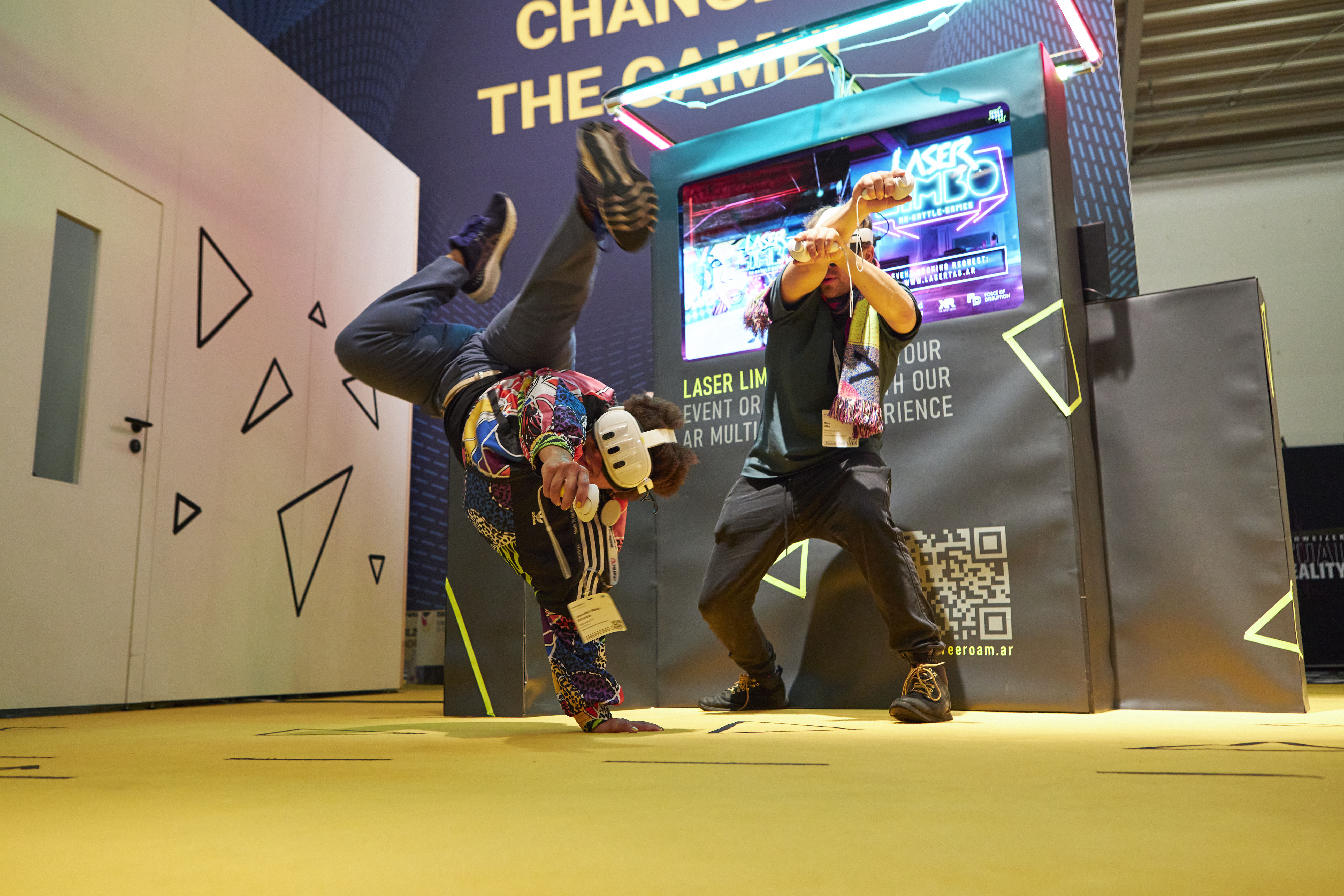
Virtual reality (VR) has grown enormously in importance in recent years and is increasingly being used in various areas of our society, including education, medicine, the military and entertainment. Experts see a particularly promising field of application in the training of athletes. To what extent does the future of training and competition preparation lie in virtual reality? Can the efficient use of VR in training even make the decisive difference in the end?
To make one thing clear in advance. The use of virtual reality cannot replace Talent and perseverance in training. Endurance athletes will need to train many hours a week to improve their maximum oxygen capacity or anaerobic endurance capacity. Similarly, training on the ball is essential for professional footballers; for gymnasts, it is the uneven or balance beam. VR training is generally intended as a supplementary tool. Virtual training enables athletes to develop, improve or even perfect skills in a controlled and realistic environment. This has many advantages.
VR is already part of training practice at the Austrian Ski Association. Ski racers use VR goggles to relive and analyze races they have already completed or to prepare and practice for upcoming races. That's smart, because every downhill run holds
ski racers* a certain risk of injury. This use of VR also saves resources. This small example alone shows the potential of this technology.
A few years ago, VR glasses were used in a study at Bishop's University to improve decision-making in young basketball players. Participants were shown videos of set plays and had to decide which action they would take next at the end of the clip. Players who had watched the videos in VR made significantly better decisions on the court than those who had only watched the moves on conventional screens.
The DFB Academy also identified improved decision-making as a use case in a two-year project with the U16 juniors. By creating a 360° world with images from a real game, the players are supposed to concentrate on the preliminary orientation. Although they have to physically look around, they don't have to move in any other way, so the training is very low-impact. Toni Kroos was a master of pre-orientation during his active career, as he knew where to pass the ball at all times. An important skill for professional footballers who want to be among the world's best.
Especially in sports such as soccer, where making the right decisions is of great importance, VR training can be used to explore all decision-making options with the help of artificial intelligence (AI). Here you can experiment with different passing or running decisions to find out how they would have changed the outcome of the respective game scenario. AI algorithms could use the information about the time before the decision was made to simulate what would probably have happened with any other possible decision. Highly complex, highly technical and highly exciting.
Individual sports have also long since picked up the ball. Mischa Zverev, former professional tennis player, manager and brother of Alexander Zverev, reports on the methods and effectiveness of VR training in tennis. "We focused on a combination of VR glasses and practice-oriented neuroathletic exercises. We quickly realized the effectiveness felt the effectiveness. Basically, the aim is to improve the movement patterns of a body that are not possible with conventional training methods. The great opportunity of the virtual exercises with the glasses is that they are playful and we can use the data collected to make the exercises sustainable," says Mischa Zverev.
His brother Alexander Zverev has just won the Masters in Paris and is now ranked number two in the world. For Alexander Zverev, neuroathletics and coach Lars Lienhard are an important part of his success. Neuroathletics training with VR glasses has several advantages for Alexander Zverev. Firstly, it allows him to train automatisms, which are particularly important in tennis. On the other hand, VR training also has a very practical advantage when it comes to training with individual coach Lienhard: "Lars only exists once in the world and whether you're in New York or Australia, he can't always be in the same place. With the VR glasses, I can still train with him."
Alexander Zverev is working together with IMPROVR. The Munich-based company specializes in athlete training with VR and relies on software that is primarily designed to improve cognitive skills. The two Zverev brothers will give more insights into this at ISPO Munich 2024, where they will be guests on December 4 and explain how to "train intelligently" these days.
Despite all the possible applications and potential advantages over conventional training methods using video, VR training should not be overused. Sessions longer than 30 minutes can cause nausea or headaches, known as cybersickness. This often happens when there is a mismatch between what viewers see and what is reported back to the brain via the sense of balance in the inner ear. Even though the hardware is generally becoming more affordable and lighter, current VR glasses currently weigh between 500 and 600 grams. This can lead to discomfort during longer training sessions as it puts too much strain on the athlete's neck muscles. This can be counterproductive, especially when it comes to training automatisms.
Experts currently also advise against using VR to train fine motor skills. A lack of haptic feedback and imperfect "pseudeo" realism can lead to movement patterns being rehearsed incorrectly. Mischa Zverev also knows that training with VR must always be reviewed and that its use and development is only just beginning: "It should always be seen as a supplementary training tool. VR certainly doesn't replace existing training! But it can be used to train movement patterns of the body that cannot be achieved with conventional training methods." However, the handling and use of VR training must be viewed with caution. "Neuro-centered training and VR technology are two new, modern components that need to be combined. In the end, it all comes down to the effectiveness for the athlete. And we are constantly working on this," says Mischa Zverev.
It is difficult to say where the limits of VR training lie. What is certain is that not all areas of application have been exhausted. There are speculations that VR developers may also consider the use of bodysuits and sports equipment with tracking functions.
This could pave the way for a realistic sports experience in a virtual environment. If the developers then manage to implement vibrations in the hardware, this could potentially become a game changer. Bobsleighing through the ice channel without being
being there yourself. A very smart idea.
It is to be expected that mixed reality via VR goggles will also find more interest and application in the future. A 100-metre sprinter, for example, could virtually create an Olympic stadium on the training ground to simulate the most important competition of the year in her daily training. Full stands, cheering spectators - everything as close to reality as possible. Imagined scenarios and processes can be played out and serve as mental replays of possible real events. Dealing with performance pressure and fears before the competition, practising routines, stress management and emotion regulation - sports psychologists are already adjusting their glasses. VR training as a game changer? The potential is there and it's real.

Fitness training is becoming more and more of an experience, and it's not just about communal activities such as running or cycling. The combination of fitness and technology, especially gaming, is defining a new era: "exergaming". With VR goggles, sensory fitness mats and playful challenges, exercise is becoming more exciting and motivating. At ISPO Munich, exergaming is the focus of many exhibitors and shows how gamification can reignite sporting ambition.
One of these is "The Trck". Its CEO Marcus Meyer explains: "We want to use the power of gamification and exergaming to create a completely new kind of fitness experience - one that is based on fun, engagement and social interaction." The approach: "The Trck" platform combines the best elements of video games and fitness, creating a dynamic environment where users are motivated by fun, goal-oriented challenges. Rather than focusing solely on the functional aspects of training, it focuses on human emotion, motivation and community - elements that are designed to keep people engaged. Marcus Meyer's strategy sounds simple:
With "The Trck", Meyer also wants to reach people who don't get enough exercise. And that's almost a third of all adults - around 1.8 billion people. This has significant consequences for health and costs the healthcare system an enormous amount of money. Recently, the proportion of inactive adults worldwide has increased - by five percentage points between 2010 and 2022. If the trend continues, according to a recent study by the World Health Organization (WHO), the proportion of inactive people is expected to climb from the current 31% to 35% by 2030. An alarming trend. Even if, according to the WHO, Germany is one of (only) 22 countries that are on the right track. In this country, only around twelve percent of people are not sufficiently active. Nevertheless, that's several million people that we want to reach with exergaming. Turning sport into a digital challenge, building a community that enjoys fitness training (again). That is the vision of Exergaming and Marcus Meyer from "The Trck".
Tennis pro Alexander Zverev also relies on training with VR glasses, even if his approach is different. To achieve his goals, the current number two in the ATP world rankings has discovered neuroathletic training for himself. With IMPROVR, Alexander Zverev reported at ISPO Munich, he gets the last few percentage points that make the difference in the end. Even though IMPROVR primarily focuses on the performance skills of top athletes, interest has grown enormously over time. Gamification next level.
Technology is shaping more and more areas of sport. Including the way we plan and document our training. The market for wearables is booming and artificial intelligence (AI) is becoming a fitness coach. However, Prof. Dr. Peter Düking from the Institute of Sports Science at TU Braunschweig warns that what may be a relief for laypeople should always be viewed with skepticism from a sports science perspective. After all, scientific studies have shown that only 3% of all devices record valid, usable data. In other words: with 97% of all devices, you cannot be sure that the displayed heart rate is correct. "This is a situation where we really need to improve," says Düking. The results of a study by TU Braunschweig into the extent to which AI can create a training plan for endurance athletes using ChatGPT are also interesting.
Conclusion: Little information leads to an insufficient and unusable result. However, the more information you provide to ChatGPT, the better the training plan will be. Nevertheless, the plan is not perfect in the end. Düking reassures all trainers who see their profession at risk due to AI:
A few months ago, a video of Lionel Messi went viral. The Inter Miami CF superstar speaks perfect English at a press conference - even though the Argentinian usually only speaks Spanish. This is made possible by AI. Not a deep fake, because Messi was real. Only his language was AI-generated. What may seem strange at first glance, shows at second glance the enormous potential of AI (alone) in the sports industry. Much greater than Messi will ever be. Where sporting events have perhaps only been produced in one or two languages in the past for financial reasons, AI can break this up in the future and reach more fans and open up new markets.
But should we be afraid of this development? A clear no! Tobias Matern, Senior Solutions Architect at Amazon, advises media, entertainment and sports organizations. Matern has deep roots in the sports industry and is confident about working with AI:
One person who also knows the sports business well is Greg Nieuwenhuys, CEO of Mammut and Wattbike. Nieuwenhuys has been coming to ISPO Munich for 15 years and appeals to the industry:
It took almost 60 years for electricity to reach 100 million people. For social media giants such as TikTok or Uber, it took around 1 year. ChatGPT took a whole 2 months. Even though this development is progressing rapidly, entrepreneur Nieuwenhuys does not see it as a threat:
Learning by doing is his motto. Trying things out, gaining experience and ensuring "quick wins" in the company. After all, AI will be relevant for the entire sports business, whether it's broadcasting, clothing or improving the performance of athletes. "As long as the technology is used responsibly by the right people, we don't need to worry," says Nieuwenhuys, looking positively to the future with AI.
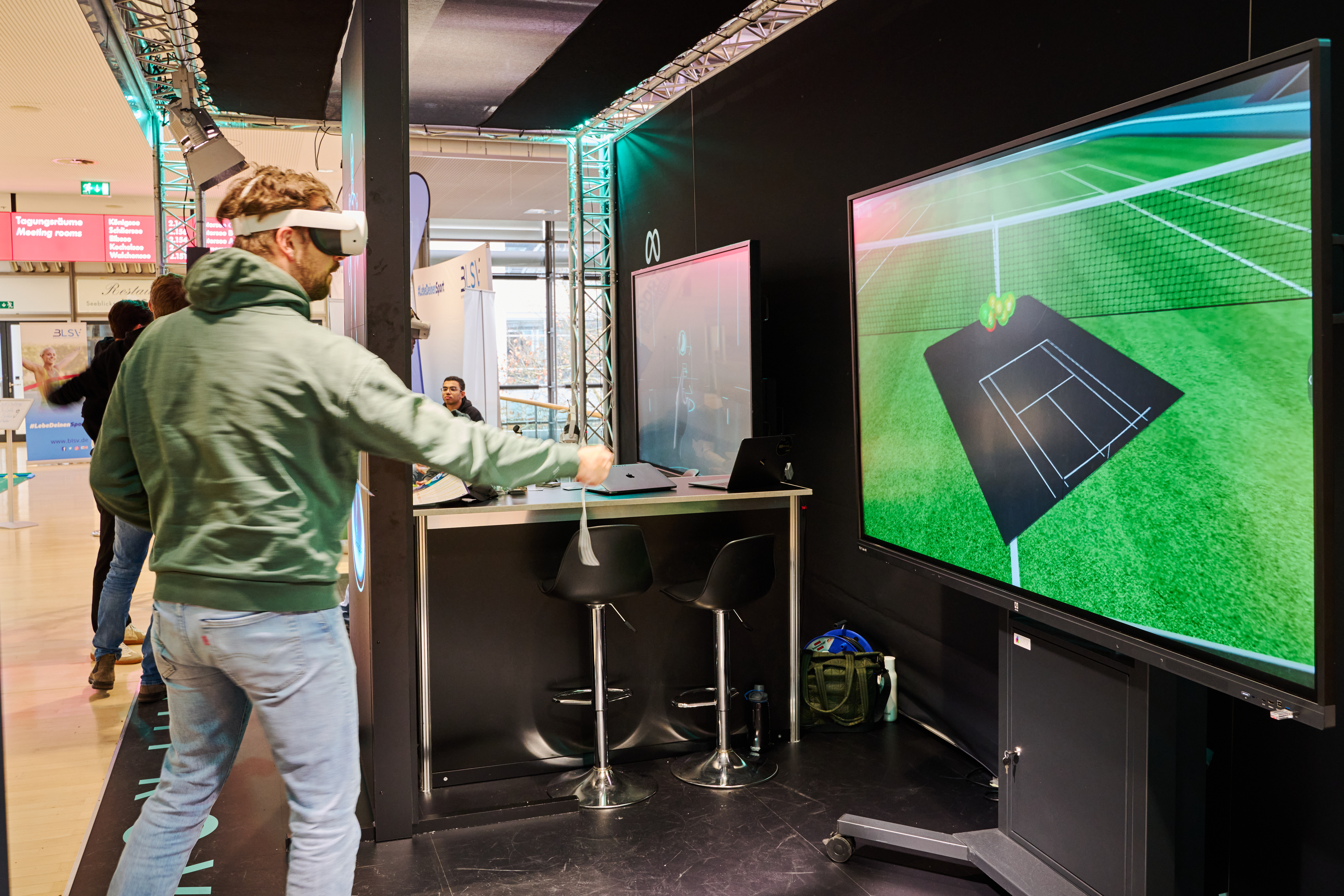
We are surrounded by data that changes and sometimes determines our lives. In everyday life, but also in sport. Data and artificial intelligence (AI) are having an ever greater influence on the way we do, develop and experience sport. There were some interesting insights at ISPO Munich.
December is traditionally the month of reckoning. The Swedish audio streamer once again presents a personalized potpourri of sound consumption. The top songs of the year, favorite artist, most popular podcast or minutes of music streamed throughout the year. Of course, fitness apps also generate personalized annual results: overall performance, fitness values, records - we are celebrated for our activities. Social media is flooded for days with the results of our friends and ourselves, we get music suggestions for the next year; we compare and compete with others in terms of sport. You can approve of this or not. The fact is, it's always about commitment.
It's not news that collecting data is a valuable asset. The implementation of search engines began in the early 1990s. Today, data determines our everyday lives. With the abstinence of our smart gadgets, the "digital detox", what once began as a blessing of convenience is now seen as a curse. But it doesn't have to be, because when used sensibly and efficiently, data can make our lives easier, inspire us and enrich us.
This is the quintessence that was also shared in numerous panel discussions at ISPO Munich. Especially when artificial intelligence (AI) becomes part of the analysis of the data madness.
However, in recent years in particular, an enormous amount of progress has been made. "That's where I see that AI, and generative AI in particular, is definitely a big help," says Tobias Matern, explaining this further development. With this in mind, more and more outdoor and fitness brands are relying on their own sales platforms. Getting to know and understand the community is extremely important. It is essential for many brands to no longer leave the online distribution of their own products to a few individual platforms. Creating their own ecosystems is becoming increasingly important. Products, entertainment, events, loyalty programs - all on one platform. This makes the data madness incredibly interesting. For sales and customers.
Nowadays, nothing works in top-class sport without big data. An example from sailing: Chief skipper Erik Heil and his strategy expert Anna Barth from Team SailGP Germany are taking the wind out of the sails of everyone who believed that sailing and watersports were all about a fast boat, wind and water. The professional sailors report at ISPO Munich that they integrate advanced high-tech equipment and data-driven methods to improve performance on the water. Over 1,000 data points per second are processed and analyzed to optimize strategies and make the right decisions in real time. Because in high-speed sailing at over 100 km/h across the sea, there is little time to make the right decision. It is therefore not surprising that former racing driver Sebastian Vettel is involved in international sailing racing as co-owner of Team Germany.
For the German technology and software company Kinexon Sports, making the right decision at the right time is part of its business model. Specializing in real-time data analysis, it is no longer just about improving athlete performance. "Predictive maintenance for athletes" - i.e. the preventive protection of an athlete due to predicted injury-related absence - is becoming increasingly important. This is extremely important for clubs in the NBA, American football and international professional soccer, as fit players are not only sporting insurance, but also the club's capital. It's good if the coaching staff can rely on evidence-based data to possibly rest a player or take them out of the game to prevent a possible and expected injury. After all, players generally always want to play if you ask them. However, the responsibility usually lies with the sports management.
The fact that more and more software companies are entering the sports industry was more evident than ever at ISPO Munich. In some areas, they are even emerging from the industry, and the sports tech sector is booming. EintrachtTech is one such example. Its CEO Timm Jäger explains how EintrachtTech came about:
Match center, news, fan store, tickets, Eintracht TV, worldwide contactless payment or even intelligent sponsor implementations - all in one place. Fans can use the app directly in the stadium to book their public transport ticket home, take out insurance or subscribe to a national daily newspaper. A data-driven success that also serves a strategic purpose. "In the Bundesliga, you always have to think about new sources of revenue. We saw an opportunity here in our technological expertise. That's why we took this step," explains Timm Jäger and makes no secret of the fact that EintrachtTech also wants to make in-house development attractive to other clubs.
Another in-house development is the SAP Garden APP, which the Finnish company Futurice developed for one of Europe's most modern sports arenas in Munich's Olympic Park. The transformation and consulting company pursues a holistic approach with "ecosystem thinking". The fact that the SAP Garden APP is now being used on a large scale in the sports industry for the first time demonstrates the desirability of this sector. The result is a standardized digital platform for games of EHC Red Bull Munich or FC Bayern Basketball. Futurice is pursuing a clear goal with the SAP Garden APP.
After just a few months, the SAP Garden APP is already an integral part of many people's visit.
"Mobile ticketing and MatchCenter are of course the most popular features. And after just a few months, 20 percent of food and drink orders are placed via mobile orders, which is a great development," says Timo Schubert, Head of IT at Red Bull Munich and SAP Garden, providing initial insights into the project. Simply order the arena sausage from your seat and pick it up at half-time - just one service that simplifies the experience at SAP Garden. But the potential of the arena as an IoT (Internet of Things) is only just beginning. The more visitor data is collected, the greater the possibilities. Loyalty programs are conceivable in which the fan can be seen on video cubes as part of the show, or players can send a "personalized birthday cheer" to the stands. These examples show that when data is used sensibly and turned into innovative ideas, not only organizers, clubs and players benefit in sport, but also fans. And they are ultimately the most important thing in sport. Because without fans, there are no emotions and data cannot replace them.