


Sports and outdoor brands are entering a new phase of retail. "Phygital" is the buzzword of the moment. This means that physical stores are still an important part of the sales strategy, but it is the "digital first" mindset that is really boosting sales. Where is this particularly true? In China, where e-commerce even has its own public holidays.
Expert Louisa Smith explains what Chinese consumers now value, how physical and digital concepts go hand in hand and why you need to invest in community.
With the 'Healthy China 2030' government initiative in full force, many brands continue investing and growing in China, but the retail scene is changing. According to World Data Lab, the 2030 dateline calculates to approximately 1 billion potential consumers, a 15% increase compared to 2024. Consumers who have a more comprehensive understanding of the benefits of health and fitness.
The consumer's attitude is also changing. China's Gen Z and the up-and-coming Alphas drive continuous growth in this sector, but it isn't all for international brands. Domestic brands are top-rated, giving global brands equal measure in performance and design. Cultural confidence is growing with consumers, and they are proud to be Chinese and home-grown brands are tying into that.
The government initiative to get the population moving is working; encouraged by the Olympic Games in Beijing in 2008, the market has grown exponentially. The potential of this market is enormous, but it isn’t a quick hit; anyone looking to sell in China needs to play the long game, as there is plenty of competition, not just from international brands, but from emerging domestic brands that are holding their own.
What is different about Chinese retail is that physical stores are essential — almost like showrooms — but also in terms of presence and sales. What is evident on a global level is that fashion and fitness, mental and physical health, and connection to a community are paving the way for brands to be at the forefront of the consumer's wardrobe for all occasions. Brands with a manufacturing partner will find it more amiable to develop retail partnerships within the country, as you must adapt to sizing and colour tendencies that the manufacturing base knows of.
Anta Sports is China's largest domestic sports company, trailing Nike and Adidas. It is a relative newcomer compared to established brands, founded in 1994 as a small shoe manufacturer. Anta Sports is also the largest shareholder of Amer Sports Inc., a global group of sports and outdoor brands, including Peak Performance, Arc'teryx, Salomon, Wilson, Peak Performance, and Atomic, listed on the NY Stock Exchange in February this year.
Anta's investment was a savvy move, evident in the international brands featured on the retail scene in China. In January this year, Canadian high-end outdoor apparel label Arc'teryx officially opened the doors to its Shanghai concept space, the Arc'teryx Museum. The West Nanjing Road flagship boasts the most extensive primitive landscape experience in the world and is in addition to the 63 Arc'teryx stores in China. Anta Sports also acquired Fila and Maia Active, a Chinese designer sports brand, in 2023.
Investment into a new market is crucial, but it isn't just monetary investment that will see a return. Investment in understanding the consumer base and connecting with the community is as essential as creating just a physical product. Lululemon is one of the most sought-after brands for the Chinese consumer, which made me wonder why. The prices are costly.
Posting a 53% revenue growth increase solely for the China market in Q3 of 2023, Lululemon Athletica's decade-long development into the market has made an impact. Not just in the 126 stores it has throughout China but also in the importance it places on Chinese brand ambassadors to educate the consumer on the right product for the suitable event. The brand also places a lot of emphasis on engaging with the consumer through digital applications plus physical community-based events that connect with the consumer.
Swiss-designed ON Running has 19 physical stores in China, but its online presence also accounts for sales. In addition, ON Running has created a social running group app that allows consumers to meet and connect—again, this digital interaction is valuable and welcomed.
China's retail scene benefits from clustering similar brands together — as consumers' lifestyles and wish lists change. The DT51 is a new community-based shopping mall that opened last year. It looks like it has dropped from space into a residential area close to Beijing Olympic Park. The windowless structure with a chromatic facade is far from traditional shopping malls. This cubist approach results in an industrial-style interior highlighting brands' equal visibility — concession-like and open-fronted.
The ground floor, as always, is the global beauty and cosmetic brands, often the products that make the luxury markets their money. The second has an eclectic mix of domestic and Western fashion brands, but the third floor is unique and dedicated to sports and outdoor brands.
From Lululemon, X-bionic to Kailua (a Chinese brand that is gaining a lot of popularity) through to Anta and Maia Active, it was a who's who of the industry from across the global to home-grown brands — that itself is interesting as nothing looked out of place in terms of design and merchandising. There was a level pegging of quality tools.
Investment in physical retail will continue. In China, visiting shopping districts and malls involves more than shopping. These areas are community-based and offer dining, leisure, strolling, gyms, and child care.
However, a digital platform is crucial in connecting with consumers, especially consumers in China. That is why, at ISPO Beijing, not only were brands showcased, but there was also an area dedicated to Tmall and the brands that have space and digital stores.
China is an e-commerce country — a digital-first economy, where physical money is barely seen being exchanged, as all consumption is digital, right down to a bottle of water or an apple. Unlike busy shopping malls and foreign shipping stores in Europe and the US, where consumers pass by with shopping bags, China is different. Many stores are used as an advertising front; you can only have brick-and-mortar with a digital platform where most purchases take place. And on digital sales, we aren’t just considering apps and static products but live sale streams, entertainment elements, and special e-commerce discount days.
When you work your way across a map of China from the East Coast inland, you realize the size of this country and its growth. Beijing and Shanghai fall into the premier tier cities, but second, third, and fourth-tier cities are growing and moving up the ranks. The potential is huge.
The advantage the sports and outdoor sector has in domestic sales growth compared to other sectors, such as tech or fashion, that are flagging is that there is a purpose. There is an end destination and point to performance products; not only do they clothe and protect, but these brands are essential in maintaining healthy mental and physical lifestyles.
Being present in China’s e-commerce market is crucial for brands to survive.
The invention of the special e-commerce holidays also creates a cleaner stream in terms of inventory, as brands know when it will hit.
These days, online purchasing can be generated through special offers, discounting, and free shipping. The downside is that returns, according to industry insiders, reach 50 percent, yet it still remains a profitable model.

In 2024, the industry will overtake itself. This is because the now ubiquitous artificial intelligence is accelerating developments in marketing to such an extent that this article should actually be updated here on a weekly basis. So let's put the brakes on for a moment and take a look at the current booth in retail sports marketing.
One thing first: artificial intelligence will no longer be a trend in 2024, but a basic technology that will revolutionize marketing. The technology will change how brands identify, understand and engage with their customers. Generative AI is experiencing huge leaps in development and, according to a survey by Bitkom, 74% of German companies are planning to invest in artificial intelligence from 2024. So anyone who is still hesitant to engage with AI, its benefits and implementation options can only see the train of satisfied customers on the horizon. We therefore present six topics that will bring completely new benefits for retail sports marketing in a short space of time through the use of AI. And yes, of course AI also had a hand here and there in the creation of this text ...
1. hyperpersonalization
2. social commerce
3. user, customer and employee experience
4. fake out-of-home (FOOH)
5. AI model influencer
6. cookieless targeting
So just dump data into an AI and the customers are happy? It's not quite that easy. There are a number of challenges in terms of data quality and data protection. Algorithmic transparency, overfitting, bias, real-time adjustments and customer acceptance are further challenges. In addition, the measures often have to be integrated into existing systems and then continuously optimized. "When looking at the supposed technical hurdles in digitalization, the lack of networking of systems, unclosed customer data chains or apps that do not have or support e-commerce functions are still the main ones," confirms Prof. Dr. Dirk Mazurkiewicz, Dean of the Business and Social Sciences Department at Koblenz University of Applied Sciences, in the trade magazine Stadionwelt.
Effective hyper-personalization therefore primarily requires high-quality data, whereby modern smartphone apps with loyalty programs and mobile payment are helpful, provided they guarantee data protection and transparent communication. For example, sports clubs could use AI-supported fan apps to offer targeted content in order to build a bond with their fans, automatically and based on empirical knowledge. Discount codes for drinks are then based on individual preferences and fan hats are only offered at temperatures below 10 degrees.
However, the development of such platform ecosystems is rapid worldwide. TikTok is currently in the process of activating its new store function in more and more countries. The advantages are obvious: people with the TikTok app use the channel around two hours a day. Many influencers already advertise products in their TikTok videos. Thanks to the store, they can now sell directly in the app. The aim is to compete with established shopping giants such as Amazon. For its part, the online retailer recently launched "Amazon Inspire" in the USA. This in-app shopping feed shows users personalized recommendations and inspiration via photos and videos. "Inspire is a place where you can discover and shop for new products," writes Amazon. Customers can also create their own "shoppable posts" and recommend items to other users. Social media and e-commerce will therefore increasingly merge into social commerce by 2024 at the latest.
Augmented reality (AR) will continue to be very popular in the CX sector in 2024. 3.2 billion was already spent on AR campaigns worldwide in 2022. And rightly so, as studies have shown that AR experiences lead to higher engagement, higher recall and higher conversion rates. AR is becoming increasingly popular in the fashion industry in particular, making it possible to try on clothes and shoes virtually. The technology reduces the need for physical samples as well as the return rate and therefore also waste and environmental impact. ISPO Award winner Hezo Cycling is already using the technology to determine the dimensions of 3D-printed cycling shoes from buyers.
The new Apple Vision Pro headset, which has recently been launched on the US market, could become a CX game changer. The "mixed reality headset" combines AR functions with virtual reality applications, creating a completely new interface between the real and digital worlds.
Decathlon launched an immersive shopping experience app for Apple Vision Pro in the USA at the beginning of February. In it, people can view a selection of outdoor and cycling products, including viewing them in 3D in their personal environment, learn stories about the products and, of course, buy them. "Customers can enter our tents or test our new bikes in 3D from the comfort of their own home - a revolution in the shopping experience," says Barbara Martin Coppola, Chief Executive Officer of Decathlon.
The acceptance of AI models is increasing and the technology is increasingly blurring the boundaries between fiction and reality. AI-generated video content will also soon be so advanced that it will be almost impossible to tell the difference. Thanks to tools like AiVatar, videos with AI models can now be created in no time at all. Of course, the authenticity of a brand, which is highly valued on all sides, cannot be represented with AI models. Nevertheless, the potential of AI in the influencer business cannot be overlooked.

2024 will be a turbulent year for the sports and outdoor industry. The experts agree on this. At least the start to the winter season has been successful for many industry players. ISPO.com spoke to brands and sales representatives at the Touring Preview in Hochfügen. The overall conclusion: if you find the right strategy, you will also find your buyers. In addition to a picture of the mood, we present two competition boosters for retailers and brands.
At the Touring Preview in Hochfügen, a winter test event for sports retailers, there is always time for a good conversation, a relaxed chat at the hut evening, some shop talk on the lift and then new equipment is tested. We listened carefully and have summarized the many insights here.
The outlook for the sports market is generally positive, with steady growth expected in the coming years. This is also confirmed by the customer perception of retailers and brand representatives. Markus Hochlahner is an event employee at Atomic, he says: "We are seeing a lot of interest in our products from retailers and customers, even though the market is actually saturated. Our events for retailers and end customers are very well received, we have a lot of interest here."
Martin Stolzenberger, Managing Director of Bergzeit, is also satisfied: "Basically, we are growing compared to the previous year, but the winter season was characterized by a warm autumn and difficult Christmas business. January is going very well so far, especially compared to last year." At the same time, Bergzeit is feeling the restraint of customers: "This is particularly true for the German market. Due to the high price increases compared to the previous year, we are no longer able to sell some price ranges well, which strengthens the mid-price range.
Martin Mitterer, owner of Mitterer - Fußfreund from Tegernsee, sees a shift in the segments. Last year, he sold a lot of shoes for the alpine segment, as unrestricted skiing was possible again after corona. Now the touring segment is in greater demand again.
However, the biggest challenge he faces is in the outdoor footwear segment, where Mitterer is still struggling with full stocks and at the same time has "the impression that things are slowly leveling out again". The full warehouses of many retailers are also noticeable at Deuter, where orders are being placed more cautiously, says a brand representative.
Lamp specialist Lupine is experiencing "good demand" from retailers. This could also compensate for the lack of business in cooperation with bike manufacturers.
However, in line with the trend forecasts of many analysts, everyone assumes that sport and therefore the demand for equipment will remain a topic of the future. A salesman from Hochfügen agrees: "People naturally want to do sports and buy products. If the conditions are right, the buyers will be there too."
DTC was not originally an important sales channel for Lupine. At the same time, as a provider of a premium product, the company is convinced that it is important to respond quickly to customer inquiries by email or telephone. "Customers naturally appreciate this," says Hannes Jarosch, responsible for design and development at Lupine. "We try to answer every inquiry personally and as quickly as possible." We know that customers expect premium service for a premium product. "This also allows us to differentiate ourselves from many of our competitors," says Jarosch.
"Service" is also one of the key words for Bergzeit: "We are sticking to our core values and focusing on expert advice, credibility and service instead of re lying on 'fancy' shopping tools ," says Florian Schinharl, Channel Manager Bergzeit Retail. However: "We are constantly looking at how we can strengthen and expand our service offering on the shop floor."
Mitterer, who took over the business from his father, is also convinced that he needs to offer an appealing sales area in addition to service. He recently modernized the outdoor area.
In order to get customers into the store or online store, experts on the brand and retailer side are increasingly relying on events. At Lupine, for example, voucher codes from festivals work very well to attract (potential) customers to the online store. We were "surprised ourselves", says Jarosch.
Lupine had not primarily evaluated events as a sales mechanism. Bergzeit does not use events as a sales driver either, but rather to strengthen customer relationships and build a regular customer base. "At the same time, we use contacts and events in general to incentivize purchases," explains Schinharl. "We want to create consistency through a high density of events and - as is the case with mountain sports - counteract any capricious weather and fluctuations in frequency." The events are diverse and range from sustainability evenings and family days to meet & greet events with athletes.
Atomic is also expanding its events and campaigns. In addition to test festivals and its own camps, the company is also "increasingly focusing on cooperations, for example with the Arc'teryx Academy", says Atomic man Hochlahner. Even retailer Mitterer is focusing on customer loyalty through small events, such as running meetings. The particular benefit for participants: "Going running with customers is better for them than any treadmill analysis and is the ideal market analysis for me."
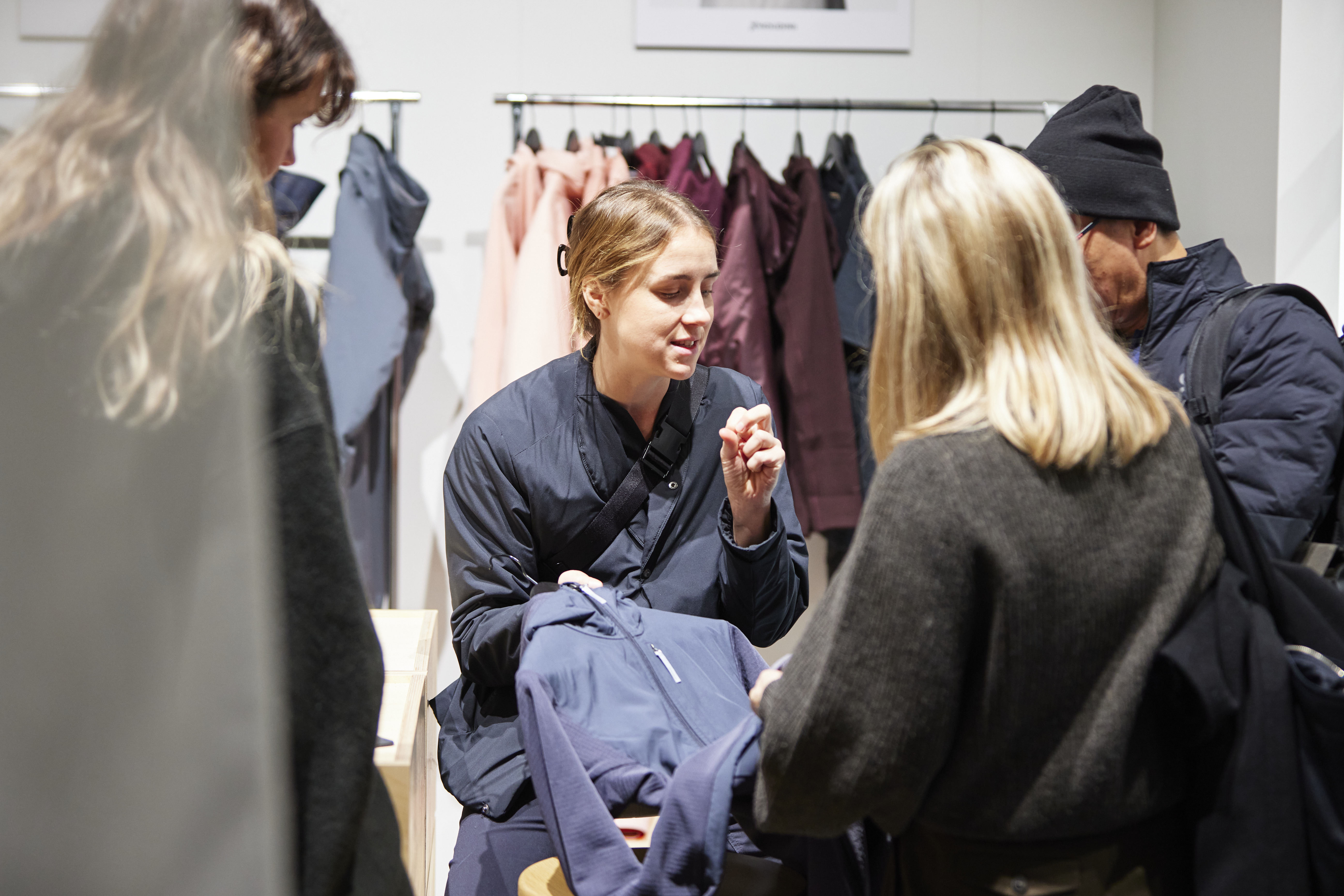
At ISPO Munich, we got an idea of the brands' strategies, asked experts and learned exciting insights from the market about the future of retail.
Of course, there was also a lot of discussion about the future of stationary retail at ISPO Munich in 2023. In particular, the constant news about insolvencies, lack of staff, high stock levels and reluctant shoppers show that retail is in a very challenging situation. However, what is clear at ISPO Munich is that the industry is focusing on brick-and-mortar retail and sees physical stores as an integral part of the retail landscape. The role that retailers play in this depends entirely on the retail strategy of the brands and the retailers themselves.
If you only focus on transactional sales, you won't win over consumers. Maximilian Riebel from BBE Handelsberatung is convinced of this. In his presentation at ISPO Munich, he asks "How do we get people to the party?" The famous four Ps from the marketing textbook - product, price, promotion, place - have been attracting fewer and fewer people to the stores for some time now. So the big question in the face of company takeovers, insolvencies and the death of retailers in city centers is how you can still attract people to your store in 2024. As the "P's from the marketing mix" are now just "hygiene factors", Riebel suggests replacing them with new P's: Purpose, Passion, Platform and Play. These are based on a deeper sense of the company's existence, passionate employees, marketing via new channels such as TikTok and a playful involvement of customers and their families.
However, a "high-quality online presence of the brands" is also an important basis for sales on the sales floor, says retail expert Anny Cardinahl, "especially in light of the shortage of staff on the sales floor".
In her opinion, there is still room for improvement in the linking of offline and online touchpoints. Although there are good omnichannel solutions, "in the German-speaking world, I'm not yet aware of any offering that is completely seamless".
For Cardinahl, it is also clear that brands cannot simply replace retailers on a one-to-one basis. "I sometimes lack the strategy on the brand side. When I look at online stores, they are not designed with the target group in mind, but are very unspecific in their approach."
If you ask the brands, you get a very heterogeneous picture:
There are many adjustments that brands and retailers can make together to satisfy consumers. Many studies, including the Deloitte Retail Study and the Consumer Insights Report Q4/2023, show that they can rely on shoppers. Consumers continue to value the physical shopping experience and advice.
Brands and retailers in the entire industry can learn from the outdoor segment here: the consumer base here has grown dramatically in recent years, partly due to the coronavirus pandemic. Nevertheless, aspects such as performance, fit and comfort remain very important for the broader target group - and therefore also the advice and tactile experience before the purchase.
Rental programs such as those offered by Doubledeck and The North Face, for example for tents, are another tool that both brands and retailers can use to win the loyalty of customers who increasingly value sustainability and conscious consumption. Repair services, taking back and reprocessing or refurbishing used products or second-hand services are also very popular with customers.
In the panel talk of ISPO 520M by Highsnobiety "Different Retail Perspectives on Outdoor", the panelists from The North Face, Zalando and This Thing of Ours agreed:
And - at least for the time being - it is bricks-and-mortar retail that can offer customers the expertise they need in the best possible way. Even if online retail continues to grow: Brands should keep this in mind when planning their sales strategy for the future.

What are the must-haves for every online store? We have the best hacks for more sales - from mobile optimization to loyalty programs to tips for faster service.
"Our finding: those who can score points in today's market environment with a good product and an authentic story, and also use modern techniques to improve the customer experience, will own the future", says the current creativestyle-report. The eCommerce professionals have recently the top 20 German sports and outdoor stores under the microscope. taken.
The focus was on the user experience, usually referred to as customer experience in eCommerce. It describes the sum of all experiences of customers with a company or a brand over the entire duration of the relationship. If the customer experience is poor, customers will no longer order from this online store - worst case for online retailers!
The report concludes that although the industry is now well positioned in eCommerce and is growing steadily, there is still room for improvement. Smooth processes, technologically optimized stores and well thought-out additional services are not standard, but too often still the exception.
In an ideal world, the sports fan goes to a website, sees his new jacket, gets his questions about it answered in a live chat, puts the product in the shopping cart, settles the bill with the payment method of his choice, and a few days later takes delivery of his new jacket - packaged in an environmentally friendly way without any filling material. But the reality is (still) somewhat different.
In e-commerce, customers often swipe back and forth between stores faster than they do when matching on Tinder. And just as with dating portals, the same applies to online stores: If you're looking for something permanent, you need to create lasting memories. For stores, this means accompanying customers on their customer journey with good content, advice, and personalized service, offering multiple payment options, and shipping the goods in a climate-neutral and environmentally friendly manner as far as possible, thus making shopping and the after-sales process an all-around successful experience.
Slow webshop? An absolute no-go! Studies show that customers abandon their purchases and don't come back if the process takes too long. Good performance not only ensures fuller shopping carts and more loyal customers, but also has a positive influence on search engine rankings, according to the creativestyle report. In addition, more and more people are using mobile devices to store online.
Retailers and brands therefore need to ensure that their websites and apps are optimized for mobile devices to provide a seamless customer experience. Sport Bittl and Sport Scheck, among others, have done just that: they landed on the winners' podium in both mobile and desktop performance. Also in the top three: Bike24 (desktop performance) and Campz (mobile performance).
Each of the retailers surveyed has a blog with many exciting and useful articles and tips on sports and the outdoors. The informative content also provides motivation to engage in sports and equip oneself accordingly. The report concludes that the quality of the content within the top 20 is particularly impressive: "Many well-structured blogs with valuable tips and motivation that encourage people to engage in sports. Here is content is used and deployed sensibly." The retailers Bergzeit and Bergfreunde are really well positioned here.
Chat spontaneously with the service center, get product information on the go via app, and answer standard questions around the clock via intelligent FAQ centers and chatbots This is how customers want to be advised today. And they want to switch seamlessly between touchpoints. The importance of good customer service in e-commerce is often criminally underestimated, say the experts at creativestyle. The more communication channels there are to choose from, the better.
Blue Tomato does a really good job here with various communication channels, including a live chat. The mail-order company Sport Bittl came out on top in the stress test with two questions: 13 minutes response time and very good response quality.
Consumers have very different payment habits. All 20 online stores offer the option of credit card payment, for example. The range of options is smaller for instant bank transfer or purchase on account. However, with an average of five payment methods on offer, the sports and outdoor sector is well positioned, according to the creativestyle report.
The absolute frontrunners here are Blue Tomato and Camps with a whopping eight out of 15 different payment options, followed by 11Teamsports and Fahrrad XXL (seven out of 15).
Competition in online retail is fierce, so online stores and brands need to retain their customers and attract returning shoppers. This includes, for example, personalized offers, loyalty programs and newsletters.
Loyalty programs that offer real added value have been proven to strengthen customer relationships. Bergzeit, for example, has a clearly structured blog that shows all benefits at a glance: from exclusive deals and partner vouchers to events and regular customer days. As a club member at Intersport, customers can collect and redeem points with every purchase.
Sustainability is no longer just a trend, but a social requirement. The stores surveyed are adapting initial approaches to this, for example with repair services and recycling and upcycling. The retailers also have transparency, climate-friendly packaging and second use on their radar - although the differences are greater here.
Bergfreunde scores points for sustainability and transparency. The online retailer has anchored the issues in its corporate values and, in its own words, is the first 100 percent climate-neutral outdoor online retailer certified by ClimatePartner. Bergzeit and Decathlon, on the other hand, offer second-hand market and repair services - exemplary for the industry. Likewise, Globetrotter and Intersport offer a rental service.
More chatbots in customer service: Chatbots provide quick answers. Many customers nowadays even expect a chat as a communication channel, as it is easy and quick to use. Unfortunately, this is only used by six stores.
Simpler returns processes: "Although we only ordered small items, the returns process was not yet automated in many cases. Too little choice of shipping service providers or a lack of returns slips do not make for a good customer experience," concludes the report.
More loyalty and points programs: Loyalty programs are a simple and very efficient way of retaining customers in the long term. Only eight of the stores offer attractive loyalty or points programs. "This is where you can make the difference as a store and stand out from the competition," the report says.
Better mobile performance: Although there are some shining examples in the industry, the majority of retailers lag behind in mobile site performance, it said. Creativestyle also says the possibilities of progressive web apps are still barely being adapted.
More apps and special features: Even though the eCommerce professionals have already discovered a few useful and cool app features at the top 20 stores, this potential is generally still being underutilized. Only eight stores have an app. creativestyle commented: "In this day and age, where mobile traffic in particular is increasing more and more, we expected more here."