


The Concurve Jacket combines responsible performance with functional innovations and is the new, lightweight and PFC-free GORE-TEX three-layer jacket from GOREWEAR. It was developed for runners looking for unrestricted freedom of movement and responsible waterproof, windproof performance.
The Concurve Jacket is packed with innovation to take running in bad weather to a new level. During product development, the GOREWEAR designers not only paid attention to the further development of function, but also to sustainability. This jacket is among the first to use the new PFC-free GORE-TEX fabric with ePE membrane, which features a reduced carbon footprint and enhanced performance, to the endurance end use.
While traditional garment design is based on a static shape, GOREWEAR's Kinetic Garment Design process orients the fabric in the optimal direction of stretch for each section of the garment to optimize ergonomics while minimizing seams. To drape the fabric on bodies in motion, GOREWEAR uses advanced 3D visualization.
The Concurve Jacket is designed to reflect the characteristic movement patterns of a runner and provides a fit that feels like a second skin. The jacket was developed with the running posture in mind: chest forward, shoulders slightly pulled back and elbows bent. It adapts effortlessly to the body's natural movements.
The GORE-TEX 3L laminate is strategically positioned to adapt to the body's biomechanical movement patterns. GOREWEAR has also done away with the traditional seams that used to run across the shoulder, front and neck, while realizing a slim, streamlined fit. This design refinement not only makes the jacket exceptionally light, but also ensures unrestricted freedom of movement while running.
This lightweight GORE-TEX jacket is aimed at runners looking for unrestricted freedom of movement, ultimate weather protection and responsible performance. It uses the newly developed PFC-free GORE-TEX fabric with innovative ePE membrane, which was launched on the market for the first time last fall. The membrane is made of expanded polyethylene and is durably waterproof, windproof and breathable. Its improved strength-to-weight ratio means that less material is required, which not only has a positive impact on resource efficiency and the carbon footprint, but also on the weight of the jacket. Nevertheless, the new membrane is as durable and long-lasting as previous GORE-TEX membranes.

The EU is tightening the rules regarding product design for circularity and waste management – because if there is no change in product design and recycling, our oceans will contain as much plastics as fish by 2050. By tackling key challenges such as infrastructure, cost, and worker safety, especially the field of textile-to-textile recycling is characterized by fast-paced innovation and a race toward scale.
Most of the products in the sports-industry are either textiles or packaging. Whilst packaging is already very regulated, sadly, less than 1% of clothing materials undergo closed-loop recycling, resulting in an annual economic loss exceeding 87 billion EUR. Globally, just 20% of clothing waste gets reused or recycled, with the majority ending up in landfills or incinerators. The rise of recycling and sorting robots, in sync with the AI boom, is a promising trend, because under EU waste regulations, Member States must establish separate textile collection systems by January 1, 2025. Meeting this deadline entails enhancing collection, sorting, re-use, and recycling capacities within the EU, necessitating significant investments in infrastructure and the development of innovative technological solutions. Enjoy the following inspiring examples and opportunities.
In order to address the major problems of our time such as climate change, waste and environmental pollution, we need new ideas and solutions. In a world where natural resources are limited, we have to question how things are made, used and ultimately disposed of. In the sporting goods industry, as in many other industries there is great potential for optimization of sustainable production processes, recycling strategies and circular economy. With the cross-industry sessions, the tradeshow IFAT Munich shines a spotlight on new solution approaches from a wide variety of sectors and industries.
Interzero stands for "zero waste solutions". In order to save raw materials, the full-service environmental service provider organizes innovative take-back and recycling systems for used packaging, products and materials of all kinds, such as textiles. The efficient recycling solutions also offer customized support for numerous companies in the sporting goods industry. Interzero receives the German Sustainability Award 2024 in the "Waste Management and Recycling Industry" category, making it one of the pioneers. The aim is to close material loops, avoid waste production and save natural resources.
Sympatex is synonymous with polyester laminates known for their durability and closed-loop recyclability. The company is expanding its range of laminates based on Fiber2Fiber recycled textiles, as they significantly reduce the ecological footprint. In addition to collaborative pilot projects, their own Eco Design Guide assists brand partners in designing their products in accordance with EU guidelines for recyclability. 'A circular economy system is the most effective solution for reducing the ecological footprint, along with product longevity, conscious consumption, and, of course, the elimination of certain chemicals like PFAS,' says Dr. Rüdiger Fox, CEO of Sympatex.
Iteratif integrates digital control with cutting edge technology to manage the end-of-life of complex soft-goods products, breaking down used goods back to raw materials. And thus, providing a solution for the outdoor, fashion and activewear sector’s waste crisis by decoupling economic growth from the consumption of finite resources. Iteratif is creating tailored reverse logistics solutions, monitoring material value and availability of recycled resources. To trace the lifecycle of goods, Iteratif is using an RFID driven system. The result: building economic, natural, and social capital by maintaining original materials and their value within the system.
Re:Down specializes in recycling down and feathers extracted from post-consumer goods, transforming them into reusable filling material for apparel, sleeping bags, and bedding products. In collaboration with Iteratif, Re:Down offers a complete circular solution for down jackets. The down is extracted using an automated machine developed by Re:Down and is reprocessed to meet high-quality standards. Additional components such as fabrics, zippers, and buttons are efficiently disassembled and recycled, all meticulously tracked with seamless traceability for each material. Broken feathers and fibers are repurposed into organic fertilizer. The goal: zero waste!
Minardi Piume is the Italian specialist for down recycling. They recently introduced Italy's first machine, specially designed for recycling down from jackets, known as P.U.R.E. – branded recycled down, certified and made in Italy. By combining the qualities of P.U.R.E. down with the kapok fiber, they pioneered a filling material called Flower Down. This innovation not only received the Textrend Award at ISPO 2023 but is also protected by a European patent. Remarkably, the thermal insulation of this product surpasses the performance of pure down. It is still biodegradable, because it doesn’t need any chemical treatment.

The Apu Parka from Paka harnesses the natural intelligence of alpaca fiber. Through Paka’s proprietary process, the fleece is transformed into a lightweight and highly efficient insulation - termed PAKAFILL® - capable of regulating moisture and retaining heat in diverse climates.
Alpacas live in the Andes of South America and are known for their adaptability to the harsh and relentless climate above 15,000 feet. Due to its thermal properties, alpaca fiber is excellent at retaining heat and regulating moisture at the same time. This makes PAKAFILL® a dynamic insulation material that performs in both cold and warm environments.
The Paka team has spent four years developing PAKAFILL® with global experts to transform the natural properties of alpaca fiber into a functional insulation. This new insulation outperforms synthetic materials (via its CLO value) and is cruelty-free. The fiber is sourced from free-roaming alpacas in Peru and is fully traceable. Each jacket comes with a QR code that the consumer can scan to see the exact coordinates the fiber came from.
The result of a long development process: PAKAFILL® is an alpaca fiber padding made by the meter that can be processed like conventional insulation material. PAKAFILL® is thermoregulating from sub-zero temperatures to aerobic activities and keeps you warm when wet. Due to alpaca fiber’s natural air pockets, it repels moisture better than any other natural fiber; alpaca has a moisture retention rate of eight percent, while other types of wool retain an average of 18-20 percent. This feature also makes it highly odor-resistant and means it rarely needs to be washed. Alpaca fiber is durable and naturally antibacterial due to the keratin protein in the fiber.
The Apu Parka was designed for outdoor adventures: The helmet-compatible hood makes it an ideal companion for days in the backcountry, the zippered vents increase breathability on climbs, and the stretch fabric and side gussets allow for premium freedom of movement. The PFC-free, water-repellent, bluesign® Certified 4-way stretch shell stands up to rain showers and offers excellent breathability. Paka offers a lifetime guarantee on the jacket.
Paka is a certified B Corporation and was awarded the ‘Best For The World Award’ by B Lab in 2021 and 2022. To create the Apu Parka, Paka sources alpaca fiber from local ‘alpaquero’ farmers in Peru, where it’s manually sorted, cleaned, and treated. From there, it’s transported to a licensed partner in Taiwan, where the treated fiber is converted into PAKAFILL® insulation using Paka’s patent-pending process.
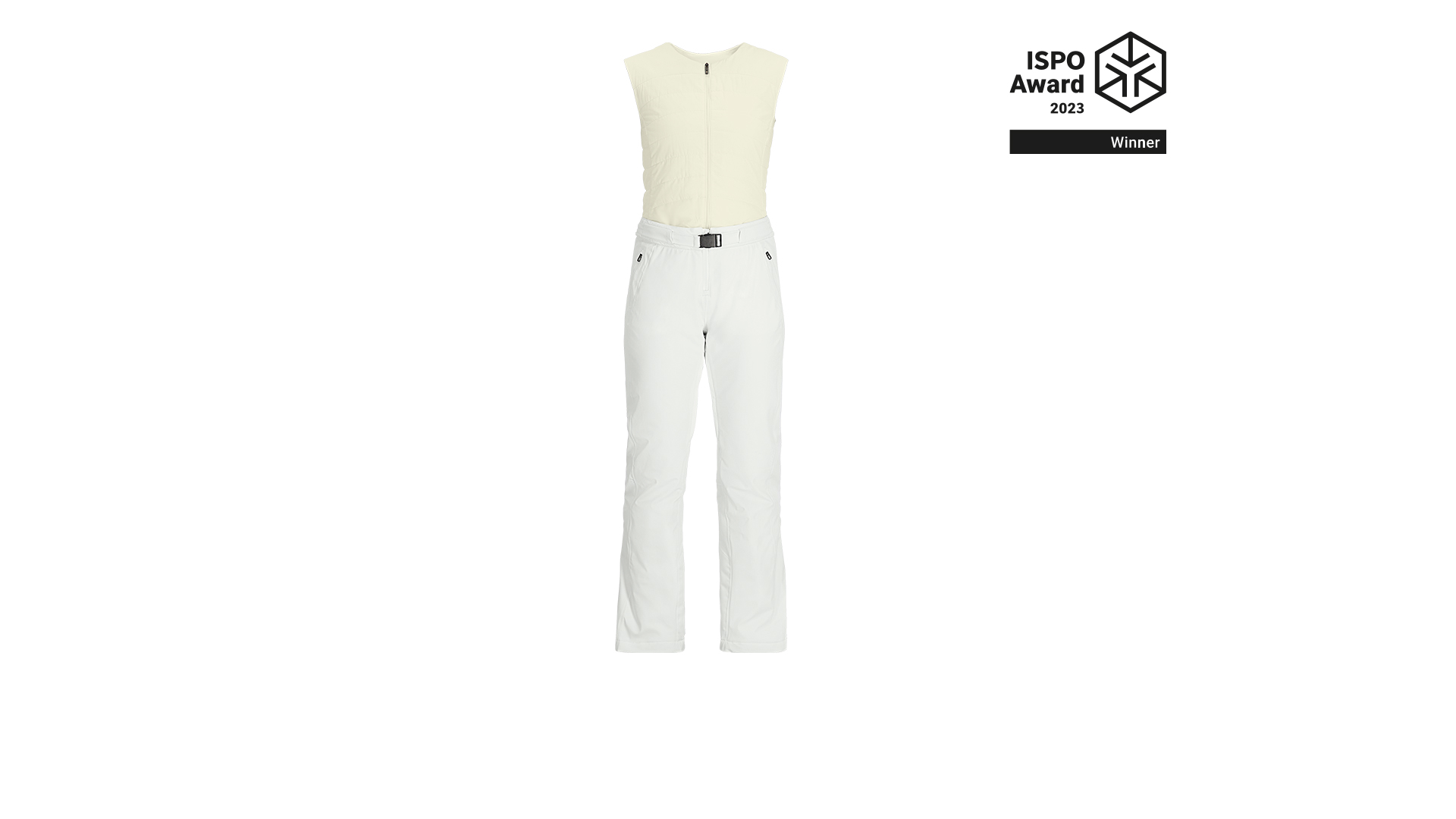
Spyder's new 3-in-1 ski pants feature a separate vest that can be easily zipped on and off from the waistband. This makes them extremely versatile and easy to adapt to changing weather conditions and women's need for warmth.
The colder it is outside, the more warming layers are needed when skiing because you are not constantly moving. This is especially true for women, who tend to get cold faster than men. It gets even more challenging when the sun comes out and your outfit suddenly becomes way too warm. What can you do? A Spyder development team led by women has come up with the perfect solution: the On Piste Bib.
The Women's On Piste Bib is an extremely versatile 3-in-1 ski pant. With a perfect blend of style, comfort, and performance, it features a zippered, insulating stretch vest that attaches to the waistband with the pants. It can be worn with or without the pants to meet different comfort and warmth needs. Of course, the vest and pants can also be worn separately, giving each garment new uses and greater versatility.
The removable, insulated, and close-fitting vest is made from a breathable, woven stretch fabric. This feature adds lightweight warmth while maintaining a city-ready look for off-piste use.
Spyder's fabric selection is based on high tech, high performance materials with a smaller environmental footprint. The main fabric is Exo Shield 30K, a 4-way stretch recycled nylon with a 30K/30K laminate and PFC-free DWR. The insulation is PrimaLoft Silver ECO (80g).

VEJA's Condor 3 exemplifies the brand's commitment to both runner's needs and ecological responsibility: the shoe combines advanced technology, bio-based materials, and ethical production. Great cushioning and lighter features ensure performance for all levels, from beginners to long-distance runners.
In 2019, VEJA introduced its running line with the Condor, its first running shoe. In spring/summer 2024, the brand launches the Condor 3 which combines technicity, R&D, and bio-based materials. With VEJA’s work on the try-on effect, cushioning, and lightness, the Condor 3 is a style that meets runners’ current needs. Both in terms of sustainable production and performance. It is designed for all eco-conscious runners, from beginners looking for their first pair to experts who want a pair in their rotation for long and easy runs. It offers an alternative design to other models on the market as the brand is known for its progressive approach in terms of sourcing sustainable materials and components as well as socially responsible working conditions.
As VEJA is known for its approach in mixing social projects, economic justice, and ecological materials when it comes to shoe production. One foundation of VEJA's sustainable approach is its choice of materials: The brand uses recycled polyester for the engineered upper mesh and laces, and the mid and outsole are partly based on sugar cane-based EVA and Amazonian rubber. The rubber has been certified Fair for Life in 2019 thanks to VEJA's support to continue improving the living conditions of rubber tappers and ensure the protection of the Amazon rainforest.
The cushioning integrates natural latex and the heel support insert is Pentax Rnew, which is made from 100 percent ricinus oil. VEJA shoes are also produced in high-standard factories in Brazil and part of the brand’s logistics is managed by Log’ins, a professional and social inclusion company.
For the Condor 3, mechanical and biomechanical testing were conducted to compare the cushioning pressure points distribution, cushioning charge, and a pair’s responsiveness and durability. To confirm the results obtained in labs, it has also been tested by runners.
A full-length L-FOAM cushion covers the outsole of the shoe for a high shock absorption capacity. It offers maximum comfort and protection against vibrations. With a big volume and a large shape, the sole provides great comfort during long runs. The Engineered-mesh, T.P.U. panels, and the back shoe lock the foot into place, yet offer breathability. The Condor 3 weighs 287g, thus bringing lightness to the stride despite being built with eco-friendlier materials. Lighter laces and a thinner shoe tongue compared to its predecessor limit points of friction.
While more sustainable doesn’t mean less durable, VEJA has also committed itself to making its shoes as long-lasting as possible. The Condor 3 lasts over 1000 km of running usage and more. In June 2020, the brand’s first repair project came to light in France. 2 years later, they opened a new location in Berlin and Paris, repairing their own shoes and sneakers but also those of other brands. So far, more than 7000 pairs have been fixed in our 4 different workshops.