

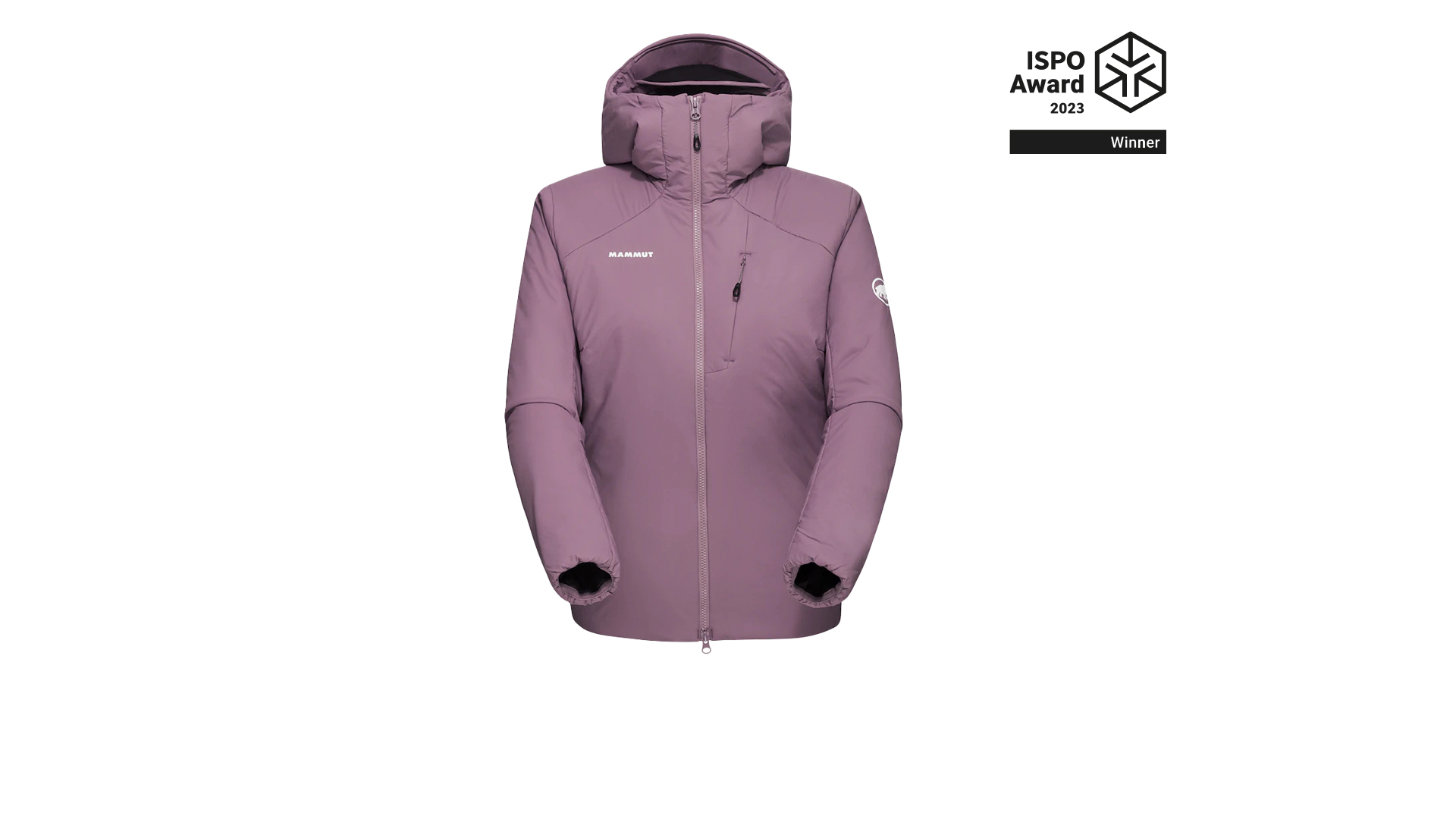
Mammut’s packable Rime IN Flex Hooded Jacket for women is a warm, lightweight jacket with durable outer and zonal insulation for functional comfort on outdoor adventures. Designed for women who love to Hike, Mountaineer, Ski Tour and Climb this Jacket combines warmth and lightweight packability to create a functional thermal layer for all mountain conditions.
The Rime IN Flex Hooded Jacket is designed with a minimalist classic silhouette with a technical look and feel. It can be easily packed into a stuff bag for simple layering in the changeable mountain conditions and aerobic exercise.
The jacket’s outer material is flexible for unrestricted movement and comfort, is abrasion resistant for the jacket’s durability and longevity, and benefits from a long-lasting water-repellent PFC-free DWR treatment to keep light showers out. The thermal liner, Mammut’s very own Mammut LOOPINSULATION, which is inserted in the form of padded sheets, is made from leftovers from Mammut's rope production partner, and provides breathable warmth and comfort, even when wet.
"We are really happy with the outcome of the Mammut LOOPINSULATION padding. Each trial round it became loftier and better. It’s really cool, that we can create a warm and protective padding out of rope-production leftovers that wouldn’t be purposed in any other way. It’s an unique innovation", explains Susanne Leutner, Product Manager Apparel at Mammut.
"The Rime IN Flex Hooded Jacket Women is the perfect companion in cold environments", says Susanne Leutner and continuous: „The Mammut LOOPINSULATION padding keeps you warm while the outer material protects you against wind and light rain showers. With its feature set and its timeless look the jacket is designed to be a super versatile allrounder – for ski touring, multipitch climbing, hiking or just wearing it in everyday life. Put in on, leave it on.
The jacket also features an adjustable hood for added comfort and protection from the elements and three zippered pockets for all those outdoor essentials, making it the perfect functional layer for multi-sports outdoor adventurers.
The jacket also features an adjustable hood for added comfort and protection from the elements and three zippered pockets for all those outdoor essentials, making it the perfect functional layer for multi-sports outdoor adventurers.

If you have the Devold Standal Zip Neck Merino Shirt with you, you can travel light when gravel biking and bikepacking. It comes with all the benefits of merino wool alongside nifty design features to aid ventilation, fit and comfort while riding.
Bike-packing adventures, bike and hike missions and gravel tours can be everything: warm, cold, wet, enduring, intense – and, of course, enjoyable. For multi-day excursions where you are not bringing a full suitcase, you also need versatile clothing that doesn't develop unpleasant odours after wearing it for more than one day.
For 170 years, Devold has trusted in the natural Merino fiber, processing it from the first to the third layer, ensuring optimal protection and comfort in every outdoor situation.
It was only natural for the Norwegian wool pioneers to develop a clothing collection for bikers as well. Enter their new Bike'n'Hike Collection, which combines temperature and moisture-regulating materials with soft comfort and eco-friendly care. Following the launch of the Kløvstien Mountainbike Collection, Devold is expanding the bike line for summer 2024 with a lighter model, Standal. This caters to bikers on multi-day journeys with minimal luggage, often relying on a single garment.
The new Standal Zip Neck Shirt is an insulating, temperature-regulating garment suitable for all seasons. It's crafted from a blend of Merino and Tencel fibers using a camo jacquard knitting process. With a super-fine 17.5 Micron, this functional shirt feels comfortable on the skin and naturally wicks away moisture. Raglan sleeves enhance shoulder comfort, and flat seams ensure an ideal fit without any discomfort.
Even after repeated wear, a little airing is often enough, thanks to the odor-neutralizing properties of Merino wool, unlike synthetic fibers. "Merino is the best fiber when it comes to reducing sweat and odor formation and wearing a top for several days during sports or travel. This is due to the surface structure and the large area of the fiber itself. Bacteria can adhere less effectively due to the wool's surface structure - it's textured compared to the smooth surface of synthetic fibers," explains Christine Haraldstad-Sindum, Senior Designer at Devold. When it's time for a wash, the Standal can be safely washed at 40 degrees in a wool bag without losing its shape or microplastic particles in the water.
The women's shirt features two diagonally placed, easily accessible back pockets, while the men's shirt comes with three back pockets. Strategically placed ventilation inserts and the two-way front zipper ensure ventilation when the intensity or temperature rises. Mesh inserts under the armpits provide additional breathability. The long back panel of the garment has been specifically designed with forward lean on the bike in mind. A reflective strip on the back enhances visibility in low light, for more safety during twilight or on forest trails. Clever features like a linen insert on the inside for cleaning your sunglasses make this shirt a great biking companion.
The Devold bike collection is entirely manufactured in Europe and guarantees chemical-free production through ISO and Oeko-Tex 100 certification. The merino wool is sourced from partner farms in New Zealand, that comply with highest animal welfare standards.
The Standal Merino Zip Neck is available for both women and men in long-sleeve and short-sleeve options, each in three colours.
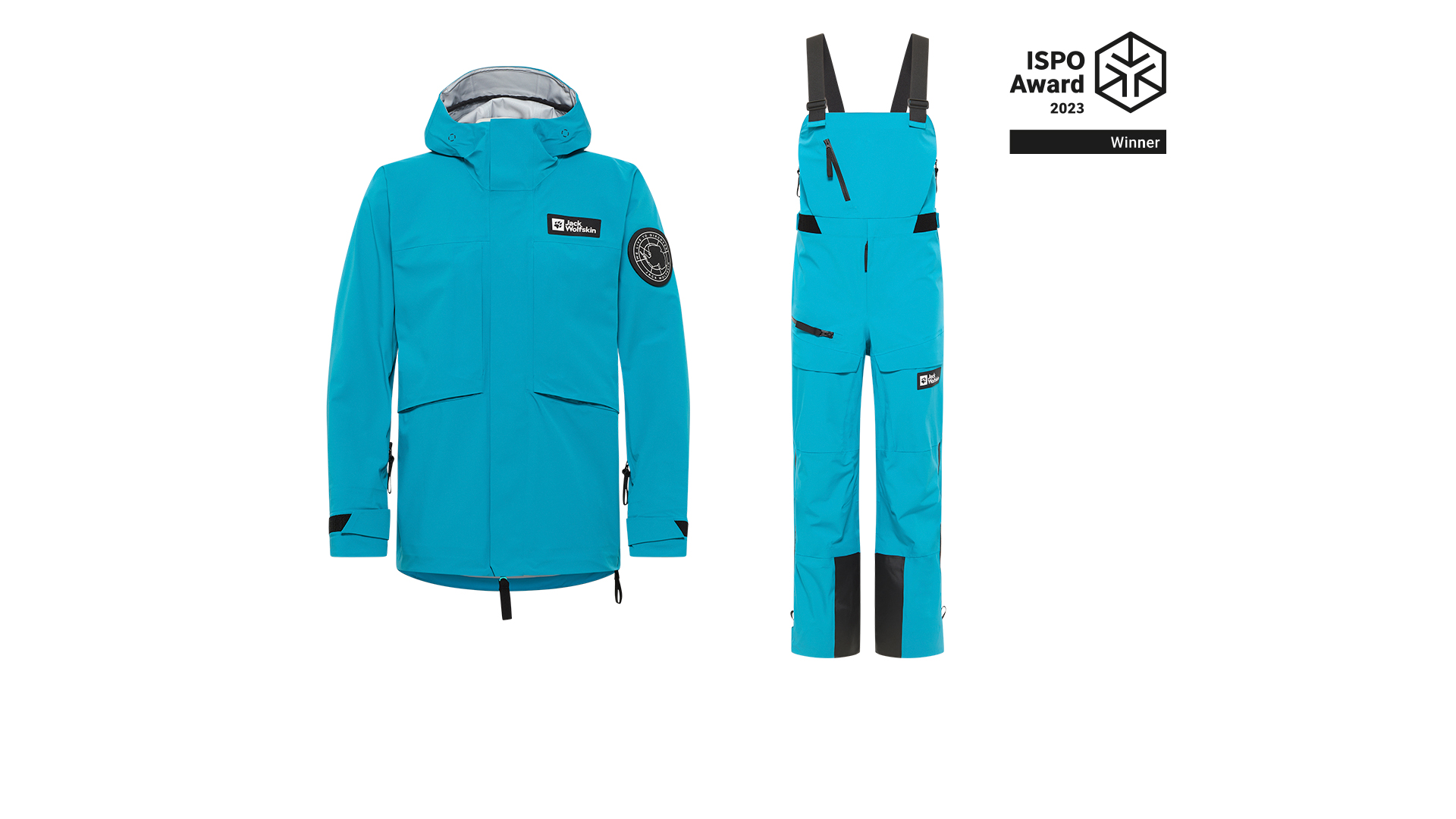
This clothing set from Jack Wolfskin consists of a jacket and dungarees. It is designed for expeditions and extreme weather conditions and was developed together with extreme adventurer Eric Larsen. Performance, sustainability and specific expedition features make it an outstanding polar expedition system.
When developing this outfit, consisting of a jacket and dungarees, Jack Wolfskin concentrated on tailoring the system precisely to the needs of an expedition traveler. The focus is therefore primarily on low weight, maximum breathability in combination with waterproofness, temperature regulation and exclusive expedition functions. These features are complemented by sophisticated solutions for greater sustainability.
The waterproof and windproof outer material is made from recycled 3L Pertex Shield Air. With its high air permeability, it ensures high breathability in rapidly changing climatic conditions and guarantees perfect temperature management. The innovative OCTA® lining on the inside of the thighs reliably protects this sensitive area from cooling down. It offers special insulation and breathability with a unique fiber construction that is 50 percent lighter than conventional material. Eric Larsen himself says of the outfit: "I think the biggest part of my work was to develop a "system". A set of apparel and equipment that works as a whole and at the same time is able to use parts in different combinations. Ultimately, breathability and overall functionality in extreme cold are key to each individual feature."
With the external expertise of Eric Larsen, Jack Wolfskin was able to create a special outfit for moving fast in an extremely cold environment where every second counts. For example, Jack Wolfskin took into account particularly easily accessible zippers with contrasting colors for better visibility, extra-long armpits for maximum breathability and the ability to quickly remove the jacket when wearing a harness. In addition, the sleeves can be stowed in the harness so that they don't drag on the ground when the temperatures get warmer.
The pants feature adjustable back straps, an elastic waistband in the back and extra-long two-way zippers for easy entry and exit and greater breathability. Four individual pockets - one on the front and three on the thighs - provide plenty of storage space for essential tools. The OCTA® lining on the front thighs provides additional insulation and protects against chilling in key areas. To protect the knees, the pants have insert pockets on the inside for standard knee pads. Snow gaiters and Velcro fasteners on the legs prevent snow from getting in.
To round off the concept, an overall glove-friendly zipper design has been implemented.
84 percent of the fabrics used and almost 40 percent of the ingredients consist of bluesign-approved materials. This means that the production of these materials is based on high standards in terms of chemicals, environmental aspects and occupational safety. The outfit is PFAS-free and also has a high level of functionality. In addition, the main fabric consists of 88 percent recycled polyamide and 12 percent polyurethane.
Jack Wolfskin offers a repair service as well as spare parts and a professional PFC-free washing and waterproofing service.

With this jacket, Halti from Finland proves that functionality, urban look, and sustainability are compatible. The special versatility of the 3in1 jacket is a response to our modern life, where things can change quickly.
Anyone who is familiar with highly functional jackets from sports would like to have the same comfort in everyday life - but with a different design. The Synkas 3in1 DrymaxX Parka by Halti is an excellent example of how well these different areas can be combined. The 3-in-1 solution offers a lot of flexibility and adaptability, making the jacket a very versatile all-rounder.
The Synkas 3in1 DrymaxX Parka consists of a waterproof and windproof outer jacket and an insulated inner jacket. The outer jacket is equipped with technical features and offers weather protection. The insulated inner jacket has a stylish, geometric quilting. Worn on its own, it is ideal for dry and cool days. Together, the jackets form an unbeatable combination to withstand windy, wet, and cold conditions.
The jacket is part of Halti's Kallio® collection, a line that highlights Finnish and Scandinavian design with clean aesthetics and Nordic simplicity. With minimal use of embellishments and extra details, this style can be easily combined with many other outfits. This makes it long lasting.
A special highlight of this jacket is the choice of materials. Halti uses mono-material, which means that all materials are made of polyester, including the snap buttons and the zipper. For example, the outer material of the jacket is made of 55 percent polyester and 45 percent recycled polyester. The inner jacket is made from a blend of 60 percent polyester and 40 percent recycled polyester. The insulation is made entirely of recycled polyester, as is the lining fabric. The use of mono-material makes it easier to recycle the jacket at the end of its life. The jacket's water-repellent finish (DWR) is fluorocarbon-free.
The jacket comes with care and washing instructions attached to the product. In addition, this fall Halti launched Halti 2nd Round - an umbrella for second-life services, including repair service, second-hand options and a donation option for customers in the domestic market.

Form follows function in the Viking Expower Mid GTX 2V boot for children. It is packed with technical features, such as the new GORE-TEX ePE technology, keeping small feet dry and warm while falling back on materials with a lower impact on the environment.
Expower Mid GTX 2V is Viking’s best in class kindergarten boot. This is also the first boot for kids on the market, which is using the new PFC-free GORE-TEX ePE membrane. It will keep little feet comfortable and dry in wet conditions and this way help in keeping them warm.
»We always choose recycled material when possible. Expower is free from PFC and the Gore-Tex membrane is Bluesign and økotex 100 certified«, explains Matilda Linde-Monsore, Head of Product.
While PFC has been widely used in membranes and DWRs for its unique technical properties, the new GORE-TEX solution featured in these boots achieves the same levels of water resistance without. The new ePE membrane is light, thin and strong and has a reduced carbon footprint (per Higg MSI) achieved by its lower material mass along with a new material combination. Besides it being durably waterproof and windproof, it offers breathability and a long product life.
With product life in mind, the boot features a reinforced upper made of durable and abrasion-resistant technical materials. It has been equipped with large reflective details for visibility in low lighting. The rubber sole provides amazing grip in any ground conditions, to have the kids enjoying the outdoors in all types of weather and surfaces.
Form follows function in Viking’s Expower Mid GTX 2V, keeping in mind how children use their boots and which areas of them are subjected to the most stress. This is why it comes with large abrasion resistant protection in the toe area and features a rubber toe cap and mud guard. A glove friendly pull tab and double velcro strap allow easy on and off.
All these functional aspects above create a comfortable, durable, dry and visible kids boot that is perfect for all outdoor-loving children, that like to play in any conditions and different surfaces. »At Viking we know that the most sustainable products are those who last long and can be reused by many. We design our products to withstand time; we developed a classic look and focused on durability so the product will last longer«, Head of Product at Viking, Matilda Linde-Monsore sums up.