


Testing your limits and getting to know your own limits, adrenaline in your veins - for many a central part of mountain sports. And canyoning is also about that. We have collected the most important facts about canyoning as an outdoor sport with lots of action.
Have you every wonderes what canyoning actually is? Being out and about in the mountains is always an experience. Once infected with the outdoor virus, many enthusiasts push themselves to try other sports besides hiking. They strive to leave the familiar paths, challenge themselves and go where perhaps not so many others have gone before them. Especially in summer, when it's hot and you prefer to combine a visit to the mountains with a stay in and around the water and be active at the same time, it's a good idea to try out canyoning. Where you can try out the sport and what you need to know as a beginner when you venture into the gorge: ISPO.com tells you.
The Grand Canyon is probably the most famous canyon in the world and most people know it. Because canyon means exactly that. The term canyoning comes from the English word for gorge. Alternatively, the sport is also known as canyoneering. But what exactly is meant by this? Canyoning describes walking through a gorge from top to bottom. You enter the gorge at a certain point and then follow the course of the water. Sometimes on dry land, sometimes in cold water.
So it's actually about hiking? You could say partly, or if, canyoning is rather gorge hiking in the extreme. Because it takes different techniques to make your way through the gorge, such as rappelling, jumping, sliding, swimming or drifting in the current of the river. Usually combined with a hike to the entrance, canyoning combines quite a few elements of different outdoor sports.
Simply entering a canyon alone is not a good idea if you want to give canyoning a try. Most tours are offered by commercial providers and accompanied by one or, depending on the size of the group and the difficulty of the gorge, several guides. This is also better, as there are a lot of things to consider when you are in the canyon. Water levels, different currents that are not visible at first sight, which are difficult to swim against and no signposted path through the gorge are all reasons for a guided tour.
As a beginner it is important to know that you are not forced to do anything on the tour. Even though most of the jumps to the entrance tend to be between one and three meters, you can often bypass or abseil them. The same applies to some abseils and often there is also the possibility to get out of the gorge on the way.
Canyoning also depends on the right technique. Many people look forward to the cliff jumps in particular and choose their tour specifically according to the height of the possible jumps. For beginners, however, it means to approach lower jumps for the first time.
Depending on the gorge and the level of the group, there may be higher canyoning jumps into pools and natural pools where it is even more important to dive in properly. To be on the safe side, it is important to follow the instructions of the guide, who will tell you where you can and cannot jump. Basically, all it usually takes is overcoming and a two-step run-up, or sometimes a big step into the void. While you slightly tense the middle of your body, your legs should remain slightly bent to cushion ground contact in the water if necessary. Otherwise, many jumps can be abseiled if you don't dare to jump, true to the motto, "everything can, nothing must". As a warning, however, it should be said that jumping from a height of 5 to 10 meters into a sometimes dark, sometimes glittering pool, however, draws a huge feeling of happiness and may be addictive.
Wherever the water is not deep enough, or the jump would be too high, you are roped down. As a guest you don't have to worry about much: The guide sets up the stand and ropes down the guests from above. This is usually done passively, i.e. by the guide. You are clipped into the rope and are lowered and secured in a controlled manner, which makes abseiling more comparable to being lowered by a partner in sport climbing than to active alpine abseiling on high mountain tours. So you can just lean backwards over the edge, sit in the harness and enjoy the abseil. This thrill is probably more than enough for many, especially at the beginning.
As a third and especially fun element, sliding is also a part of canyoning. On natural water slides, you can also cover sections of the route, where you may pick up quite a bit of speed and, as in the artificial slide park, it's best to keep your arms close to your body.
If you think that most canyoning accidents are caused by falls during rappelling or injuries during jumps, you are not quite right. Often injuries happen more during hiking or wading through flowing water, as wet and even mossy stones in shallow pools are more slippery than you think and therefore there is a risk of twisting your ankle. Sturdy shoes reduce the risk, as does the right equipment overall.
However, it can be really dangerous when canyoning without a professional guide. Previous knowledge of the Alps is only of limited help, different equipment is needed and special knowledge must be called up. However, with tour providers you are in good hands, because guides usually know the canyons of the offered tours and are well trained, because they have to renew their license regularly. As in the mountains in general, there is of course always a certain residual risk, for example due to the weather and as with any sport, injuries can also happen, even if one acts prudently.
First of all, on guided tours the equipment is usually included. This consists of a thick neoprene suit with hood, which is roughened on the inside to provide as much warmth as possible. If you have ever put your feet into a mountain stream, you know that even in summer the water has rather low temperatures. And in the shady darkness of a gorge, even in sweltering heat, it is rather cool on the hiking trails during the ascent all day long. That's why neoprene socks also make sense, so that the feet also stay nice and warm. If you have to make size specifications for the rental in advance, you should in any case consider that these socks are thicker than normal ones and therefore the shoes are rather needed one size bigger.
Another part of the equipment is a helmet climbing helmet and a special harness for canyoning. This is used similar to a climbing harness for belaying, but is constructed a little differently. A bib made of solid plastic is connected to the wide band of the hip belt and the leg loops to provide additional protection when sliding. A self-belay is also attached to the harness, which basically consists of two loops, each with a carabiner fixed to prevent slipping.
You should also bring a bathing suit, a towel and a change of dry clothes. Most tour operators also send their guests packing lists or more detailed information on what to bring.
In the meantime, canyoning has spread as a trend sport and especially in the Alps there are different possibilities with beautiful, partly also fundamentally different gorges, for example in Switzerland, in the country of origin France, in Austria or also in Italy. Depending on the level, there is probably the right canyon for everyone, because the tours can differ greatly. While some offer high jumps, loud rushing waterfalls through which you can abseil, or long slides, there are also gorges that are suitable for families with smaller jumps and abseils. The same applies beyond Europe, because canyoning is also a special experience in New Zealand or the USA to experience nature on site.
So there are different possibilities to spend a day canyoning in the gorge. Depending on the length and difficulty of the tour, country and also provider, the prices can vary between 80 and 150 euros, sometimes even more.
Above all, it is important that you know how to assess yourself and your fitness level in advance and discuss with the tour guide what is suitable for your personal level, so that both the level of difficulty and the length of the tour are suitable and neither over nor under demanding. If the tour is well chosen and a basic fitness level is available, almost everyone will get their money's worth, whether it's just a challenging tour with house-high jumps and abseils for adrenaline junkies or more of a pleasure tour where you can let yourself drift in the water and relax while wandering through a fascinating world formed by water, where you can hardly close your mouth in amazement.

What to start with for winter sports? Ski or snowboard? What do beginners learn faster? What is more fun? What are the options? ISPO.com answers the most important beginner questions.
Two skis and two poles against a wide board - skiing is much more complex than snowboarding and requires significantly more coordination.
While on a snowboard you influence direction and speed by shifting your weight, a skier has to coordinate both arms and both legs. This is more difficult in the beginning.
So easier to learn is snowboarding, especially for those who already have experience with skateboards or surfboards.
If the sideways line of sight and balancing are still unfamiliar, skiing and snowboarding take a similar amount of time in beginner status. However, it takes much less time to become an expert on a snowboard than on skis.
What is much easier for skiing beginners, however, is to lift with the bow lift or T-bar lift. For snowboard beginners, being pulled up the side of the mountain is often a rather unpleasant and oppressive feeling.
Transportation by chairlift also presents a somewhat greater challenge for snowboard beginners. After all, you have to keep your balance when getting on and off.
But in the gondola, at the latest, it's a level playing field.
Skiing is faster than snowboarding, at least in terms of records. Due to the greater width and friction of the board, the top speed for snowboarding is a maximum of 200 km/h. The fastest skiers (speed skis) reach more than 250 km/h.
For beginners and occasional skiers, however, the difference in speed between skis and snowboards is not as noticeable. When skiing, speeds between 30 and 60 km/h are usually measured.
With the experience of a ski instructor, you can even crack the 100 km/h mark. With snowboarding, shot rides can become similarly fast. However, the fun for most snowboarders lies anyway rather in the fast driving of curves (carving), ramps and obstacles as well as in jumping, as can be observed in the fun parks of many ski resorts.
Up the slope with the lift, then down the slope again, that is the everyday life of many skiers. But it's up to each person to decide how much variety they want to get out of skiing.
The sport itself is quite diverse: whether with the appropriate experience beyond the slopes in deep snow, on ski tours or in the fun park.
Snowboarding offers the same possibilities. To get up the mountains beyond lifts, you either strap the board to your back and use snowshoes or buy a splitboard, which can be split into touring skis when going uphill.
Snowboarding as a relatively young sport has long been used not only by younger people, ski schools also offer beginner courses for adults between 18 and 88 years.
The reason for its popularity among young people is mainly that snowboarding is easier to learn, especially with previous experience of lateral weight shifting through skateboarding.
The eye-catching design of the boards and snowboard clothing reinforces the youthful image of the sport - even though skiing has long since caught up due to the freestyle and freeride movement.
Skiing, however, is still considered by many to be a classic winter sport that can be practiced from childhood to old age, between leisurely and sporty. With snowboarding, the focus is more on the fun factor (keyword: fun park with ramps and half pipe).
Skiing and snowboarding are similar from the point of view of sports medicine, as far as the strain on the muscles is concerned. Snowboarding, however, is considered more physical.
The strong strain on the thighs, calves and gluteal muscles is identical in both sports.
However, due to the constant shifting of weight on the snowboard, the hip muscles and ankle muscles are put under much greater strain, as is the upper body. The mobility and stability of the trunk is provided by the abdominal muscles and back muscles (back extensors).
If the ski poles are used heavily when skiing, the pushing off additionally stresses the arm, chest and shoulder muscles.
The differences can also be seen in the injury statistics: Skiers naturally suffer significantly more knee injuries. Snowboarders, on the other hand, suffer more wrist-related fractures.
Above an altitude of 2,000 meters, the heart muscle is equally stressed during skiing and snowboarding. At lower altitudes, the cardiovascular system is at much less risk of overload.
The equipment of skiers and snowboarders has many overlaps, so the costs are similar. Skiers need ski boots, skis and poles; snowboarders boots and board.
Otherwise, active participants in both sports need a helmet, ski or snowboard goggles, gloves and ski clothing consisting of a ski jacket, ski pants, ski socks and functional underwear.
Because of the higher risk of injury from jumps, many snowboarders wear a back protector, and some also wear a pants protector with protection for the thigh, tailbone and hip, as well as wrist protectors These can significantly reduce the risk of wrist fractures.
The purchase of the complete equipment costs about 800 euros, whereby one must plan about 400 euros alone for the board or the skis including binding.
Especially for professional race boards, the price can quickly reach four figures, but this is not (yet) an issue for beginners.
Especially at the beginning of your skiing career, it is a good option to rent skis or a board. This way you can better judge later on in which equipment you should invest.
Regardless of whether you ultimately decide to ski or snowboard: We wish you a lot of fun with winter sports!
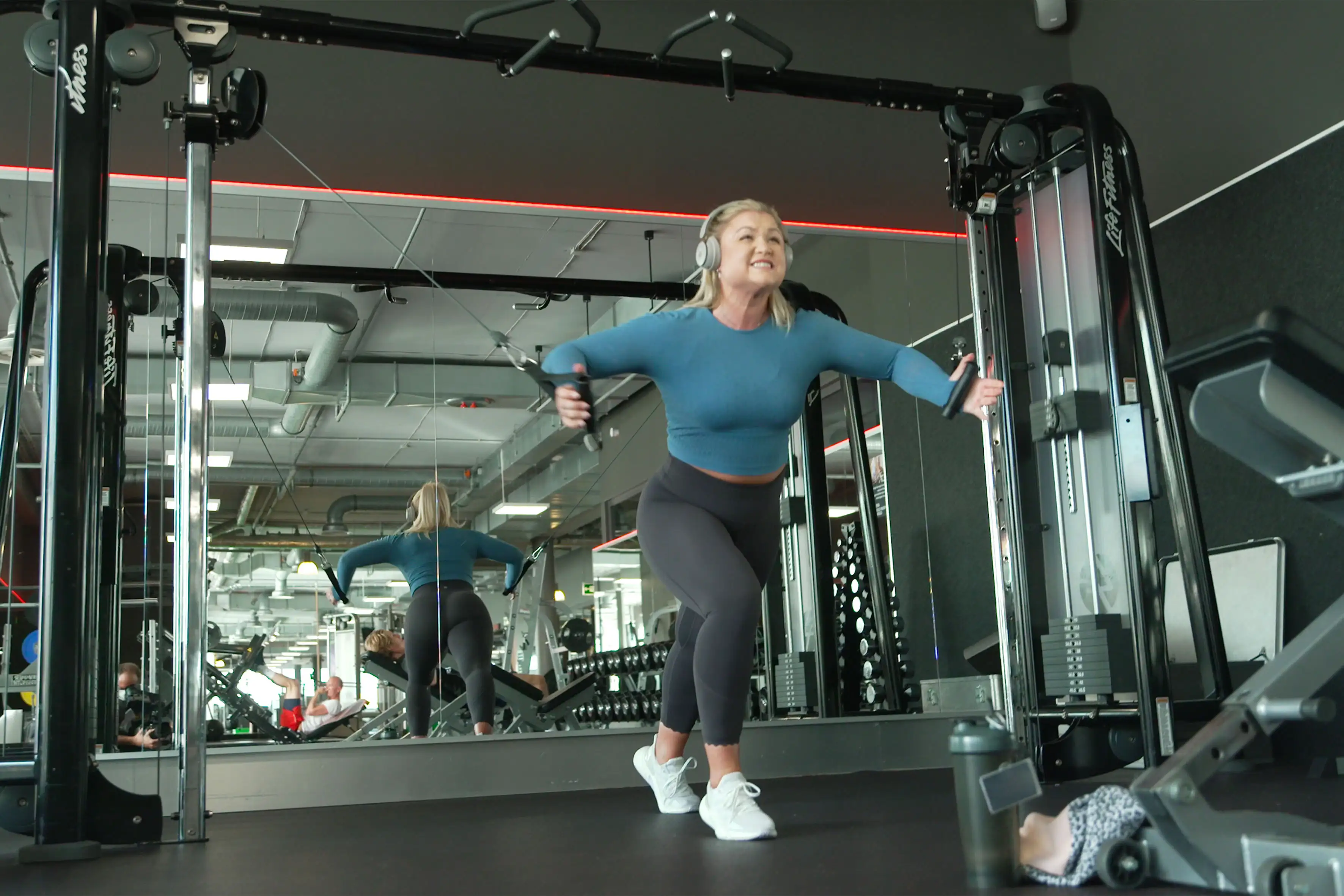
Men want muscles, women want to weigh less. For some, however, the dream of an ideal weight turns into a nightmare with serious eating disorders. But what is a healthy weight? And how do we deal with food in a normal way? We have the best tips - including from nutrition doc Silja Schäfer and fitness influencer Sophia Thiel.
In 2012, Sophia Thiel starved herself from a body weight of 80 kilograms down to 50 kilograms - at a height of 1.72 meters. She starts bodybuilding, and the vicious cycle of "train, eat, sleep" picks up speed. "I always thought my body was an asshole, I had to beat it." The then 17-year-old builds up a huge social media community, lets her followers share in her life trimmed to fitness.
In 2019, suddenly nothing works anymore. For two years, the now 27-year-old completely disappears. Then in 2021, the comeback - including the publication of her book "Come back stronger" (published by ZS Verlag) - with significantly more kilograms on the ribs. Thiel now speaks openly about her eating disorder. And even today, she regularly struggles with binge eating. "My body, the diets and me. I've done a lot of shenanigans with myself behind the scenes in the past and I'm more than grateful for the development since my break." The fitness influencer also tells in the ZDF report "37 degrees" how bad she was at times and how destructive she was with her body.
In her book, she writes about her personal experiences, insights and dealing with her eating disorder. She hopes "that I can perhaps offer a helping hand to many people out there. It took her a long time to realize that she wasn't perfect or had to live up to any ideals. "Accepting yourself is sometimes not so easy," she admits openly. But she says the path to finding herself is worth taking. That's why she now regularly asks herself questions - about her own self-image, the future, everyday life and, above all, "This is good for me." She has also discovered ice bathing for herself - as a kind of meditation.
While the focus in professional sports is more on the clinical pictures of anorexia, bulimia and binge eating, the general population is struggling with too much weight. According to the latest RKI figures, 53.5 percent of the population in Germany is overweight (including obesity). Men (around 61 percent) top women (around 47 percent) here. Obesity is present in 19 percent of adults. This is also confirmed by Dr. Silja Schäfer of the Nutrition Docs. "We see that the extremes are increasing. Accordingly, all eating disorders are increasing." Especially among young people, the problem is "really frightening." And among those over 60, the nutrition doctor observes that about 70 percent are overweight. The current book of the nourishing Docs dedicates itself also to this topic ?our anti-belly fat program ?(published in the ZS publishing house).
In general, the so-called body mass index of the WHO (World Health Organization) makes a statement about the weight in the normal range. Some calculators extend the simple formula (body weight divided by height in meters squared) to include gender and age.
Reason: From 40 it is quite normal to gain weight, but this does not mean that the weight is outside the norm. Another criticism of the BMI is that only the body mass is considered, and not the ratio between fat and muscle mass. For those who do a lot of sports and have thus built up muscles can even have a BMI above 25 and thus be classified as overweight according to the definition. For this reason, Dr. Schäfer recommends a BIA measurement (Bioelectrical Impedance Analysis). This shows "exactly the body composition" in terms of muscles, body fat deposits and also water, among other things.
According to the Forbes experts the following diets will be in vogue in 2023: the Mediterranean diet with fresh fruit, whole grains, nuts, vegetables, fish and olive oil. In second place is a vegetarian diet followed by the DASH diet (cereals, Meat, poultry, fish, fruits and vegetables). The DASH diet, developed on scientific evidence, is designed to reduce high blood pressure. The abbreviation DASH stands for "dietary approach to stop high pressure".
As the best commercial diet, Weight Watchers comes in fourth, and the app Noom in fifth. Noom, according to Forbes expert Dr. Melina Jampolis, "is not a diet, but rather a lifestyle for greater sustainability. The program is based on behavior change, which is a key element to successful and lasting weight loss - it tries to go beyond just calorie intake and output (exercise) and help individuals understand why they overeat or make poor choices."
However, not only overweight and obesity are on the rise in industrialized countries, but also eating disorders such as anorexia nervosa (anorexia) and bulimia nervosa (binge eating disorder) as well as binge eating disorder. The deliberate reduction of body weight to the limit of underweight in order to achieve a certain athletic performance and to gain recognition is referred to as anorexia athletica (perhaps pseudoanorexia athletica would be better), according to the "Deutsche Ärzteblatt".
The cliché that mainly girls or models suffer from disorders such as anorexia or bulimia is not true, according to findings of the German health insurance company Barmer. Its own projections show a significant increase in eating disorders among men and women of 13 percent within four years.
In addition, various studies with U.S. students would indicate that there are hardly (yet) any differences between men and women in terms of frequency. If the symptoms of an eating disorder, such as self-induced vomiting, binge eating, use of laxatives or excessive exercise, were considered, another study came to the surprising conclusion: among adolescents, these disorders are equally common among boys and girls.
Almost every second patient with an eating disorder, according to Professor Dr. Almut Zeeck, Senior Physician at the Clinic for Psychosomatic Medicine and Psychotherapy of the University Hospital in Freiburg, does sport in a problematic way. Whether running, cycling or swimming: Patients suffering from anorexia or bulimia would use sports to specifically influence their weight or figure. "They have a strict plan in mind and become very restless if, for example, they don't have the opportunity to go for a run for an hour before breakfast," says the senior physician.
However, she adds, athletic activity becomes problematic not only when it is done excessively, but also when patients* feel guilty when they can't exercise. Other warning signs: Those who can't stop exercising despite injury or illness. Those affected often do not allow their bodies a break and time to regenerate after training. Motives would also play a role: Those who no longer enjoy exercise, but only try to consume the supposedly many calories through daily sports.
For many top athletes, the issue of weight is often a balancing act between competitive disadvantages due to a too high weight and performance losses due to a too low weight. "In some sports disciplines, such as track and field, ski flying, and to some extent in martial arts and aesthetic sports, a body weight as low as possible is presumably required," says Dr. Christine Kopp, senior physician at the Tübingen Sports Medicine Department and association physician of the German Athletics Association. Because of the problem, the physician has initiated a consultation hour for female competitive athletes in 2019. This is the point of contact for female athletes from all over Germany who have too low a body weight or noticeable symptoms such as a drop in performance, hormone disorders or fatigue fractures.
Germany's best runner, Konstanze Klosterhalfen, regularly faces accusations that she is too thin. At 1.74 meters tall, she weighs just 48 kilograms. That corresponds to a body mass index of 15.85. According to the Federal Center for Nutrition, a BMI below 18.5 means being underweight. However, in various interviews the 25-year-old track and field athlete emphasizes how important healthy nutrition is to her and that she is constantly optimizing it.
Nutrition doc Schäfer knows the weight issues in athletics. "Coaches come to me looking for help. My advice then is to address the issue clearly and say where the coach's work stops and psychological support would be important." But the nutritionist also openly admits, "When it comes to eating disordered children, we are often helpless and don't know when to intervene." That's why, in her own words, she thinks it's "good" when well-known athletes like Sophia Thiel, for example, publicize the issue of eating disorders.
Under the hashtag Body Positivity, more and more women and men are daring to present their "imperfect" bodies. However, in this context, various medical experts warn of the negative consequences of being overweight. In a study from 2018 Austrian and English scientists established precisely this connection: more and more people are overweight but do not perceive this as negative or harmful to their health. Dr. Schäfer, a mother herself, recommends picking out the "good aspects" of social media, always questioning the content and "not just following someone just because."

Eating a vegan diet, even after the Veganuary: Does that really make sense as an athlete? How does a diet without animal products affect your own performance and can it perhaps even be improved? We have looked at the most important factors and explain what should be on your menu if you want to eat vegan all year as an athlete.
In Germany alone, the number of people eating a vegan diet rose by 170,000 last year - to a total of just under 1.6 million. Plant-based foods are booming, as can be seen not only in supermarkets and restaurants, but also in competitive and popular sports.
Especially in sports, a balanced diet is the be-all and end-all. There it is only logical that a purely vegan sport nutrition is controversially discussed. Many nourishing myths persist and the study situation is still quite thin, even if Expert:innen are today safe that the renouncement of animal products does not have to bring disadvantages with itself. Quite the opposite.
Who would like to change its nutrition durably, should argue nevertheless exactly with the nutrient need of its body. Especially when it comes to athletic performance. We show you the most important components of a balanced diet without animal products.
The strongest man in the world, Patrik Baboumian, Formula 1 champion Louis Hamilton or professional cyclist Dotsie Bausch - they have all not only broken records, but also have another thing in common: a vegan diet. In the film "The Game Changers" they, along with many other competitive athletes, tell what the change in diet has done to them and how plant-based meals even boost their performance.
So if you lack motivation or still have doubts about whether you can maintain your performance with a vegan sports diet, watch this film!
As an athlete, you know that you have a higher energy consumption and your body needs more calories for training. For better results in sports, nothing is more important than a balanced diet rich in carbohydrates, healthy fats and proteins. Good news: even purely plant-based is no problem at all!
Carbohydrates should make up 55 to 75 percent of your calorie intake. They are the fuel for energy and your performance in sports. The best plant-based carbohydrate sources are:
Fats are also part of your balanced diet plan. They should make up to 30 percent of your calorie budget because they are important for the health of body tissue. And this is where it gets very interesting: those who eat a vegan diet generally consume fewer fats. Animal products contain much more of them, but they are also unhealthier. Plant-based fats contain much more unsaturated fatty acids, which are better for you because they lower the risk of cardiovascular disease, for example. Plant foods that contain healthy fats are:
Protein is the key to sports success, or so they say. It's not for nothing that protein supplements, shakes and bars that promise to help you build muscle faster are in abundance. It's true that protein is essential for building muscle, but it also maintains and regenerates your body tissues. Instead of taking supplements, you can also get the necessary protein from your diet - even vegan. This is also confirmed by the German Nutrition Society.
There is an erroneous rumor that meat is the protein source par excellence. Here lies also the largest prejudice against vegan sport nutrition. In fact, red meat contains a lot of protein: around 26 grams per 100 grams. Beans stand to it however in almost nothing after: with Kidneybohnen are it nevertheless 24 grams. The following foods provide even more vegan protein power:
The daily protein requirement is actually individual. You can calculate it with a simple formula: An adult person should consume 0.8 grams of protein per kilogram of body weight per day. For athletes: up to 1.7 grams of protein per kilogram of body weight.
The advantages of a vegan sports diet briefly summarized:
Important for a pure vegan sports diet:
If you want to make your diet purely plant-based, you should have your blood levels checked regularly. It is also necessary to supplement vitamin B12.
Food Inspo: The Grain Green Bean Concept:
In the bookRun Vegan. we came across a nice rule of thumb for balanced, vegan meals. Marathon runners:inside Katrin Schäfer and Daniel Roth have been eating a vegan diet for many years and make sure to include the following three ingredients in every meal:
There is also no end of inspiration for vegan sports nutrition on the social networks. On Instagram, for example, Nadine and Jörg from the vegan food blog @eatthisorg make your mouth water with their recipe ideas. The digital cookbook from PROVEG is also recommended.. And the best thing about Veganuary is actually that under the hashtag more vegan recipes continue to exist after January than you can cook for the rest of the year.