

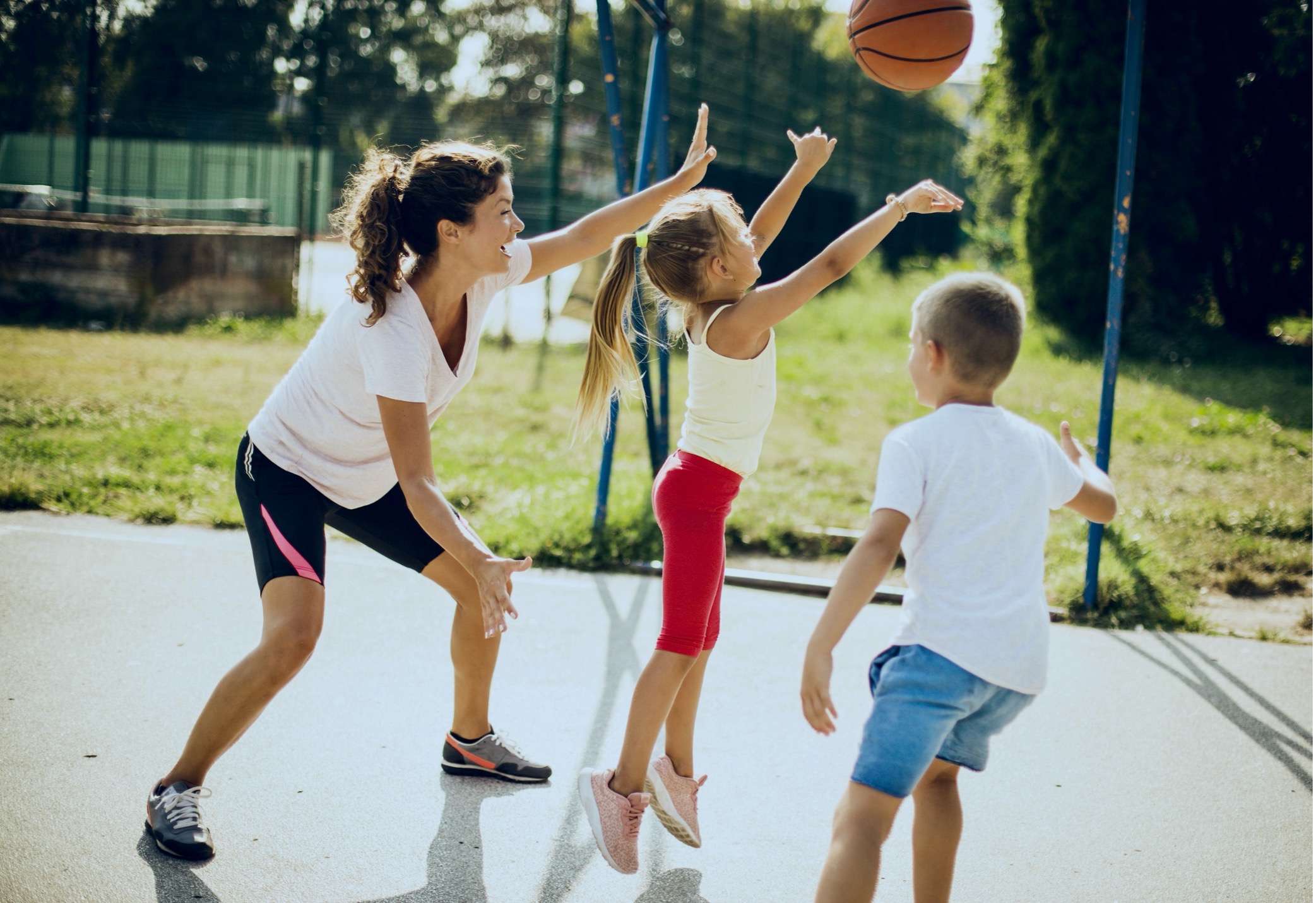
Our mothers drove us to training, handed us our forgotten sports bags and gave us access to sport at an early age.
Whether on the pitch, in the company or in everyday family life: women bear responsibility on many levels - organizationally, emotionally and mentally. It is often overlooked how strongly this "mental load" also influences their own activity - and how important targeted sports activities are for them in particular.
For Mother's Day, we are therefore looking at how exercise can promote mental health, how cycle-based training sets new standards, why professional sport and pregnancy are not a contradiction in terms - and what modern managers can learn from mothers. It's about more than care: it's about leadership, innovation and structures that treat health not as a privilege, but as a foundation. That's why ISPO 2025 will bring together the healthcare sector, companies and industry from 30 NOV. - 02 DEC. in the Health & Wellbeing Arena to find solutions that will shape the future of sport!
Directly to the contents:
- Mental health for mothers: Why exercise is more than compensation
- What is mental load in mothers?
- Professional sport and pregnancy: between reality and reform
- What is cycle-based training?
- Women's health: from the gap to the solution
- Mothers, doers, encouragers: Leadership rethought
- What we can learn from mothers - 5 tips for the industry
Mental health for mothers: Why exercise is more than compensation
Mothers bear responsibility on many levels - emotional, organizational, mental. The so-called mental load accompanies them around the clock and can lead tochronic exhaustion and psychological stress. Many mothers refrain from exercising for this very reason, partly because self-care is perceived as "selfish".Dr. Fiona Bull from the WHO emphasizes the difference between the sexes: "Men tend to be more active than women. This means that women are less likely to reap the health benefits. Therefore, there is a huge opportunity for us all to encourage more women and girls to get active, stay active and stay healthy. This is really important, and unfortunately it is often overlooked." This is precisely why it is crucial to see exercise not as a luxury or selfish, but as a necessary part of mental health and female self-care.
It's not about peak performance. On the contrary: intensive sports sessions do not necessarily correlate with greater happiness. In a Japanese study, mothers who achieved the WHO recommendation of 150 minutes per week reported significantly higher subjective happiness (score: 4.56 vs. 4.09). Even 600 MET minutes per week - i.e. around five hours of moderate-intensity daily exercise such as walking or light cycling - made a difference. It is important that exercise is adapted to the current physical and emotional state - then it is maintained in the long term and acts as a real resource in everyday life.
A look at Sweden underlines how strongly political framework conditions are interwoven with mental health: In countries with equal parental leave, the need for anxiety medication among mothers falls by 26 percent. But a lot can also be achieved on a small scale - with exercise programs that take mothers seriously, create space for social connection and treat mental health not as a privilege, but as a foundation.
11 strong women, 1 clear message: Health is still not fair
Mental strength meets responsibility: How Malaika Mihambo shapes sport and society
Professional sport and pregnancy: between reality and reform
Brazilian volleyball player Priscila Heldes is on the court despite her growing belly - medically supervised, with adapted training and the full support of her team. Her message: "I am healthy and feeling great. The first thing I did when I found out I was pregnant was to seek medical help. I am being monitored by a professional who has experience in the health of athletes and has cleared me to play, taking some precautions, of course." Pricila emphasizes the importance of medical care, but of course every pregnancy is individual. Every pregnant person should listen to their body and do what is good for them in consultation with doctors.
Physical activity during pregnancy not only promotes physical well-being, but also reduces the risk of back pain, gestational diabetes and depressive moods after the birth.
But while individual examples are encouraging, the case of Paralympic swimmer Elena Semechin shows the other side: After announcing her pregnancy, the three-time world champion lost sponsors. Her planned return to the 2028 Paralympics is uncertain - not because of her athletic form, but due to a lack of financial security.
The good news: things are moving. The Women's Tennis Association has introduced a pioneering maternity protection program in 2025. It also applies to players who adopt or become parents together with a partner. Twelve months of financial security and access to medical advice create new scope - not only on the court, but also in life.
Top stars such as Serena Williams, Naomi Osaka and Belinda Bencic show what is possible: sporting careers that take place not despite, but with a family.
The message is clear: if the structures are right, family becomes a strength in professional sport - not a risk.
10 wishes for the sports industry: female athletes want more than pink sportswear
Women's health: from the gap to the solution
Women's health is not a "nice-to-have" - but a key factor for healthy societies and efficient companies. Theresa Härter, Consultant for Mental Health & Women's Health, WORK BODY MIND, spoke about this in her talk at ISPO Munich "Taboo or transformation - Why female health in the world of work is not a "nice to have".
She emphasized that 700 diseases are diagnosed later on average in women than in men. The result? Nine years of poor health - per woman. The economic damage: around 1 trillion euros a year, caused by missed diagnoses, incorrect treatment and structural neglect.
The solution is within reach: Gender-sensitive health management that differentiates rather than generalizes. Endometriosis, PCOS, lipoedema or the menopause - these diagnoses affect millions of women, but are often left out of prevention and occupational health programs. This needs to change.
What does that mean in concrete terms? Sports programs must take hormonal characteristics into account, nutrition courses must be tailored to clinical pictures such as PCOS, and mental health must also be considered in the context of chronic pain. Companies that take a holistic and gender-specific approach to health are not just investing in people - they are investing in sustainability.
ISPO 2025 (30. NOV. - 02. DEC.) is dedicating a separate hall to the topic of Health & Wellbeing. Here, new perspectives on physical and mental women's health will become visible - through products, concepts and discussions that combine sport, prevention and equality.
Women's Health & Femtech: Why companies should focus on women's health
Mothers, doers, encouragers: Leadership rethought
They are C-level, founders, industry pioneers - and mothers. Women like Amy Montagne (Nike), Carla Murphy (adidas), Anne-Laure Descours (formerly Puma) and Antje von Dewitz (Vaude) show what modern leadership can mean: Compatibility as attitude, self-care as strength, purpose instead of pure performance.
Antje von Dewitz, mother of four and Managing Director of Vaude, puts it in a nutshell: those who understand leadership as a form of care work lead more sustainably, more empathetically - and more successfully. For Amy Montagne, motherhood was the turning point: she completely changed her leadership, became more vulnerable, more visible - and therefore more effective. Anne-Laure Descours, on the other hand, deliberately chose Hong Kong as a place to live so that she could develop as a mother and top manager - a socio-political statement. Carla Murphy drives the outdoor sector at adidas with vision and perseverance - and is also an ultra-runner and mother of two.
These 25 female entrepreneurs are changing the world of sport
44 female athletes who are changing the world