

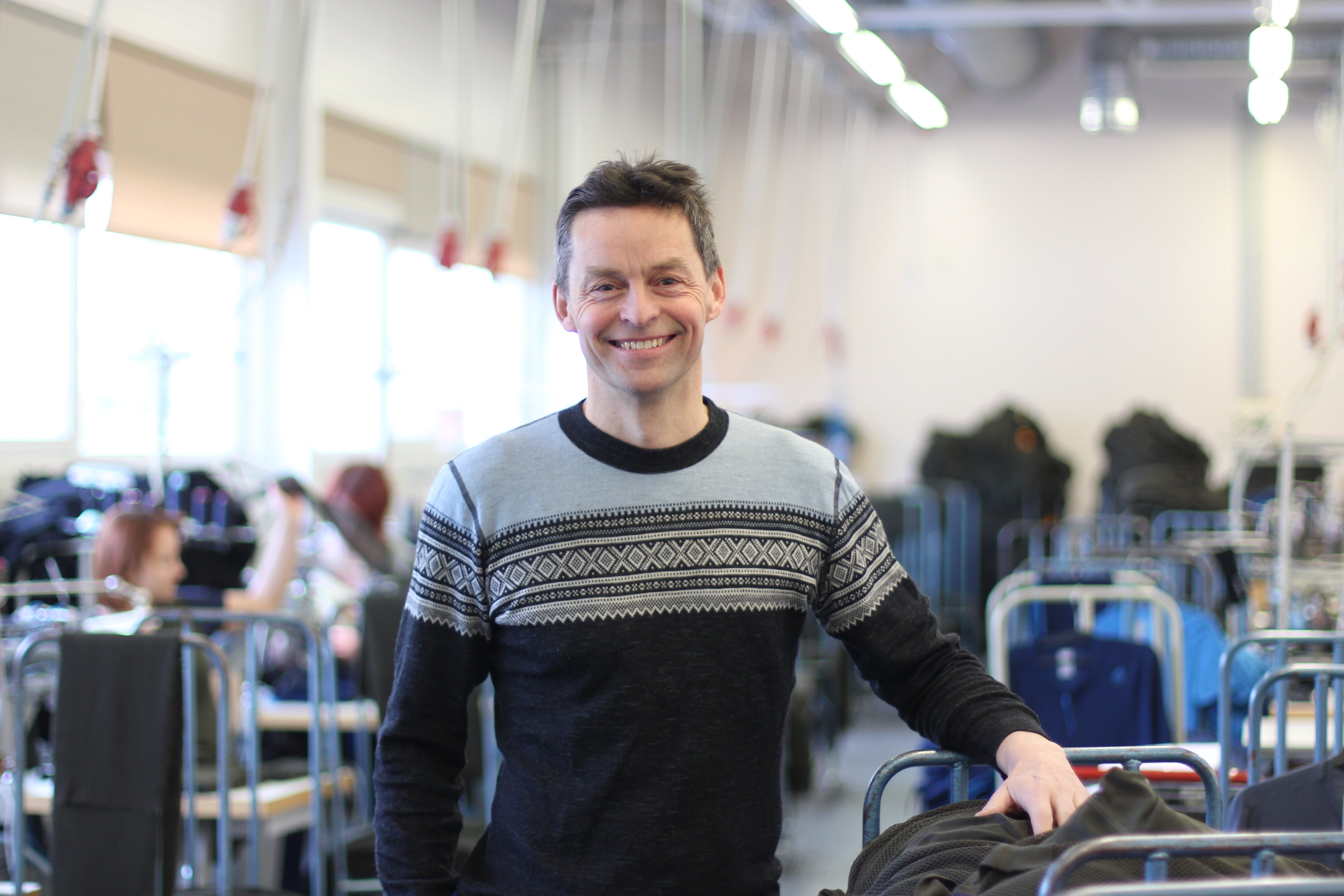
What once began with men's underwear and some clothing is now a recognized brand for functional outdoor underwear that can withstand extreme climatic conditions: Aclima. An important part of this evolution has been the expansion into the military sector. For the armed forces of Nordic and other European countries, Aclima produces robust, high-performance gear that has to withstand the toughest conditions every day. In this exclusive interview, CEO Hans Petter Jacobsen, who has been with the company for 30 years, takes us through the history and future of Aclima and reveals his views on the competition from Scandinavia.
All statements at a glance:
- Joining Aclima: Hans Petter's way
- Managing the transformation
- Military business: profit and benefit
- Aclima's focus and values
- Specialization in Merino wool: Reasons
- Control of Merino quality
- Relationship with competitors in Scandinavia
- Norway's outdoor tradition and Aclima
- Future prospects for Aclima
Hans Petter, how and when did you join Aclima?
My journey with Aclima began over 30 years ago, in 1994, when the brand was still in its infancy and focused primarily on men's underwear and clothing. I initially joined the company as an external auditor, but then decided to join the team. Since then, Aclima has undergone a remarkable transformation and has become a recognized brand for functional outdoor underwear.
How did you manage this transformation?
Since taking on the role of CEO in 2009, I have had the privilege of leading Aclima through various changes, including the acquisition by the Swedish Open Air Group in 2022. Despite the changes in ownership, Aclima has retained its family essence. Third generation family members are still actively involved in our operations. We have overcome many challenges in our industry and diversified our brand presence. As CEO of Aclima, I am proud that our growth in the contract business, especially in the military sector, has been tremendous.
How do you profit from business with the military?
Since the last millennium, we have recognized and leveraged the symbiotic relationship between military and outdoor markets. Soldiers are critical and demanding users of our clothing. This lends credibility to our outdoor gear. We currently supply all Nordic countries as well as the Belgian army and special forces in Canada, the USA, the UK and Germany. Last year, contracts with the police and military accounted for more than half of our total sales, a significant increase compared to previous years. This growth reflects our commitment to innovation and quality. And we continue to develop fabrics and garments tailored to the needs of military personnel.
What do you attach particular importance to with Aclima?
Despite market fluctuations, Aclima remains firmly focused on sustainability and innovation. Our commitment in this area extends from the sourcing of materials to production processes, emphasizing environmentally friendly practices. We place great emphasis on natural fibers such as merino wool, in line with the growing demand for sustainable alternatives.
Greenwashing - how deceptive sustainability becomes a problem
You have always specialized in merino. Why is that?
At Aclima, we view natural raw materials such as merino wool as a high-tech fiber straight from Mother Nature. We integrate Merino's unique properties into our garments by harnessing its natural breathability, moisture wicking and odor resistance. We are also deeply committed to an ethical sourcing and production process, ensuring transparency and accountability throughout our supply chain.
How do you check this?
For example, we work closely with the suppliers of our merino wool. They are part of the ZQRX program, which guarantees responsible animal husbandry practices. By working with suppliers who prioritize animal welfare and environmental protection, we can trace the journey of our merino wool from the sheep farms in New Zealand to the finished product. This commitment to traceability not only ensures the quality and integrity of our garments, but also reinforces our dedication to sustainability and ethical standards throughout our production process.
As a merino specialist, you are not alone in Scandinavia. What is the relationship like with your competitors?
In terms of cultural influence in our region, especially in Norway and Scandinavia, we maintain an open attitude and encourage collaboration - even with our international competitors. We experience a spirit of camaraderie where industry players support each other. This is because, especially in emerging markets, the immense demand for outdoor clothing offers room for multiple participants. Our interactions with competitors are often informal and direct, which is evident at trade shows like OutDoor by ISPO, where we openly discuss and share insights. Regardless of whether it is purely business related. Although our direct approach might be perceived as rude in some cultures, we value honesty and reliability and appreciate verbal as well as written agreements.
Outdoor living is a tradition in Norway. How is this reflected at Aclima?
We strive to capture the essence of Norwegian outdoor life in each of our garments. Specifically, our deep respect for nature and our strong adventurous spirit. Many people admire Norway for its harsh weather and seek appropriate clothing for such conditions, which is understandable. Almost all Norwegians participate in some form of outdoor activity; some are avid enthusiasts, while others enjoy it occasionally. Personally, I most look forward to ski tours in the sunshine at the weekend. Fortunately, the mountains nearby are still covered in snow for much of the year. This direct experience of Arctic climate conditions lends credibility to our tips. When customers from abroad ask us how to dress in the icy streets of our capital, they rely on our expertise in cold weather clothing.
Times in the industry are currently as rough as the weather in Norway. How will things continue with Aclima?
My vision for Aclima goes beyond providing quality outdoor gear; it includes inspiring people to explore and appreciate the natural beauty of their own regions. By encouraging outdoor enthusiasts to embrace local landscapes, we not only support environmental protection measures, but also promote personal well-being and community cohesion.
Overtourism: Can our mountains still be saved?