

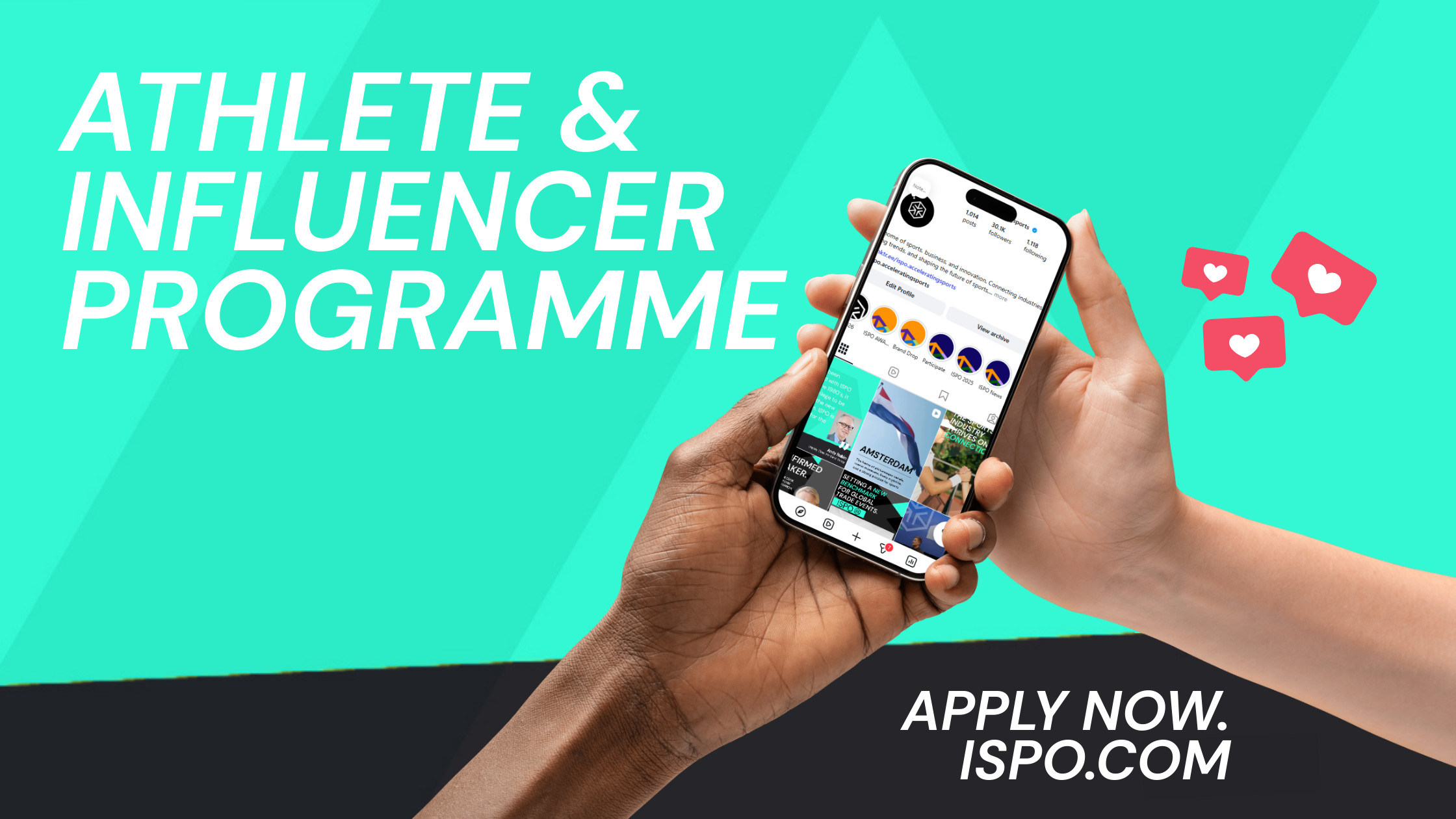
Applications for the ISPO 2026 Athlete & Influencer Programme are officially open, and we’re excited to welcome athletes, creators and influencers from across the sporting world to apply.
This programme is designed for individuals with an established platform in the sports, outdoor or active lifestyle space who want to connect with the global sporting industry under one roof. It offers a unique opportunity to engage directly with brands, decision-makers and innovators shaping the future of sport.
ISPO is the world’s most influential trade event for the sporting goods, outdoor and winter sports industries, representing the entire value chain from materials and manufacturing, brands and products to trade and customer experience.
Successful applicants to the Athlete & Influencer Programme will receive access to an exclusive package of benefits, including:
This programme is your chance to amplify your voice, grow your network and play an active role in the conversations shaping the future of sport.

We're officially opening the Call for Content for ISPO 2026, and we’re inviting industry leaders, innovators, creators, and changemakers to submit session proposals for our content stages. If you have a compelling story, a powerful insight, or a vision for the future of sports, retail, fashion, tech, materials, or culture - we want to you to be a part of this new era of ISPO.
We’re looking for thought‑provoking content that dives into today’s most pressing market challenges and cultural shifts. Whether you’re exploring new business models, material innovation, creative leadership, tech transformation or emerging consumer behaviour, this is your chance to put your ideas centre stage at the world’s most influential sports and outdoor trade show.

You can submit proposals across five distinct stages, each designed to speak directly to a key pillar of the industry:
1. Brand & Retail Horizons Stage
Built for brands and retailers ready to scale smarter and faster while future-proofing their business in an evolving market. Discover how sustainable practices drive business growth and learn to navigate industry shifts to your advantage. Through practical case studies set against international market conditions, sessions will tackle current industry challenges and show how tactical commercial, marketing and logistical strategies can determine whether a business fails or flies.
2. Fashion & Textiles Hub
This stage explores key areas of fashion and textile design, including current and emerging trends, innovative brand strategies, and insightful case studies. The content delves into women-centric design within sports and other areas of fast-developing innovation, examining how culture and diversity are shaping the future of the industry. The stage highlights cross-cultural and cross-industry perspectives, showing how global collaborations and diverse cultural insights shape design strategies and inspire new collections. Sessions will address sustainability challenges and the balance between profitability and long-term value, exploring how design leadership can create collections that are both responsible and successful.
3. Ingredients & Components Impact Forum
For over 60 years, materials, components, and ingredient brands have powered innovation, performance, and profitability across the global sports and outdoor industry. Bringing together leading experts to share proven strategies, real-world success stories, and practical insights. Attendees will discover how cutting-edge materials and sustainable technologies help brands and retailers connect with new audiences and unlock new market opportunities in an increasingly competitive landscape. This programme is curated and moderated by the world’s leading Ingredient Branding expert, Tomas Vucurevic, delivering a sharp strategic perspective and a focus on the business impact of material innovation.
4. Tech Solutions Hub
A dedicated zone for business owners, retailers and brand leaders looking to better understand and adopt the technology shaping modern commerce. Leading platforms such as e-commerce, marketplace, marketing and design tools will host sessions focused on real business challenges and practical solutions. From building and scaling an online business to improving branding, the Hub connects attendees with the experts behind the technology.
5. ISPO Podcast Studio
New for 2026, the ISPO Podcast Studio brings live industry conversations to the exhibition floor via a fully functional, soundproofed glass studio. Leading podcasters will host 30–45-minute live recordings with industry specialists, while visitors listen through wireless headphones for an immersive, high-engagement experience that enhances the show without disrupting the wider exhibition environment.

Where emerging sport and outdoor brands get their moment in the spotlight. A selection of start-ups will pitch their latest products and innovations, offering a first look at what's new, what's next, and what's about to disrupt the industry. Attend to get ahead of the curve, discover emerging brands as they hit the market, and engage directly with the ideas and products shaping the future of outdoor sports.
ISPO’s content programme is future‑focused, globally minded, and backed by a €1 million content investment, ensuring world-class production, high-impact themes, and top-tier speakers.
Across two days, multiple stages will run simultaneously on the show floor, bringing the industry’s brightest minds together for discussions, debates, and deep expertise.
Apply here to submit your proposal - The ISPO Content Team will review all submissions and respond to you in due course.
To learn more about the stages visit this page here.

If business events are meant to be more than functional appointments – if inspiration, exchange and sustainable added value are at the heart of the experience – then choosing the right location becomes crucial. And why not meet where the name alone stands for both cult status and a place of longing?
As a renowned alpine town, Kitzbühel has been combining tradition and innovation for centuries and has long established itself as a first-class destination for Meetings, Incentives, Conventions and Events (MICE). Embedded in an impressive mountain landscape, Kitzbühel offers the ideal setting for events that leave a lasting impression.
That Kitzbühel knows how to deliver outstanding events is evident not least from the legendary races on the Streif or the ATP tennis tournament in summer, where the world’s best players and their fans come together. Kitzbühel stands for alpine inspiration, genuine hospitality and the highest quality standards in event execution. More than 750 years of history shape the town, while at the same time it is modern, cosmopolitan and professionally positioned, with a very special charm.
It is precisely this combination that makes Kitzbühel so attractive for companies planning meetings, congresses or incentives with real added value.
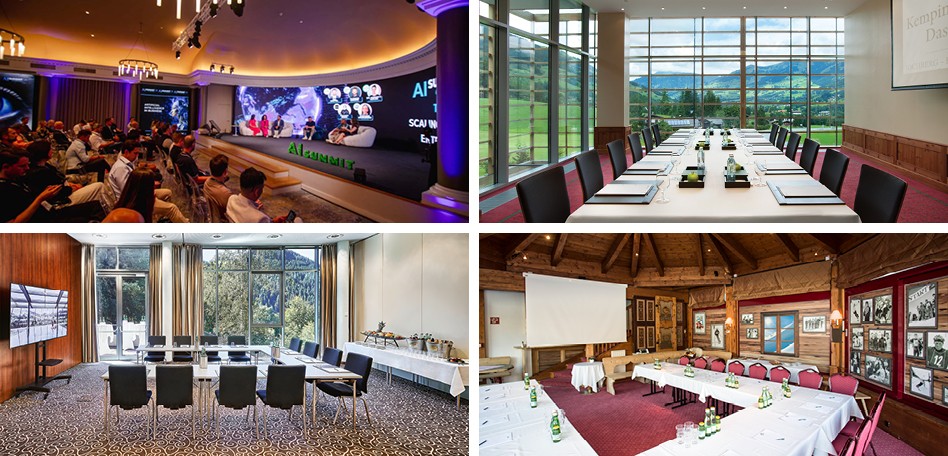
Whether an exclusive board meeting in a small circle, an international conference or a multi-day incentive for employees: the destination offers flexible, modular event spaces, high-quality conference hotels and extraordinary locations – from traditional Tyrolean mountain huts to modern business spaces with panoramic mountain views.
In both summer and winter, Kitzbühel is “Your Place to Meet”
In addition, there is a wide range of options for inspiring supporting programmes – whether sporty or culinary. Event managers know that a successful event does not thrive on content alone, but above all on emotion, created through memorable experiences. Kitzbühel offers more than 50 activities and experiences that can be perfectly tailored to incentives, teambuilding activities or networking formats.
In winter, dreamlike snow experiences, ski adventures or atmospheric evenings in mountain huts await. In summer, hiking, biking, golf, lakes and culinary discoveries take centre stage. Whether sporting challenges, creative workshops or indulgent breaks – the alpine landscape creates space for new perspectives, while motivation and genuine connections emerge along the way or during relaxed stops at traditional inns.
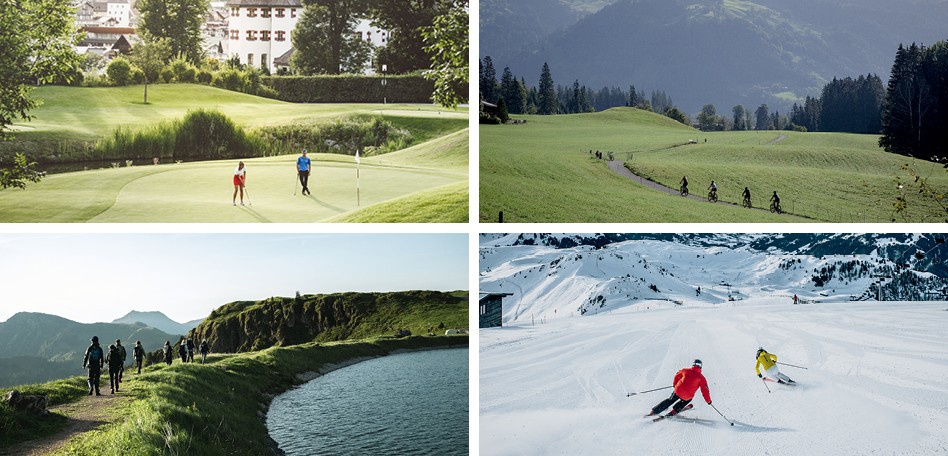 Kitzbühel offers the perfect setting for events of all size
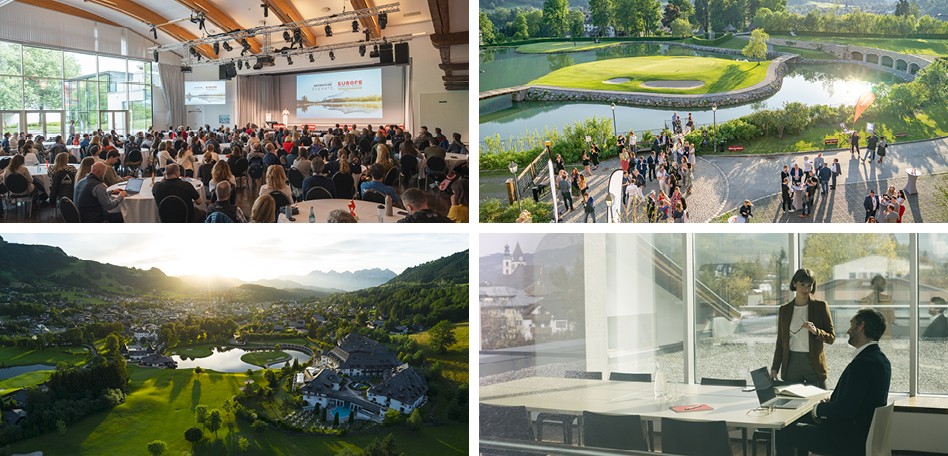
One of the cornerstones of the MICE destination is the modern congress centre, which can host events ranging from several hundred up to a thousand participants. This is complemented by a wide selection of certified conference hotels and extraordinary event locations – centrally located, technically state-of-the-art and individually adaptable. For those seeking seclusion, this is equally possible, ensuring that every group finds the right place to meet and connect.
Overall, Kitzbühel’s unique atmosphere offers 58 km² of space for encounters between 800 and 2,000 metres above sea level – 365 days a year, across all four seasons.
Another key advantage: short distances. Hotels, venues, restaurants and leisure activities are all quickly and easily accessible within Kitzbühel. This not only simplifies logistics, but also enhances the overall quality of the event experience. Despite its alpine location, Kitzbühel is easy to reach – by train directly to the town centre, by car, or via international airports such as Innsbruck, Salzburg or Munich. Shuttle services and well-designed mobility concepts provide additional flexibility on site.
 Sporty supporting programmes create the perfect basis for team building
A decisive advantage for organisers is the professional on-site support. Kitzbühel Convention Services (Verlinkung: https://www.kitzbuehel.com/convention-services/?utm_source_platform=online-marketing&utm_medium=button&utm_source=ispo&utm_campaign=ispo-magazin-mice) acts as the central point of contact for the entire event planning process. From the initial idea through to successful implementation, an experienced team accompanies every step – competent, efficient and personal.
The range of services includes location scouting and site inspections, coordination of regional partners, organisation of incentive programmes and sustainable mobility solutions. The goal is to save time, use budgets efficiently and at the same time create a customised, high-quality event experience.
 Kitzbühel offers 58 km² of space for encounters between 800 and 2,000 metres above sea level
Sustainability in Kitzbühel is not a trend, but a lived philosophy. Many businesses are certified with the Austrian Eco Label and focus on regional value creation, resource-efficient concepts and short supply chains. As a result, Green Meetings and sustainable events can be implemented here just as credibly and professionally – without compromising on quality or comfort.
For companies that wish to take responsibility and design their events consciously, Kitzbühel offers clear added value and strong positioning.
More about Kitzbühel – Your Place to Meet as a business event location in the heart of the Alps:
Early demand for ISPO 2026 is surging, with global brands rapidly securing their place at the most influential meeting point for sporting goods, outdoor and winter sports.
Following an exceptionally strong rebooking phase and a powerful launch to the sales campaign, momentum is building at pace across every corner of the sector.
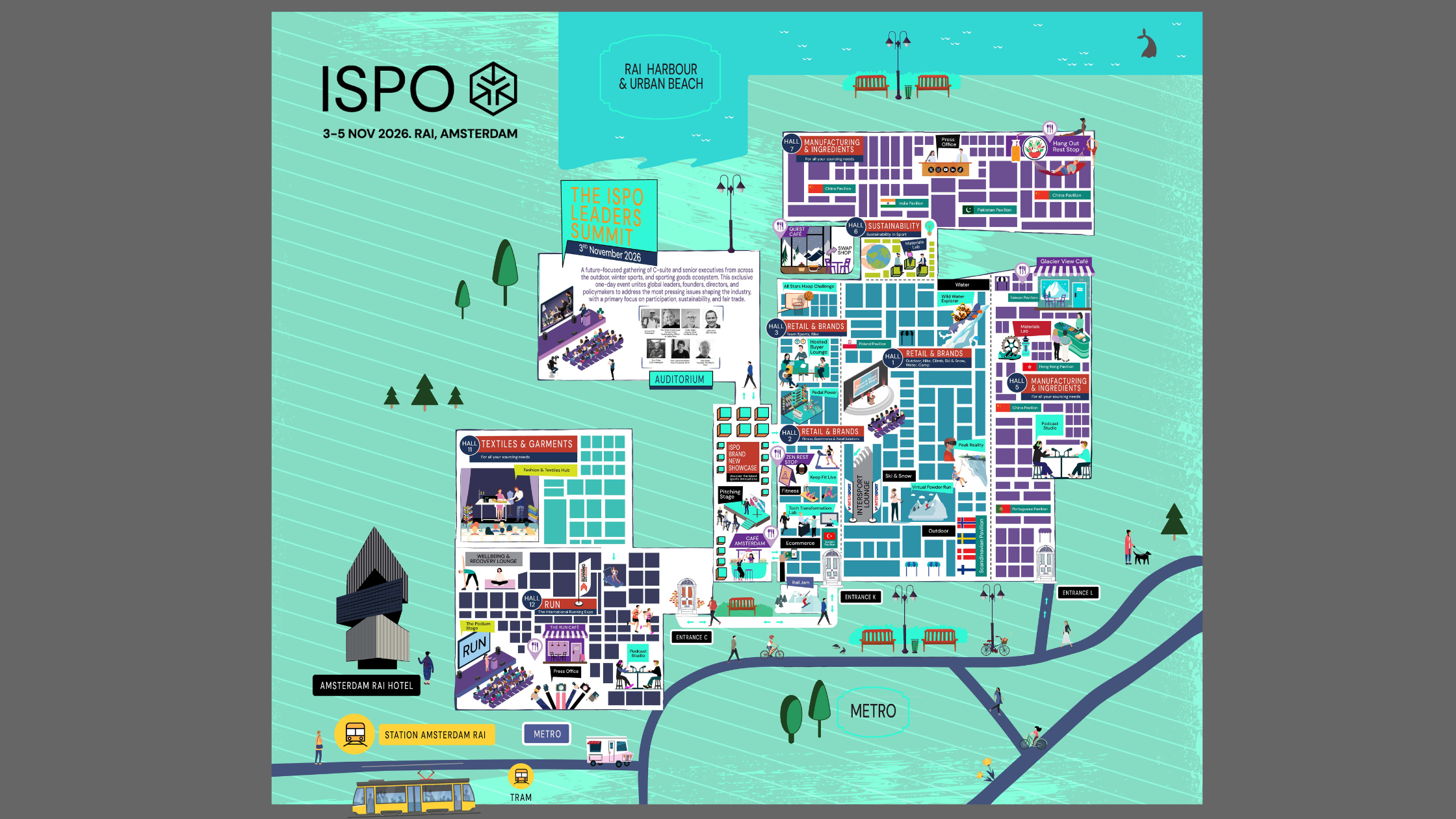
ISPO, the world’s leading event for the sporting goods, outdoor and winter sports industry will be held in Amsterdam on 3–5 November 2026. With more than 280 exhibitors already confirmed and over 50% of the floorplan secured with 10 months still to go, enquiries are accelerating from across the globe.
This early wave of commitment reflects growing industry confidence in ISPO’s renewed positioning and underlines its role as the essential global platform where the biggest brands, boldest ideas and most influential decision-makers come together.
A first for ISPO: Onsite rebooking sparks record early commitments
ISPO 2025 in Munich marked the first time exhibitors were able to secure their space immediately for the next edition, and the industry reacted positively.
Brands and businesses spanning sporting goods, outdoor, fitness and manufacturing seized the opportunity, committing early to ISPO 2026 in Amsterdam, which will debut under its new, future-focused positioning.
This strong response highlights a growing appetite for ISPO’s renewed mission: uniting the entire global value chain - from materials sourcing and product creation to brand development, retail, performance innovation and the consumer experience - within one powerful, connected marketplace.
Early confirmed exhibitors include:
Industry leaders welcome ISPO’s renewed vision
Support for ISPO’s new direction extends beyond bookings. Industry leaders are vocal in their confidence in ISPO’s return to the global stage.
David Nordblad, Secretary General of the Scandinavian Outdoor Group, commented:
“A big win for the industry - ISPO is back as the leading global tradeshow, together with a great partner to back it up and take it to the next level.”
Setting a new benchmark for global trade events
Delivered by Raccoon Media Group in partnership with Messe München, ISPO 2026 will debut a re-imagined global platform at RAI Amsterdam. The event will be co-located with the International Running Expo, Europe’s only B2B trade show dedicated exclusively to the running industry.
With over 25,000 visitors and buyers expected and more than 2,000 exhibiting brands and businesses, ISPO 2026 will act as a global launchpad for:
With half of the show floor already secured and momentum accelerating, brands shaping their 2026 strategies are encouraged to act early.
“Exhibiting at ISPO 2026, means your brand gains unparalleled visibility among the world’s leading buyers, retailers, manufacturers, distributors, and media. We want brands taking centre stage at this global industry gathering, rather than watching from the side lines” said Soraya Gadelrab, Joint Managing Director for ISPO.
Interested in exhibiting and sponsorship opportunities at ISPO 2026? You can enquire here.

Organisers of ISPO, the world’s most influential trade event for the sporting goods, outdoor and winter sports industries, unveil the agenda for the NEW Leaders’ Summit which will feature newly announced IIC - INTERSPORT International Corporation CEO Tom Foley and World Cup and Olympic champion Lindsey Vonn amongst the stellar line-up of industry experts taking to the stage.
They will join Jimmy Chin (Filmmaker and Mountaineer), Celine Del Genes (Decathlon, Global Game Changers), Hap Klopp (Founder, The North Face), Professor Laura McAllister (Vice President of UEFA), Andy Rubin (Deputy Chair, Pentland Group), John Lacy (CEO, Burton) and Pia Heidenmark Cook (Former Group Chief Sustainability Officer Ingka/IKEA).
The new ISPO Leaders’ Summit will be an exclusive C-suite conference uniting senior executives, policymakers and changemakers from across the sports ecosystem. Foley and Vonn join an inspirational list of experts who will share their insights and experience via keynote speeches, fireside chats and panel discussions, debating pressing issues such as fair trade, participation, and sustainability.
Lindsey Vonn is the most successful female alpine skier in history. Winning gold in downhill skiing at the 2010 Winter Olympics in Vancouver, Vonn also has four World Cup Championships and a record eight World Cup season titles to her name. She is one of six women who have won World Cup races in all five disciplines of alpine skiing – downhill, super-g, giant slalom, slalom and super combined. Adding to her legendary status, Vonn recently came out of retirement to rejoin the U.S. Ski Team, making a historic comeback to the World Cup circuit this season with her sights set on the 2026 Winter Games.

Vonn said, “There are so many parallels between competing at a high level and leading a business. I’m looking forward to joining the Leaders’ Summit in Amsterdam and connecting with the people behind the brands we all love.”
Foley's career in the sporting goods industry is well-documented. Prior to his appointment as CEO of IIC – INTERSPORT International Corporation, he served as the CEO of French retailer Go Sport and led the business’s Middle East division. Foley is also the founder of Independent Sports Retailers Alliance in Ireland which he led until 2011. With 20+ years’ experience in global sports retail, Foley is renowned for navigating the challenges of an evolving retail landscape and identifying what is required to thrive in this competitive environment.

Mike Seaman, Group CEO of Raccoon Media Group said. “The Leaders Summit will see a veritable who’s who of the industry share decades of experience. There is very little that our speakers haven’t seen or experienced and we’re honoured to have them all attend and share their learnings, insights and knowledge. The Summit is an event not to be missed.”
The full Summit can be viewed at https://www.ispo.com/visit/ispo-leaders-summit
Raccoon Media Group and partners Messe München have committed €3 million to reimagine ISPO from 2026, with €1million of this investment allocated to content across the Summit and Expo, delivering a truly memorable experience for all who attend.
“ISPO 2026 will be so much more than a trade show.” said Kate Jamieson, Racoon Media Group’s Content Director. “ISPO will meet the needs of the head, the commercial side of what makes our industry vibrant, profitable and thriving. However, we will place equal focus on the heart. Why we do what we do, what drives us every day and what inspires people to move. This will be reflected in the content too, important business insight, coupled with a healthy dose of fun!”
ISPO’s content investment extends across all the three days of ISPO2026. The Expo will feature multiple visitor activations such as a Rail Jam outside the RAI with stunts and demos, the ‘Screen to Summit’ interactive Climbing Wall, Summit Sprint, The Runway, Avalanche Simulation, Shop of the Future and VR Powder Run to name a few. The event will feature four show floor theatres which will deliver educational content whilst some ISPO favourites remain too, including the Functional Clothing Swap and BrandNew, a Dragon’s Den style pitch zone for start-ups. Several fringe networking events will also take place hosted by the leading industry associations which form the backbone to the sporting goods, outdoor and winter sports sectors.
“We are curating an immersive, interactive experience across the three show zones which ensure all attendees walk away engaged and inspired. Ultimately, every component of ISPO 2026 is designed so that attendees leave feeling they’ve experienced something special, and that their time and investment were well spent.” Jamieson adds.
*** ENDS ***
For further information or to arrange an interview, please contact:
ABOUT ISPO
First hosted in 1970, ISPO is the world’s premier sports, outdoor and winter trade event welcoming over 50,000 global attendees annually. From 2026, ISPO enters a new chapter led by Raccoon Media Group, in partnership with Messe München. The joint venture combines the heart, agility and entrepreneurial spirit of Raccoon Media Group with the competence, scale, and global reach of Messe München. The refined strategic direction addresses the cost base to make attendance more affordable, aligns the event with global buying cycles, and ensures accessibility for a broader international audience.