


Contemporary outdoor, tenniscore, basketball or running: no matter which sports-inspired lifestyle is currently at the forefront of fashion, it is clear that sports and outdoor activities are in tune with the times. ISPO Munich wants to show just how versatile and inspiring this unstoppable fusion of fashion and sport is at the curated special area Zeitgeist by ISPO 2024 Edition.
All insights at a glance:
The crises and challenges of recent years have challenged consumers, brands, retailers and trade fair organizers alike and have left their mark. Especially for young, innovative brands outside the mainstream, the changes in the trade fair landscape have not made it any easier to find the right audience. However, new opportunities have also arisen. The sports and OutDoor market in particular has proven to be more crisis-resistant than average because sports and outdoor activities continue to be an important source of inspiration and strength for people. Many even say that sport is more important than ever. This is precisely why sport plays such a major role in current fashion. So big, in fact, that even luxury fashion houses are sponsoring the Olympic Games. But these new, fashionable consumers expect more than pure function. They often don't feel addressed by classic sports and outdoor brands and are looking for new style codes that better convey their attitude to life. ISPO Munich is closing this gap with the curated special area Zeitgeist by ISPO 2024 Edition, offering all the pioneering brands from the fields of sports fashion, streetwear and outdoor lifestyle a customised, attractive environment. Be there!
Would you like to be part of Zeitgeist by ISPO 2024? Then contact Constanze Fuchs directly:
If you want to be part of the curated area Zeitgeist by ISPO 2024, simply contact Constanze Fuchs directly:
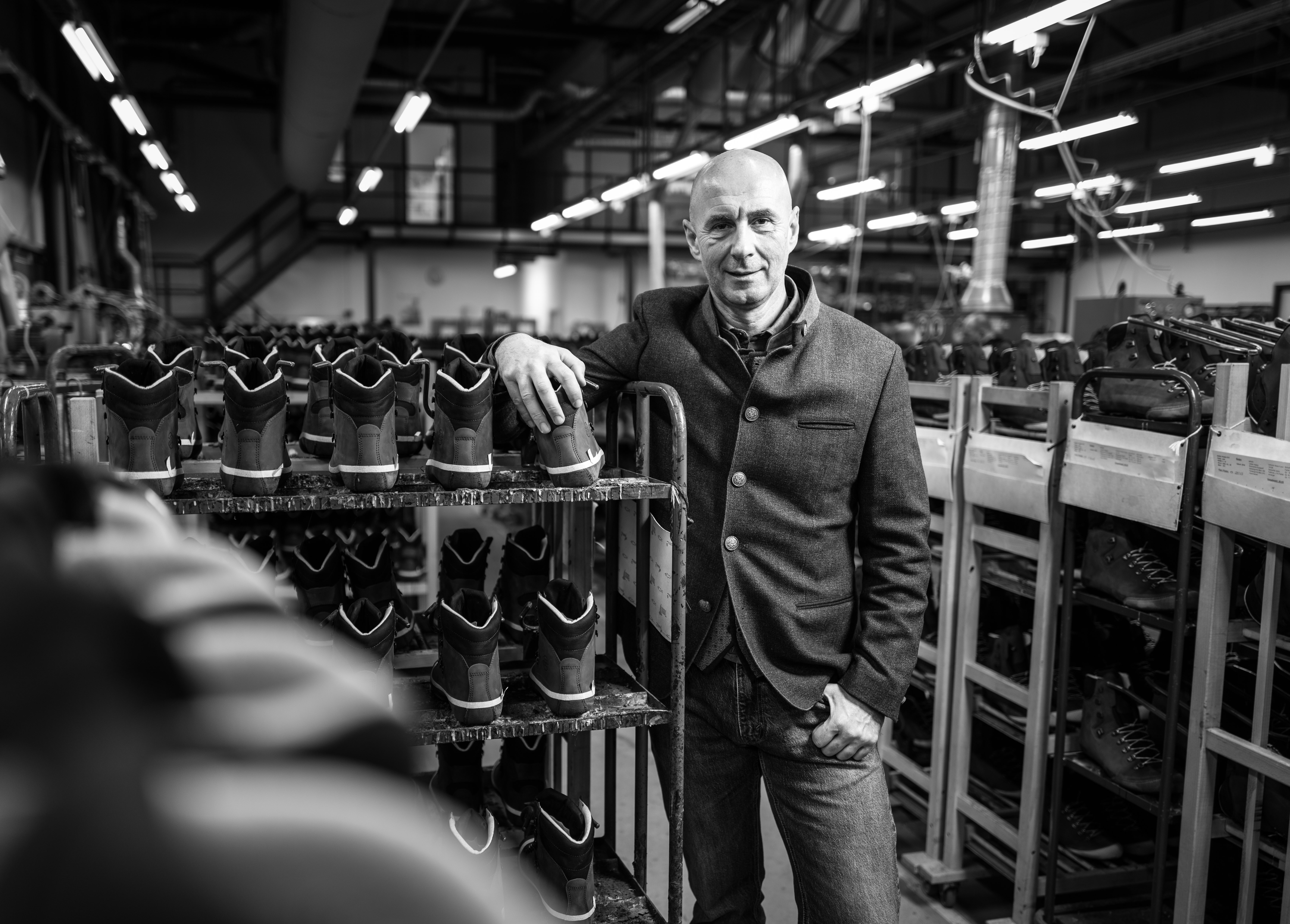
Hanwag Shoes have made it from the scree field to the catwalk: the traditional German brand is celebrating huge success with its mountain and trekking shoes at the Fashion Weeks in Paris and Tokyo. In a new episode of "Challenges of a CEO", Hanwag CEO Thomas Gröger tells us how this came about and why all outdoor brands flirting with the high fashion market shouldn't have too high expectations.
Imagine: a showroom in picturesque Paris, craft beer bottles from the ice bucket, guests in 500 euro jogging bottoms. And me in the middle of it all in traditional Bavarian costume and our retro red dot - the Hanwag shoe, that represented the outdoor brand at an international fashion fair for the very first time in February 2023.
But first back to the beginning. A former Hanwag employee literally stumbled across a pair of original Rotpunkt shoes in Stockholm: A person was simply wearing the Hanwag classic from the 80s on the street. We were able to buy the pair of Hanwag shoes from her and put them in the display case in our office in Bavaria.
Around the same time, the Munich fashion agency Akkvrat got in touch. Our shoes were "really cool" and they wanted to position Hanwag in the fashion segment. We turned them down. We also declined the second and third requests. But owner Atith Kotsombat didn't give up and so we invited him and his team to visit us on the fourth call. And what immediately caught their eye during the visit? The red dot in our display case. It would go through the roof at Fashion Week.
I was skeptical. I associated "fashion" with white sneakers and high emissions. Hanwag shoes are the exact opposite: hundreds of hours of traditional craftsmanship go into every pair of our shoes. For us, design always has a technical purpose. We don't make shoes that look good, we make shoes for the mountain, for trekking or long-distance hiking.
We are a small company with limited resources. That's another reason why we initially said no. Sustainability, history, authentic products - that's exactly what's needed in the high fashion segment, the agency told us. Not the quick off-the-peg copies, the white sneakers. Outdoor is the big trend in fashion and Hanwag had to go to Paris Fashion Week with a colorful new edition of the red dot. We thought that was cool.
I've known the outdoor industry for 30 years and have been to all the trade shows. But Fashion Week is not a trade show as we outdoor brands know it. You rent a store or a bar in the city center and exhibit there. We didn't need a booth at all. That was something completely new for me.
None of the people who came to our showroom were dressed normally. They were all individualists. But they were really interested in the Hanwag story: in our history, sustainable production in Europe and 100 years of footwear craftsmanship. In the outdoor industry, we talked these topics up and down. In the end, it was often just about the price.
There at Paris Fashion Week, our story finally took center stage. The feedback was: this is not just a shoe, these are Hanwag shoes: state-of-the-art! Since then, I've seen the fashion world from a completely different perspective.
We then launched the retro red dot not only in Paris, but also in Tokyo, Munich and New York. And what can I say - in terms of brand building and tapping into new target groups, it couldn't have gone better.
Our classic mountain boots in brown and gray would not have received so much attention. We have become more colorful and terms like "color blocking" are no longer used so rarely at Hanwag. However, it is very important to me that we are not associated with the fast fashion industry. Hanwag shoes remain true to their authentic, functional design, even when we react to outdoor trends. We don't develop fashion products. The shoes remain the same.
We only produced a limited quantity of the Rotpunkt, which sold out quickly. Since then, we've had more and more requests from international retailers, not only for the Rotpunkt, but also for other models. The Alaska is now also available in bright orange and we're currently talking a lot about our Grid Stone - a low shoe that I wouldn't describe as modern. But Atith Kotsombat thinks that our classic embodies exactly what the high-fashion world needs right now. So let's see how we can make that happen.
Of course, we also take our shoes from the international Fashion Weeks to outdoor trade shows such as OutDoor by ISPO. Because we want our long-standing retailers to be able to jump on the bandwagon. And that is happening. Fashion was already a huge topic at the last ISPO trade show.
For us at Hanwag, it's very clear that we don't want to develop fashion products in the future either. I don't think that would work either. We didn't actively enter the fashion market, we were found by high fashion. I can only say to anyone flirting with the market: don't set your expectations too high. We are outdoor brands, not fashion brands that sell hundreds of thousands of Hanwag shoes overnight.
Nevertheless, we have found a new sales market in the high fashion sector that is working for us right now. It's fun that our storytelling is so well received in this environment! And when the trend is over again, that's just the way it is. We were right at the forefront, which is just great.

This clothing cools! Climate change brings with it many changes that we humans have to adapt to. The most obvious is the rising temperatures, which reach new record levels almost every month somewhere in the world. What does this mean for our clothing? We have compiled the best technologies that cool effectively even on hot days.
The body actually already has a built-in self-cooling system: sweating is our natural mechanism for regulating body temperature and preventing overheating. If the body becomes too warm, for example due to high ambient temperatures or physical exertion, the brain activates the body's own cooling system and the body begins to sweat. As soon as the sweat reaches the skin, it evaporates and draws energy from the body in the form of heat. This evaporation process has a cooling effect and helps to keep the body temperature at a healthy level. In principle, it is therefore not a bad idea to wear as little clothing as possible when it is hot. But that doesn't always work. And too much sun is also bad for your health. In view of rising temperatures, the textile industry is therefore looking for solutions to ensure that clothing can reliably support the cooling effect. Because one thing is clear: the demand for cooling textiles will increase. Market forecasts predict annual growth of around eight percent by 2032.
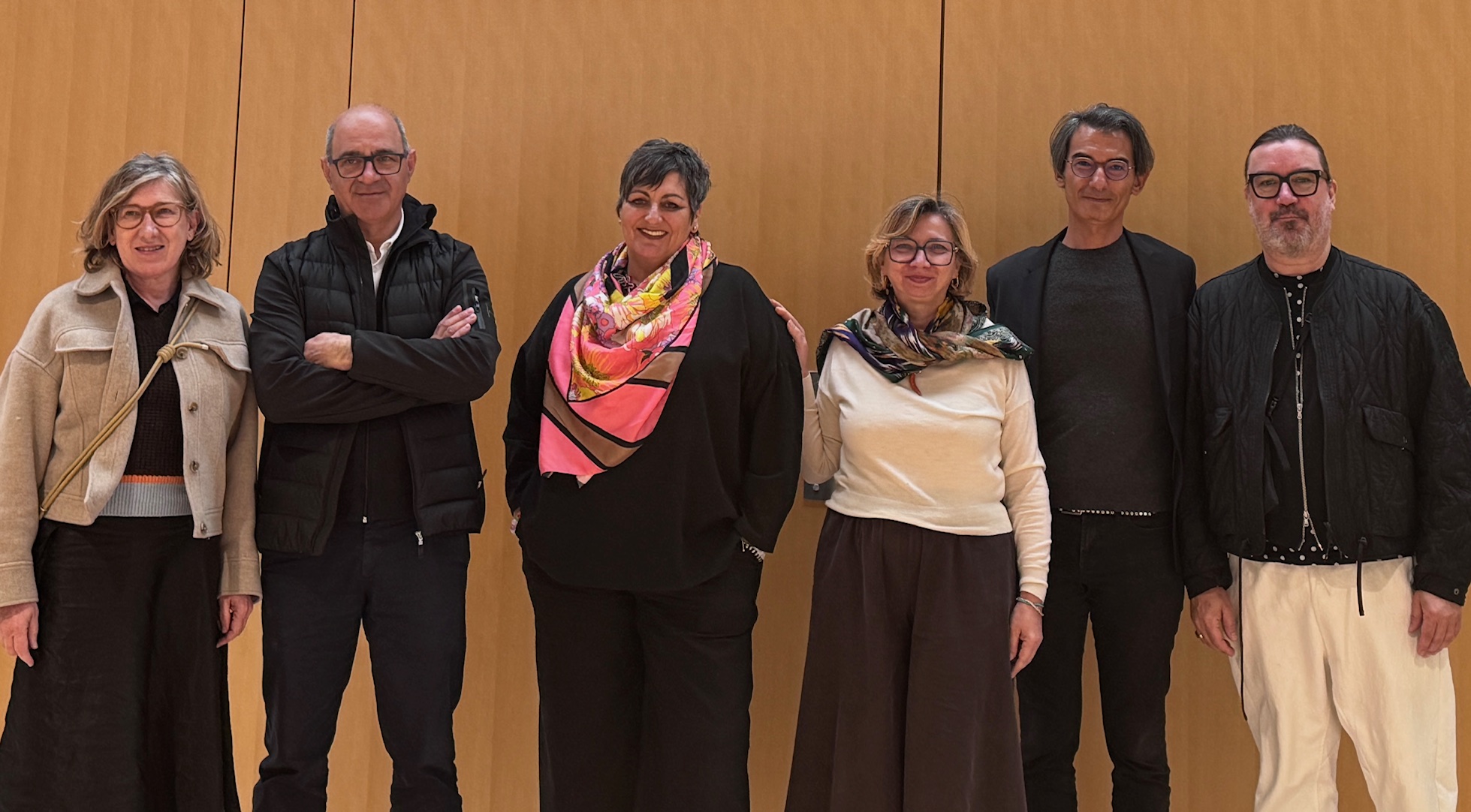
Once again, the ISPO Textrends jury came together in Munich to review and evaluate the textile innovations for the spring/summer 2026 season. We reveal the trends that emerged, why sustainability takes precedence over innovation and why a new type of communication is needed.
What was unanimously clear was that this season isn’t going to wow with any new state-of-the-art developments. Instead, it confirmed that the industry had taken heed in embracing sustainability, as all products had some form of sustainable ingredient or process.
‘This is something positive: people are continuing to make claims for sustainability solutions; this is a very positive point; all the products have some reference to sustainability; this is now a culture,” said Braz Costa, General Manager of CITEVE.
Sustainable processes are featured right through the supply chain. From the fiber, fabric, and finish sectors, each product was proudly linked to a more substantial sustainable source. Ranging from the understated but still valued sustainable in terms of companies using renewable energy to water-saving processes to the more creative elements of innovative fiber content taking on a new direction, as virgin synthetics upped the ante with recycled or bi alternatives. Membranes and coating continued to see the push to cleaner chemistry, with PFAS and PFC-free materials still delivering the protection required.
Waste was used, not just from the textile sector, but also evident in the soft equipment sector, with waste fabrics immersed in nonwovens with a laminate, through to waste products from the food industry pulling on apples, bananas, pineapples, and cherries, all offering unique performances, including anti-odor.
Natural fibers, both established, esoecially cotton and new contenders, highlighted the performance prowess they too can offer in a market where function overrides fashion.
With the jury judging each product via an iPad, it is always a perfect event to discuss developments in the textile sector, directly related to ISPO Textrends applications but also in general. This was done by (see cover picture from left to right) Sophie Bramel – Technical Editor, World Sports Activewear (WSA), Braz Costa – General Manager of CITEVE, Louisa Smith – Textile Trend Consultant, Giusy Bettoni – CEO and Founder, CLASS, Kutay Saritosun – Director of Brand Services and Partnerships Bluesign, Thomas Håkansson – Creative Director and Senior Designer.
“I have felt that innovation has slowed down in the last few years, and this season’s selection of fabrics tends to confirm that in my mind. Innovation is not the high point, but there are some very beautiful fabrics. They look great, and they are all sustainable. You can say that has become the standard. Obviously, it is expected, but it is good to see it is really there,” said Sophie Bramel, Technical Editor, World Sports Activewear (WSA).
“I feel this is a season for which we will have to look further for real innovation. It’s there, but you have to look for it. It is a safe season, with classics that are reassuring and work, and they are now made of recycled nylon and recycled polyester,” she said.
Polyester took center stage in the synthetics arena, with a wide range of variations from recycled; the use of this robust fiber is a sign of the times from a cost point of view. Polyester is like a chameleon; It can change characteristics and performance and comes from a wide range of sources, although soon it won’t be able to come from recycled plastic bottles, as they will no longer be deemed a sustainable feedstock. A cat with nine lives, polyester will foray into new functionality and bio-based feedstock, and it will take a mighty innovation to knock this synthetic fiber offer pole position.
Mono fabrics emerged, bringing mechanical stretch and an easier end-of-life solution. New ingredients included apple, banana, and cherry, bringing a touch of the exotic, with cotton delivering a newly energized bid to gain more ground in the performance sector. Reassuringly good fabrics, switching from conventional to recycled and bio ingredients for synthetics added to the continuing level of performance required for our industry.
The general consensus is that the textile industry has become somewhat stagnant in its offerings. This isn’t to say that there are bad fabrics; it is just highlighting the fact that innovation has been put on hold. Much of the blame for this fixed position is the constant focus on brands’ margins, which are squeezed each season.
“Regarding innovation, it is mostly about the brands' commitment to those materials, so they can be really commercial when you support them. That is what we see lacking. That may be why we have less innovation, as those companies are not supported as much as they could be, so they can scale up and be commercial. Hopefully, we wil.l see more newness in the next couple of seasons,” said Kutay Saritosun, Director of Brand Services and Partnerships Bluesig.
So, where is the innovation? So where is the innovation? It is there, but you have to deep dive to see where the innovation has taken place. It isn’t in new fibers but through next level spinning, new lighter weight fabrics and the clean chemistry that is replacing forever chemicals and reducing the impact on the environment..
The problem, as the jury discussed, is the lack of support from brands. This highlights the recent bankruptcy of Renewcell, the Swedish commercial of the world’s first textile-to-textile processing, which filed for bankruptcy after a year of trading. Multiple reasons have been mulled over: the lack of support from brands, the onus of brands towards their margin, Renewcell's growing too quickly, and much more. However, with textile-to-textile recycling elevated as a future savior in pursuing the circular economy, Renewcell’s bankruptcy was a blow to the industry globally.
“If we talk about a new generation of material, we must first talk about a new generation of business. I think we are going towards a new format where if the values towards ethics towards footprint, at the same time, we have to highlight values as you don’t see the ethical side physically, the impact on the water and the chemical is lower. Still, it is there., and we need to recognize it,” said Giusy Bettoni, CEO and Founder, CLASS.
However, innovation and developments come at a price, and brands have to take some responsibility in supporting new developments and educating their consumers about why a product may have a premium price.
“ It isn’t just about margins, but part of it is us going into a new generation of communication; that does not mean we have to write half a page of everything, but there are ways to say why this garment is different from, if not more expensive, has different values that motivate the consumer to buy it. Unfortunately, these values are sometimes not evident when wearing a sustainable garment. We are so linked that we need to see things to understand - it’s a challenge,” she said.
The jury discussed how innovative new developments are out there, and it is a matter of time before they come through. Traditionally Spring/Summer is a smaller season than Fall/Winter, and interest is already starting for the next season, in the hope that the industry at all levels works as one in scaling up new ideas.
“Regarding sustainability, we are in a difficult place, there is challenge and opportunity, but the results are not there. The innovation is out there, but it needs to scale up. Scaling, implementing, and transferring technology takes some time,” said Braz Costa, adding that we need adaptation from the retailers. “We need another opportunity to be economically possible, so without the movement from both sides, it isn’t possible."
Creative Director and Senior Designer, Thomas Håkansson echoed this sentiment that innovation is out there. “I get the impression it is there if you look into it, I think it is important that we give it time to be there. I think some time is needed. Investors are forced to say we are there, and a longer perspective is needed.”
What shouldn’t be overlooked is that change takes time. The textile industry is one of the oldest industries in the world, dating back thousands of years. Even if we track it back to when it became automated, we are talking 200 years, so change does take time. This edition of the jury meeting has proved that it can change, as the jurors noticed that sustainability is finally featured in all products.
Sophie Bramel reminded us all how long it can take to find a new fiber and bring to market. “In the most recent past, the newest fiber we are using today on an industrial scale is lyocell—research started in the late 1970s. Two major companies, Lenzing and Courtaulds, were working to get that fiber to market—it took 30 years!”
Which brands emerged as winners from this jury meeting? You can find out in Munich at OutDoor by ISPO from June 3 to 5, 2024 at the ISPO Textrends Forum.

More than just a hobby or a challenge: for Gen Z, outdoor has a completely different significance than for previous generations and they express this through their fashion. We took a look at how their outdoor fashion game has evolved over the years, what they are looking for and what homework brands need to do now.
The start of Gen Z's relationship with outdoor fashion: the gorpcore trend. OutDoor and fashion have long been a dream team. In the 1990s, rappers like Mase and Notorious B.I.G. made outdoor fashion street-ready and laid the foundations for the gorpcore trend - with windbreakers, colorful cargo pants and dad sneakers.
A lot has happened since then: the term "gorpcore" is no longer enough to describe the complex interweaving of sport and fashion. The two worlds have long been closely linked. The trend will become even stronger in 2024. It's about much more than just making outdoor pieces an integral part of the world's streets and catwalks. Gen Z and soon Gen Alpha are completely redefining outdoor as a lifestyle - and expressing this through their clothing in particular.
In the keynote at ISPO Munich 2023, Highsnobiety explained which four aspects are driving this development:
We show three trends that have emerged from this:
Functional, ugly, sloppy - outdoor clothing has long since shed its old image. The new store design of traditional outdoor brands shows that sportswear has arrived in the middle of the high fashion scene. The Arc'teryx flagship store in Beijing, for example, could just as easily be a fashion boutique as a contemporary museum and offers shoppers a luxury experience that only fashion labels usually do.
Ever since Rihanna wore colorful Salomons at the Superbowl Halftime Show, hiking boots and functional sneakers have been among the favorite pieces of A-listers, from Bella Hadid to EmRata. Functional fabrics such as Gore-Tex have become luxury attributes, and collaborations between sports and fashion brands have long been the order of the day (keyword: Gucci and The North Face). Whether Moncler, Prada or Balenciaga - almost every high fashion label also has an outdoor collection.
The result is a fashion mix that works just as well on a Sunday brunch in the city as it does on a hike afterwards.
Gen Z is the first generation that no longer knows a life without social media. This goes hand in hand with constant pressure to compare themselves and get the most out of themselves. They have recognized outdoor as an opportunity to consciously switch off and escape reality. The focus is not on performance and pushing oneself to the limit, but on the experience itself.
A TikTok trend that reflects this: Soft Hiking. Hiking for everyone, gentle tours with low demands to enjoy nature and relieve stress. What should not be missing is the opportunity for self-expression, and here the focus is on fashion - which also reflects the inclusion and creativity of the new definition of OutDoor.
Even before coronavirus, brands such as Adidas were already embracing the new, more relaxed relationship with outdoor sports. The "Adidas Gardening Club" was intended to be an alternative to the sporting ambition and performance aspect that other products otherwise radiated. Outdoor yes, but soft, please!
Another development that brands should have on their radar: the ever-increasing splitting of their target groups. Between the sporty, ambitious, performance-oriented buyers and the gorpcore enthusiasts, there are numerous other trends and gradations.
One niche: creative and unique pieces that are based on the ugly fashion trend and only hint at the functional outdoor aspect. We see this above all in shoes, whether hiking loafers, chunky sneakers or the hiking boots worn by Venus Williams at the Louis Vuitton show. The weirder, the better! Highsnobiety writes in its whitepaper "the new luxury":
"It's never been so cool (and so profitable), "strange" to be. The luxury goods industry has embraced the niche to give mass consumers a sense of novelty and variety. The opposite is true: the niche is a commercial advantage, and the profit margin is the mainstream."
According to the report, 44 percent of respondents like things that the mainstream would describe as strange or ugly - ironically making them the new majority.
The stark contrast to this: Quiet Outdoor, sleeke, subtle and almost futuristic outdoor clothing in muted colors and with technical details.
These trends pose two challenges for traditional sports and outdoor brands.
The first is to get to know the new target groups, give them what they need and stay in touch. Despite this diversification, brands must not lose their core and must remain true to themselves. From performance-oriented athletes to sneakerheads: they all love fashion and the outdoors - each in a different way.
The second challenge is also the biggest opportunity: Gen Z is looking for brands that will take them by the hand. This is because they lack the time and expertise to pursue their passion for the outdoors. 67 percent of those surveyed in a report by Y-Pulse would describe themselves as "outdoorsy", but feel that their time capacities and skills do not reflect this. 38 percent even say that they do not feel welcome in the outdoor community. Whether brand trips or outdoor experiences - it takes more than just products!
The big benefit: If brands gain the trust of Gen Z, they have the chance to attract customers who will remain loyal to the brand for a lifetime.