


Raccoon Media Group is pleased to announce that Rab will return to exhibit at ISPO 2026, joining the growing roster of leading outdoor and performance brands that are backing the industry's flagship gathering in Amsterdam this November.
Rab, the British mountain apparel and equipment brand renowned for creating rugged, high-performance gear for mountain people, has confirmed its participation at ISPO 2026, where it will showcase its latest product innovations and connect with retailers, distributors, media and industry professionals from across the global outdoor sector. The brand will also use the platform to underline its continued focus on responsible business practices and foster industry collaboration.
Taking place in Amsterdam from 3–5 November 2026, ISPO 2026 marks Rab's return to the exhibition floor as the brand reinforces its commitment to face-to-face business, industry collaboration and the long-term value of trade events.
For Rab, exhibiting at ISPO is about more than showcasing products. The brand believes that strong trade shows play an important role in creating opportunities for meaningful business conversations, strengthening partnerships and helping the outdoor industry move forward together.
"Trade shows remain one of the few places where the entire industry can come together under one roof," said Jon Frederick, Chief Marketing Officer at Rab. “They work as an incubator for inspiration and ideas, energising the future leaders of the industry. Importantly, they also create space to address shared challenges – from environmental impact to responsible business practices – and to move forward collectively as an industry.”
Founded in 1981 by climber Rab Carrington, the company began in the attic of a small terraced house in Sheffield, where the first sleeping bags bearing his name were hand-stitched and shaped by years of mountain experience. More than four decades later, the business continues to be guided by the same principles of craftsmanship, functionality and innovation that helped establish its reputation among the climbing and mountaineering community.
Today, Rab creates high-performance clothing and equipment designed to provide protection, comfort and freedom in the mountains. The brand remains committed to producing durable, repairable products that are built to last, while continuing its journey to reduce the environmental impact of its operations and help preserve the wild places that inspire its community.
“Rab has always been a wholesale-led business, built on strong relationships with specialist retailers, industry partners and mountain communities," Frederick continued. "While digital communication plays an important role, there is still no substitute for meeting in person, seeing products first-hand and having meaningful conversations that build long-term partnerships.”
"As a global heritage outdoor brand, there is real value in exhibiting at an international event such as ISPO," Frederick added. "It allows retailers to engage directly with our collections and better understand the innovations we are introducing, while providing our team with the opportunity to strengthen relationships across markets. Ultimately, the wider outdoor community benefits from that exchange of knowledge and expertise."
Speaking on the announcement, Tracy Bebbington, Joint MD of ISPO at Raccoon Media Group, said: "Rab is one of the most respected and authentic brands in the outdoor industry, and we're delighted to welcome them back to ISPO 2026. Their commitment to supporting industry events reflects exactly the kind of collaborative mindset that helps our sector thrive. We look forward to seeing Rab engage with retailers, partners and the wider outdoor community in Amsterdam this November."
Rab joins a growing roster of international brands confirmed for ISPO 2026 as the event continues to build momentum ahead of its move to Amsterdam. Organised by Raccoon Media Group in partnership with Messe München, ISPO 2026 will bring together leading brands, retailers, distributors, athletes, media and industry professionals from across the global sports, outdoor and active lifestyle sectors.
The announcement reflects continued momentum for ISPO as it evolves its platform and experience for the global sports, fitness, outdoor and active lifestyle industry, bringing together leading brands, retailers, distributors and key decision-makers from across the sector.
With more than 850 exhibitors already confirmed and strong retailer engagement from names including INTERSPORT, Ellis Brigham, JD Outdoor, Mountain Warehouse and Amazon, ISPO 2026 is expected to welcome over 25,000 industry professionals and key opinion leaders to Amsterdam this November.

Our Athlete & Influencer Programme spotlight for May focuses on Jan Virt, @janvirt.official, a vertical specialist ready to tailor the production footprint based on your needs.
Jan is fascinated by people operating on their edge. Constantly on the search of untold human stories, from the hardest rock climbing grades to explorers, to Olympic medallists pushing their limits and redefining the current status quo.
Everyone has a story that can change the world, and often the most meaningful messages come from the most unexpected characters.
We Spoke to Jan about his sporting background, and how the best moments at ISPO come from spontaneous encounters.
I was a competitive swimmer for almost ten years, until I was eighteen. But I started falling behind my peers too many times, lost motivation, and chose university over training twice a day. It was five years later that I discovered climbing, always driven by an inner passion for adventure and to explore new places.
I'm knee-deep in love with all sorts of climbing disciplines, from bouldering to ice and mixed climbing in the Alps. I've done some big walls in Yosemite and ventured into thin air in South America and the Himalayas.
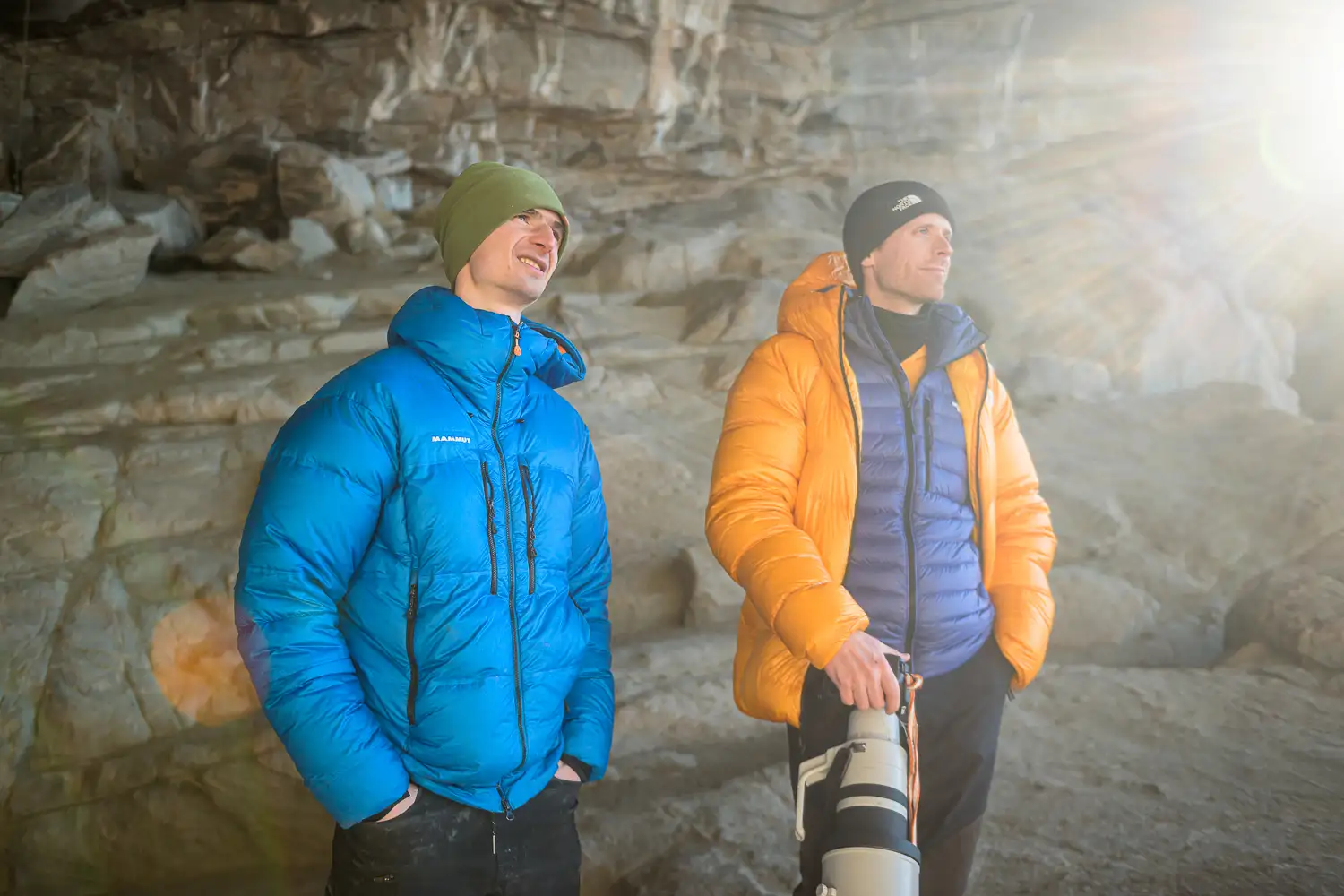
ISPO has always been the event for connecting with outdoor brands, colleagues, and friends who share the outdoors as their playground. As a content creator, the most important thing is connecting with people, and constantly showing up is the key. Some of my favourite ISPO moments are accidentally bumping into friends I haven't seen in a while.
Alex Megos, a world-class climber from Germany and a friend who makes any training session feel like just hanging out. I'm in total awe of his handstands, though I'll admit I don't have nearly enough patience to learn them myself.
I see social media as basically texting on steroids. I want to feel genuinely connected to the people who follow me, those who share an interest in photography, filmmaking or climbing, so I try to respond to every DM I get. It comes down to pure curiosity: who are these people, and why do they connect with what I do?
When I get my hands on Skittles, I eat them one colour at a time.

The National Outdoor Expo will return in 2027 with a redesigned format shaped around four defining elements: the activities people take part in, the equipment they rely on, the skills they develop and the environments they experience.
This approach places disciplines, retail, practical learning and live participation at the centre of the show, creating a more structured and relevant way to explore the outdoors.
The show will continue to be organised across eight core disciplines: hiking and walking, trail running, cycling, climbing, camping, adventure travel, water sports and bushcraft but 2027 will see a distinct area within the event, bringing together brands, retailers, content and live environments relevant to that activity.
A show organised by activity
For 2027, the event moves to a structure where visitors navigate the show by what they do outdoors. Each discipline will combine product, expertise and experience in one place. The intention is to create a more coherent environment, where visitors can spend time within their area of interest and engage with it in greater depth.
Retail placed at the centre of the experience
A key part of the new format is the integration of retail and brands within each discipline. Dedicated retail zones will sit inside each area of the show, bringing together leading outdoor retailers and brands alongside relevant content and activations. This approach allows visitors to explore equipment and apparel in context, with the opportunity to compare products, ask questions and understand how they perform in real use. The aim is to create a more useful commercial environment for both exhibitors and visitors, where product discovery is directly connected to activity.
From inspiration to application
The 2027 programme places greater emphasis on practical learning and participation. Alongside headline speakers, each discipline will include workshops, coached sessions and skill-based demonstrations led by athletes, guides and practitioners. These sessions are designed to reflect real outdoor environments, giving visitors the opportunity to build knowledge they can take beyond the show. Content will sit closer to the action. Rather than focusing solely on talks, the programme will include live activity, performance environments and opportunities to observe and take part in the disciplines themselves.
Live environments across the showfloor
Each area will feature activity-led environments designed to be used. Climbing will include performance and competition elements. Trail running will focus on endurance, technique and equipment testing. Camping and bushcraft will centre on practical skills and field use. Across the show, the balance shifts towards doing, learning and observing real participation, rather than purely listening to experience.
A more defined role within the outdoor sector
The 2027 format positions the National Outdoor Expo as a single place where the UK outdoor community comes together across multiple disciplines, while giving each one the space and depth it requires. The event remains open and accessible, but is structured with greater clarity for those already active within the outdoor space, as well as those looking to progress.
The new format will be introduced at the 2027 edition, with further announcements on retailers, partners and programme to follow in the coming months.

After OutDoor is before OutDoor: After the European Outdoor Group (EOG) and Messe München presented plans for fundamental changes to the format of the trade fair at this year's event, there are now further details on the new concept.
Since the announcement of the basic concept, the trade fair partners have intensified the dialog with brands and retailers. The new concept is being developed in close coordination with the main advisory board of OutDoor and a newly founded retailer advisory board is being developed.
The feedback so far has been overwhelmingly positive and shows the industry's strong interest in intensive cooperation. A survey conducted by the EOG among its members confirms this: for a large proportion, the future of the international trade show is important and unity in the industry is essential for the success of the event.
We have been really encouraged by the level of engagement and enthusiasm that there has been for our vision to reshape OutDoor. Crucially, this has come from all parts of the industry, and from all over Europe. Brands, retailers and other shareholders in the show have all offered positive feedback, along with constructive suggestions of how to enhance the concept even more. The consultation will continue and is a key element of finalising the format of the show, which will be ready to launch in full in October.
- Tobias Gröber, Director ISPO Group
Everyone who has contributed to this process so far has recognised that the agreed mechanism for addressing major topics such as the European outdoor industry’s international trade show, is through collaboration and unity. It has been clear so far that colleagues recognise how important OutDoor is to our sector and want it to succeed. That can only be achieved by working together and the threat of fragmentation has much wider and more serious implications. We are keeping our promise to fully engage and consult, and so far, the overall response to that from across the trade has been very positive
- Matt Gowar, EOG President
In the first phase of concept development, the trade fair partners presented concrete goals that they want to achieve with the changes at OutDoor. These include
Brands and retailers agree that OutDoor can remain a significant platform for all parts of the outdoor trade if the right changes are implemented. There is a consensus that the trade show needs to offer more return on investment, better efficiencies, a more balanced financial burden and stronger brand and retailer representation.
The feedback on the radically new design of the trade fair environment is very positive. Brands welcome the new hall format, which aims to improve the visitor experience and make participation more accessible for many exhibitors. Changes include 'freestyle' areas with size restrictions and a focus on smaller presentations showcasing innovations and product concepts as well as deeper brand stories.
All participants have approved the plans to introduction of numerous additional meeting rooms including pre-built rooms that can be booked by the hour, day or for the entire trade show. This development has been well received by retailers, who previously had no place for their teams to meet at the trade show. The new proposals allow them to rent a comfortable workspace away from the main areas of the halls. The introduction of additional meeting rooms is also part of a wider strategy to better spread the financial burden and to ensure that everyone doing legitimate business at the trade show contributes to the financial stability of the event.
Retailers have also made it clear that they want to attend an event that will help them increase sales and service levels, and not just as a shopping opportunity. Plans to expand the conference program within the trade show, with more retail-focused topics and practical ideas and solutions, have been well received. Topics of particular interest - which are also relevant to other visitors and exhibitors - include Retail technology/digitalization, social media know-how and the latest insights and ideas on the in-store experience and point of purchase.
In addition to the changes in format, a key part of the project will be the introduction of a new approach to customer relationship marketing. This will enable trade show organizers to directly address different target groups within the industry with relevant, tailored information about the trade show and their participation. This change is not just about new software or a larger database, but is a targeted attempt to create an ongoing dialog between the trade show and all its key stakeholders.
The first steps have been taken - but this is just the beginning, the development process is in full swing. The main advisory board and the newly founded retailer advisory board are intensively involved in developing the concept. Transparency is an important factor here: further details on the new concept will follow shortly.
The final concept for OutDoor 2025 will be presented in full in October - in good time for all stakeholders to plan their participation and set budgets.
Insights on the topic can also be found here:

Inventor of the hashtag #vanlife, treehouse dweller and creative jack-of-all-trades Foster Huntington refuses to be pigeonholed. Even though he has a huge following on social media, where it's usually about finding your niche. In this interview, he talks about his influences, why he is not a fan of likes and clicks and what role his inner child plays in his projects.
"Vanlife for me is usually linked to something, such as an activity I want to do. A lot of my tips center around surfing, for example," says Foster Huntington, describing his view of vanlife, a lifestyle he helped shape through his Instagram channel. The action sports influences of his teenage years calibrated his inner compass: "Music and imagery from snowboard or skate movies determined what I found cool and what I didn't." Surfing is now his favorite sport. "But snowboarding probably had the biggest influence on me. Apart from that, I like skateboarding and have my own bowl at home."
He has also turned his back on full-time van life. "I've had a home for ten years, where the tree houses are. I now travel maybe two months a year, whereas I used to be on the road all the time."
There are now many different definitions of the outdoors - not to mention vanlife, microadventures and classic outdoor sports. For Foster Huntington, outdoor primarily means surrounding yourself with nature. "I'm more of an immersive outdoor guy. For me, it's all about living directly in the forest. But I don't live super remotely. My home is an hour away from Portland and it takes me 25 minutes to get to the nearest supermarket."
He doesn't like the idea of "nature as our playground", because: "We live in nature. I like living in a more rural area because it makes me feel more connected to nature in a way that's a little less hedonistic." This goes hand in hand with understanding nature better. "For me, being outdoors also means realizing that nature has an overwhelming power and that humans are less powerful. That's what I like about it."
Someone like Foster Huntington, who likes to surround himself completely with nature and spends a lot of time outdoors, also has ideas with regard to the current sustainability debate in the outdoor sector. "There is definitely a demand for companies that make things that last forever or repair them. But we mustn't lose sight of the fact that buying new always has a greater impact than re-impregnating, repairing or simply reusing what we already have." Of course, he believes that brands that produce functional clothing definitely have their place, as they are in constant use at home, where he puts on his snowshoes and weatherproof jacket to chop wood in winter. Nevertheless, he also sees the need for change: "Consumption must change in a meaningful way. Companies need to change, produce less and produce things that last much longer."
Foster doesn't just see the challenge on the brand side: "It will also be difficult from the consumer's point of view, because we are trained to get something cheaper on Amazon or hit the Black Friday sale. The most sustainable jacket is always the one we already have." From a marketing and branding perspective, this still requires a real shift. But there are also good opportunities for brands to position themselves here.
In Huntington's view, the really important thing for brands and people in the sports world is not to lose sight of who you are: "If you're a skateboard brand, you're about skateboarding. If you're a snowboard brand, it's about that. Nowadays, brands try to have something for everyone in their program. I don't think that works. It's better to get back to your core and focus on what you're really about. Collabs are cool if you do one or two, but not if your whole business is based on them."
In his view, the same also applies to content creators or people who are just starting out in the media. "Do something that's really unique to the current situation you're in. What are you really interested in, what is your background? Use modern technology to realize your goals instead of looking at who's shouting the loudest. I would pay attention to that."
He takes a rather critical view of social media and the developments on the platforms. As well as their impact on loneliness and mental health. "I spend an incredible amount of time alone, mostly camping alone - except for my dog, which does make a difference. But being alone was the reason I started photography. I wanted to share the things I've experienced," says Foster. "I send the pictures to my parents, my brother or my friends to show them what I've just discovered. I like that about social media too, it connects us on that level." At the same time, no one is immune to falling into a rather negative cycle.
"There's always the constant comparison with others. Especially if you perceive things differently and aren't camping with a bunch of friends. This can quickly lead to loneliness or even depression."
Not getting into this cycle is easier said than done. According to Foster, it takes a lot more self-reflection and understanding of the media to prevent this, which probably doesn't hurt anyone.
When it comes to creativity, Huntington has a rather skeptical view of social media and the fact that we are globally networked. "There are no longer any local silos where special things can be created." Although he also sees the advantages of always being up to date. "But just looking at how many likes I get is not good for creativity. Great ideas never work straight away. You have to develop a perspective and keep going until it works. That's something I really struggle with. I don't have a solution for it, except to be very conscious of what you create."
For his own creative process: "Oh, my inner child would love this", instead of "others do this to get likes, so I have to do it too." In order to get in touch with his inner child better, he also provides direct tips. "That's exactly why I built the tree house. I want to wake up every day and think, awesome, I'm in a tree house. For my eight-year-old self, that would be the coolest thing ever."
He applies this approach to his other projects. "At the same time, it's important to have friends who help you assess whether it's just nonsense or really worth the time. Many of my friends helped me build the tree house, for example."
Work hard, keep going even if you don't get it right first time, don't be too perfectionist and keep creating new things, Huntington lists other tips. "Force yourself to create things. That's important for creatives."
As a creative jack-of-all-trades, Huntington particularly values the process in his own creative work: "I love research. There are thousands of books and magazines and movies in my house. I'm oldschool, I'll look at a photo book or buy a bunch of old heavy metal magazines on Ebay to look through their designs when I'm working on a project. That's also something I like about stop-motion, because it's all in the preparation and pre-production." It's also important for him to work with people towards a goal, to connect. "As soon as it degenerates into a result thing, where I just have to press a button or install something, I'm less interested in creating things." Nevertheless, he is certain that AI will drastically change many things in the coming years, such as how films are created.
Speaking of wishes for the future, does Foster Huntington have any in relation to the sports and outdoor community? "I hope that things will move back towards the community." This statement also has to do with how he himself came into contact with sports culture:
"Getting together and watching the latest Warren Miller movie in a theater in Portland once a year had a big impact on me when I was young. Today, it's all much more fragmented. That may sound nostalgic, but I hope that things will move back in the direction of emphasizing shared experiences and celebrating the moment as a community."