

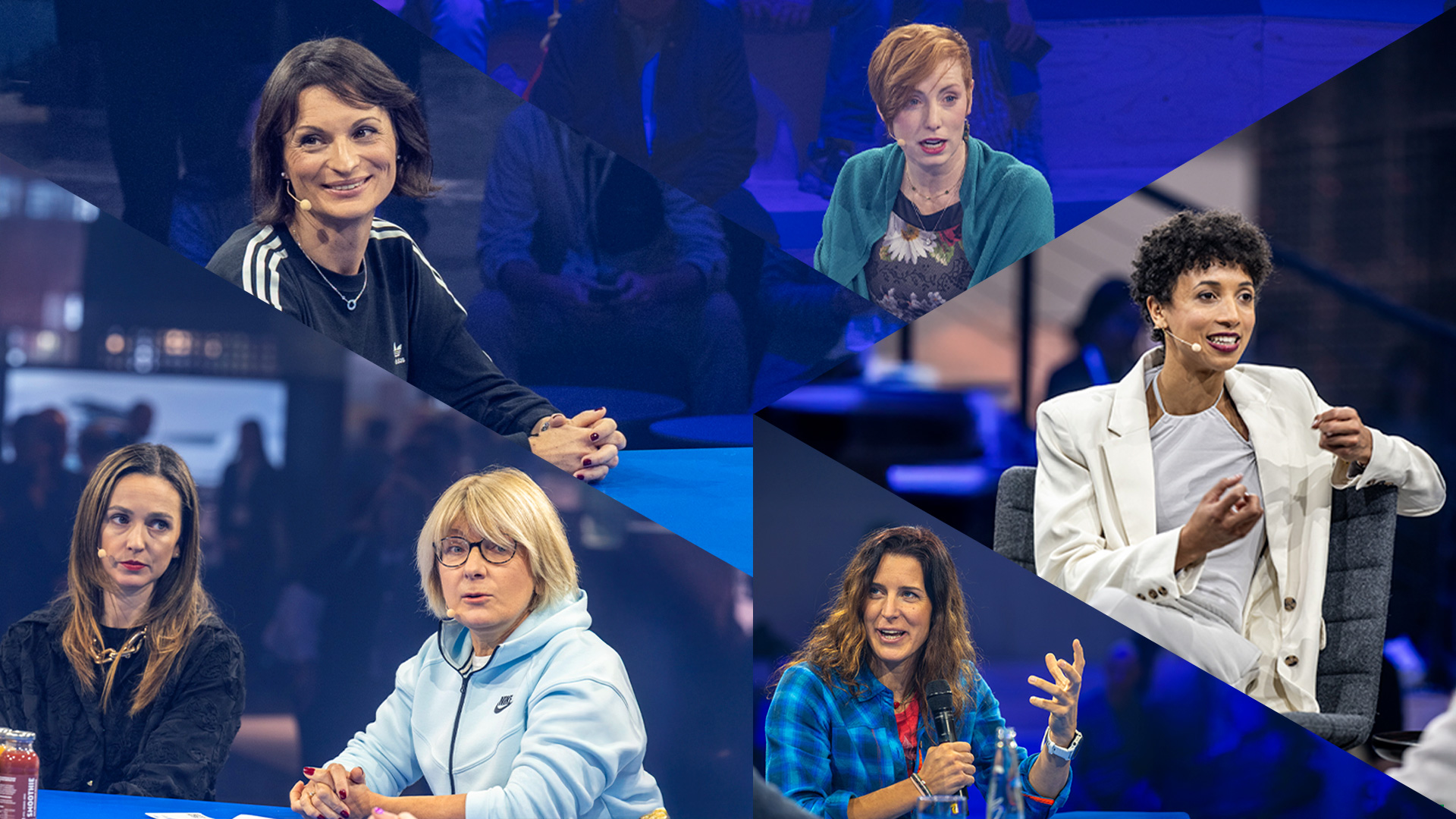
62% of women worldwide feel disadvantaged within the healthcare system. This gender health gap is also evident in sport and the outdoors — from training plans to injury prevention. International Women’s Day highlights this reality — but health equity must be a year-round priority. Achieving it requires ongoing attention, education, and systemic change.
These 11 statements from strong women make one thing clear: It’s time for change — and there’s still a long way to go.
Inspiring women at ISPO Munich at a glance
- Malaika Mihambo
- Emma (Mason) Zwiebler
- Elena Korf
- Lena Haushofer
- Marina Moguš
- Kathrin Messer
- Tamara Lunger
- Grace McNamara
- Theresa Härter
- Petra Hagel
- Jiskia Rice
More than half of women feel they receive lower-quality care in the healthcare system compared to men. Whether it’s sports injuries, heart attacks, or mental health, medical research and diagnoses are still often based on the male body as the standard. As a result, women are diagnosed later, treated less effectively, and given too little attention when it comes to prevention and therapy.
This gender health gap is also evident in the world of sports and the outdoors — from training plans and stress thresholds to injury prevention. However, the issue of health goes far beyond gender-specific differences. Health — both physical and mental — is increasingly becoming a key factor for performance, quality of life, and sustainable participation in sports.
That’s why health took center stage at ISPO Munich 2024, with talks, panels, and discussions featuring strong voices from female athletes, health experts, and industry leaders. Their perspectives make one thing clear: health is more than just a trend — and the sports and outdoor industry must take a holistic approach to this vital topic.
"And I think we would live in a happier world if everyone would do more for their personal well-being and inner peace."
Malaika Mihambo: Mental strength, responsibility and the influence of sport on society
"81% of the next generation of youth who don't move their bodies enough to maintain good health. And that's our next generation employees, it's the next generation's fans of sports(...)."
Emma (Mason) Zwiebler on the global lack of exercise
"We are facing an inactive generation who is likely to produce another even less active generation and this is something for the industry to collectively think about and consider."
How the rise in global inactivity rates is impacting the sports industry
"Inclusion, health and education and sustainability – these are the three main topics also for ISPO Munich. And with ISPO, we are reaching millions of people. And we can use this platform and all the changemakers and stakeholders on this platform to really spread the word."
"We strongly believe that sport has the power to change lives and it's not only sport that is beneficial for our health if you just think about it's also what it does to our culture to our community."
Sport, health & retail: 9 mindshifts for the future
"The topic of sleep is so essential for everyone, whether in business health management or for private individuals. Our approach is to provide health to everyone regardless of their income level because everyone is equal."
Game changer in training: neuroathletics
"I defined myself very much by performance. It always had to be faster, higher, further. And at some point there is no end to it. So there has to be a crash. That should arouse our sensitivity for this topic."
Mental strength for business success: 3 lessons from ultra trail running
"Screen time is huge. How do we convert that screen time into active screen time? whether it's walking to work, whether it's traveling, cycling to work. We have to tackle this Problem of inactivity."
The most important Sportstech trends from 8 sports industry reports
"We are equal, but not the same, men and women – and that needs to be reflected in corporate health management"
"I think a really important point is psychological safety, because that’s truly a key to healthy work environments where people can make mistakes. There’s no such thing as a culture of mistakes — there should be a learning culture. And in cultures where mistakes are not allowed, that has a very negative impact on employees' health."
Company health programs for greater productivity
"Of course we need digitalization, but we need in health care for the public easy access to our health data, easy access to health care in general that could only be facilitated by digitalization. I think especially the transferability of such data is of massive importance."
What start-ups can learn from networks and events