


As the sportswear industry evolves, ISPO Textrends continues to be a key platform for showcasing the most innovative and forward-thinking products. The ISPO Textrends Award Spring/Summer 2027 shines a spotlight on groundbreaking designs that push the boundaries of functionality, sustainability, and performance. From advanced base layers to innovative outerwear, these winners represent the best of the sports textile world. Discover how technology and sustainability are driving the next generation of sportswear.
The Spring/Summer 2027 season embraces a compelling 'Better Together' ethos, where collaboration and information sharing are paramount to driving efficiency, enhancing performance, and delivering exceptional products. This season is a transformative wave of innovations, fresh perspectives, and practical solutions as our industry gears up for the first wave of new EU legislation.
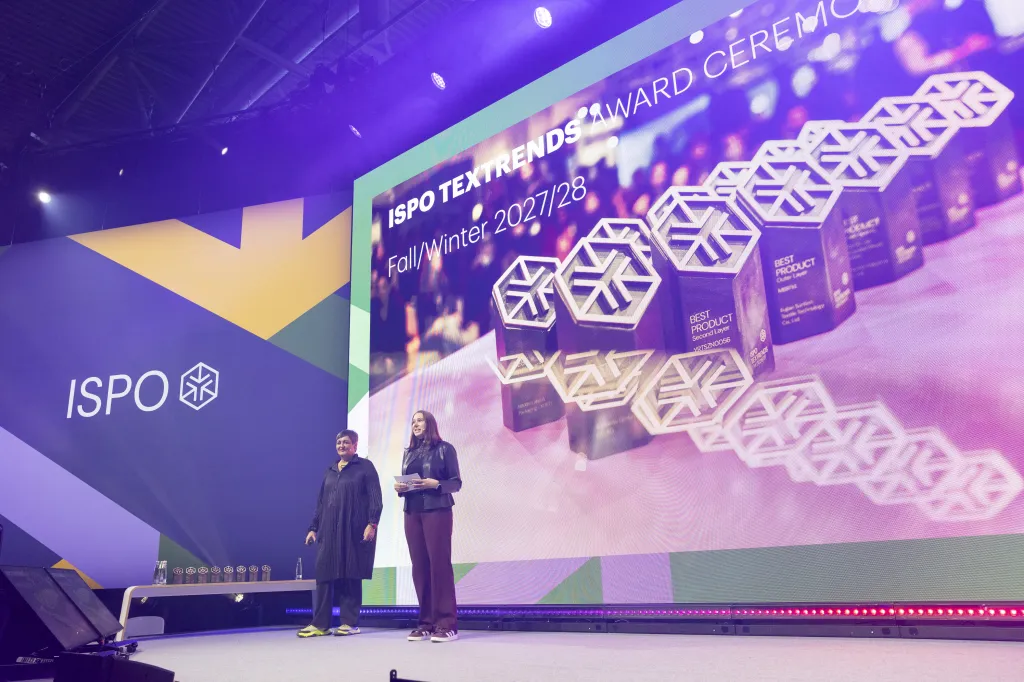
ISPO Textrends provides brands in the sports and outdoor industries with a valuable platform to discover and showcase the latest innovations and trends in materials and textiles. ISPO Textrends Award Winners receive highly sought-after recognition, boosting their global visibility and highlighting their innovative strength. Only at ISPO - from 30. NOV. – 02. DEC. in Munich.
Key principles such as transparency, traceability, and responsibility will guide us throughout the entire product life cycle. Together, we can forge a path for change, revitalizing an established industry to welcome bold ideas and innovative processes. While this may seem daunting, it is not just possible—it is essential. By uniting our efforts, sharing insights, and striving for new benchmarks in performance, material innovation, and product design, we can propel the sports and outdoors sector into a vibrant future.
Now is the pivotal moment to shift our focus. Even the smallest steps can lead to monumental strides. This Spring/Summer, we’re witnessing the rise of groundbreaking processes like zero waste, net zero emissions, multi-functionality, and interchangeable products. These innovations not only promise an efficient industry but also empower consumers to enjoy products that are smarter and more sustainable, inspiring hope for a responsible future. We must confront the pressing challenges of overproduction and overconsumption head-on.
Each of us plays a role in this, and by reforming our personal consumption habits, we can encourage a more accountable approach across the entire industry. Sustainability must continue to be at the forefront of our efforts; however, let us not forget the core of our industry: Sports and Outdoors. Performance and creativity are just as critical.
Now is the moment to collaborate, harnessing all three pillars of sustainability, performance, and inspiration. Together, we can deliver responsibly sourced, thoughtfully designed, and expertly manufactured products that will stand the test of time, motivating us to push the boundaries of what’s possible. This vision was reinforced by the ISPO Textrends jury, highlighting significant changes they observed in the latest innovations. The recurring themes of sustainability, circularity, responsibility, and lightweight design underscore the direction we must take. Let's seize this opportunity to create a lasting impact in our industry.
Prior to the meeting, ISPO Textrends releases five textile trends, aimed at sharing out outlook as to how we see the industry shaping and the need for change.
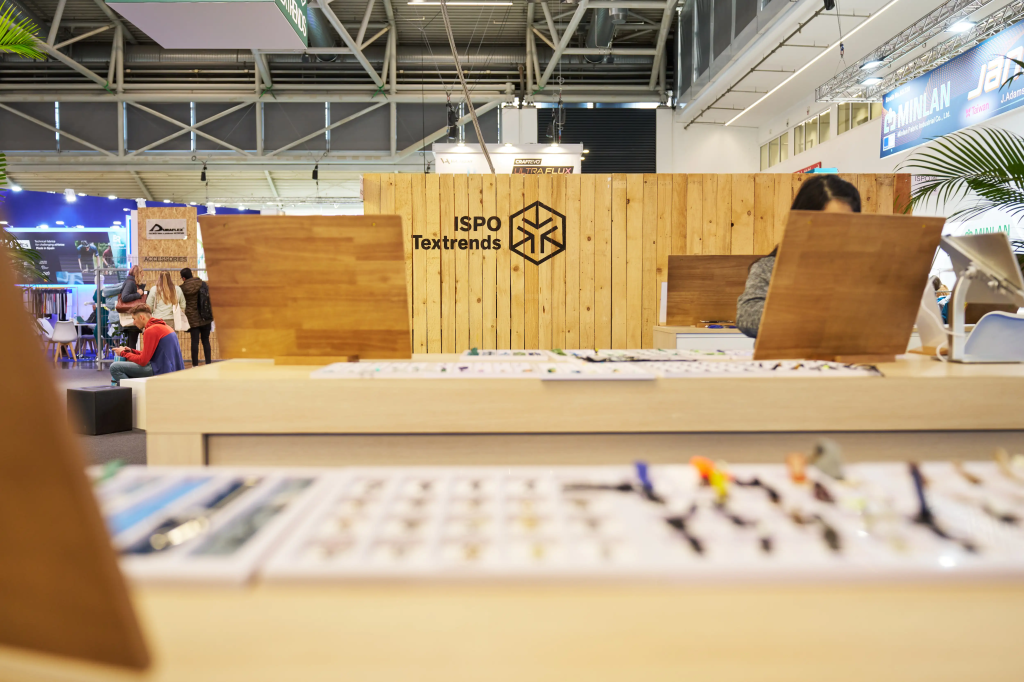
ISPO Textrends offers a valuable platform for showcasing innovative materials and textiles in the sports and outdoor industries. With over ten years of expertise, it provides companies the opportunity to gain global recognition through the ISPO Textrends Award. Selected products are professionally photographed and featured in the Trendbook, which is used by designers and product managers. Winning products are displayed at the ISPO Textrends Hub at ISPO from 30. NOV. – 02. DEC. in Munich, driving additional visibility through QR codes linking to exhibitor booths. Participants also benefit from ISPO’s PR efforts, helping to amplify their brand and attract new business opportunities.
Prepare for the upcoming season by discovering the best materials and trends in the ISPO Textrends Marketplace and Trendbook.
Got an innovative textile? Apply now for the ISPO Textrends Award and showcase your product to the world!
The ISPO Textrends Jury Meeting for Spring/Summer 2027 set the stage for what’s to come, with a strong focus on innovation, sustainability, and performance. The jury selected standout products across six categories and, beyond judging, tackled key industry issues—from new legislation to circularity, biodegradability, and synthetics—making this season’s insights more relevant than ever. The winners will be presented at ISPO Shanghai 2025 before the industry gathers for ISPO Munich 2025, taking place 30. NOV. – 02. DEC. 2025.
The ISPO Textrends jury met once again to judge and deliberate the applications submitted for Spring/Summer 2027. With much debate, shared knowledge, and new implications for the industry, the outcome was unanimous in selecting the Best Product and TOP 10 products in six different categories.
Key trends for the season were the emphasis on cool touch, UV+, wellbeing, lightweight performance, and a new level of technicity. Spring/Summer is never the most creative of seasons due to companies prioritizing the winter season, where more high level functions are required. However, this season’s meeting didn’t disappoint, as many applications stood out from the rest.
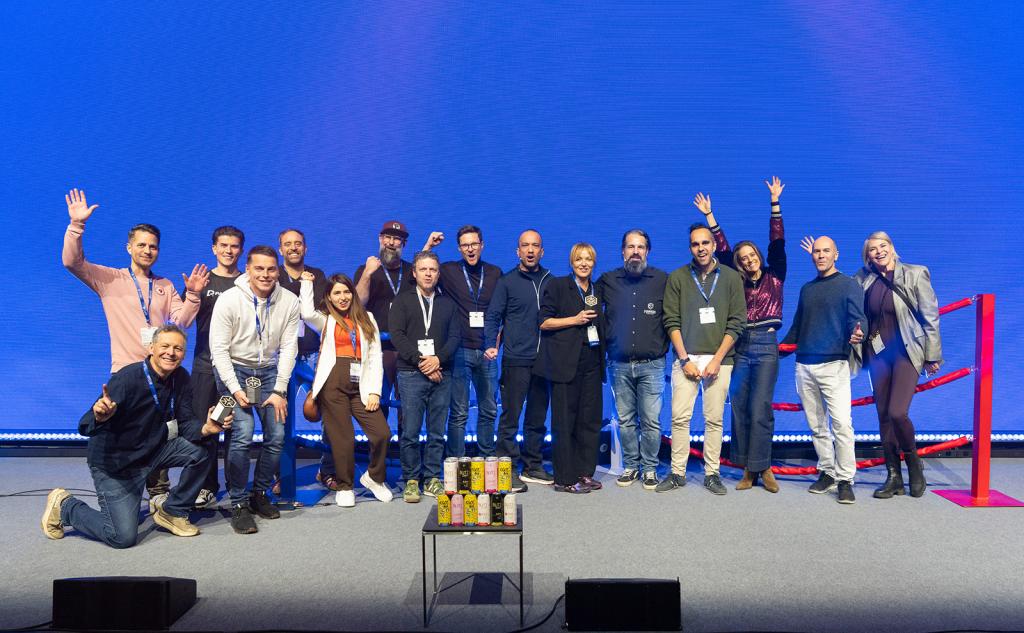
The jury meeting, as always, was a combination of professional collaboration, camaraderie, listening and learning, and rapt discussion with laughter; everyone involved loves this industry and only wants the best for it. With the products selected, the winners will be announced in May. In this session, the jury sat to discuss improving the industry and taking it to the next level.
What makes the jury unique is the level of expertise from all sectors of the textile industry. We all take an honorary role in participating in the jury meeting, and with a combined average year of experience of 200 plus! They won't mind me sharing that. We all have something to offer to guide the textile industry in improving.
More Information on the ISPO Textrends Jury
Whilst we discussed the key trends and developments during the blind judging, which was conducted on individual iPads to clarify the results, it was the first time we all decided to sit down and discuss earnestly problems occurring in the textile industry and how we could overcome them.
The initial problem of the lack of communication and understanding between the textile producers and the brand developers and designers kicked off the roundtable discussion.
"What designers today are doing is a lack of general education; often, buyers don't know the difference between polyester and polyamide. They don't know. It's always just: what's the price? And that's coming back to the synthetic fibers. Everything is about price. You can talk about natural fibers until the cows come home," said David Shah.
It was clear at this jury meeting that applications aren't shouting out sustainability claims. This could be down to sustainability running throughout their production line or due to the new legislation coming through.
"Well, now it's the green claims under the EU Green Deal," explained Kutay Saritosun, director of brand services at bluesign. "The green claims are coming. You can't say eco-friendly. So, in certain words, you won't be able to use it. A third-party organization must back up any claim you make on the garment. You have to prove it. And then there are certain things you can't use," he said.
The vision of the EU Green Deal ESPR is that by 2030, all textile products in the European market must be durable, repairable, recyclable, and produced respecting social rights and the environment alongside other requirements.
"The whole problem with sustainability is that there is too much talk and not enough worthy action. We need laws that are setting, hopefully, in a good way, because how to define by law sustainable, you know, I want to see. We must close the triangle. Industry, consumer, and regulation. Without regulation, we don't react," said Shah.
Biodegradable characteristics are becoming a popular self-explanatory term for both the industry and the consumer, but are they being interpreted correctly?
"Take care about biodegradable. Biodegradable is not a performance. We don't want these kinds of materials. We want materials to be circular," said Braz Costa. "Let's clarify. What is the importance of biodegradability? Just for two things. The first one is for technical textiles applied in agriculture or fishing. Second, to ensure that microplastics or microparticles generated by the garment will not be a problem in the ocean," he said.
Sophie Bramel was keen to illustrate that the designers love the biodegradability story. "Everyone loves it. This is a bad story. We should be focusing on responsible end-of-life."
The jury agreed that the language has changed regarding sustainability, particularly biodegradable terms.
Discussing the outcome of recent reports alleging that synthetic fibers are more sustainable than natural fibers because they use less water, less energy, fewer chemicals, and no potential arable land, the jury was unanimous in the misleading interpretation.
The reports integrate into the LCA land use for natural fibers, and fossil carbon extraction is not included in synthetic LCAs, so they're not comparable. If you want to integrate fossil fuel extraction in polyester, polyamide, and all the PUs we use, etc., then allocate them. One kilo of crude oil becomes half the medicine in the world, half the plastics, and three-quarters of the textiles. How do you allocate on each kilogram, how much is going to become your aspirin and how much is going to become your polyester running shorts? So they will never have that data.
The overall outcome of the meeting is that we as an industry should be moving towards circularity, but it isn't that easy. We are moving in the right direction, but much work still needs to be done.
"There are many moving parts for circularity, so many components, and the infrastructure is not happening yet," Kutay Saritosun of bluesign.
Another key aspect is that the textile mills applying for ISPO Textrends are adapting to the new rules and regulations more than they did eight or ten years ago. It is clear that there is a harmonious approach globally in terms of technology, greater transparency, third-party certification, and cleaner textile manufacturing.
As far as sustainability goes, how do we qualify it? How long is a piece of string? Many textile mills opt for cleaner textile processing methods, recyclability, zero waste, renewable energy, and more. There is no clear winner.
While around the table, Braz Costa asked ChatGPT what the equivalent environmental impact of a cotton T-shirt was- the answer was 1,000 text messages. It makes you think. I asked the same question: A single cotton T-shirt generates about 4-7 kg of CO₂ emissions, equivalent to driving 10-20 miles. It isn't just the textile industry that is solely responsible. All sectors and consumers, too, have to take some responsibility. This has to improve.
Taking the opportunity to ask the jury one final question, "In an ideal world, we would want the consumers to pay more so that we can create better products." The reply came quickly, 'Are you living in cloud cuckoo land?' asked David Shah, with the rest of the jury members in hoots of laughter. Here's hoping they may be wrong on that front!
Now is the time for the industry to unite and communicate clearly with consumers, many of whom regard brands viewing them as paychecks. Respect is required for the environment and human-to-human contact in engaging with consumers and giving them the confidence to buy better, more durable goods with responsible end-of-life.
The textile industry is facing an exciting change: sustainability is no longer an option, but the basis for innovation and progress; instead, the focus is on creativity and performance. For the fall/winter 26/27 season, material manufacturers are showing how bio-based raw materials, recycled and sustainable materials and technological developments are changing the textile world. It's not just about environmentally friendly processes, but also about performance, creativity and circular approaches. Those who boldly embrace these trends are actively shaping the future of the industry. Whether you are a designer, material manufacturer or decision-maker in the textile industry - find out how you can use sustainable materials and innovative technologies to develop future-proof products and take advantage of the trends.
Amongst the textile industry, the message is clear: efficiency is king in creating a clean and sustainable future. Greenwashing is a no, and for a brand to build up responsible products, it starts at the point of sourcing. ISPO Textrends is a case in point; the forum is the go-to destination for sports and outdoor brands. The Fall/Winter 26/27 offering, exhibited at ISPO, highlighted the ongoing developments that aren't always evident to the eye, but rest assured, delve in deep, and you know they are there.
Despite uncertain times, new developments are already here. It is interesting to see subtle changes in some products that are reinvented in lighter qualities or revised recipes but offer performance from responsible material manufacturing. Brands have to pick up the baton and take these to market. Playing safe is an easy option; in these times, being spirited and a little daring can reap positive rewards. The latter is evident in the latest developments, from clean and green chemistry replacing the now-banned forever chemicals to bio-based prints and membranes.
"One nice thing is that recycled polyester is not always recycled from bottles; it can also be recycled from textiles, which is better, and we need more. The first polyester fibers from carbon capture are also coming to market. I feel we've been there, and the main innovation has been slow recently. Still, now it's like now things that have been in the pipeline for four or five years are now coming to market,'" said Sophie Bramel, Textrends jury member and Technical Editor of Sports Textiles.
Inresst, winner of "Best Product" in the "Second Layer" category, uses post-consumer ocean waste. A. Sampaio has turned their textile know-how to incorporate GRS-certified post-consumer recycled polyester dyed with biological dyes.
Anta Sports Carbon Capture Dry PRO3 fabrics, a process where, as the name says, CO2 is captured from industrial sources, then reacted with a catalyst and solvent to provide polymerized chemicals used for the creation of polyester pellets, which are spun into yarn and then into fabrics was selected as a new development but the Textrends jury. Low carbon emission features at Far Eastern New Century, an innovative low-temperature melt spinning technology that reduces production temperature by 20.
Sometimes, on a sustainable level, the less obvious plays a significant role. For example, renewable energy, whether factory-based - or country-based, three cheers to Portugal and Spain for running their entire energy grids on renewable for significant amounts of time; the textile industry is behind renewable energy.
With sustainability secured as an ongoing process that will never cease, at this season's Textrends, it was clear to see that textile mills are emphasizing the spinning aspects, not just the overall appearance, putting engineering at the core of the fabrics to create next-generation lightweight products that protect and perform to the same level as their predecessors.
Winning Best Product for the Base Layer category, the Südwolle Group developed Z.hodium Nm120/2, a 100% Wool yarn made from super-fine 13.9 Micron TEC Merino wool. This yarn delivers unparalleled softness and performance, perfect for high-end activewear, outdoor apparel, and fashion. With a fabric weight of just 180 gsm, it combines lightweight comfort with exceptional durability, which can be a problem with 100 percent wool through abrasion.
Food waste is also becoming an integral part of the textile sector, especially in fibers, including banana and pineapple waste, and algae are commercially viable for bio-dyes from algae. Bio-based feedstock features in all areas, as much as the with from fossil fuels, offering new alternatives to a wide range of ingredients, including nylon, polyester, trims, and membranes.
Achieving zero waste in the manufacturing process would be a dream come true. Still, whilst we look at circularity in returning apparel to the circular economy, other material suppliers and brands are returning their cutting-room floor waste back into their supply chain. Aclima, exhibiting at ISPO, is a case in point, collecting their wool cuttings at their manufacturing factory in Estonia, shredding and spinning to give this waste a new lease of life - post-industrial waste for textile-to-textile new life.
Other natural waste ingredients feature commercially led textiles; we must move to zero waste, where circularity has become the end goal. We may have textile-to-textile (T2T) recycling in the post-industrial. Still, we need to change the goalposts and create 100 percent circularity in the supply chain and final product post-consumer so that the product can be returned in full at the end of its life.
With the drinks industry being forced to be responsible for its own waste, the textile industry has adapted once again as the availability of used plastic bottles declines. The Sheico Group has opted to recycle used car tires, creating a beautiful black recycled polyester, eliminating the need to dye, thus saving water, complete with bluesign accreditation.
"You can have a mechanical stretch without elastane, you can have warmth and airflow in a garment for added comfort without any chemicals; it's just mechanical structure, and there are some really interesting examples this season," observed Sophie Bramel.
Achieving zero waste in the manufacturing process would be a dream come true. Still, whilst we look at circularity in returning apparel to the circular economy, other material suppliers and brands are returning their cutting-room floor waste back into their supply chain. Aclima is a case in point, collecting their wool cuttings at the apparel manufacturing in Estonia, shredding and spinning to give this waste a new lease of life.
Today's design process is really about keeping it real. I mean doing things like the fabric that you can use for different purposes, and also when mono materials, where you can work more with the yarn and the spinning process, and then use fewer components. That's what's exciting, and you can also see that on the technical side, you see a lot of recycled material, especially polyamides. You know that they have come to a level where you can see high-performance fabric in recycled yarns," said Thomas Hakansson, Creative Director and Textrends jury member.
Winning Textrends' Best Product in the Accessories category, YKK's AiryString zipper eliminates the traditional zipper tapes, offering more flexibility and weight reduction. In addition, the AiryString produces less greenhouse gas emissions and uses less water than conventional tape zippers. Plus, the AiryString zipper is made from 100% recycled materials.
Durability features for the season: fabrics are keenly lighter than before and still deliver the performance and protection required, leading to a longer life of a product. Brand developers and designers now have to consider how a garment is to perform and how it is to be dismantled and returned to the circular economy responsibly before they even start sourcing and designing.
United Repair Centre (URC) led the way at ISPO with a way for a supply chain that is not only sustainable but also human-centered and future-proof. By focusing on repair as a practical and scalable solution, URC empowers brands to reduce waste, extend product lifespans, and embrace circularity.
In the end, the textile industry makes great ingredients to make excellent kit for the sports and outdoor market, so having a connection or even communication with the consumer in how they can care for their kit and keep it relevant for longer is key. It is also really appealing to the consumer, and more brands are selling pieces with repair kits or at least information on where to repair them.
Fabpatch from Finland is a case in point, exhibiting at the Sustainability Hub, where brands can work with the company and prepare self-adhesive fabrics using the same fabric as their product. The unique process of the adhesive aspect doesn't require heat - kit can be repaired on the go.
Repairs symbolize a wear-and-tear attitude. This scarred approach to products is also a legacy to the heritage of the product combined with the wearer's adventures where it has been and what the wearer has achieved - the life story of a product worn with pride.
Bio-based synthetics, polyester, nylon, and spandex all feature - Lycra's launch of bio-spandex through to bio-membranes, with Bosideng achieving 100 percent bio-membrane technology with a high level of performance.
The excellently presented Material Lab, part of the Sustainability Hub at ISPO Munich, highlighted the bio alternatives that could define our future. We are already scaled up to some extent in bio-based synthetics, and algae are becoming an increasingly sought-after ingredient for auxiliaries in the printing process and natural dyes, as seen with Algaeing. This new company has also scaled up to a commercial level.
One problem that we as a collective industry have to embrace is the new developments and renewable alternatives that are available, but calling up from the lab to the commercial level is costly, something that we all have to take on board. If we are to commercialize a fraction of these developments, the investment must come through, not just in initial start-ups but also in enabling them to become mainstream. Only then can we envisage an industrial approach to this. The appeal and development are there, but plenty of brands are shaded by the premium that goes with new developments. With that in mind, they must work on flexibility in their margins to enable this area to grow.
Digital content is highlighted throughout the textile industry, but you won't see the primary influence on the fabric. Behind the scenes, the mills are developing performance fabrics with sustainable credentials, and today's efficient manufacturing process is one of precise automation and digitalization. This, in turn, leads the way to higher efficiency.
One area of digitalization you see is through wearable technology, with Clim8 exhibiting at ISPO, highlighting the connectivity wearable technology can bring to apparel in the form of an app-controlled algorithm-driven heating technology.
With digitalization a crucial aspect of the supply chain, not just in creating more efficiency and reduced waste and controlled inventory, the emerging Digital Product Passport (DPP) coming into effect in 2027 encourages transparency to products, including the original ingredients and manufacturing.
Where are we going to put all this required data? The solution is through QR codes, and Textrends award-winning Maxim Label and Packaging are geared up to work with brands in relaying this information, including QR code labels designed with functionality in mind, delivering various scan results with one QR code that will provide an abundance of information to customs agents including country of origin or PO details and can also be scanned by consumers to get the relevant information to them, thus avoiding information overload.
With innovation, sustainability, and creativity all delivering the best material sourcing options, the human-to-human connectivity, not just in business or the final activity but through a collective approach, was evident at ISPO Textrends. The tactility the fabrics deliver, and this season, the touch was better than ever, as the global textile collective weaved through the trend tables at the Textrends forum highlighting all the products awarded by the international jury of textile experts, confirmed the connectivity we need with each other and through touch of this season’s fantastic textile developments.
Innovation isn’t just a buzzword—it’s a blueprint for the future. As we look to Fall/Winter 26/27, ISPO’s megatrends—CLARITY, UNLOCK, and PRIMAL—are redefining the rules of the game. These aren’t just trends; they’re the driving force behind smarter sourcing, cutting-edge digitalization, and a return to the essentials of human connection.
Get ready to dive into the ideas that will drive Fall/Winter 26/27. It’s time to explore, evolve, and inspire. The future starts here.
When it comes down to defining the key directions that will influence our sourcing decisions regarding ingredients, fabrics, finishes, and trims, the first port of call is to determine the megatrends. So, what are these megatrends? What makes them unique? They are moods and indicators, embracing cross-industries and consumer anticipation on a global scale. They evolve each season, twisting and turning, blossoming into a new direction, and shape-shifting into each other's path. There is a morphing of ideas at all levels of our multi-faceted industry. From email to manufacturing, textile production to brand development.
We are introducing the three megatrends that are the foundation of our business and others. There is no cap on the information that these trends drive. They are here as a guideline of how we all connect at different levels of the supply chain to the final consumer. Once again, we are all in it together, sharing information and collaboration is key for a smooth and successful future. Start your sourcing inspiration for the Fall/Winter 26/27 season as we mean to go on with Mega Trend 1, CLARITY.