

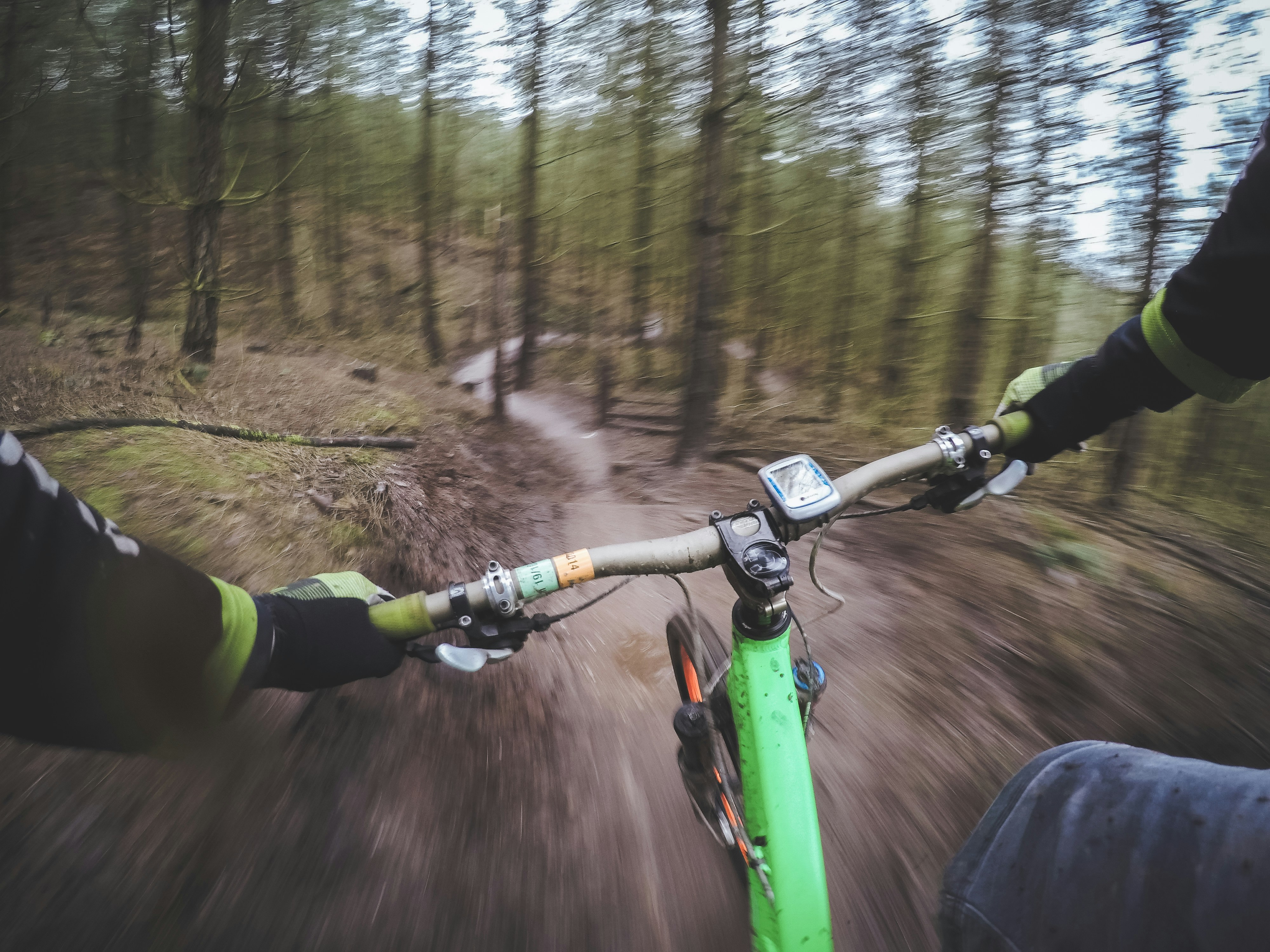
Smartphone on the handlebar, smartwatch on the wrist – digital tools are now part of every ride. But what happens when they break? Warranty provider Wertgarantie offers a sustainable approach to device protection – focused on repair over replacement.
Whether it’s gravel, road, or mountain biking – what once was a minimalist sport has become a high-tech experience. And it’s not just about the bikes themselves. Today’s cyclists carry more than just a helmet and gloves: GPS units, action cams, smartwatches, and smartphones have become essential tools – for navigation, performance tracking, or documenting the ride.
But what if your tech fails – or worse, gets damaged mid-ride?
It’s a valid concern. Especially when things get rough on the trail, it becomes clear that many of these devices aren’t built for the rigors of real-world outdoor use – let alone the pounding of downhill trails, gravel descents, or a crash at high speed on the road.
“Plenty of mountain bikers mount their phones directly to the handlebars – but the brackets used often aren’t designed for aggressive off-road riding,” says Aaron Weyrauch, CEO of Weyrauch Repair, a certified repair partner of Wertgarantie. Even among dedicated recreational riders, equipment isn’t always aligned with actual demands out on the trail.
“Dedicated bike nav systems are becoming rare – most riders rely on their phones with apps like Komoot,” Weyrauch explains. “The problem is that phones often come loose, hit the ground hard – and are immediately damaged.” On rough terrain or uneven surfaces, one sharp jolt or sudden stop is sometimes all it takes.
Damage is also common in road cycling: “Road cyclists typically carry their phones in their jersey pockets – but in the event of a fall or even a sharp evasive maneuver, the phone can slip out and go flying,” says Weyrauch. “Smartwatches are frequent casualties too.” Today’s multisport watches are packed with sensors and open interfaces, but they’re not always up to the task when it comes to impact, moisture, or crashes.
When a tech device gets damaged, having a reliable insurance partner on your side makes a big difference. Wertgarantie takes a stand against throwaway culture with its “repair over replace” policy – and covers repair costs when things go wrong. “Whenever possible and economically viable, repairs are always prioritized. If a repair isn’t feasible, a replacement device of equal type and quality will be provided. And if neither option applies, the customer receives a predefined reimbursement for a new purchase,” explains Jenifer Rahmani, Head of Customer Service at Wertgarantie.
In Germany and Austria alone, more than 2,300 workshops are listed in the brand’s free online repair locator. With a 98% match rate, finding a nearby service partner is straightforward and fast.
Repair costs typically cover diagnostics, spare parts, and actual repair time. For common issues – such as cracked displays or worn-out batteries – fixed-rate pricing applies. More complex damage is calculated individually based on labor and materials needed.
The entire process is streamlined and digital: “Everything begins with a digital repair request – submitted by the retailer, insurer, or directly by the customer,” says Aaron Weyrauch from Weyrauch Repair. “The device is then evaluated in one of our certified workshops. Depending on the diagnosis, we proceed with repair, replacement, or report back to the insurer. Transparency, fast turnaround, and real-time status updates are standard for us.”
Additional support comes via the TechManager app from Wertgarantie. Users can report damage or theft in just a few clicks, track the repair status, and rely on a fully digital, transparent workflow. “With the TechManager, users always have full visibility over their devices and insurance coverage,” says Sönke Kopp, Head of Mobile App Solutions at Wertgarantie.
A smart protection solution for digital gear – and for a worry-free biking experience.
Repairing a product doesn’t just extend its lifespan – it also conserves resources, reduces electronic waste, and is often more affordable than buying a replacement. Especially when it comes to high-value devices, repair is not only a financially sound option but also the more sustainable choice.
On top of that, personal settings, stored data, and individual usage habits remain intact – a benefit that a replacement device rarely offers.
By focusing on the real needs of today’s athletes and outdoor users, Wertgarantie delivers a repair-first approach that is both practical and future-ready. Because true sustainability doesn’t start with recycling – it starts with repair.

Skiing used to be a must for many families, and winter vacations were always a shared highlight. But in view of climate change and rising costs, this is no longer a matter of course. That's why mountain biking could now take its place in summer. ISPO.com author Claudia Klingelhöfer gives seven reasons why mountain biking is the ideal family sport and why bike parks such as those in Serfaus Fiss Ladis offer the perfect playground for this.
A pump track for practising cornering and bike handling techniques, small jumps to motivate children, trails with gentle curves, drops at different heights and challenging jumps with gaps and tables for experienced riders - the bike park in Serfaus Fiss Ladis offers everything a mountain biker's heart desires. The area is like a playground for mountain bikers and those who want to become one. Which brings us to point one:

Gravel bikes are the perfect bikes for bikepacking and bike touring. But for the tour to be really fun, the bike needs to be properly packed. We give you 5 tips that will not only spare your nerves when bikepacking, but also your back. And with our packing list, you're guaranteed not to forget anything.
As little as possible, as much as necessary. That's the credo of bikepacking. Always ask yourself the question: What can I leave out if necessary? What equipment saves space and weight?
The question: "What do I need to take with me?" depends crucially on the length of the trip. It's more fun to cycle through the countryside without a tent, cooking equipment and all your provisions. However, this also noticeably restricts your flexibility when choosing the route and its length. A mini tent, in which the bike also becomes the tent poles, can help, such as the "Bikecamper" from Topeak. This not only saves up to 1.5 kilograms of luggage, but also effectively protects your bike from theft at night.
The position of the luggage on the bike has a direct effect on the ride quality. For example, many gravel bikes have eyelets or threads for a rear rack. However, smaller bags distributed around the bike maintain the weight distribution that is important for off-road riding and take the strain off the frame.
Manufacturers such as ISPO Award winner Ortlieb also offer compact bags for saddle, frame, handlebars and fork with an amazingly small pack size.
With gravel bikes, there are occasional carrying passages where the bike weight rests on a continuous soft pad. The important thing here is to push everything heavy deep into the bag. This way you avoid strong pendulum and rocking movements.
The water bottle on the frame is a classic. But there are much better solutions: Firstly, bottles on the frame prevent the bike from being easily shouldered, and secondly, special bottles with protected drinking valves are required off-road. Small hydration packs or "hydration vests", as worn by trail runners, are better than bottles on the frame when bikepacking.
A 1.5-liter hydration bladder with a tube on the back, two soft flasks and an abundance of small and easily accessible pockets around the upper body keep drinks, bars, tools or electronics close to the body. They are less likely to get shaken up, are difficult to freeze in winter and are always easy to reach. Another plus point: the bike bags can remain closed in the "open field". The contents stay dry and clean.
As tempting as it is to simply stow your heaviest luggage in a rucksack on your back, it is impractical on long bike rides. This is because heavier backpacks change your posture on the bike to such an extent that muscular problems quickly occur, even if the backpack feels good.
Heavy backpacks can also restrict your mobility. For fast sections, they also hinder aerodynamics as they make it impossible to adopt a strongly bent position. And: the back hardly gets any ventilation when riding with a backpack.
Ultralight backpacks without a carrying frame can be a good compromise here.
There is no single method for loading a gravel bike. However, there are a few basic rules to prevent nasty surprises on the road:
The more variable individual items are, the less you need to take with you. Arm and leg warmers plus a rain jacket with detachable sleeves turn a jersey set into a universal kit.
You should think about the following equipment when bikepacking:
Useful gadgets:

"What is normal?" Annelina, better known as MTB downhill influencer "Freeride Anne", has dealt with this more than extensively. The trans woman's dramatic story is characterized by suffering, aggression and depression - including a suicide attempt. However, her story also shows how valuable a strong community is and how sport can be a compass for life.
"When hikers see us in the bike park, some ask us why you're doing something so extreme and not something normal? But who says what is normal? Society? And which part is that then?" asks Annelina Knauf, one of the few self-confessed transgender mountain bikers, who jumps over gaps on her YT Capra mountain bike, "falls down" meter-high drops and rides the roughest enduro trails. Even as a small child, she knew that she didn't want to be a man. But she plays her role as a boy so well over the years that even her closest family don't realize how she actually thinks and feels. "You deserve an Oscar," says her father after she comes out.
But suppressing her feelings and not really knowing how to fix this "wrong feeling" is emotionally draining. Annelina, then still André, becomes quarrelsome and aggressive - even towards those close to her. She tries to deal with everything herself. Mountain biking distracts her, especially the adrenaline of the downhill. It becomes her medicine to get a grip on her feelings and not burden those around her even more. "In the end, I didn't even look at the tough trails and key sections, I just rode them as fast and aggressively as I could."
The harsh consequences of this behavior followed in August 2022. She crashes heavily on the Bergstadl trail in the Austrian bike park Saalbach-Hinterglemm. Diagnosis: complicated acromioclavicular joint fracture. The result: a ten-week break from adrenaline and her usual downhill medicine. "When I had no choice but to be alone with myself, it was the first time I really felt how bad I was actually feeling."
The injury break leads to the realization that she no longer wants to live in the wrong body. In November 2022, Annelina goes partying in Leipzig's left-liberal club scene - the tough mountain biker's first public appearance as a woman. She feels comfortable in her outfit - finally.
However, her first party night as a woman ends with a disastrous action on the way home: "I was happier than I'd ever been. So happy that I wanted to die," describes Anne. She drives her car at full throttle into a highway bridge pillar. The suicide attempt fails - and triggers a rethink. Anne decides that she wants to be happy in the long term and live as a woman. This requires professional help: among 20 psychiatric clinics, she finally finds a facility in Zwickau that is designed to help trans people on their journey.
On the way to a new identity, it becomes clear how difficult it is for many people to deal with transgender people. Questions arise: Is it a mental disorder? Is it something like an identity birth defect that can be permanently corrected? There are also social issues behind this and therefore even a legal problem: is it a medical condition? Who pays for gender reassignment? The topic involves many bureaucratic hurdles ...
The young sportswoman meticulously plans her admission to the psychiatric ward. She sends over 20 multi-page letters to family and friends in which she describes her motives and plans in detail and which are supposed to arrive when her therapy begins. But Deutsche Post thwarts her plans and delivers the letters earlier than planned. "I thought the Amazon courier was ringing and suddenly my grandpa was at the door and just said lovingly: 'Come with me - grandma has made lunch!" Anne then came out within the immediate family circle before starting therapy in Zwickau.
Another big step follows after her therapy: Freeride André becomes Freeride Anne. This is what the mountain bike influencer now calls herself on Instagram, where she wants to entertain, inspire and, above all, encourage people to live life to the full after her experiences. Following the example of New Zealand downhill World Cup rider Kate Weatherly, she records a reel - it's her coming out.
How athletes are using their platforms to advance LGBTQ+ rights and inclusion in sport
"After that, I turned off my phone and didn't look at it again for a while." Anne lost an incredible 80 percent of her followers within a very short space of time. But this also showed the "cool side of the mountain bike community", says Anne. She receives many comments, including well-known people from the mountain bike scene. Downhill World Cup rider Jasper Jauch is impressed and supportive: "So strong, you're going through it." Community icon and Girls Shred founder Bine Herzog invites Anne directly to the Girls Shred event in Serfaus-Fiss-Ladis. The motto: community over competition. "It doesn't matter what you can do or who you are. It's all about having a good time together," says Anne about the support from the mountain bike community. It's obvious how much it means to her.
"Everyone should be allowed to ride a bike, no matter how, no matter what skills, no matter what bike, no matter what clothes, no matter what gender. None of that is important." Bine Herzog, Founder Girls-Shred
Find out more about Girls-Shred on Instagram
It is important to Anne to encourage people to stand up for themselves: "Many people are afraid to come out. I don't see myself as the first transgender mountain biker in Germany. Unfortunately, I'm just one of the few who have managed to say: 'Hey guys, this is me. This is how it is now'." Even if she wouldn't call herself that - with many new followers, she has become a symbol for the LGTBQ+ community.
"Anne is such an impressive mountain biker. She symbolizes that we need much more inclusivity in sport. Everyone is welcome here - regardless of their background," says Marie-Therese Riml from Bike Republic Sölden, who selected Anne as an ambassador and model for 2024. "This is exactly what we want to promote with the new campaign in Sölden. Anne is a perfect fit, and we hope so much for her that she gets enough support for her difficult operations."
The best bike parks in the Alps
Despite matching outfits, make-up, hairstyle and her feminine, trained voice, Anne's above-average height and facial features make her look masculine - for now. This is set to change over the next two years. Anne already has the necessary certificate (see info box above) and has also started the accompanying hormone therapy. But the real challenges still lie ahead: The so-called GAO (gender reassignment) and FFS (facial feminization surgery) will cost well over EUR 50,000.
The risk of injury to the face and head will remain high due to reconstruction and correction of the bones (FFS) around the forehead, jaw and chin. There are also many other challenges to overcome. It's all about testosterone, muscle percentage and psyche. Transgender athletes in particular run the risk of suffering excessively from testosterone deficiency during hormone therapy. This also affects athletic performance: altered bone density, muscle fiber changes and permanently reduced strength and endurance are just some of the risks.
Like most influencers in sport, Anne cannot make a living from this alone and works full-time for a very understanding and enlightened employer in the chemical industry. Nevertheless, the costs are overwhelming, considering that very large sums have already gone towards co-payments, fees and private treatments to date. This is why she has launched a Go Fund Me campaign. It is not easy for her to ask for public support. But anyone who knows Anne knows that her example will give the sport of mountain biking a new and exciting angle and make it more visible.
And so the young athlete's story touches on another topic that is not easy to deal with, especially in professional sport. She is keen to compete in Downhill Cup races and says herself that there are anatomical and biological differences between men and women and that sport is currently reaching its limits in the context of transgender people. For Anne herself, it is clear that there must be distinctions between men and women, especially in professional sport and competitions. The discussion surrounding downhill World Cup rider Kate Weatherly has already shown this.
LGBTQ+ in sport: The small difference lives on
On the one hand, biologically speaking, male bodies can have clear advantages due to more muscle mass and testosterone. However, transgender women in particular run the risk of suffering from additional injury risks due to testosterone deficiency, surgery and psychological stress when undergoing hormone therapy. There is a lot of uncertainty and the issue becomes political as soon as regulations on fairness in professional sport are juxtaposed with inclusion in sport.
The world governing body UCI (Union Cycliste Internationale) has adapted the applicable rules for international competitions several times and refers to the current state of research. Since July 2023, the UCI rules have excluded transgender athletes who have completed their transition after (male) puberty from participating in women's competitions on the international UCI calendar. They are allowed to take part in men's competitions.
"As a transgender athlete, you have to find your own stance on this, help shape the rules and, if necessary, back down if you want to be authentic and be taken seriously," says Anne. She also had to acquire such insights and opinions over the past twelve turbulent months. "I've learned a lot. About myself, society and sport. My horizons have broadened." She owes it all to mountain biking and, thanks to the MTB community, feels strong enough to overcome the challenges ahead of her. "Maybe there's someone else who feels this way," she writes on Instagram and wants to encourage others. Her Instagram channel and even her WhatsApp profile are a call to action: "Make it happen girl. Shock everyone."

At the 2023 World Cycling Championships in Scotland, the elite of the downhill pros will also gather. At this super event in Fort William, Nevis Range, it's not just the mountain bike stars who have adrenaline in their blood. The audience also quickly gets heart racing during the gnarly descents. This season in particular, there are some spectacular young guns who are shaking up the field of riders. We introduce you to four riders you should definitely keep on your radar.
From the third to the fifth of August, the fastest downhillers will be on the road in the Scottish Highlands. Uncompromising, focused and with a healthy dose of risk-taking, they will be at the start. We present Jackson Goldstone, Jordan Williams, Andreas Kolb and Vali Höll, four of the most inspiring young downhill pros.
The small wheel rider developed into one of the biggest promises in mountain biking. Goldstone put the first exclamation mark on his career when he won the Red Bull Hardline, probably the toughest official downhill race in the professional circuit, as a debutant in 2022. The course in Wales includes 30-meter jumps, drops around 14 meters high and challenging sections in the steepest, rockiest terrain. Only a few downhill pros compete here.
He starts into the World Cup as a freshly crowned World Cup winner. The Canadian won the last race before the World Cup in Val di Sole and is the absolute top favorite for the World Cup title. "In his first World Cup win in Val di Sole, he has already shown with his victory that his lack of experience can be made up for by incredible skills and fun biking," says Jasper Jauch about the 19-year-old. Jauch is a MTB pro, Youtuber and as a former World Cup rider still has very good insights into the racing scene. Further, the German recognizes in "the rough diamond, a certain freshness in racing procedures and no heady approach to chassis tuning. In addition, Jackson has a fun and experienced team in the background."
"Vali Höll simply has an incredible talent," says Jauch. "She grew up with mountain biking, had great people and experienced biker*s around her at all times." She has excellent "reaction, balance and line choice," the Youtuber says approvingly. So she is also the big favorite at the world championships for the title, which she already won last year.
Since her start in the elite class two years ago, she has also had to learn how to deal with setbacks. Injuries and crashes at her home race and at her first elite world championships, as well as the high pressure of expectations, demanded everything from the exceptional athlete. The advantage: She should be able to handle the pressure that weighs on a defending champion in Scotland.