

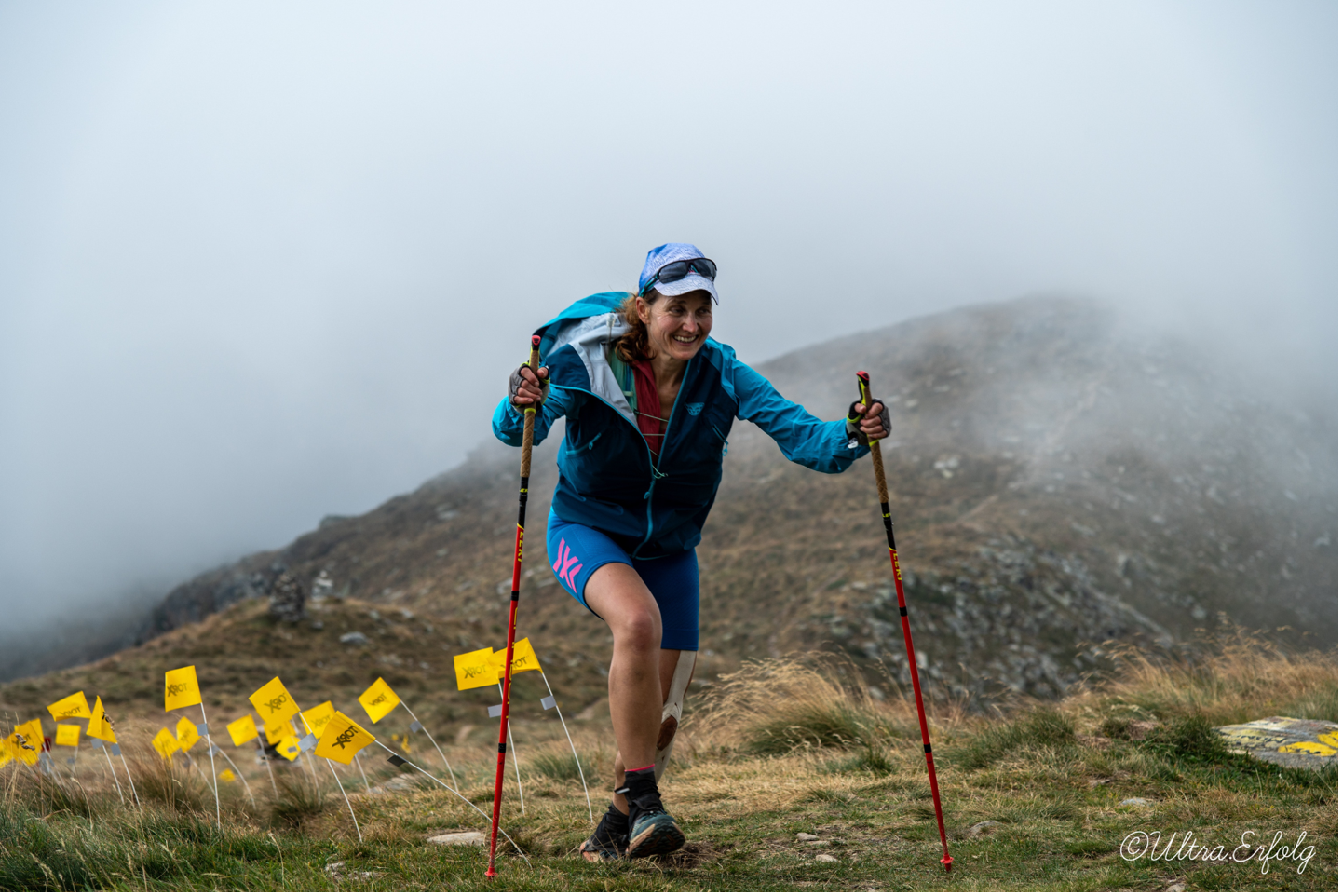
How important is resilience? Whether in running or in life: Resilience is like a multiplication factor. If it has a value of zero, you always end up with zero. Resilience plays a particularly important role in unexpected turns and initially unwanted changes. It often determines victory or defeat and in extreme situations sometimes even life and death, both on the mountain and in business.
What you can learn from ultrarunning to build resilience in the workplace:
How discipline is fun
How to train discipline
Discipline and self-confidence
Actionable steps and strategies for individuals to build resilience in the workplace.
Resilience is a key factor in overcoming crises in a way that conserves resources - both in the Ultratrail and in companies. So the interesting question is: can you train resilience? I can do this very well when running an ultra trail. A marathon or the necessary stamina for other sports is certainly enough. Regardless of your sporting discipline, you need the necessary discipline to achieve challenging goals and this can easily be trained in everyday working life. Wait a minute, I was just talking about resilience and now I'm talking about discipline. Discipline is like FC Bayern or corona rules: There are always fans and opponents. I didn't use to be a fan of discipline. Until I realized that eating a bar of chocolate can be just as disciplined as eating a salad.
Below you will find out why discipline is so important for resilience, how discipline is fun, how it can be practiced in everyday life (without spending extra time), how discipline and self-confidence are connected and what everyone can do to get the best out of unwanted, unplanned situations for themselves and those around them.
How to train your resilience
By dividing the big goal, in my case a finish at the Tor des Géants, into many small stages, which you can achieve and implement with discipline and your method of time management, even in a busy and packed working day, you will gradually gain self-confidence and at the same time get closer to your goal. You don't run an ultra trail over 100, 200 or 300 kilometers, but from aid station to aid station, from checkpoint to checkpoint, and in difficult moments only the next step counts. And then another and another and another. The more challenging the situation, the smaller your sub-goals need to be so that they remain achievable.
Bonus point: master unexpected changes with discipline, resilience and self-confidence.
Whenever things go differently than desired or planned, this requires us to rethink and adapt to the new conditions. Social scientists and change managers explain the consistent reaction pattern to such changes using the well-known Kübler-Ross model, among other things. The model originally comes from the phases of coping with grief. The death of a loved one is certainly an extreme example of an unwanted change. Social scientists have also found comparable reaction patterns in other adjustment processes. I use this model to show you a way, based on my experience on the mountain and in business, that will enable you to move from the first to the last phase in a way that conserves resources:
How my resilience helped me overcome challenges in ultratrailrunning (and how you can adapt this to your workplace):
- Phase 1: Shock and rejection
When the radiologist diagnosed a muscle tear with 7 cm retraction (distance to the insertion) by chance in October 2020, around seven weeks after an accident while water skiing that was declared a muscle fiber tear, I didn't want to admit it at first. However, I didn't have much time because I had to decide very quickly whether I wanted to have the operation. Normally, a muscle tear like this is operated on within a maximum of two days. Fortunately, I already had my Ultra-SAFE concept back then, which I gave a TEDX lecture about in 2018.
- Phase 2: Anger and blame
I could have blamed the orthopedic surgeon for the wrong diagnosis. Then four weeks would have passed, but not seven. As I've learned, "guilt" always refers to the past and that can't be changed anyway. Responsibility is much better. The doctor took responsibility by checking the new diagnosis and recommending me and the priority of this injury to a very good and experienced surgeon. And of course, I also took responsibility. I could have gone to the doctor or gone home immediately after the painful muscle cramp when I took my first step on the water ski slope. However, I was not aware of the option of tearing a muscle in my thigh, even though I am a qualified physiotherapist. So I didn't need to be angry with myself. - Phase 3: Negotiating
I sought three opinions from experts and received three answers: I should definitely have surgery immediately, versus the conviction that it was far too late for surgery. At this point, I was able to walk on flat terrain. I was unable to run or overcome differences in altitude. Dr. Björn Drews, now head of surgery at the Sankt Vinzenz Hospital in Pfronten, gave me an honest 50-50 assessment. It was similar to a negotiation, albeit my decision. "What would you advise your wife to do?" I asked him. "I would tell her to put her sporting ambitions on hold and not have surgery," he replied, adding, "but I can't advise you to do that." - Phase 4: Depression
Admittedly, I was not aware of the extent of the follow-up treatment, such as the relief with a maximum of 100 degrees of hip flexion (i.e. no normal sitting position, neither when eating nor on the restroom) for over 6 weeks and the very long way back. So I was happy with my decision to have the operation and mainly saw the chance to be able to walk up and down mountains again. - Phase 5: Acceptance
In this case, neither my mind nor my subconscious put up much resistance. Because it was clear to me that time, as in the Ultratrail race, would determine success or failure. That the demolition, like the sudden onset of winter at the beginning of September at the Tor des Géants, was unchangeable. When I was struggling with a swollen and very painful knee halfway through this race in 2019, it was a different story. Looking back, I wasted a lot of time and energy as a result. In the end, I managed to reach the finish line in 147 hours (non-stop) with a total of four and a half hours' sleep. However, it wasn't enough to qualify for the Tor des Glaciers, i.e. to finish in under 130 hours. When I worked my way back to ultratrail level for two years after my muscle tear - as a non-professional with various other commitments, three steps forward and two steps back, sometimes the other way around - the above-mentioned discipline and the resilience I had trained helped me significantly.
In 2023, I signed up for the TOR again with the question: How can I manage to be seventeen hours faster? With so little sleep from 2019 and with poorer muscular conditions than after optimal training with two healthy legs?
The answer: I have to manage to get to phase 4 (acceptance) when unexpected events occur without losing time or energy, not let myself be thrown off course, reorient myself briefly if necessary and accept everything that I cannot change as it is in order to make the best of it. A thunderstorm on the pass, hail in an open field, trails that turned into torrents, constant rain with a landslide, a broken pole and then the cold. I had the opportunity to practise. 127 hours 32 minutes and 35 seconds - to the finish.