

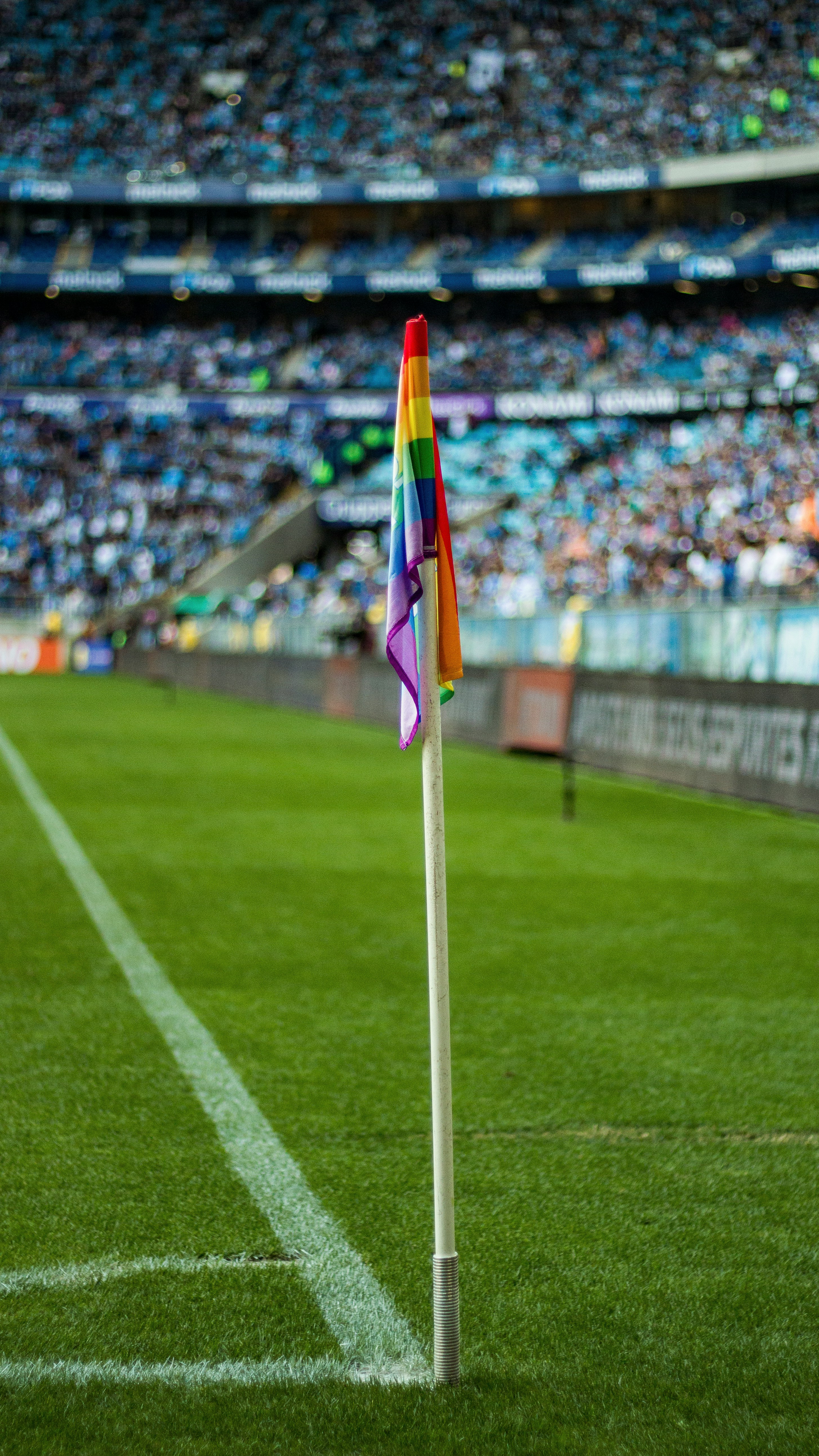
Attitude is not hype - it is the reason why brands exist at all. Paralympic icon Verena Bentele puts it in a nutshell: "Everyone must have the chance to move." Sport stands for access, joy and empowerment - far beyond pure performance. And as leadership mastermind Simon Sinek says: "People don't buy what you do, they buy why you do it."
The Brands on Mars agency's Haltungskompass 2025 shows what really motivates female consumers today: purpose, diversity, equality and social cohesion. Companies such as Nivea, Globetrotter, Patagonia and Nike successfully exemplify this. For decision-makers in the sports industry, this means that attitude must be visible - in product development, brand strategy and communication.
How brands can make their "Why" visible and set up their retail game for the future will be shown at ISPO 2025 from 30 NOV. - 02. DEZ. in Munich. Be there.
Directly to the contents:
- Haltungskompass 2025
- Advertising and communication is important
- Brand identity is important: attitude is not hype
- Companies have a license to trade
- The future: No interference is not an option
- Diversity counts - skincare brand leads the way
- Nivea: Best practice from the industry
- Campaigns with meaningful storytelling
- Avoid stereotypes with market research
- From environmental protection to brand identity: Patagonia as a pioneer
- Focus on climate protection & animal welfare: Globetrotter's attitude is convincing
- Nike: Taking a stand with the courage to be controversial
- 5 lessons learned for the sports industry
Haltungskompass 2025
The Haltungskompass 2025, developed by the agency Brands on Mars and the market research institute Puls, surveyed 2,000 Germans about 200 brands - giving them valuable insights into consumers' expectations of brands and companies.
For example, according to the Haltungskompass 2025, respondents associate "social diversity" (48%), "social cohesion" (44%) and "gender equality" (44%) most strongly with brands across all sectors. The topic of environmental protection only comes in at 33%, and measures to combat climate change at "only" 31%. Brands on Mars identified a total of ten attitude dimensions.
Another representative study (Brands in Responsibility 2024) shows that trust in brands (54%) is higher than in politics (31%) or the church (25%). Matthias Meusel, CEO of Brands on Mars, says:
Germans trust brands more than the government, politics or the church.
Companies could "close this trust gap through social commitment". The Edelman Trust Barometer 2025 confirms this: people's fear that leading companies are lying to them is greater than ever. The fear of being discriminated against is also at an all-time high.
Advertising and communication is important
According to Meusel, the surveys also show that consumers expect companies to actively support social and environmental issues.
81 percent of Germans say that brands and companies should do more to promote social cohesion,
according to the CEO. More than half of those surveyed in the Haltungskompass 2025 also expect brands and companies to communicate their messages clearly through advertising and press work. For Nivea, for example, the focus is on five values of human interaction:
- Integrity: Honesty & reliability
- Inclusivity: For all people, regardless of origin or identity
- Care: Connection between skin, health & self-confidence
- We>I: The We stands above the I - a brand of togetherness and belonging
- Sustainability: Responsibility towards consumers, society and the environment
Brand identity is important: attitude is not hype
But which values suit a company and its products? "Attitude is not hype. It is a long-term competitive advantage for brands," summarizes Meusel. At the same time, he warns:
Authenticity beats marketing rhetoric. Consumers recognize empty messages. If the attitude does not match the brand, [...] it will be discovered relatively quickly.
Studies such as the PwC Brand Study 2024, by strategy and technology consultants Booz Allen Hamilton, the Aspen Institute or McKinsey and Interbrand show that the value of brands accounts for 60 to 70 percent of the total company value. A clear stance therefore not only strengthens identity, but also economic success. PricewaterhouseCoopers also found that around 79% of respondents believe that increasing awareness of sustainability influences customers' willingness to switch to other brands.
Sustainable transformation: what the sports & outdoor industry needs to change
Companies have a license to trade
Citizens around the world believe that companies have a "license to operate". Those who feel a higher level of dissatisfaction are more likely to believe that business is not doing enough to solve social problems, according to the Edelman Trust Barometer 2025. The recommendation for action - including for companies in the sports industry - is therefore clear: "To manage these expectations, you need to understand where you have obligations, act on behalf of your stakeholders and advocate for your interests." Meusel goes one step further, calling 2025 "the year of honest brands. Germans expect a clear, honest stance." This means there is a clear mandate:
Brands should now take action themselves. Show a socio-political and social stance and communicate it honestly.
The future: No interference is not an option
Prof. Dr. Maja Göpel, an expert in sustainability policy, transformation research and bestselling author, also describes "decency" as an important value and dedicates the last chapter of her recently published book "Werte. A compass for the future". In her eyes, this can also have a social impact. Göpel also calls for more commitment and involvement: "The time when it was an option not to get involved 'politically' is definitely over. Looking at whether a calculation, balance sheet, bureaucracy or a standard, a rule, a habit helps us to achieve our social goals is not ideological, but confidence-building. Becoming aware of these effects is also the first step on the path to self-efficacy. We can only change what we recognize - and new opportunities arise from changing everyday structures."
For women only: female brands bring sporty momentum to the fashion market
Diversity counts - skincare brand leads the way
"Nivea has achieved great success with its diversity campaign," confirms Matthias Meusel from Brands on Mars. The fact that the brand has positioned itself extremely well in terms of equality and diversity has had an "extreme impact". Consumers remember brands that take a clear stance. According to the Haltungskompass, "40 percent [...] were able to spontaneously name brands that are socially committed - a high figure for an unsupported question." The fact that campaigns can influence buyers' opinions of brands is also confirmed by the Haltungskompass 2025.
Nivea: Best practice from the industry
Nivea, the world's number one, regularly relies on campaigns that represent one attitude above all: Inclusion. Its social responsibility - including for gender equality - is important to the international company Beiersdorf in many respects. "Nivea not only places the highest value on product quality, but as an inclusive brand it has always stood for fundamental values of human interaction. We are constantly making targeted investments in the brand itself in order to express our values and attitude," says a company spokesperson.
Campaigns with meaningful storytelling
"Nivea is for skin - and Nivea is for everyone. We also show this in our commitment and through the design of our communication", a company spokeswoman describes the brand's strategy in a few words and mentions the "Going-all-in" campaign, among other things. In a video, indigenous women climb the highest mountains in the middle of Bolivia. Surrounded by snow-covered peaks, "The Climbing Cholitas" are small, colorful dots in their brightly colored robes. Why do they do this? To free themselves from stereotypes, is the answer. These brave women in traditional dresses climb to show the world that empowerment knows no boundaries. Their courage encourages women everywhere to reach new heights. And that is exactly what the campaign launched in spring 2024 aims to show: How important it is to feel comfortable in your own skin. Other protagonists are "inspiring people from different parts of the world who are following their passion".
Gender segregation in sport: sponsorship between fairness and image
Avoid stereotypes with market research
As a brand, Nivea uses meaningful data from Kantar, the second largest market research company in the world. The brand wants to "ensure a diverse representation in its own campaigns and actively avoid stereotypes, for example". In the area of DE&I (Diversity, Equity and Inclusion), "we use an external D&I board, among other things, to ensure that we take diversity and inclusion into account at all levels - including with regard to gender," emphasizes the company spokesperson. "Since September 1, 2023, 50.3% of management positions worldwide have been held by women. Since January 2023, the proportion of women on our Executive Board has also been 42.9%. This means we have tripled our progress in this area in the last three years." The respondents to the Haltungskompass 2025 also see it this way: Nivea ranks first in the "gender equality" attitude dimension.
From environmental protection to brand identity: Patagonia as a pioneer
Various companies in the sports industry also clearly represent their values: whether environmental protection and sustainability, as with Patagonia and Globetrotter, or inclusion and diversity, as with Nike. Patagonia not only focuses on high-quality and durable clothing, but also communicates a "Don't buy this jacket" philosophy. In 2023, the clothing manufacturer took first place in a survey of the 100 most respected US companies. Vincent Stanley, Director of Philosophy at Patagonia, told the business magazine Fortune that Patagonia is a great example of how a company can turn an environmental solution into a business opportunity. He believes that "the intrinsic motivation of people to do the right thing is a kind of secret force in business".
Focus on climate protection & animal welfare: Globetrotter's attitude is convincing
Globetrotter was recognized in the Haltungskompass 2025 for its commitment to climate protection (3rd place) and animal welfare (1st place). "We always think it's great when our commitment to sustainability is recognized and rewarded," says Miriam Ersch-Arnolds, PR Manager at Globetrotter. "In recent years, we have continued to work on expanding and optimizing our circular services such as our repair workshops and our 2nd-hand buying and selling." The German retailer has received numerous awards for its commitment to sustainability, such as the "German Sustainability Award 2024" in the sports retail category. "We also offer our label 'A greener choice' [...] to recognize more sustainable alternatives in our range. The fact that sustainability is indeed a decisive purchasing factor is also confirmed by the Haltungskompass 2025: around 79% of respondents state that sustainability influences their choice of brand. To make this visible, Globetrotter is focusing on campaigns - for example in "Green November", which invites people to consume consciously instead of going on a shopping spree.
Navigating sustainability: core challenge for fashion brands in 2025
Nike: Taking a stand with the courage to be controversial
Nike is committed to the values of inclusion and diversity with regular campaigns. "Equality" (2017) emphasized social justice in sport and beyond, "Until we all win" (2018-2020) spread the message about the power of community and "Believe in something" (2018) supported ex-NFL player Colin Kaepernick in his protest against police violence - a campaign that, incidentally, was very controversial. Customers also see the corporate values communicated by German companies: Globetrotter took third place in the "Measures against climate change" dimension of the Haltungskompass 2025 and first place in the "Protection of animal welfare" dimension.